Moisture-Resistant Dresser Materials That Won’t Warp
Have you ever opened a dresser drawer and found it stuck or swollen? If so, you know the frustration of moisture damage. A warped dresser is more than just an eyesore; it can be a daily hassle.
Whether you’re furnishing a bathroom, a humid bedroom, or a basement, choosing the right material from the start can save you a lot of trouble.
Not all dressers handle moisture the same way. The difference between a dresser that lasts a decade and one that buckles in its first summer often comes down to its materials.
So, let’s explore which materials hold up well, what makes them effective, and how to pick the right one for your space.
Why Moisture Destroys the Wrong Dresser Materials
Before getting into what works, it helps to understand what goes wrong. Wood is a natural, porous material, and it responds to changes in humidity by expanding and contracting.
When moisture gets into untreated or poorly finished wood fibers, those fibers swell unevenly. That uneven expansion is exactly what causes warping, cracking, and drawer misalignment.
Solid woods vary widely in how well they handle this. Some species are naturally more dense and oily, which makes them resist moisture absorption far better than others.
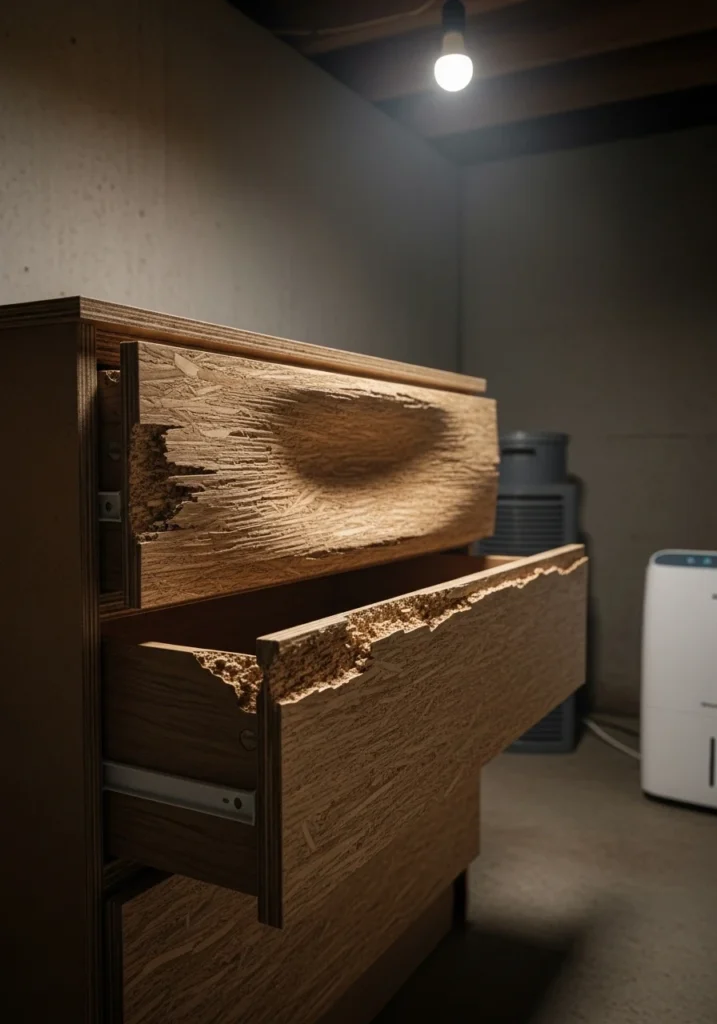
On the other end of the spectrum, cheap particleboard furniture absolutely hates water.
Even a single exposure to high humidity can cause particleboard to swell, crumble at the edges, and lose structural integrity fast.
If you have ever watched a budget dresser slowly disintegrate in a steamy bathroom, particleboard was almost certainly the culprit.
The Role of Humidity vs. Direct Moisture
There is an important distinction worth making here. Humidity refers to ambient moisture in the air, the kind you get in coastal climates, basements, or bathrooms after a long shower.
Direct moisture means actual water contact, splashes, spills, or condensation from a glass sitting on top of the dresser. Both cause damage, but they do so in different ways and at different speeds.
The materials covered below address both concerns, though some handle one better than the other.
Knowing your specific environment helps you pick the right solution rather than just any moisture-resistant option.
Solid Teak: The Gold Standard for Humid Environments
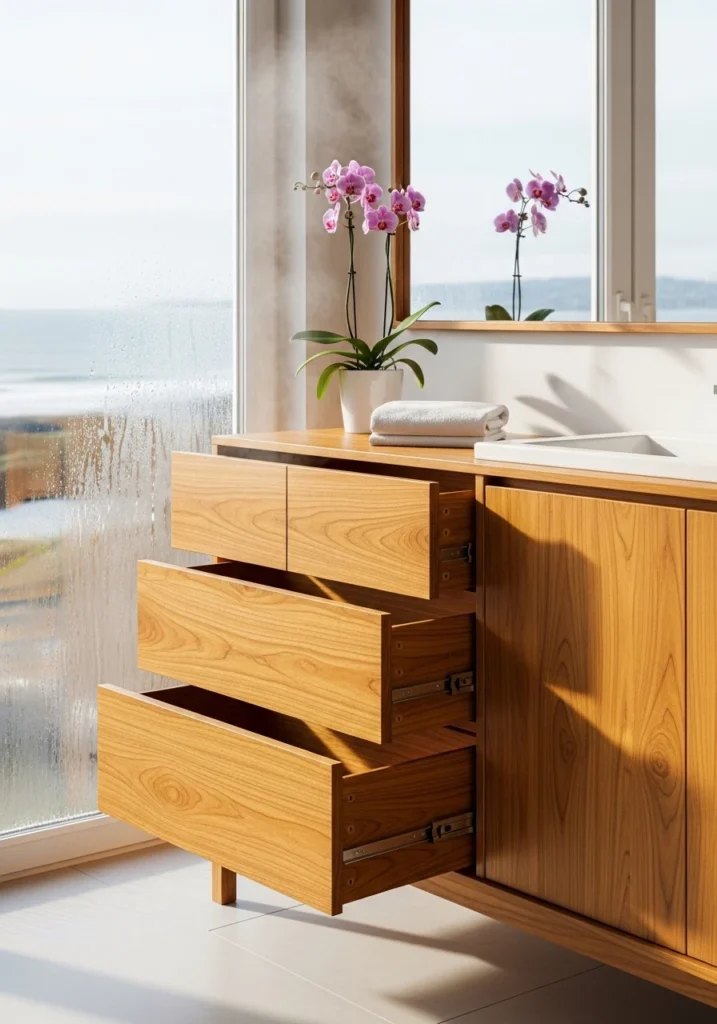
If you ask anyone who has spent serious time around furniture built for wet or tropical conditions, teak comes up first.
Teak wood contains natural oils that effectively repel moisture from within the wood itself.
These oils prevent the wood fibers from absorbing water at the rate that most other species do, which is why teak has been the material of choice for outdoor furniture and boat decking for centuries.
A solid teak dresser in a humid bathroom or coastal bedroom handles the environment far better than virtually any other natural wood option.
The grain is tight, the density is high, and the natural oil content does the heavy lifting without requiring constant sealing or maintenance.
You do get some minor movement with extreme humidity swings, but warping in the traditional sense is rarely an issue.
The Honest Downside of Teak
Teak is expensive, and there is no polite way to soften that. A quality solid teak dresser sits at a significantly higher price point than most alternatives.
If budget is a concern, you are better off knowing that upfront rather than expecting teak pricing to surprise you on the pleasant side.
That said, teak furniture tends to last for decades with minimal care, so the cost-per-year math often works out better than cheaper options that need replacing every few years.
Shop Solid Teak Dressers on Amazon
Marine-Grade Plywood: Underrated and Seriously Tough
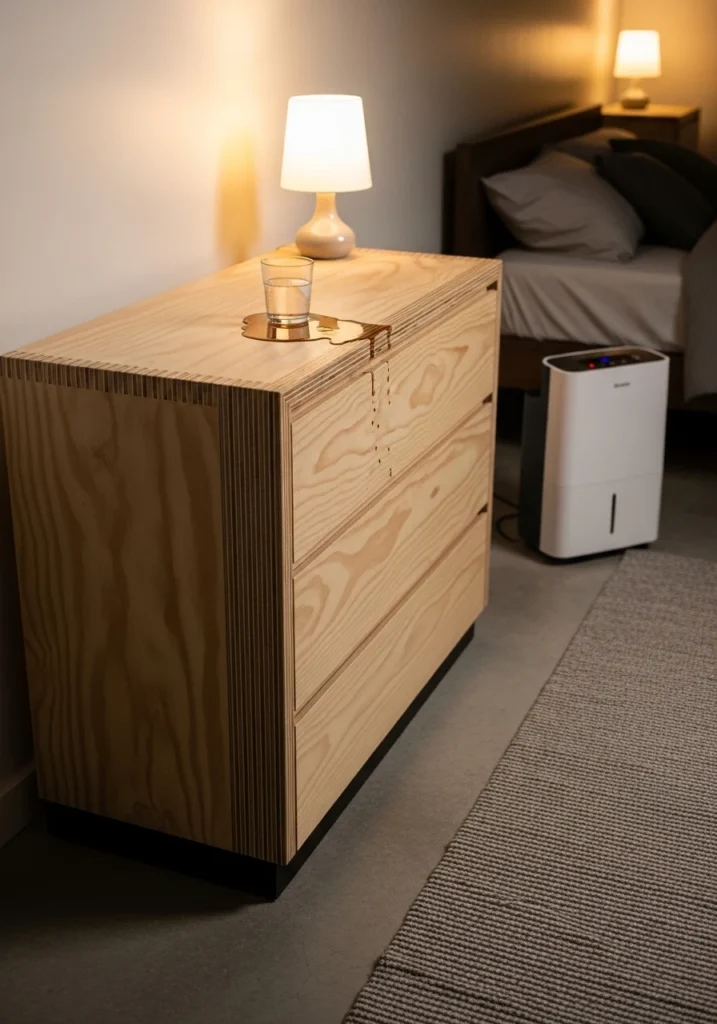
Marine-grade plywood does not get nearly enough credit in the furniture world, probably because the name makes people think of boats rather than bedroom furniture.
But here is the thing: marine-grade plywood resists moisture better than most solid woods, and it does so without the price tag that teak carries.
The reason marine plywood performs so well comes down to how it is constructed.
It uses multiple thin layers of wood veneer bonded together with waterproof adhesive, and the veneers themselves come from denser, higher-quality wood species with fewer voids or defects.
That layered structure also means marine plywood resists warping extremely well because the grain directions in alternating layers counteract each other’s tendency to expand.
Where Marine Plywood Makes the Most Sense
Marine plywood dressers or dresser frames work particularly well in:
- High-humidity rooms like bathrooms or laundry areas
- Basement bedrooms where moisture seeps up from the foundation
- Coastal homes with persistent ambient humidity year-round
- Situations where you want solid performance without solid-wood pricing
The finish applied over marine plywood matters enormously, though. A well-sealed, properly finished marine plywood dresser handles moisture beautifully.
One with a thin or compromised finish starts to lose its advantage over time.
Browse Marine-Grade Plywood Dressers on Amazon
PVC and Waterproof Composite Materials
If you need something that genuinely laughs in the face of moisture, PVC-based and waterproof composite materials deserve serious consideration.
PVC furniture does not absorb water at all because it is not a porous material. There are no wood fibers to swell, no adhesives to degrade, and no surface to warp.
Humidity simply does not affect it the way it affects wood-based products.
Waterproof composite materials work on a similar principle.
They combine wood fibers or other organic materials with polymer resins or plastics, creating a product that looks and feels more like wood than pure PVC but carries much of the same moisture resistance.
Many bathroom vanities and utility storage pieces use composite construction for exactly this reason.
The Aesthetic Trade-Off
Pure PVC furniture tends to have a utilitarian look that does not suit every room.
It works perfectly in a utility room, garage, or purely functional bathroom storage context, but it rarely delivers the warmth and visual character that most people want from a bedroom dresser.
Waterproof composites occupy a better middle ground, offering improved aesthetics without sacrificing performance.
If the dresser needs to look good while also resisting moisture, composites typically win over pure PVC.
Find Waterproof Composite Dressers on Amazon
Solid Rubber Wood With Proper Sealing
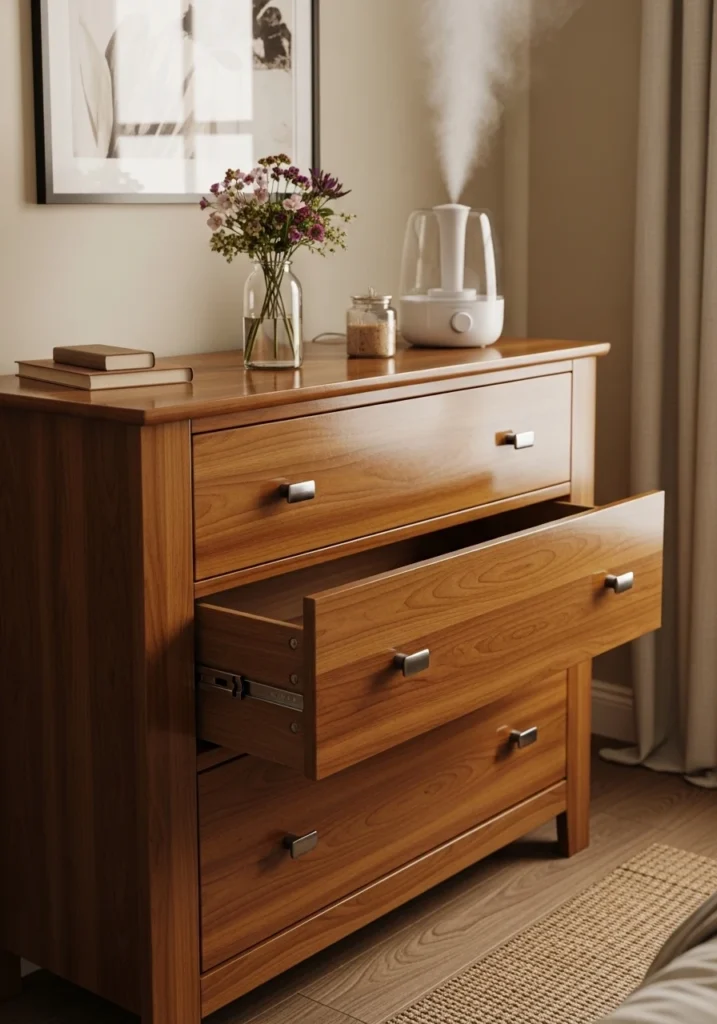
Rubber wood does not get much attention in the moisture-resistance conversation, which is a shame because it performs surprisingly well when properly sealed.
Rubber wood is a dense, tight-grained hardwood that originates from rubber tree plantations.
It takes finish well, machines cleanly, and resists moisture absorption better than many other mid-range hardwoods.
The key phrase there is “properly sealed.” Rubber wood without a quality finish is moderately moisture-resistant at best.
Apply a good quality polyurethane, lacquer, or marine varnish to a rubber wood dresser, and you dramatically increase its ability to handle humid environments.
The wood itself provides a solid base, and the finish provides the actual barrier against moisture.
This makes rubber wood a strong value option. It sits at a more accessible price point than teak and delivers genuinely good performance with the right finishing approach.
Stainless Steel and Metal Framing
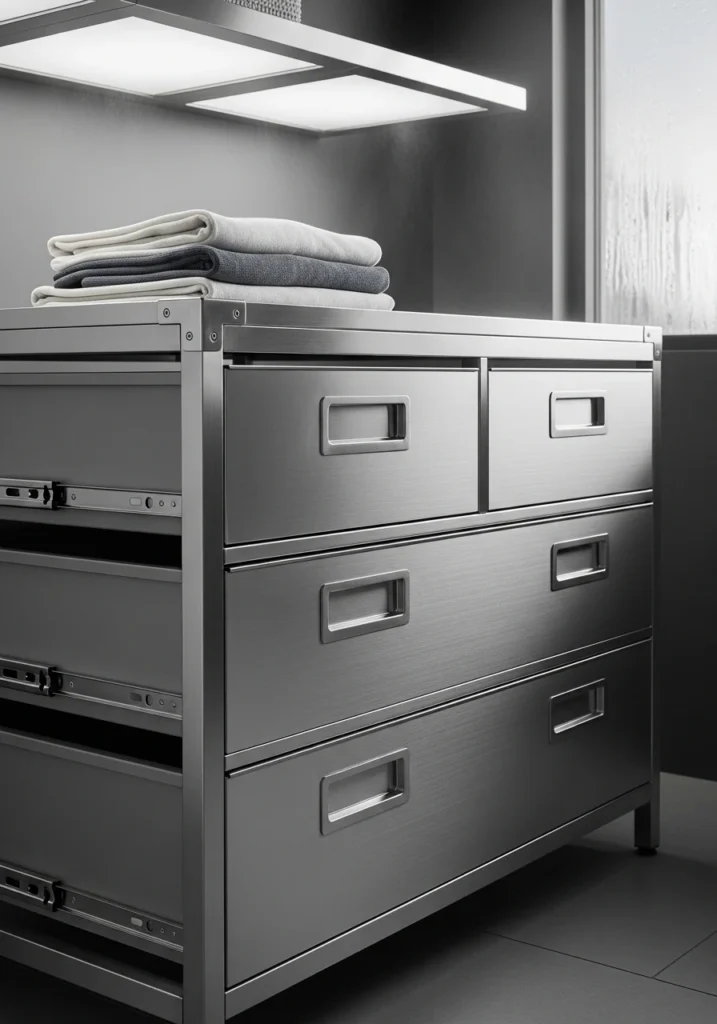
For those who prioritize pure moisture resistance above all else, metal dressers with stainless steel or powder-coated steel frames solve the warping problem entirely.
Metal does not warp, swell, or absorb moisture. It can rust if the protective coating fails, but a quality powder-coat finish or stainless steel construction holds up in even the most demanding humid environments.
Metal dressers work particularly well in industrial or contemporary styled rooms, laundry areas, and anywhere that prioritizes function heavily.
The drawers themselves often use metal slides and frames too, which means the entire structure stays dimensionally stable regardless of humidity swings.
What to Watch for With Metal Dressers
The main concern with metal in humid environments is the quality of the protective coating. Cheap powder coating can chip, and once moisture reaches bare steel, rust starts. Look for:
- Stainless steel construction as the premium option
- Epoxy powder-coated steel as a reliable mid-range choice
- Drawer interiors lined with non-reactive materials to protect stored clothing from any surface issues
How Finish and Sealing Change the Equation
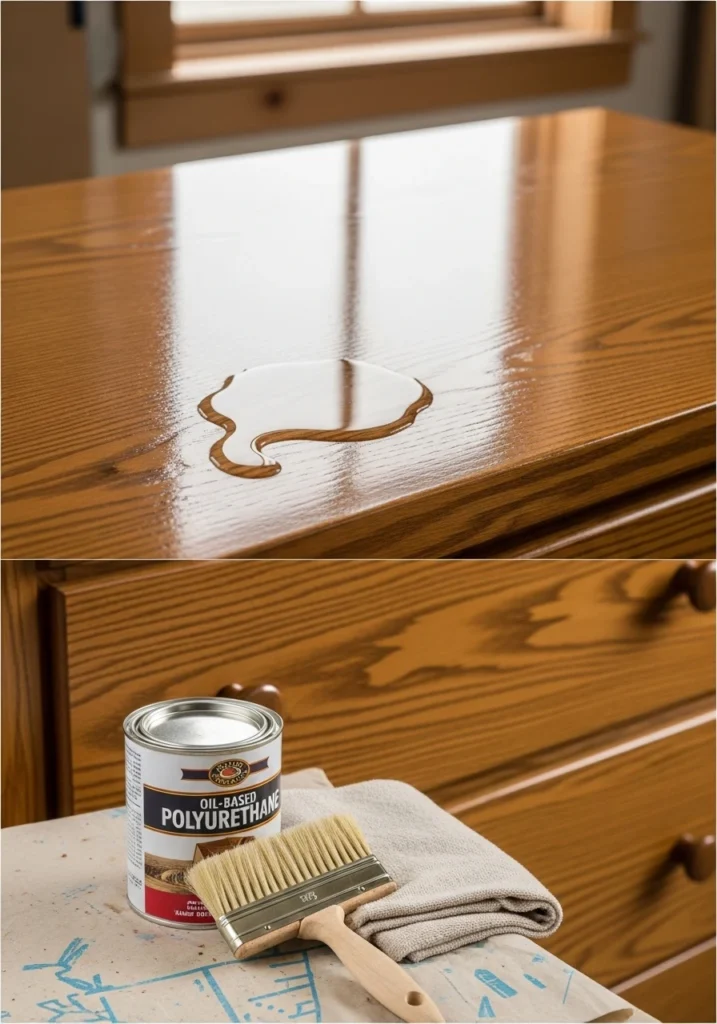
Here is something that does not get said often enough: the finish on a dresser often matters as much as the base material.
A mid-grade wood with an excellent waterproof finish can outperform a higher-end wood with a thin, porous lacquer in a humid environment. The finish is the first line of defense, and it deserves serious attention.
Polyurethane finishes, particularly oil-based polyurethane, create a hard, water-resistant shell over wood surfaces.
Marine varnish goes even further, offering flexibility and moisture resistance specifically designed for high-exposure environments.
If you buy an unfinished or minimally finished dresser, applying a quality sealer yourself can significantly upgrade its moisture performance.
Finishing Tips That Actually Make a Difference
- Seal all surfaces, including the inside of drawers and the back panel, not just the exterior
- Apply multiple thin coats rather than one thick coat for better adhesion and durability
- Reapply finish every few years in high-humidity environments, particularly on drawer runners and edges
- Use paste wax on drawer slides to reduce friction and provide a secondary moisture barrier
Shop Waterproof Wood Sealers and Finishes on Amazon
Comparing Your Options at a Glance
Here is a straightforward comparison to help you weigh the choices against each other:
| Material | Moisture Resistance | Warping Risk | Price Range | Best For |
|---|---|---|---|---|
| Solid Teak | Excellent | Very Low | High | Bathrooms, coastal homes |
| Marine Plywood | Very Good | Low | Mid to High | Humid bedrooms, basements |
| PVC / Composites | Outstanding | None | Low to Mid | Utility spaces, bathrooms |
| Rubber Wood (sealed) | Good | Low-Medium | Mid | Budget-conscious buyers |
| Stainless Steel | Outstanding | None | Mid to High | Industrial spaces, laundry |
Compare Moisture-Resistant Dressers on Amazon
Making the Right Call for Your Space
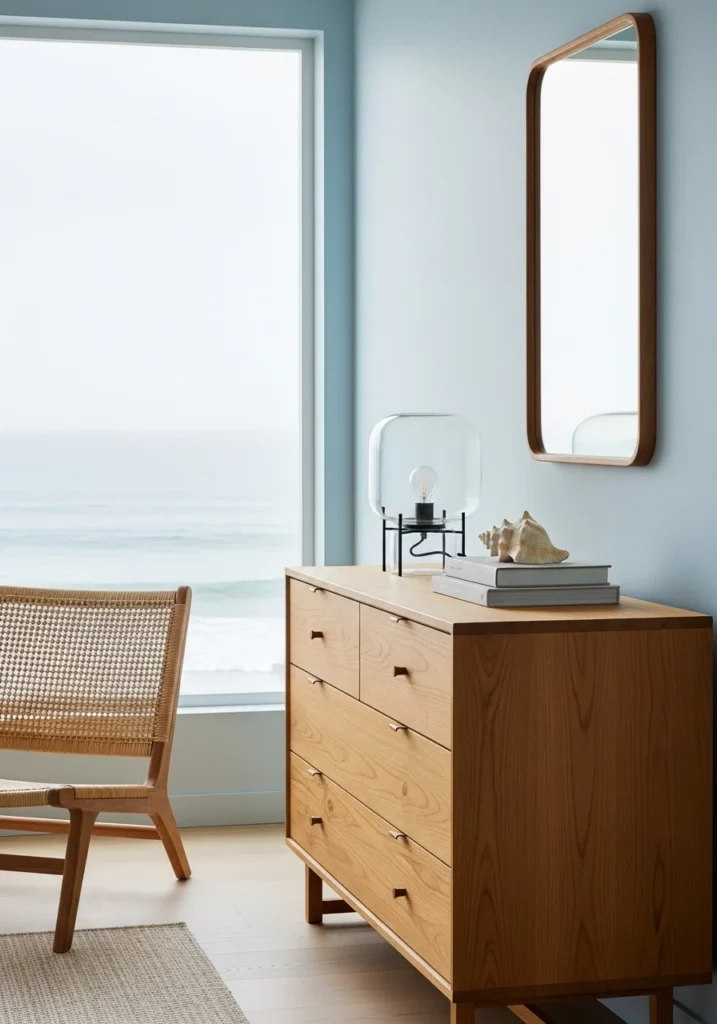
Choosing the right moisture-resistant dresser material comes down to three things: your environment, your budget, and how much the dresser needs to blend into the room aesthetically.
A bathroom dresser has very different demands than a bedroom dresser in a slightly humid climate.
If performance is the top priority and budget allows, solid teak or stainless steel give you the most confidence in truly demanding environments.
For most humid bedrooms and basements, marine plywood or properly sealed rubber wood deliver excellent results at more manageable price points.
And if you need maximum moisture resistance in a purely functional space, PVC and waterproof composites get the job done without fuss.
The worst thing you can do is default to the cheapest particleboard option, watch it slowly disintegrate, and then spend more replacing it than a better dresser would have cost upfront.
Your future self, the one who can actually open the top drawer without a wrestling match, will thank you for making the right call now.
Buy once, buy right, and let moisture be someone else’s problem.
What Is the Best Moisture-Resistant Material for a Dresser in a Bathroom?
Solid teak is the best choice for a bathroom dresser. It has natural oils that repel moisture, so it doesn’t need constant resealing.
If teak is too pricey, marine-grade plywood with a waterproof finish is a great alternative. Both materials handle bathroom humidity better than solid pine, MDF, or particleboard.
Does Solid Wood Warp in Humid Conditions?
Solid wood can warp in humid conditions, but the degree of warping depends heavily on the wood species and the finish applied.
Dense, oily hardwoods like teak, white oak, and rubber wood resist moisture absorption much better than softer, more porous species like pine or basswood.
A quality polyurethane or marine varnish finish on any solid wood dresser dramatically reduces the risk of warping, swelling, and drawer misalignment.
Is Marine Plywood Good for Making a Dresser?
Marine plywood is a great choice for dressers in humid areas. Its layered design uses waterproof glue between each veneer.
The alternating grain direction helps prevent warping, even in high humidity. When finished and sealed well, a marine plywood dresser can last longer than many solid wood options in wet conditions.
How Do I Stop My Wooden Dresser From Warping in a Humid Room?
To stop a wooden dresser from warping, seal every surface. This includes the drawer interiors, back panel, and all edges. Use a waterproof finish like oil-based polyurethane or marine varnish.
Running a dehumidifier in the room helps control humidity. This reduces stress on wooden furniture over time.
Avoid placing the dresser against exterior walls where condensation collects. Also, reapply the protective finish every two to three years in high-humidity areas.
What Dresser Material Works Best for a Basement Bedroom?
Marine plywood and sealed rubber wood work well in basement bedrooms. They handle moisture from the foundation and high humidity.
If durability is your top priority, choose a powder-coated steel dresser. It won’t warp since metal doesn’t absorb moisture.
Avoid particleboard and standard MDF dressers in basements. Both materials break down quickly in the low humidity common in these spaces.