Wardrobe or Armoire for a Small Bedroom?
You’ve got your small bedroom looking just right. The bed fits, the nightstand is set, but then you hit a wall, literally and figuratively. You still need more clothing storage.
Now you’re in the furniture aisle or scrolling online, torn between a wardrobe and an armoire. Does this sound familiar?
Both serve similar purposes, but they differ in design, space requirements, and suitability for your bedroom.
Choosing the wrong one can lead to cramped walkways, wasted wall space, or a piece that can’t hold all your clothes. Let’s break it down clearly, with no fluff or confusion.
What Is the Actual Difference Between a Wardrobe and an Armoire?
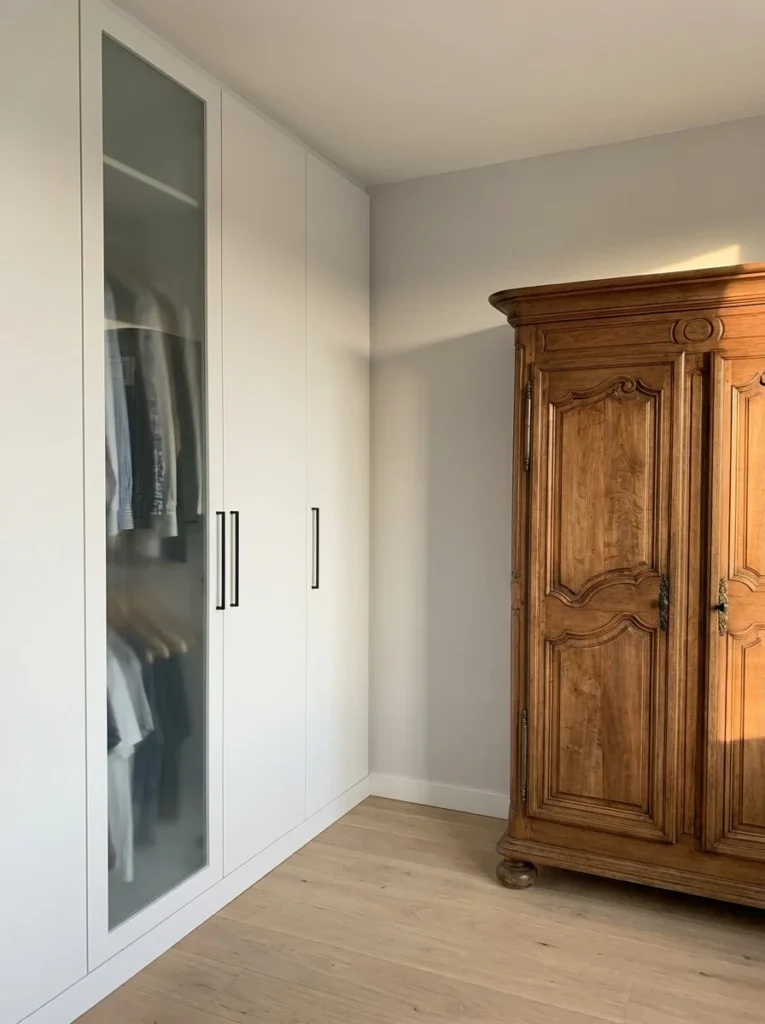
Before you can pick one, you need to know what separates them. People use these words interchangeably all the time, but they are not the same thing.
The Wardrobe: Built for Function
A wardrobe is a tall, freestanding cabinet designed primarily for hanging clothes. Most wardrobes feature:
- A long hanging rail (or two shorter rails stacked)
- Shelves on one side for folded items
- Drawers at the bottom in some models
- A relatively sleek, rectangular profile
Wardrobes tend to have a more modern or contemporary look. They are workhorses.
They do not apologize for being storage units, and they usually come in a range of finishes from plain white to wood-grain laminate. Think IKEA PAX territory.
The Armoire: The Elegant Older Sibling
An armoire is a French-origin piece of furniture that started life as a place to store armor (yes, actual knight armor).
Today, it is a large, ornate cabinet that stores clothing but leans heavily into aesthetics. Armoires typically feature:
- Decorative carved or paneled doors
- A mix of shelves, hanging space, and sometimes drawers
- Solid wood or wood-veneer construction
- Heavier weight and more visual presence
If a wardrobe is the dependable sedan of bedroom furniture, an armoire is the vintage convertible. Both get you from A to B, but one makes a much louder statement pulling into the driveway.
Why Storage Choice Matters Even More in a Small Bedroom
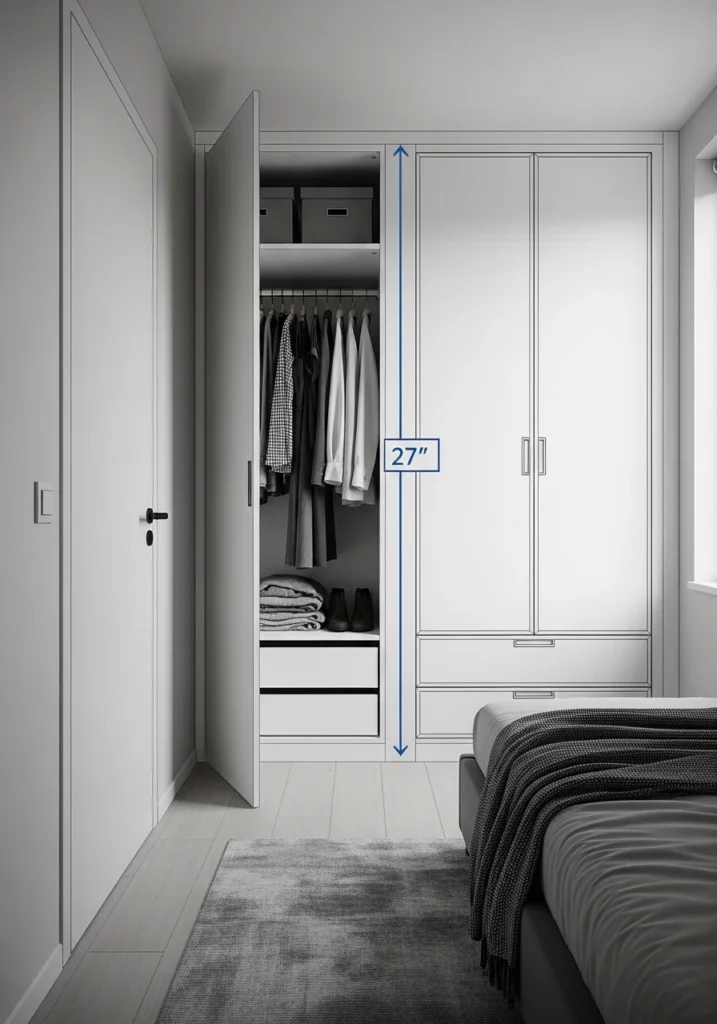
Here is the thing about small bedrooms: every square foot is a negotiation. You are not just picking furniture; you are mapping out a livable space.
A piece that is even six inches too wide can block a doorway, cut off natural light, or make the room feel like a closet itself.
Depth is the real culprit most people overlook. Wardrobes tend to run about 22 to 24 inches deep.
Armoires, because of their traditional construction, often push 26 to 28 inches deep. In a room that is 10 by 10 feet, those extra inches add up fast.
Width matters just as much. A large armoire can span 50 to 60 inches across. A single wardrobe module might be as narrow as 19 inches.
When you are working with one small wall, that flexibility is gold.
Wardrobe Advantages for Small Bedrooms
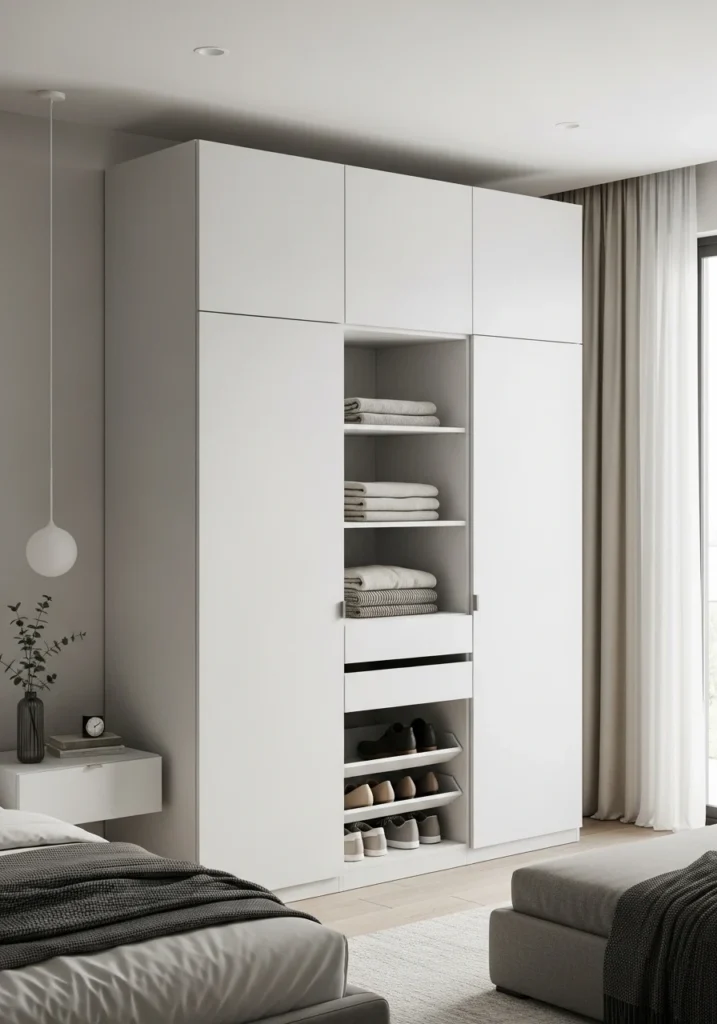
If you are serious about maximizing a tight space, a wardrobe usually wins the practical battle. Here is why:
Modular Flexibility
Most modern wardrobe systems let you mix and match modules. You can build exactly the configuration your room needs, whether that is one narrow unit or two medium ones placed side by side.
You are not locked into one predetermined size, which is a huge advantage when every inch counts.
Explore Modular Wardrobe Systems on Amazon
Slimmer Profile
Wardrobes typically sit closer to the wall and take up less floor space than armoires. If you need to place furniture along a wall that also has a door or window, a slimmer wardrobe is far easier to work around.
Better Vertical Use
Many wardrobes go all the way to the ceiling or close to it.
That vertical reach means you pull storage upward instead of outward, which keeps the floor footprint tight and the room feeling taller and more open.
Easier Customization
Interior wardrobe fittings (drawers, shelves, shoe racks, pull-out trouser hangers) are widely available and affordable.
You can retrofit a basic wardrobe carcass with exactly the internal layout you need. Want more drawers and less hanging space? Done. No need to buy a whole new piece of furniture.
Armoire Advantages for Small Bedrooms
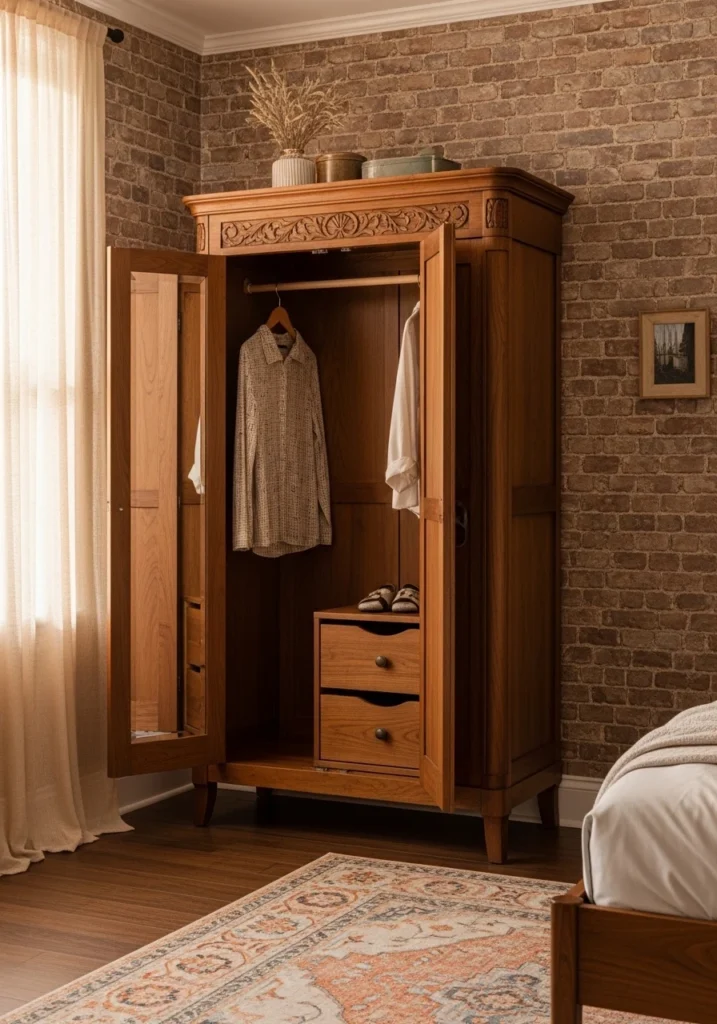
Armoires are not just for sprawling master suites. In the right small bedroom, they actually solve some real problems, and they do it with style.
Statement Piece That Pulls Double Duty
A well-chosen armoire acts as both storage and focal point. In a small bedroom with limited wall art or architectural detail, an armoire gives the room a visual anchor.
It does more design work per square foot than a wardrobe usually manages.
Self-Contained Storage
Because armoires are built as a single cohesive unit, they tend to have more thoughtfully integrated internal storage.
Some include a combination of hanging space, deep shelves, small drawers, and even built-in mirrors. You get a complete storage solution in one piece without the need to buy additional fittings.
Find Armoires With Built-In Storage on Amazon
Works Without a Built-In Closet
Older homes and studio apartments often have zero closet space. An armoire steps in as a full closet replacement and does so without requiring any installation.
You bring it in, position it, and your bedroom instantly has a closet.
Vintage and Character-Rich Options
If you are furnishing a bedroom with older architectural bones, a midcentury aesthetic, or a maximalist vibe, an armoire fits in naturally.
A flat-pack wardrobe in that same room might look like it wandered in from a different decade entirely.
Head-to-Head: Wardrobe vs. Armoire for Small Bedrooms
| Feature | Wardrobe | Armoire |
|---|---|---|
| Average Width | 19 to 48 inches (modular) | 40 to 60 inches (fixed) |
| Average Depth | 22 to 24 inches | 24 to 28 inches |
| Style | Modern, contemporary | Traditional, vintage, ornate |
| Customization | High (modular interiors) | Low to moderate |
| Hanging Space | Typically more | Moderate |
| Visual Weight | Light to moderate | Heavy |
| Price Range | Budget to mid-range | Mid-range to high |
| Best For | Maximizing storage in tight spaces | Character-driven rooms needing a focal point |
What to Consider Before You Buy
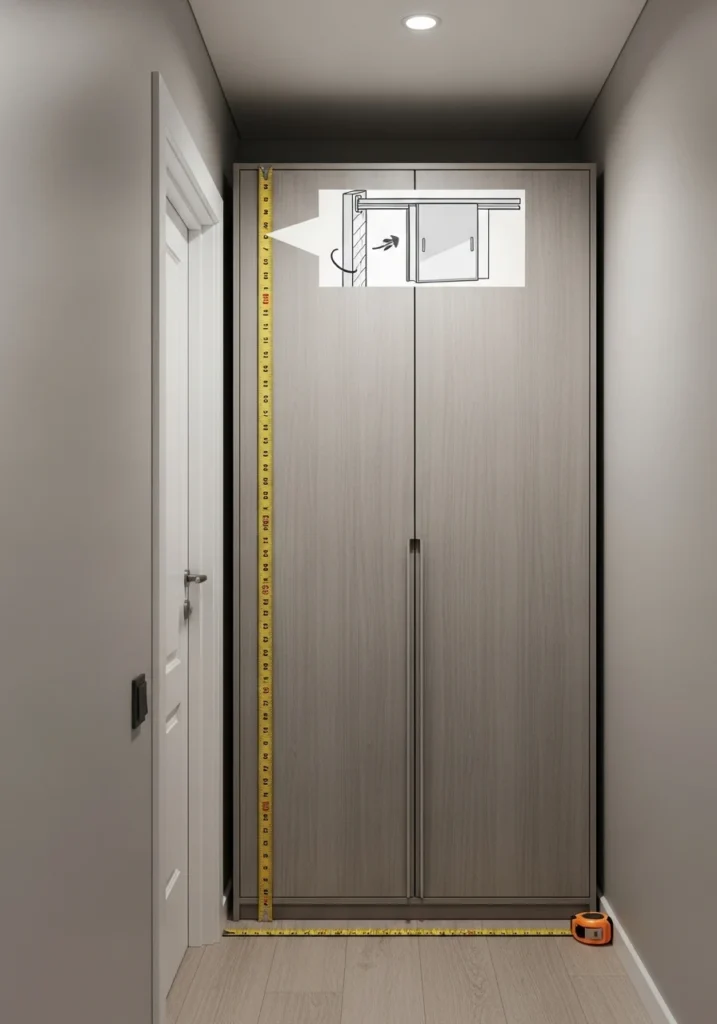
Measure Twice, Regret Nothing
Always measure your wall space before you shop, not after. Write down the width, height, and depth clearance you have. Account for door swings, baseboards, and any outlets on that wall.
An armoire with doors that swing outward needs at least 24 to 30 inches of clear space in front of it. A wardrobe with sliding doors needs none.
Think About Door Style
- Hinged doors give full access to the interior but need swing clearance
- Sliding doors save floor space but mean you can only access half the interior at once
- No doors (open wardrobe) keeps things airy but requires you to stay organized, which, let us be honest, is a tall order
Shop Wardrobes by Door Style on Amazon
Match Your Existing Furniture
A glossy white wardrobe sitting next to a dark mahogany bed frame is going to look like a furniture store showroom during a clearance sale.
Aim for pieces that share materials, finishes, or at least complementary tones.
Consider the Weight
Solid wood armoires are genuinely heavy. Some weigh over 200 pounds.
If you live in an apartment, move frequently, or simply do not want to strong-arm a piece of furniture across a room, a flat-pack wardrobe is significantly easier to transport and assemble.
The Verdict: Which One Should You Choose?
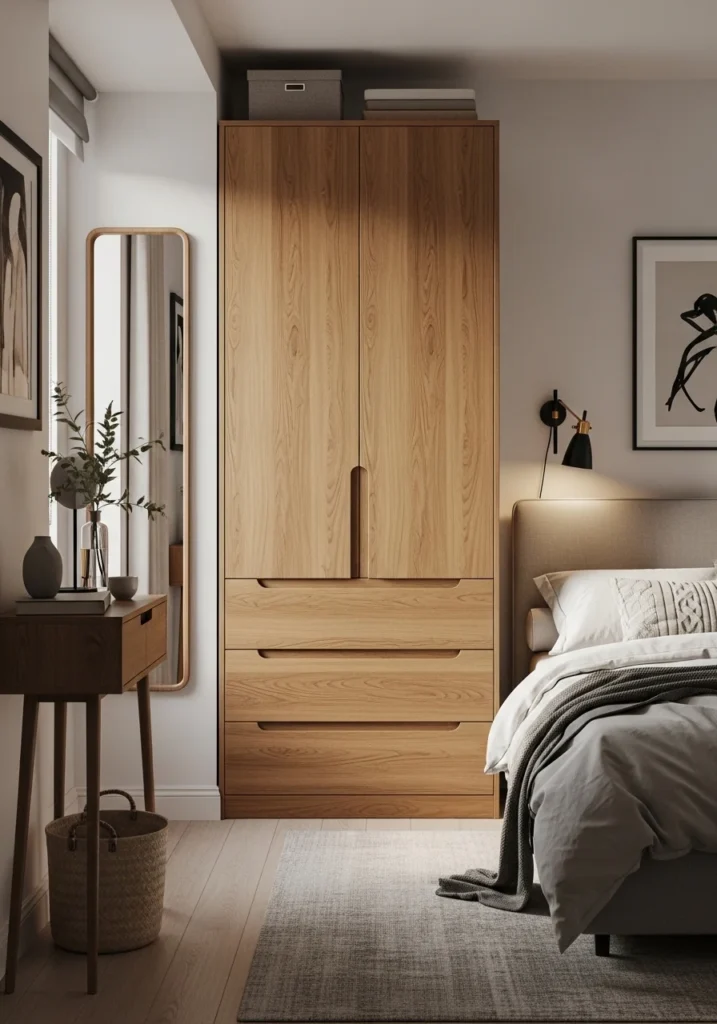
Here is the honest answer: choose a wardrobe if your priority is maximizing storage and flexibility in a small space.
Modern wardrobe systems give you more control over dimensions, interiors, and layout. They sit flatter against the wall, take up less floor space overall, and adapt to whatever your clothing situation demands.
Choose an armoire if your small bedroom has a strong aesthetic identity and you want a single piece that delivers storage and character simultaneously.
Armoires work brilliantly in rooms that lean vintage, maximalist, or traditionally styled, where a sleek modern wardrobe would look out of place.
One more thing worth saying: do not underestimate the value of a piece that you actually love looking at. A small bedroom is a personal space.
If an armoire makes the room feel like yours in a way a standard wardrobe never would, that matters. Practicality and personal taste do not have to be opposites here.
Final Thoughts
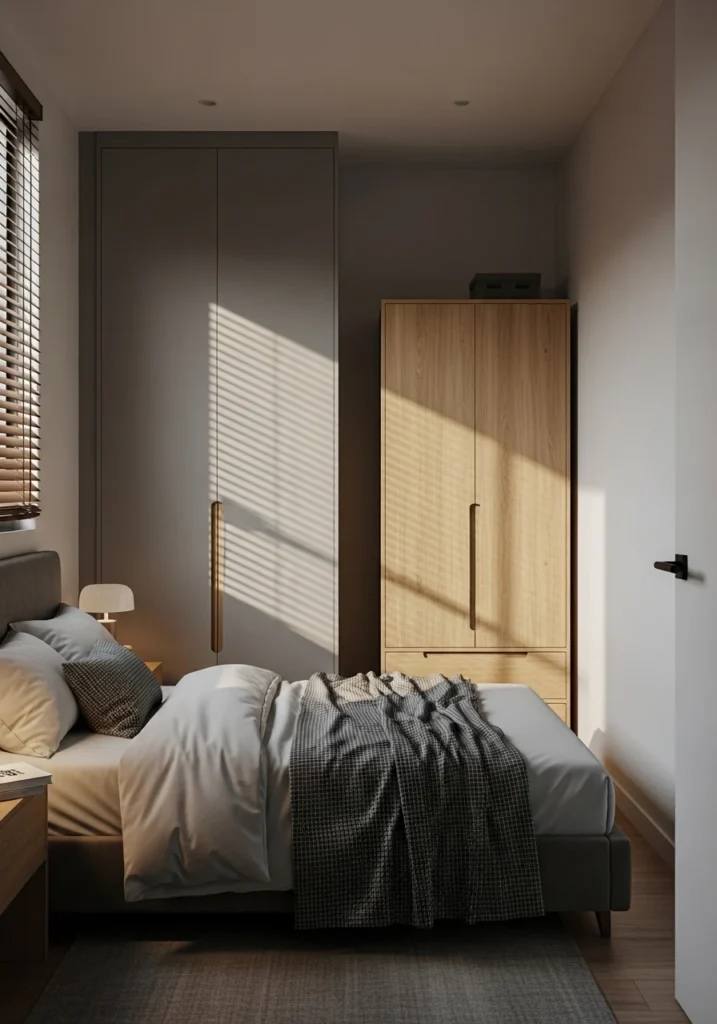
Choosing between a wardrobe and an armoire for a small bedroom comes down to what you value most: pure storage efficiency or a balance of storage and style.
Wardrobes win on adaptability and space efficiency. Armoires win on visual presence and character.
Either way, your small bedroom can handle more storage than you think. Measure carefully, think about how you actually use your clothing storage day to day, and pick the piece that earns its floor space.
Your future self, standing in a room that finally feels complete, will thank you for making the thoughtful choice now.
Shop Wardrobes and Armoires on Amazon
What Is the Main Difference Between a Wardrobe and an Armoire?
A wardrobe is a modern, freestanding cabinet for hanging and folding clothes. It has a sleek, rectangular shape and comes in various sizes.
An armoire is a heavier, more decorative piece that originated in France. It includes hanging space, shelves, and drawers in one stylish unit.
The main differences are depth, visual weight, and the design character each piece adds to a room.
Which Is Better for a Small Bedroom, a Wardrobe or an Armoire?
A wardrobe is often the best choice for a small bedroom. It offers flexible sizing, sits shallower against the wall, and allows for a custom interior layout.
Modular wardrobe systems are great because you can choose the exact width and height for your space.
An armoire only works well in a small bedroom if the room has a strong vintage or traditional style. It should be a single statement piece that meets all your storage needs.
How Deep Is a Wardrobe Compared to an Armoire?
Most wardrobes are 22 to 24 inches deep. Armoires usually measure 24 to 28 inches deep. Those extra inches can make a big difference in a small bedroom.
A deeper piece takes up more room, reduces walkway space, and can crowd the area. If your room is tight, a standard wardrobe’s slimmer profile gives you more breathing room.
Can an Armoire Replace a Built-In Closet in a Small Bedroom?
Yes, an armoire can work as a full closet replacement. This is especially true in older homes, studio apartments, or rentals where closet space is limited or missing.
A good armoire offers hanging space, shelves for folded clothes, and sometimes drawers. It all comes in one freestanding unit that needs no installation.
Just measure the wall space carefully before buying. Armoires can be wide and heavy when in place.
How Do I Choose Between Hinged and Sliding Doors on a Wardrobe for a Small Bedroom?
Sliding doors are a smart choice for small bedrooms. They need no swing space in front. Hinged doors, on the other hand, require 24 to 30 inches of clear space to open fully. This can be tricky in tight rooms.
The downside of sliding doors is access; you can only open one side at a time. However, if your wardrobe is organized and you know where everything is, this trade-off is often worth the space you save.