Heavy Duty Bed Frames Built for Heavy People
You Deserve a Bed That Actually Holds You
Let’s be honest: most bed frames ignore weight capacity. You flip the box, squint at the fine print, and find out the frame you love holds just 250 pounds. Great.
If this sounds familiar, you know how frustrating it is to shop for a heavy-duty bed frame as a larger person.
The good news? The market for heavy-duty bed frames for heavier people has expanded a lot.
There are solid options that won’t creak, sag, or collapse at 2 a.m. This guide covers everything you need to know before buying.
What Makes a Bed Frame Truly Heavy Duty
Not every frame that slaps “heavy duty” on its label actually earns the title. Manufacturers love that phrase because it sounds reassuring, but the details tell the real story.
A genuinely heavy duty bed frame separates itself from the pack through three core qualities: structural materials, weight capacity ratings, and support systems.
Steel vs. Wood: Which Material Wins?
Both materials can work well, but they behave very differently under consistent, high-load conditions.
Steel frames tend to offer:
- Higher weight capacities, often ranging from 500 to 2,000+ pounds
- Greater resistance to warping over time
- More consistent performance regardless of humidity or temperature changes
Solid wood frames offer:
- A warmer, more traditional aesthetic
- Natural stiffness and rigidity when built with hardwoods like oak or maple
- Better vibration absorption, which can mean quieter sleep
Here is the honest take: for people over 300 pounds, heavy gauge steel frames almost always outperform wooden ones in long-term durability.
Wood can be fantastic, but cheaper engineered wood and MDF simply do not hold up. If you go wood, go solid hardwood or skip it.
Shop Heavy Duty Steel Bed Frames On Amazon
Weight Capacity: What the Numbers Actually Mean
This is where most shoppers get burned. A bed frame rated at 500 pounds sounds comfortable if you weigh 280.
But that rating typically covers the combined weight of the frame, mattress, bedding, and sleepers. Factor in a quality mattress at 80 to 100 pounds, and your actual usable weight capacity shrinks fast.
A smart rule of thumb: choose a frame rated for at least twice your body weight if you sleep alone, or the combined weight of both sleepers plus 40 percent if you share a bed.
That buffer protects the frame’s structural integrity and extends its lifespan significantly.
The Most Important Features to Look For
Shopping for a heavy duty bed frame without knowing what to prioritize is like buying a car without checking the engine. You need to look past the photos and read the specs carefully.
Center Support Legs
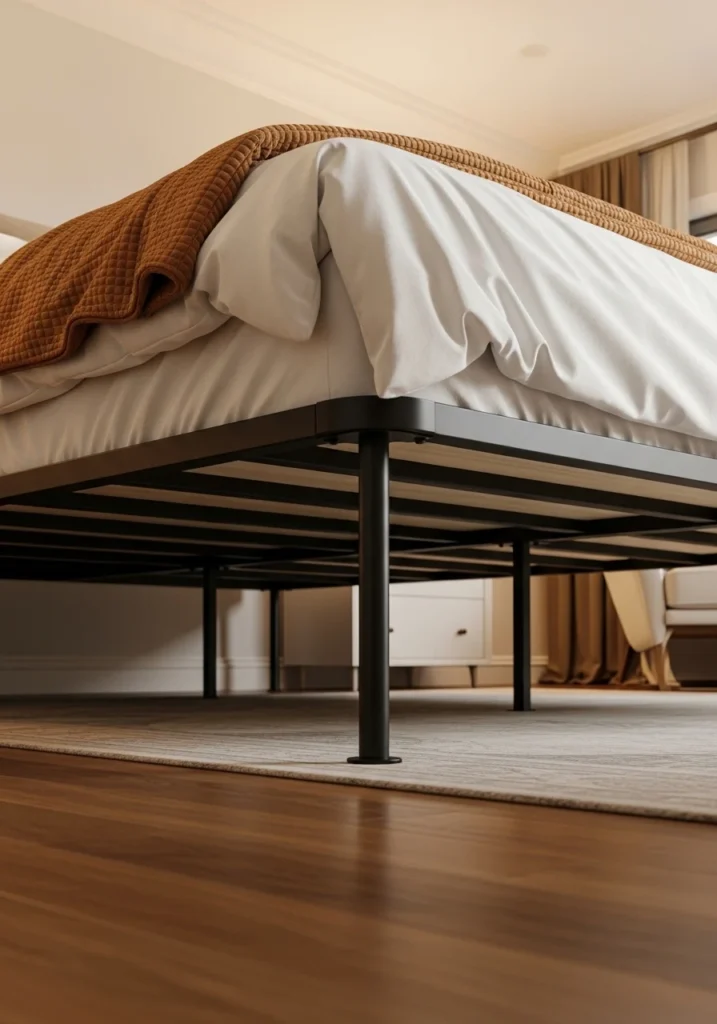
This feature sounds boring, but it does an enormous amount of work. Center support legs prevent mattress sagging by distributing weight across the floor rather than relying solely on the side rails.
Most quality heavy duty frames include at least two to four center legs, and the best ones let you adjust their height.
Without center support, even a high-quality frame will eventually bow in the middle. That bow transfers directly to your mattress and then to your spine. So yes, those little legs matter quite a bit.
Slat Systems and Their Spacing
Slats support your mattress, and the slat system on a heavy duty frame can make or break your sleeping experience. Look for:
- Solid wood or steel slats rather than cheap particleboard
- Slat spacing no greater than 3 inches to prevent mattress compression and sagging
- Slats that lock into the frame rather than just resting loosely in channels
- A minimum slat thickness of 0.75 inches for wood slats
Some frames skip slats entirely and use a solid steel grid or platform. That design often handles high weight loads better than widely spaced slats.
Find Bed Frames With Strong Slat Systems On Amazon
Frame Gauge and Weld Quality
For steel frames specifically, the gauge of the steel matters enormously. Lower gauge numbers mean thicker, stronger steel.
A frame built from 14-gauge steel handles far more stress than one built from 18-gauge steel, even if both claim the same weight rating on the box.
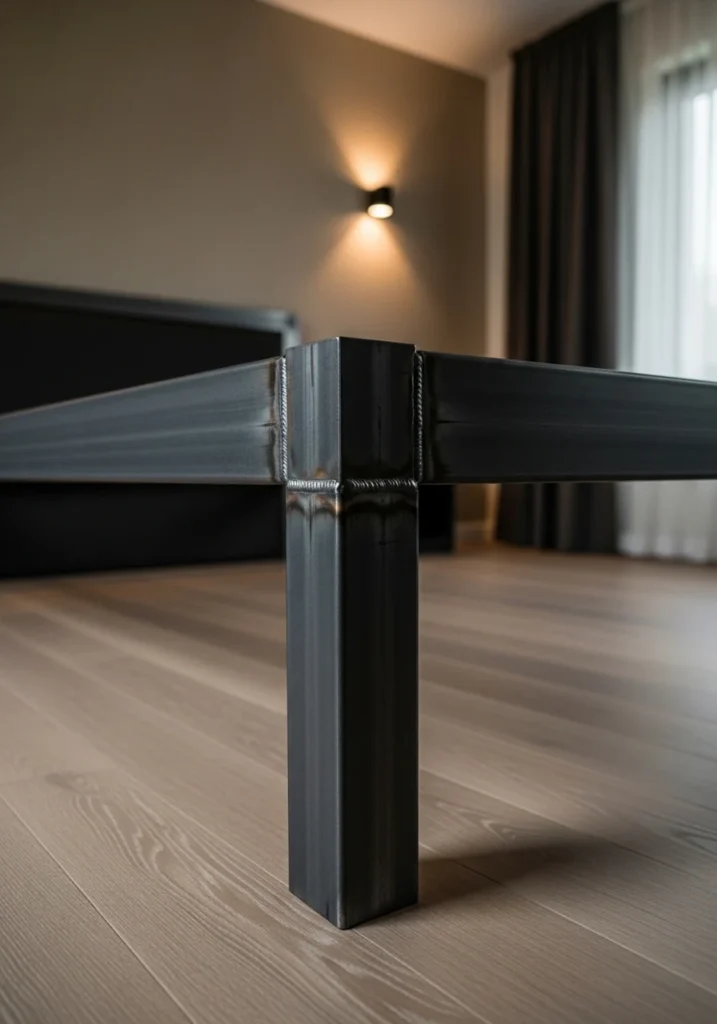
Weld quality is equally critical. Poorly welded joints fail under repeated stress, especially at the corners where most of the load concentrates.
If you can examine the frame in a store, run your hand along the welds. Smooth, consistent welds signal quality craftsmanship. Rough, uneven ones suggest a factory cutting corners.
Bed Frame Styles Worth Considering

Heavy duty frames come in several styles, and each suits different needs and room setups.
Platform Bed Frames
Platform frames provide a low-profile, modern look and typically come with built-in slat systems.
They work well for heavier sleepers because they eliminate the need for a box spring, reducing the total height and load distribution complexity.
Many of the highest-capacity frames on the market use a platform design.
Best for: People who want a clean aesthetic, use a memory foam or hybrid mattress, and want maximum center support.
Adjustable Base Frames
Adjustable bases allow you to raise the head or foot of the bed, which many people find helpful for conditions like acid reflux, snoring, or lower back pain.
Heavy duty adjustable bases exist, but you need to shop carefully.
Check that the motor system and frame structure are both rated for your weight, as many adjustable bases have lower capacities than standard frames.
Best for: Sleepers who want therapeutic positioning and are willing to invest more for a quality unit.
Storage Bed Frames
Storage frames sit higher off the ground and incorporate drawers or lift systems beneath the mattress. They solve a real space problem, especially in smaller bedrooms.
The trade-off is that storage frames often have weaker center support because the storage space interrupts where legs would normally go.
If you want a storage bed as a heavier person, look specifically for models with reinforced side rails and at least two floor-contact support points running down the center.
Mattress Compatibility Matters More Than You Think
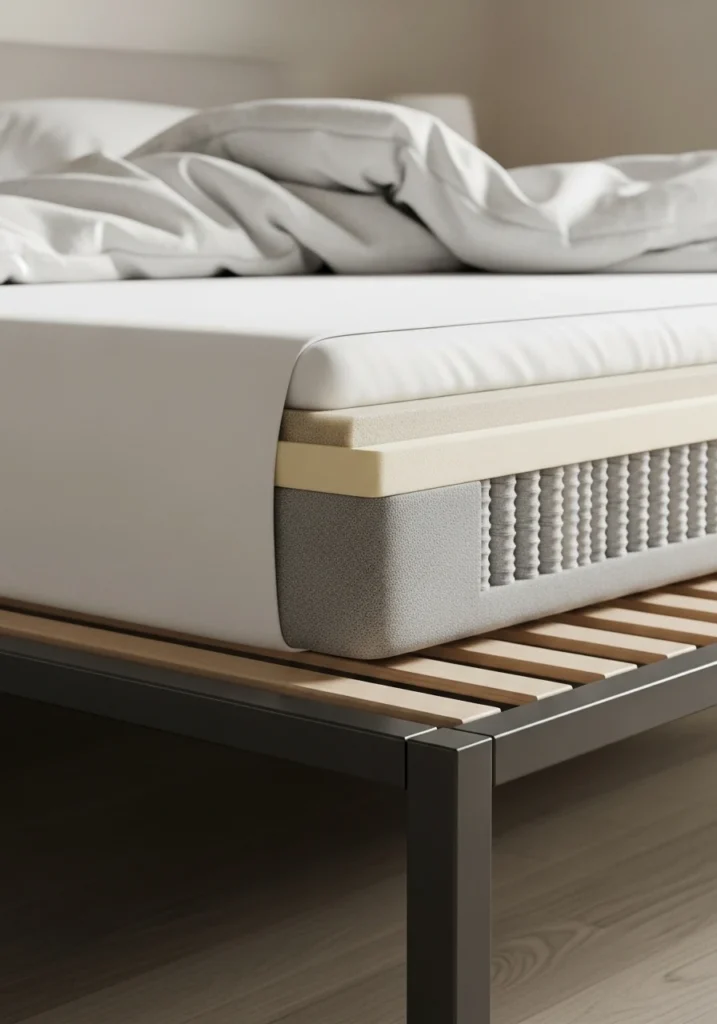
Buying the right frame is only half the equation. A heavy duty frame paired with the wrong mattress creates problems just as annoying as a flimsy frame. Here is what to consider:
- Foam mattresses: These work well on solid or close-slatted platforms. They need consistent support or they develop body impressions quickly.
- Innerspring mattresses: These handle high weight well but need a firm, stable base. Loose or widely spaced slats let the springs compress unevenly.
- Hybrid mattresses: These tend to be the best all-around choice for heavier sleepers. They combine the pressure relief of foam with the support of coils and hold their shape longer under consistent load.
Look for mattresses specifically marketed for heavy sleepers or bariatric use, as these typically use higher-density foams and reinforced coil systems designed to resist premature breakdown.
Browse Mattresses Designed For Heavy Sleepers On Amazon
Common Mistakes to Avoid
People make the same errors when shopping for heavy duty bed frames. Learning from those mistakes saves you money and a sore back.
- Buying based on price alone: A cheap frame with an inflated weight rating will fail sooner. Spend a little more upfront and avoid replacing it in two years.
- Ignoring assembly quality: A well-designed frame poorly assembled performs like a badly designed one. Follow instructions carefully and use the correct hardware.
- Forgetting to check return policies: Heavy frames are expensive to ship. Make sure the retailer offers a reasonable return window before you commit.
- Assuming all warranties are equal: Some warranties cover manufacturing defects but exclude weight-related damage. Read the fine print before you assume you are protected.
How Long Should a Heavy Duty Bed Frame Last?
A quality heavy duty bed frame, properly maintained, should last 10 to 15 years or longer.
Steel frames on the higher end of that range often outlive the mattresses that sit on them. The key to longevity comes down to three habits:
- Check and tighten all bolts every six months. Fasteners loosen over time through movement and vibration.
- Avoid sitting repeatedly on the same edge of the frame. Edge stress concentrates in one spot and weakens side rails over time.
- Keep the frame dry. Moisture corrodes steel and warps wood. A small amount of humidity control in your bedroom goes a long way.
Final Thoughts
Finding a heavy duty bed frame that actually holds up does not have to feel like a research project.
You now know what materials to prioritize, what capacity ratings actually mean in practice, and which features separate a genuinely strong frame from a marketing-heavy one.
The bottom line is simple: bigger people deserve better sleep just as much as anyone else, and the right frame makes that possible. Stop settling for products that treat your weight as an afterthought.
A well-built heavy duty bed frame is an investment in your health, your sleep quality, and your long-term comfort.
Make that investment wisely, and your frame will hold you up every single night without complaint. Unlike that old creaky one you replaced.
Shop Heavy Duty Bed Frames On Amazon Today
What Weight Capacity Should a Bed Frame Have for a Heavy Person?
The ideal weight capacity includes your body weight and the weight of your mattress and bedding. Generally, choose a frame rated for at least twice your body weight if you sleep alone.
For couples, add both weights together. Then, look for a frame rated at least 40 percent above that combined weight. This extra support helps maintain the frame’s strength and prevents early wear.
What Is the Strongest Type of Bed Frame for Heavy People?
Heavy gauge steel frames work best for heavier sleepers. Frames made from 14-gauge steel are strong and resist warping better than thinner steel or engineered wood.
Solid hardwood frames can last too, but only if made from dense woods like oak or maple. For anyone over 300 pounds, a steel platform frame with multiple center support legs is the best option.
Do Heavy People Need a Box Spring With a Heavy Duty Bed Frame?
Not necessarily. Most modern heavy-duty bed frames have a built-in slat system or a solid platform base. These designs support a mattress without needing a box spring.
Many foam and hybrid mattresses actually work better without one. A solid platform spreads weight more evenly.
Always check your mattress manufacturer’s guidelines. Some warranties need a specific foundation type to stay valid.
How Do I Know if a Bed Frame Will Hold My Weight Before Buying?
Find the manufacturer’s weight capacity and subtract your mattress weight, usually between 80 and 100 pounds. Check if the rating includes the total load or just the sleeper weight.
Some brands present these numbers differently. Look for frames with multiple center support legs, thick steel or solid wood slats, and reinforced corner joints.
Reading customer reviews from people with similar body weight can show how the frame performs in real life.
How Long Does a Heavy Duty Bed Frame Last for a Heavier Person?
A sturdy, heavy-duty bed frame should last 10 to 15 years with proper care, even under heavy use. To extend its lifespan, tighten bolts every six months. Keep the frame dry to prevent rust or warping.
Also, avoid putting repeated pressure on the same edge. Cheaper frames may wear out much faster, often within three to five years. That’s why investing in quality materials from the start is worth it.