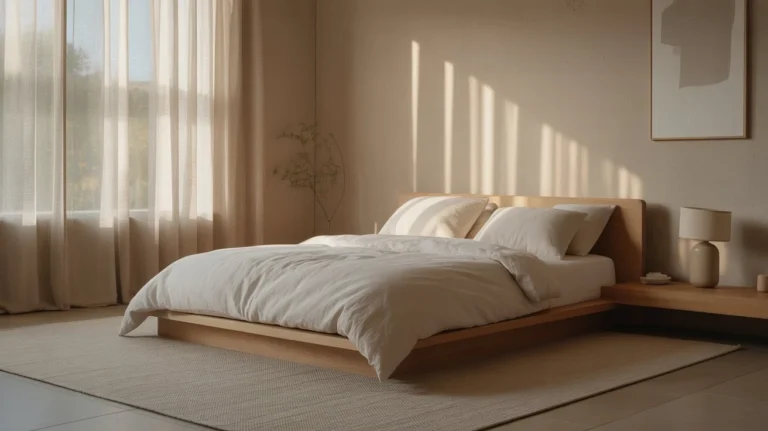
Accent Wall Behind Bed to Transform Your Bedroom
Your bedroom deserves more than four plain walls staring at you each morning. If you’ve had a dull bedroom for too long, an accent wall behind your bed could be the perfect solution.
It’s an affordable upgrade that can transform your space.
When done right, a bedroom accent wall behind the bed ties the room together. It creates a focal point and makes your bed look magazine-worthy.
If done wrong, it can end up looking like a failed DIY project. This guide will help you get it right the first time.
Why the Wall Behind Your Bed Is the Most Important Wall in the Room
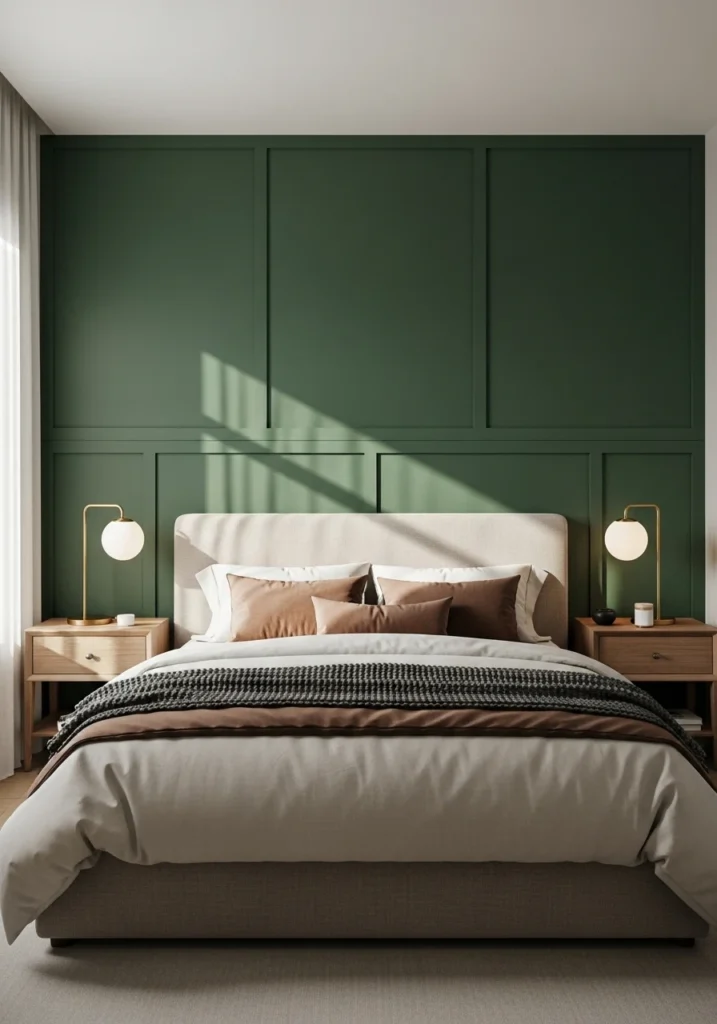
Think about it. When you walk into any bedroom, where does your eye go first? Straight to the bed.
The headboard wall, or the feature wall directly behind the bed, is the visual anchor of the entire space.
Every other element in the room, the nightstands, the lighting, the rug, takes its cue from what happens on that wall.
A headboard accent wall creates depth and dimension. It signals intentional design.
It tells anyone who steps into the room that you actually thought about this space rather than just throwing furniture in and calling it a day.
The Psychology Behind a Focal Point
Interior designers talk about focal points constantly, and for good reason. A strong focal point guides the eye, creates visual order, and makes a room feel intentional rather than chaotic.
Your bed is already the dominant piece of furniture in the room, so building an accent wall directly behind it reinforces that hierarchy.
When the wall behind your bed has character, the rest of the room snaps into place. Suddenly, those matching nightstands make sense.
The pendant lights feel purposeful. Even a mediocre rug looks better because the whole room has a clear center of gravity.
Popular Accent Wall Ideas Behind the Bed
You have a lot of options here, which is both exciting and slightly overwhelming.
The key is to pick a treatment that suits your personal style, complements your existing furniture, and works within your actual budget.
1. Bold Paint Colors
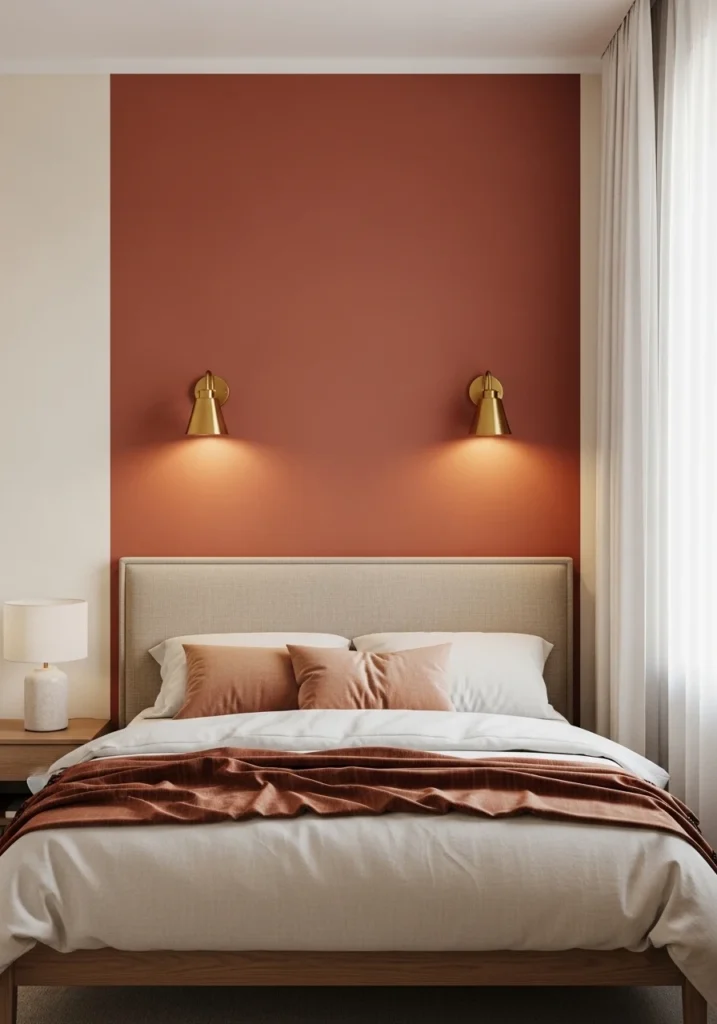
This is the easiest, most affordable entry point.
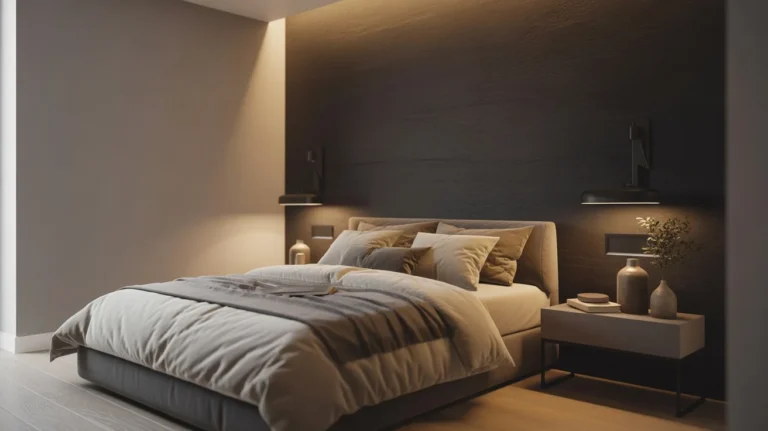
A single wall painted in a deep, rich color like forest green, navy blue, terracotta, or charcoal creates instant contrast without requiring a contractor or a weekend of hard labor.
What makes this work:
- Choose a color that appears elsewhere in the room, such as in your bedding or curtains, to tie everything together
- Go at least two to three shades deeper than your room’s main color for maximum impact
- Matte or eggshell finishes tend to look more sophisticated on accent walls than glossy ones
If you have been playing it safe with beige and white your entire adult life, a bold paint color on the headboard wall is the low-commitment way to finally try something different.
Shop Bedroom Accent Wall Paint Colors On Amazon
2. Wallpaper and Murals
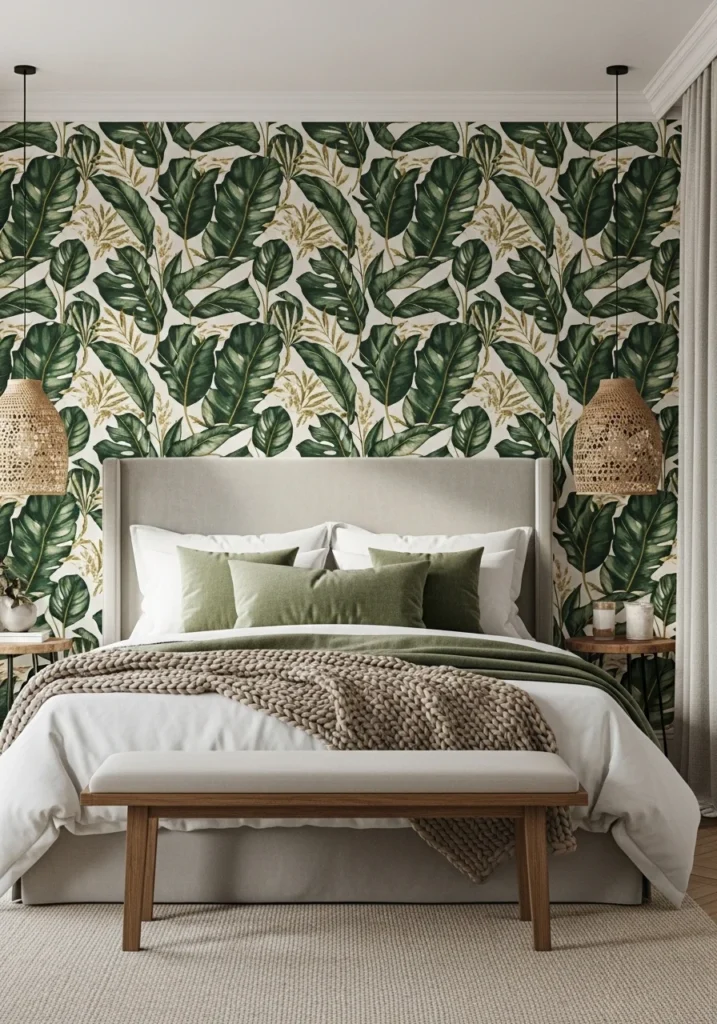
Wallpaper has had a serious comeback, and honestly, it never should have left.
A wallpaper accent wall behind the bed can introduce pattern, texture, and personality in ways that paint simply cannot match.
Botanical prints, geometric patterns, abstract art, textured grasscloth, and large-scale murals are all fair game.
The single wall format keeps costs manageable since you are only papering one surface instead of the entire room.
Things to keep in mind:
- Peel-and-stick wallpaper works well for renters or anyone who changes their mind frequently
- Large-scale patterns work better in bigger rooms; small rooms benefit from smaller, more delicate prints
- A floor-to-ceiling mural behind the bed creates a truly dramatic, hotel-like effect
Shop Peel-And-Stick Wallpaper On Amazon
3. Wood Paneling and Shiplap
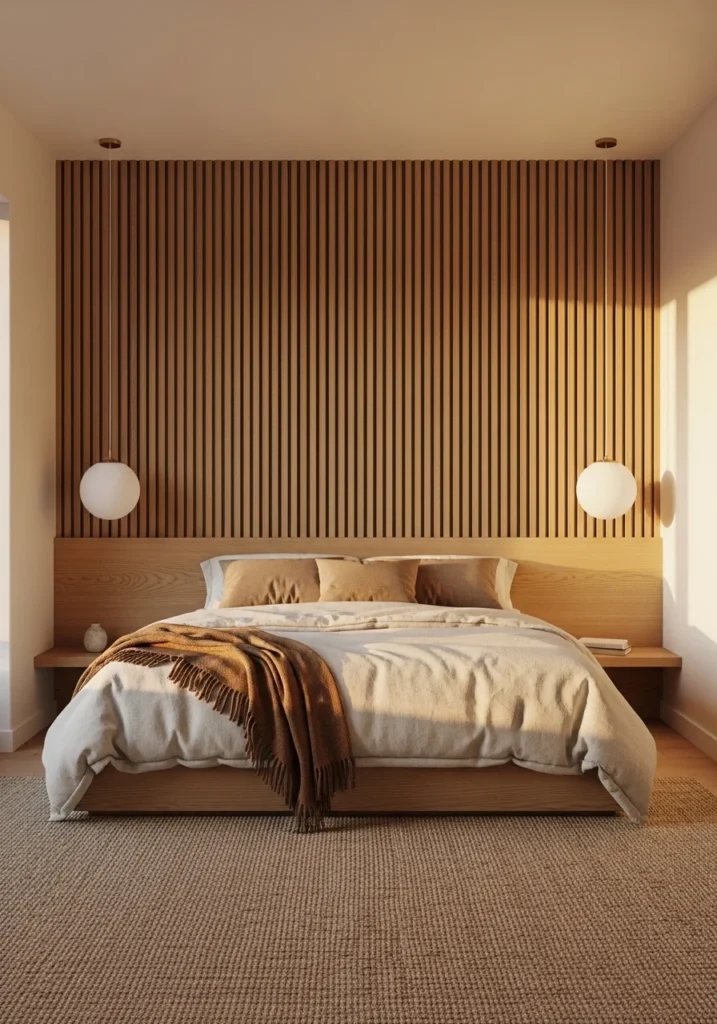
Warm, textured, and endlessly versatile, wood paneling on the wall behind a bed adds natural warmth that no paint color can fully replicate.
Shiplap, slat walls, and board-and-batten all fall into this category, and each creates a distinctly different mood.
Shiplap reads casual and relaxed, with its horizontal lines and slight shadow detail. Vertical slat walls feel more modern and architectural. Board-and-batten leans traditional and structured.
You can paint wood paneling for a cleaner, more contemporary look, or leave it natural and sealed for a warmer, more organic feel.
Either way, the texture alone adds a dimension that flat paint cannot achieve.
Shop Wood Wall Paneling And Shiplap On Amazon
4. Stone and Brick Veneer
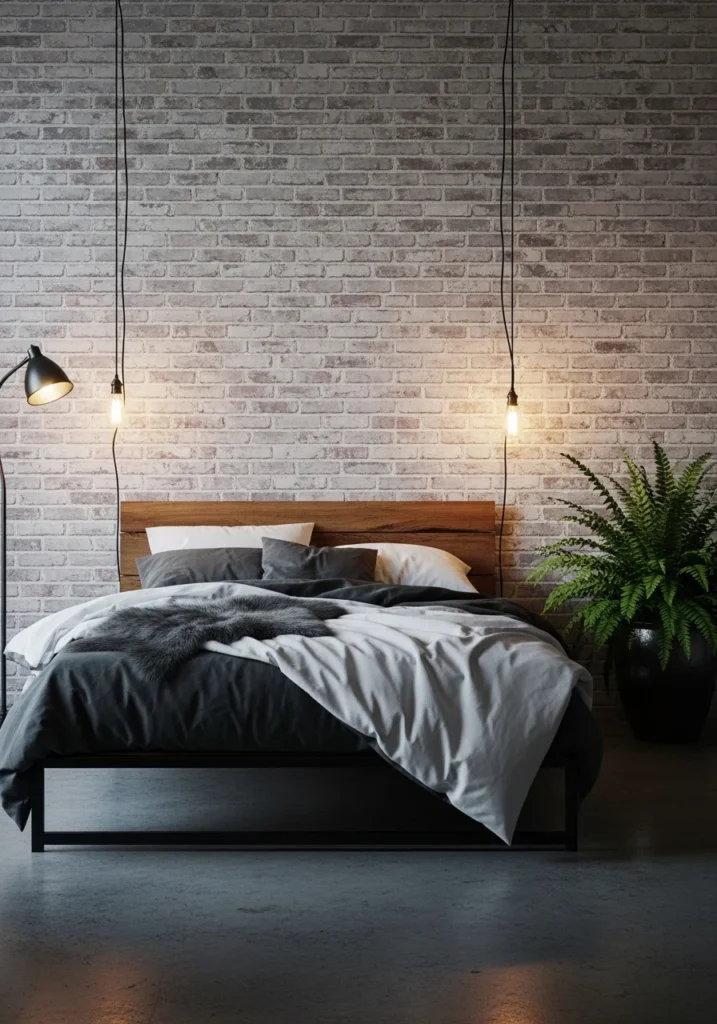
A stone or brick veneer accent wall behind the bed brings raw, industrial energy into the bedroom. It works particularly well in loft-style spaces or rooms with an urban, contemporary aesthetic.
Real stone and brick are heavy and expensive to install, but veneer panels give you the same visual effect at a fraction of the cost and weight.
Many homeowners install these themselves over a weekend with basic tools and adhesive.
The key with stone or brick is balance. This material is visually heavy, so keep the rest of the room relatively light and simple to avoid the space feeling like a cave.
Shop Stone And Brick Veneer Panels On Amazon
5. Fabric and Upholstered Wall Panels
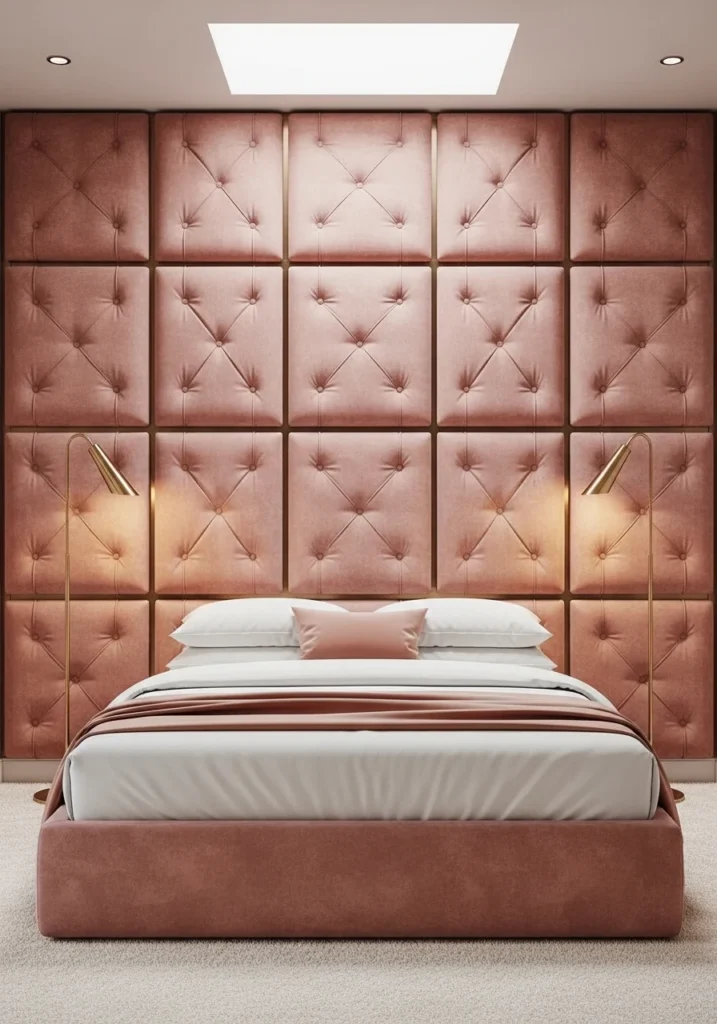
An upholstered accent wall brings softness and luxury to the bedroom in a way that no other material can.
Fabric panels in velvet, linen, boucle, or leather create a cocoon-like quality that makes the bedroom feel genuinely restful.
Why upholstered walls work so well behind the bed:
- The soft material adds acoustic dampening, which reduces echo
- It reinforces the bedroom as a place of comfort and rest
- The texture reads as high-end even when the actual materials are budget-friendly
You can create a DIY version by mounting fabric-wrapped panels directly to the wall, or go the custom route with a full floor-to-ceiling upholstered installation.
Shop Upholstered Wall Panels On Amazon
6. Tile and Textured Wall Treatments
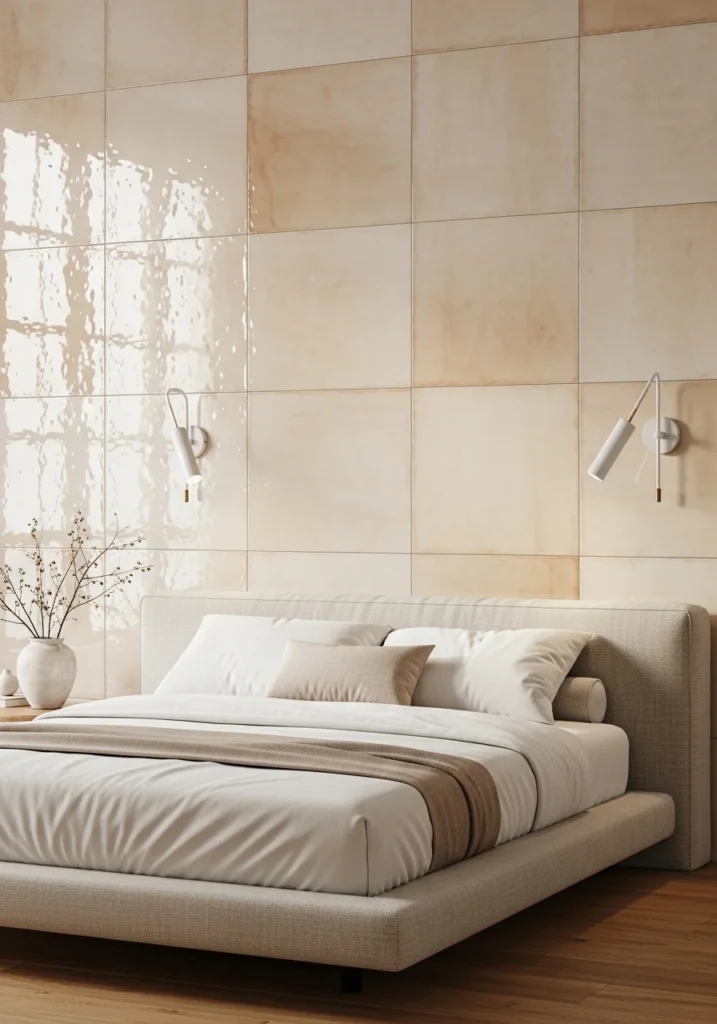
Tile is not just for bathrooms and kitchens anymore. Large-format tiles or zellige-style handmade tiles on the wall behind the bed create a sculptural, gallery-worthy effect.
Limewash paint deserves a special mention here too.
This ancient technique creates a soft, mottled, organic texture that looks like aged plaster and adds enormous character to a bedroom wall. It is also surprisingly easy to apply yourself, which is a bonus.
How to Choose the Right Accent Wall Treatment for Your Bedroom
Now that you have options, how do you actually decide? Here are the factors that matter most.
Match the Material to the Mood
Every material carries a different emotional quality. Ask yourself what feeling you want the room to deliver.
- Calm and restful: Soft paint colors, upholstered panels, linen wallpaper
- Bold and dramatic: Dark paint, large murals, stone veneer
- Warm and organic: Wood paneling, limewash paint, grasscloth wallpaper
- Modern and architectural: Geometric wallpaper, vertical slat walls, large-format tile
Consider the Size of Your Room
Scale matters enormously. A large-scale botanical mural that looks stunning in a spacious master bedroom can feel suffocating in a small guest room.
In tighter spaces, lighter colors, subtle textures, and vertical elements tend to make the room feel taller and more open.
In larger rooms, you have the freedom to go bolder. Deep colors and heavy textures actually benefit from space because they need room to breathe.
Work With Your Existing Furniture
Your headboard is going to sit directly in front of the accent wall, so the two need to work together rather than compete.
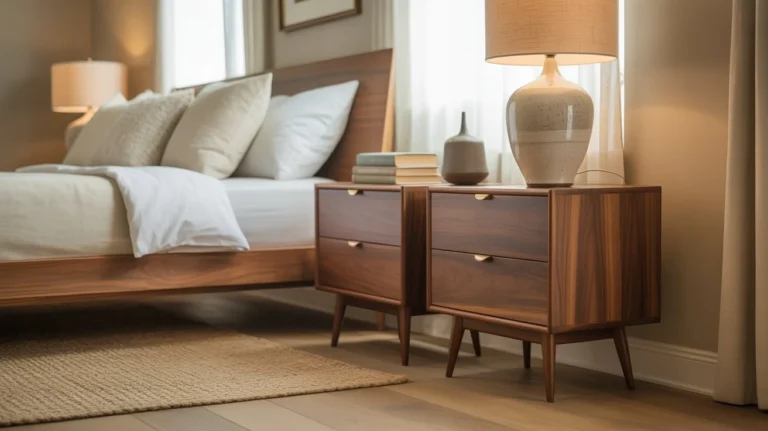
A highly ornate, carved wooden headboard might clash with a busy wallpaper pattern. A simple upholstered headboard, on the other hand, plays nicely with almost any wall treatment.
As a general rule, if your headboard has a strong visual presence, keep the wall relatively simple. If your headboard is minimal, the wall can carry more design weight.
DIY vs. Hiring a Professional
Here is the honest breakdown.
DIY is perfectly reasonable for:
- Painting an accent wall
- Installing peel-and-stick wallpaper
- Hanging shiplap or basic wood paneling with standard tools
- Applying limewash or plaster paint
Hire a professional for:
- Stone or tile installation
- Traditional wallpaper with complex pattern matching
- Full upholstered wall installations
- Anything structural
The cost of a botched DIY tile job will far exceed what a professional would have charged in the first place. Know your limits, and do not let YouTube confidence get the better of you.
Shop DIY Accent Wall Tools And Supplies On Amazon
Styling Tips to Make Your Accent Wall Shine
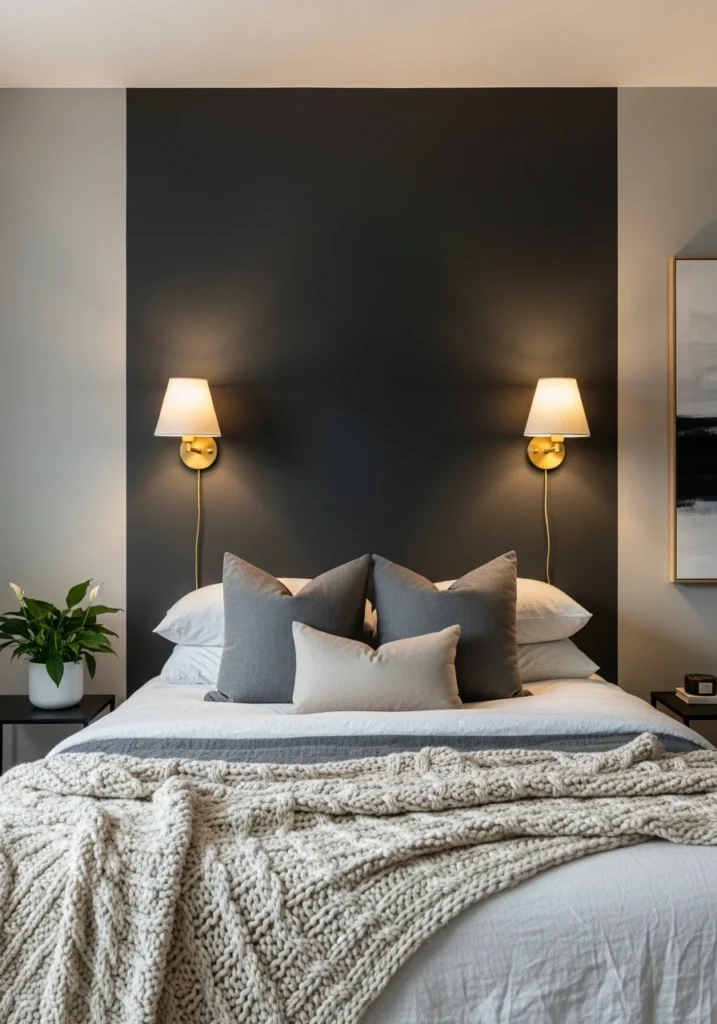
Getting the wall right is only half the job. How you style the space around it determines whether the whole bedroom lands or falls flat.
Frame the wall with intention. Sconces or pendant lights on either side of the bed draw attention to the accent wall and reinforce its role as the room’s focal point.
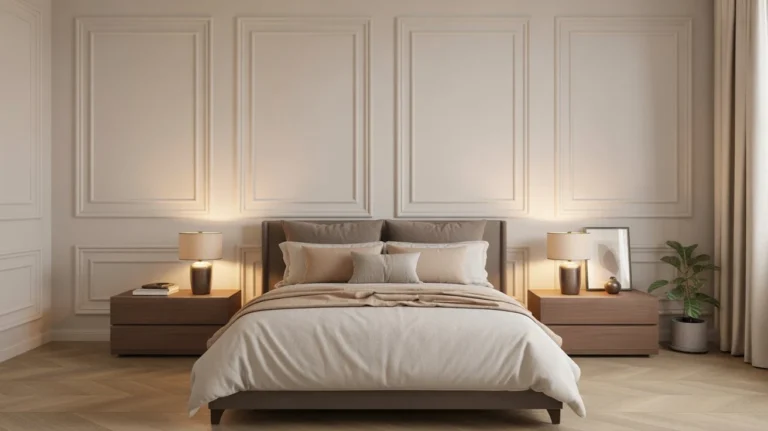
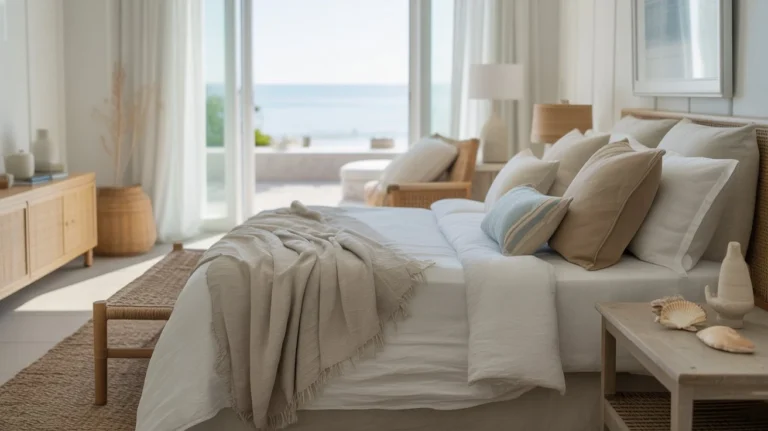
Layer your bedding. A layered bed with textured throws and multiple pillows adds depth in front of the accent wall and prevents the space from looking flat.
Keep the other three walls neutral. The accent wall should stand out. If the other walls compete for attention, the whole effect gets muddled.
White, warm greige, and soft cream are reliable choices for the remaining walls.
Use the wall as a color reference. Pull one color from your accent wall and repeat it in small doses throughout the room via pillows, artwork, and accessories.
This technique creates visual cohesion without making the room look like everything came from the same catalog.
Common Mistakes to Avoid
Even good ideas can go sideways. Here are the pitfalls that most people do not see coming.
- Choosing a color in artificial light: Always view paint swatches and material samples in the actual room, in both natural and artificial light, before committing
- Ignoring wall prep: No amount of beautiful wallpaper or paint will hide a cracked, uneven, or poorly patched wall. Prep is everything
- Going too matchy-matchy: Your accent wall should complement the room, not perfectly match every item in it. A little contrast is what makes it interesting
- Stopping at the wall: The accent wall is the starting point, not the finish line. The lighting, bedding, and accessories all need to support it
Final Thoughts
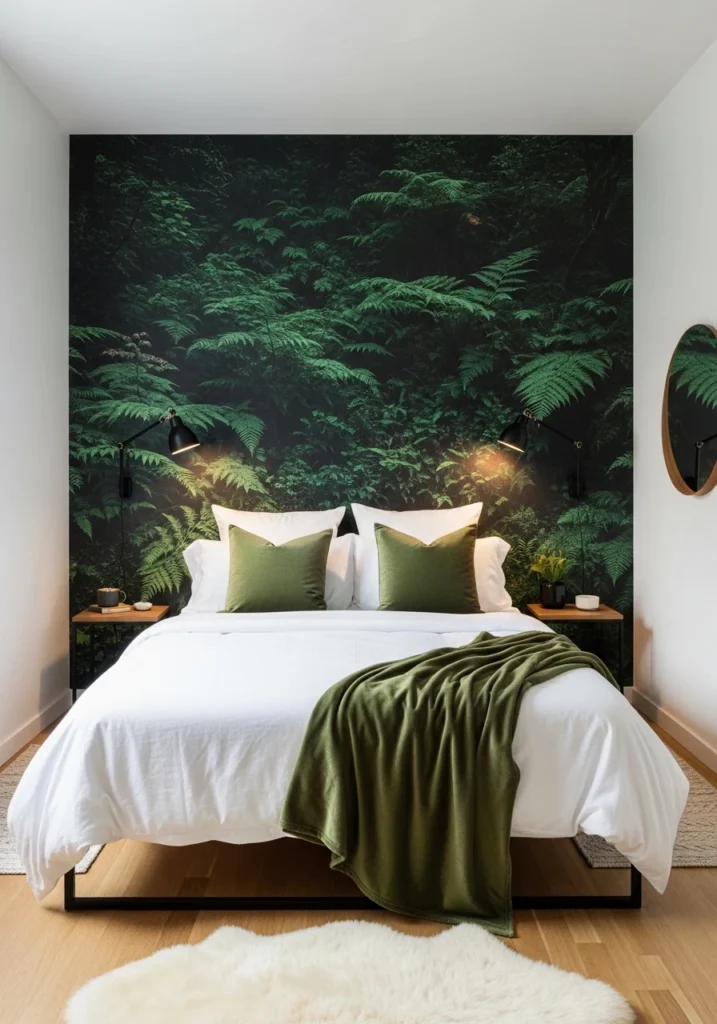
An accent wall behind your bed is one of the most satisfying bedroom upgrades you can make.
It is relatively affordable, completely transformative, and entirely reversible if you change your mind in a few years.
Whether you lean toward a moody painted wall, a textured wood panel installation, or a dramatic floor-to-ceiling mural, the principle is the same: give the most important wall in your bedroom the attention it deserves.
Start by defining the mood you want the room to create. Then choose the material that delivers that feeling best.
Work with what you already have, keep the styling intentional, and do not be afraid to be bold.
A bedroom that actually excites you every time you walk in is absolutely within reach, and it starts with that one wall right behind your bed.
What Is the Best Color for an Accent Wall Behind a Bed?
Deep, rich colors are ideal for a bedroom accent wall behind the bed. Popular options are forest green, navy blue, charcoal gray, and terracotta.
Choose shades that are two to three tones darker than the room’s main color. This creates a strong contrast.
Always test paint swatches in the room, under both natural and artificial light, before making a final choice.
How Wide Should an Accent Wall Behind the Bed Be?
The accent wall should cover the full width behind the bed, where the headboard sits. In most bedrooms, this means the wall stretches from corner to corner.
Avoid stopping the accent wall halfway, as partial walls can look unfinished and make the room feel unbalanced.
Should the Accent Wall Behind the Bed Be Lighter or Darker Than the Other Walls?
Darker colors usually work better. A dark accent wall behind the bed adds depth and makes the bed the focal point. It also gives the room a layered, intentional feel.
Lighter accent walls may suit very small or low-light rooms, where dark colors can feel too much. However, in most standard bedrooms, a deeper tone creates a stronger visual impact.
What Type of Wallpaper Works Best for a Bedroom Accent Wall?
Large botanical prints, abstract patterns, textured grasscloth, and full-wall murals make great accent wall wallpapers for bedrooms. Peel-and-stick options are ideal for renters or those seeking flexibility.
In smaller bedrooms, choose smaller or delicate patterns to keep the space feeling open. In larger rooms, bold, oversized prints create a dramatic, designer look.
Can You Create an Accent Wall Behind the Bed on a Tight Budget?
A bold paint color is the cheapest option and gives great results for little cost. Peel-and-stick wallpaper is another budget-friendly choice that doesn’t need professional help.
DIY shiplap with basic lumber and a nail gun is also a smart way to add texture and warmth. The key is to pick one treatment and do it well, instead of layering multiple elements on a tight budget.