Stop Your Metal Bed Frame From Squeaking Tonight
There you are, finally settling in after a long day. Then it starts: that sharp, rhythmic squeak every time you move.
A squeaky metal bed frame seems minor, until it’s 2 a.m. and you’re debating sleeping on the floor. Trust me, I’ve been there, and it’s not a good look for anyone.
The good news? Fixing a squeaky metal bed frame is usually a same-night job. You don’t need a giant toolkit or an engineering degree.
Most fixes take under an hour, cost very little, and let you return to bed in peace. Let’s dive into how to make that happen.
Why Metal Bed Frames Squeak in the First Place
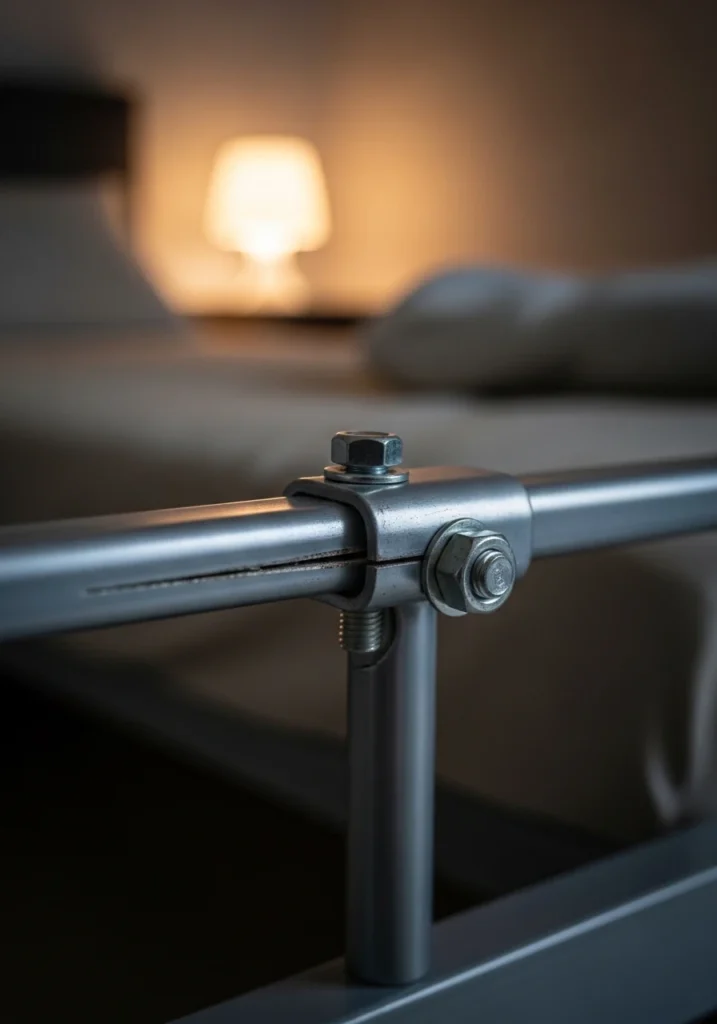
Before you start throwing WD-40 at everything and hoping for the best, it helps to understand what actually causes the noise.
Metal bed frames squeak for a handful of specific reasons, and identifying the right one saves you a lot of time.
Metal is naturally rigid, and when two rigid surfaces rub against each other under pressure, friction creates noise.
That squeak you hear is essentially your bed frame crying out about metal-on-metal contact somewhere in its structure. The more you move, the louder it protests.
The Main Culprits Behind the Squeak
Here are the most common reasons your metal bed frame squeaks:
- Loose bolts and joints where the frame connects at corners or side rails
- Metal-on-metal friction at connection points where no cushioning exists
- Worn or missing washers that used to buffer contact between bolt heads and the frame
- The frame rubbing against the floor if the legs lack rubber feet or caps
- Slats shifting on the frame if your bed uses wooden slats resting on metal supports
- The mattress or box spring rubbing the frame where it sits along the rails
Nine times out of ten, the squeak lives in one of these spots. The tricky part is figuring out which one, and that requires a quick investigation before anything else.
How to Find the Source of the Squeak
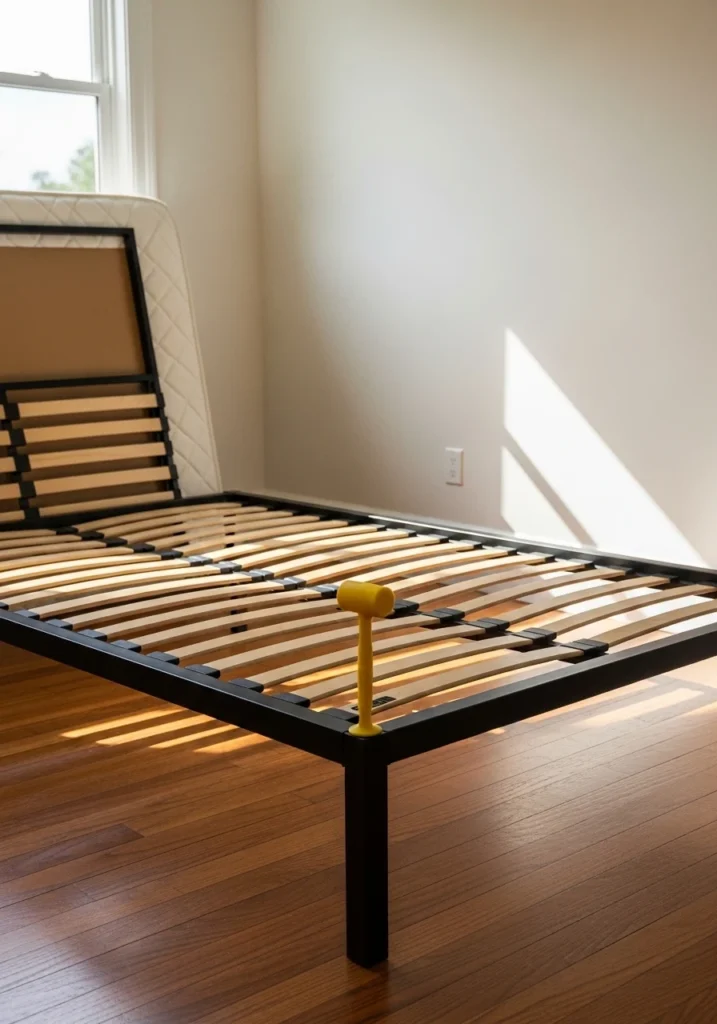
Randomly tightening bolts around your frame without knowing where the noise comes from is a great way to waste thirty minutes and still hear the squeak at midnight.
Locating the source first makes the whole process much more efficient.
Strip the bed down to the frame itself. Remove the mattress, box spring or foundation, and any slats. Then push and press on different sections of the frame while listening carefully.
The squeak will reveal itself when you apply pressure to the right spot. This step alone narrows down your repair work dramatically.
A Simple Isolation Method
Work through the frame section by section:
- Press down on each corner joint and listen for noise.
- Grip the side rails and try to flex them slightly while listening.
- Check where the center support beam connects to the side rails.
- Lift and replace the slats one at a time if the noise appeared when the slats were in place.
- Put the mattress back on last and press down on different zones to check if the mattress-to-frame contact produces noise.
This process takes about ten minutes and almost always points you directly at the problem. Once you know where the squeak lives, fixing it becomes straightforward.
Fix Loose Bolts and Joints First
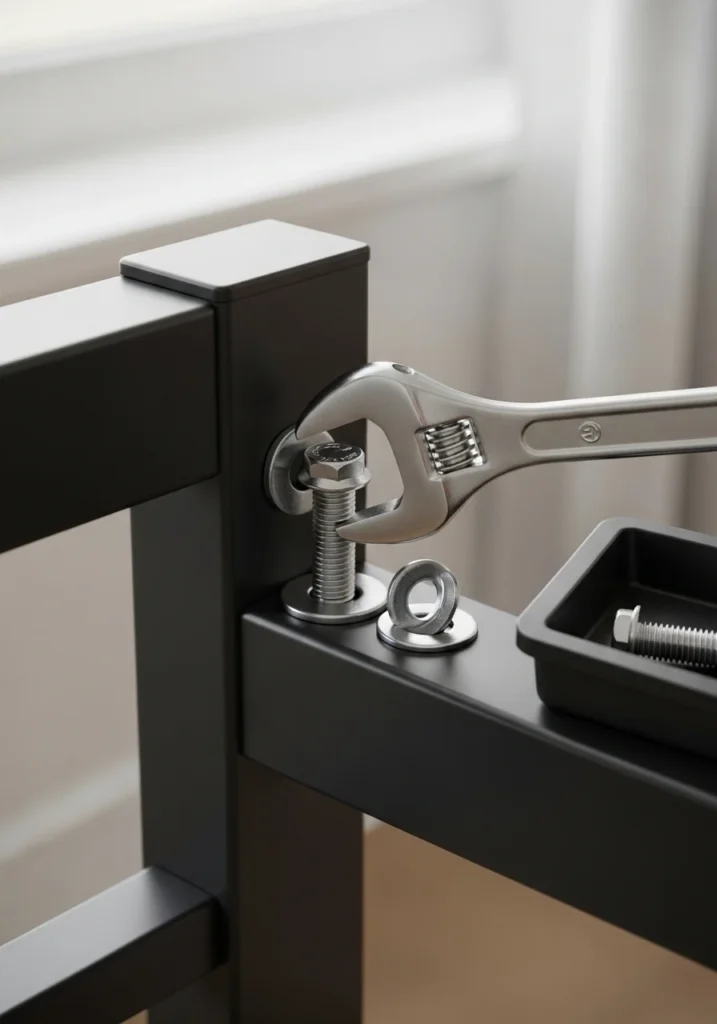
Loose bolts are the single most common cause of a squeaky metal bed frame, and they are also the easiest fix.
Over time, the constant movement of sleeping loosens hardware that was once tight. This is not a flaw in your bed frame. It is just physics doing its thing.
Grab a wrench or the appropriate hex key and tighten every bolt on the frame. Go around the entire structure systematically rather than just targeting the spot you think is making noise.
Bolts in other areas may be looser than you realize, and a thorough tighten-up prevents future squeaks from developing nearby.
Add Washers for Extra Stability
If your bolts keep loosening over time, the issue may be that metal is contacting metal directly at the bolt head without any buffer.
Adding a flat washer and a lock washer under each bolt head creates a cushioned, more stable connection that resists loosening under regular movement.
You can pick up an assorted washer pack at any hardware store for a couple of dollars. This small addition makes a noticeable difference in how long your tightened bolts stay tight.
If you find a bolt that simply will not hold tension, replace it entirely rather than continuing to re-tighten it.
Lubricate Metal-on-Metal Contact Points
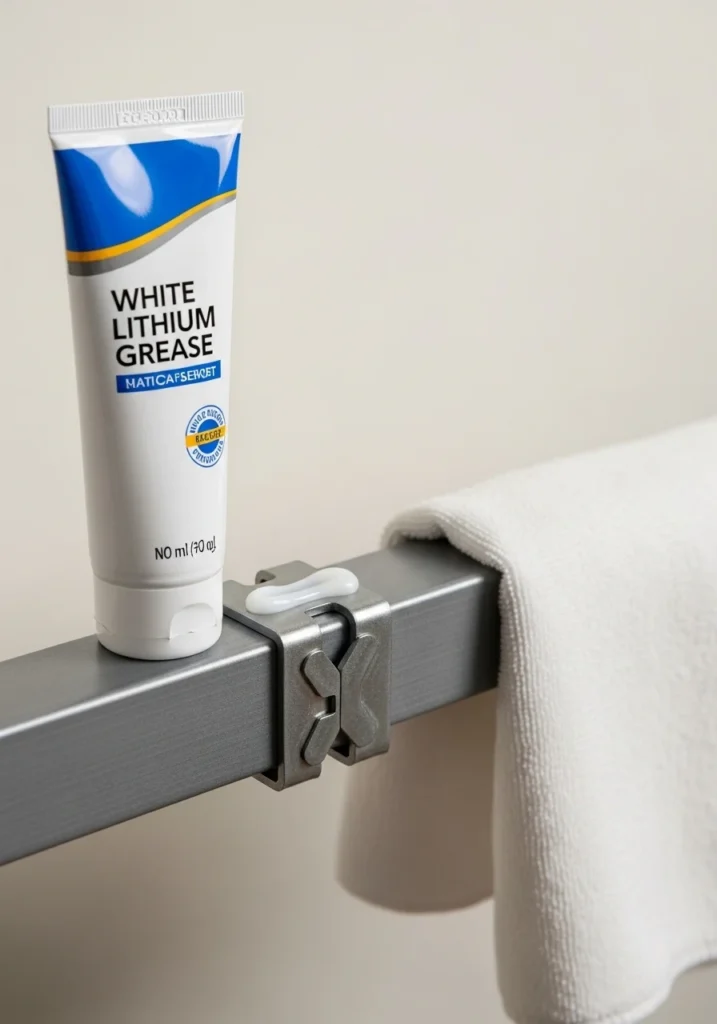
Once you have ruled out loose hardware, friction between metal surfaces becomes the next most likely suspect.
This is especially common at joints where two pieces of the frame slot together or overlap. The metal rubs with every movement, and the result is that familiar, aggravating squeak.
Lubricating these contact points eliminates the friction and silences the noise almost immediately.
The good news is that you probably already have something at home that works perfectly well for this job.
Best Lubricants for a Squeaky Metal Bed Frame
Here is an honest comparison of your options:
- WD-40: Works well as a short-term fix but tends to dry out and attract dust over time. You will likely need to reapply within a few months.
- White lithium grease: A much longer-lasting option that stays in place and handles metal-on-metal contact beautifully. This is my personal preference for bed frame joints.
- Beeswax or a plain wax candle: Surprisingly effective and completely clean. Rub it along contact points and it reduces friction without any mess or odor.
- Petroleum jelly (Vaseline): Works well for smaller contact areas and is something most households already have in a bathroom cabinet.
- Cooking spray or olive oil: In a genuine pinch, these work. They are not a long-term solution, but they will get you through the night if nothing else is available.
Apply your chosen lubricant directly to every metal joint and connection point you identified during your inspection. Reassemble the frame, move it around, and listen for any remaining noise.
Shop Lubricants for Metal Bed Frames on Amazon
Address Frame-to-Floor Friction

Sometimes the squeak does not come from the frame itself at all. It comes from the legs of the frame dragging or rocking against the floor with every movement.
Hard floors like tile and hardwood amplify this noise considerably, and it can sound exactly like a joint squeak when you are lying in the dark trying to diagnose it.
Check the feet of each leg and look for worn, missing, or absent rubber caps.
Most metal bed frames come with small rubber or felt feet on the legs, but these wear down or fall off over time. Replacing them is a five-minute job and costs almost nothing.
Quick Fixes for Leg-to-Floor Contact
If you do not have replacement rubber feet on hand right now, these work as temporary solutions:
- Felt furniture pads cut to size and stuck to the bottom of each leg
- A folded piece of cloth or a tennis ball cut and fitted over the leg end as a temporary buffer
- Rubber shelf liner cut into small squares and placed under each leg
The permanent fix is proper rubber leg caps or glides, which you can find at any hardware store.
Pick up a set that fits your leg diameter and press them on. Your floor and your sleep schedule will both thank you.
Browse Bed Frame Leg Caps and Floor Protectors on Amazon
Stop Slats From Shifting
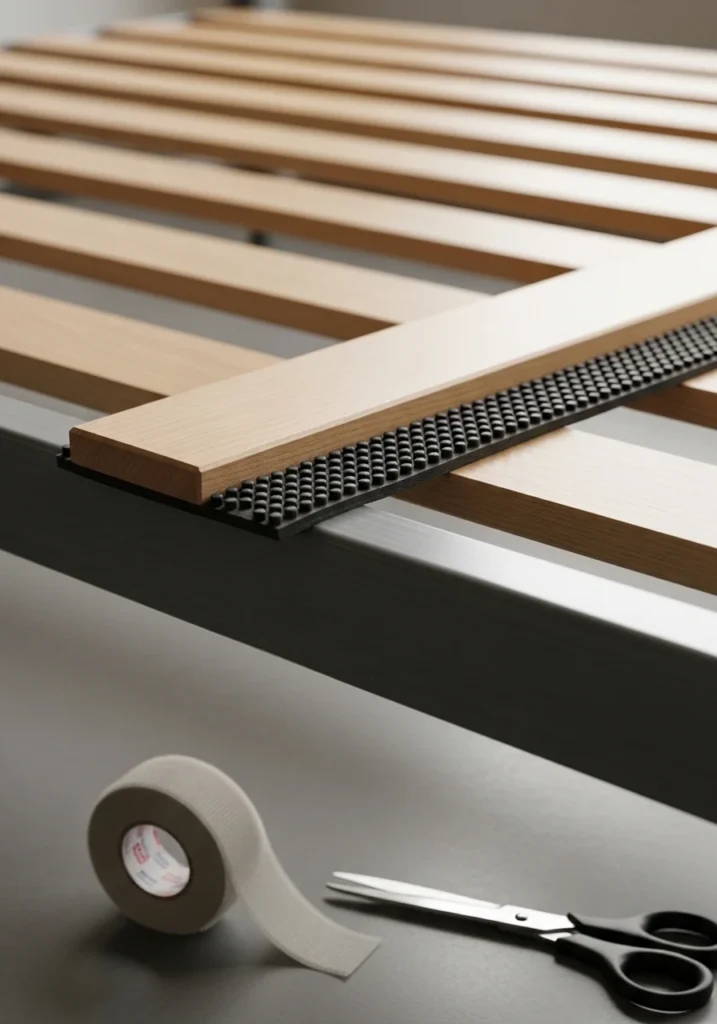
If your bed uses wooden slats that rest across metal support rails, those slats shifting position under your weight can produce a surprising amount of noise.
The slat moves, the wood contacts the metal rail, and you get a creak or squeak that sounds like it is coming from the frame itself.
The solution is to stop the slats from moving. There are a few reliable ways to do this depending on how your frame is built.
Methods to Secure Shifting Slats
- Rubber non-slip matting: Cut strips of rubber shelf liner and place them under each slat where it rests on the metal rail. The rubber grips both surfaces and prevents sliding.
- Hook-and-loop tape (Velcro): Stick one side to the metal rail and the other to the underside of each slat. This keeps everything locked in place without permanent modification.
- Foam pipe insulation: Cut pieces and place them along the metal rails before laying the slats across. This cushions the contact point and stops noise from any movement that does occur.
- Screw the slats down: If your frame has pre-drilled holes, you can screw each slat directly to the rail. This is the most permanent option and the one that requires the least maintenance going forward.
Find Slat Grip and Non-Slip Solutions on Amazon
Fix Mattress-to-Frame Contact Noise
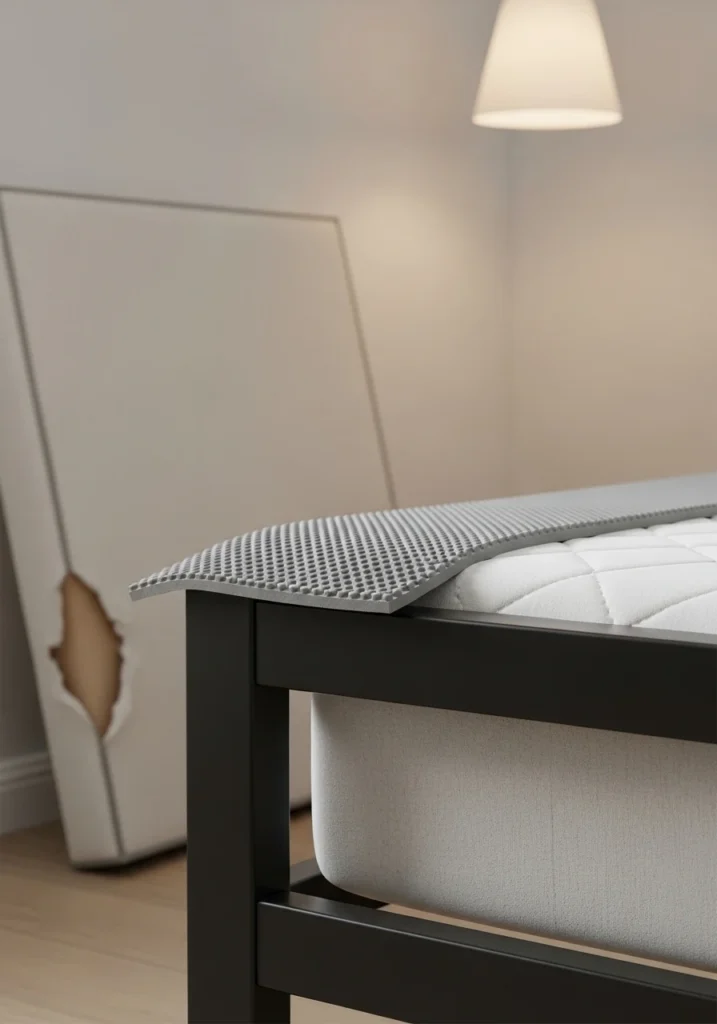
Your mattress or box spring can also generate friction noise where it contacts the metal rails of the frame.
Box springs especially tend to develop squeaks at the corners where the spring unit meets the frame rail.
This is a surprisingly sneaky source of noise because it feels like it must be coming from the frame itself.
Lay a thin rubber mat or non-slip rug pad across the metal rails before placing your mattress or box spring back on.
This single layer of material eliminates metal-to-surface friction entirely and often silences a squeak you have been chasing for weeks.
If you use a box spring, inspect the fabric underneath it for any tears where the internal spring mechanism might be contacting the frame.
A torn cover allows metal springs to rub directly against the bed frame rail, and that contact creates significant noise.
When to Consider Replacing the Frame
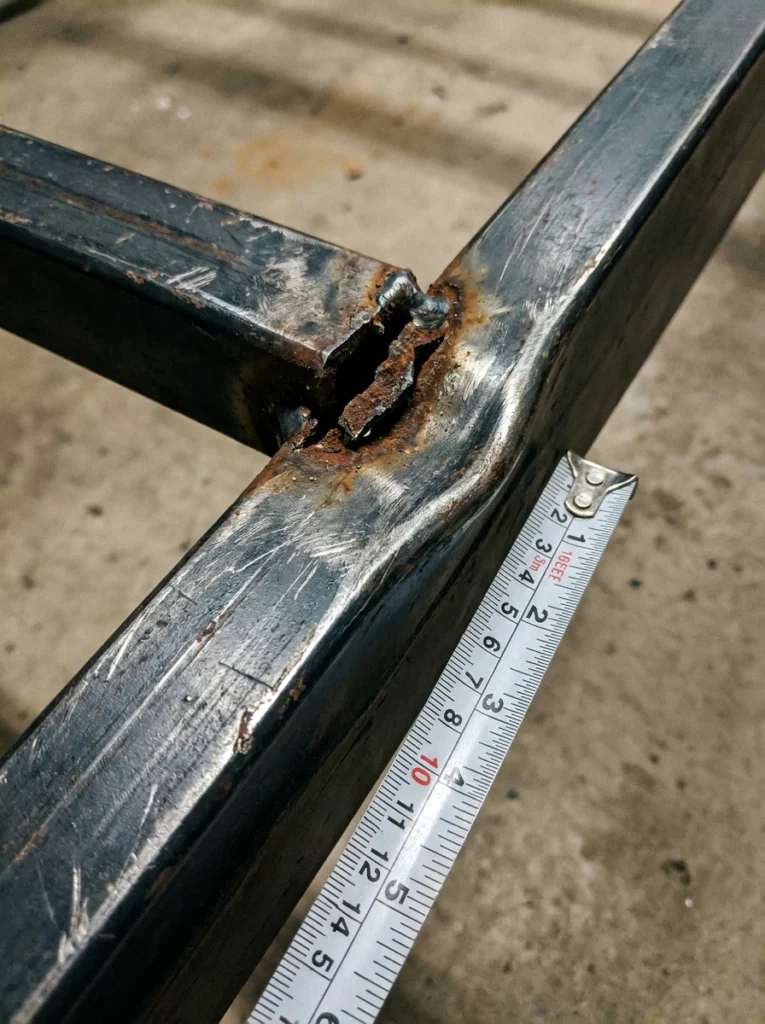
Most squeaks respond well to the fixes above. But occasionally, a metal bed frame reaches a point where tightening bolts and lubricating joints simply cannot save it.
If you notice bent or warped frame sections, cracked welds, or joints that will not hold tension no matter how many times you tighten them, the frame itself may be structurally compromised.
A frame that flexes under your weight due to a bent rail creates constant metal movement that no lubricant can fully address.
At that point, replacement is genuinely more cost-effective than continuing to fight the problem. Modern metal bed frames offer excellent durability and value, and starting fresh often costs less than you expect.
Shop Metal Bed Frames on Amazon
A Prevention Plan So You Are Not Back Here in Six Months
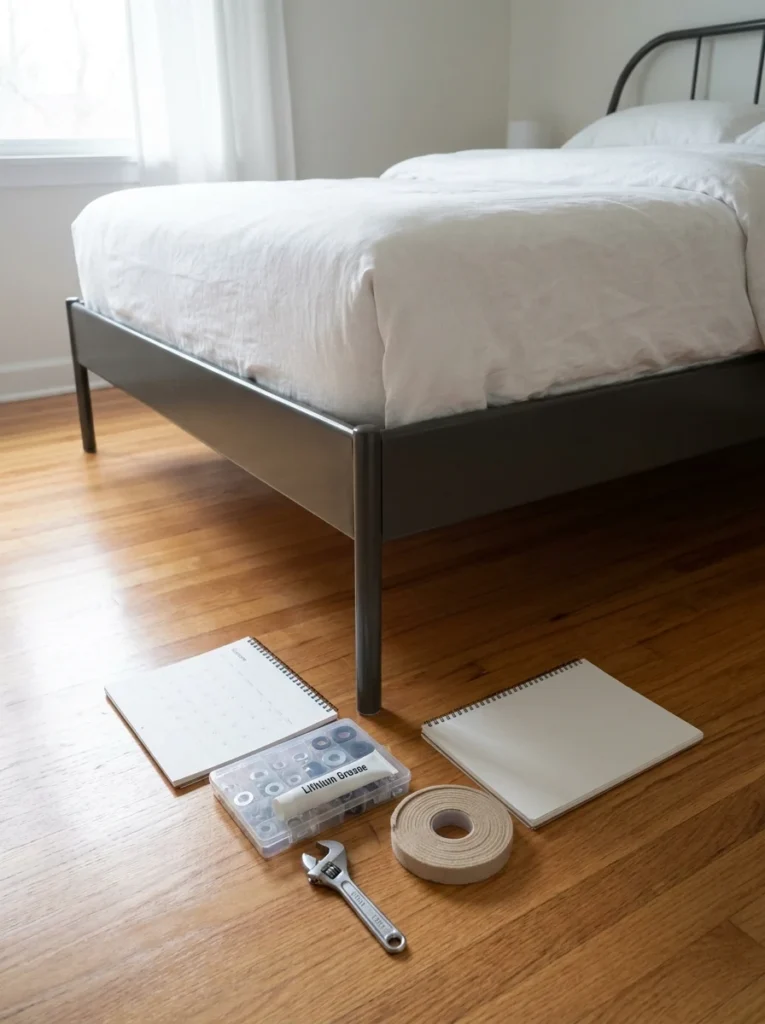
Fixing the squeak tonight is great. Keeping it from coming back is better. A little preventive maintenance goes a long way with metal bed frames.
Here is a simple routine to keep things quiet:
- Tighten all bolts every six months as part of a regular check-up.
- Reapply lubricant to joints annually or whenever you notice the first hint of returning noise.
- Check rubber leg caps every few months and replace them when they show wear.
- Inspect slat positions whenever you change your bedding and reposition any that have shifted.
This routine takes less than fifteen minutes twice a year and prevents the 2 a.m. squeak situation from ever becoming your problem again.
Get Everything You Need for Bed Frame Maintenance on Amazon
Quiet Nights Are Closer Than You Think

A squeaky metal bed frame is annoying, but it is almost never a serious problem.
Loose bolts, metal-on-metal friction, worn leg caps, shifting slats, and mattress contact cover the vast majority of cases, and every single one of them has a straightforward fix you can complete tonight.
Start by finding the source, tighten everything down, lubricate the contact points, and work through the checklist above systematically.
Chances are you will solve the problem before you even make it through all the steps.
And the next time you climb into bed, the only sound you will hear is the glorious, peaceful nothing of a frame that finally knows how to keep quiet.
Now go get some sleep. You have earned it.
How Do I Find Out Which Part of My Metal Bed Frame Is Squeaking?
Strip your bed down to the frame. Remove the mattress, box spring, and slats. Then, press and push on different parts of the frame. Listen closely for where the noise comes from.
Start at the corner joints and move along the side rails. This method helps you find the source faster than guessing.
What Is the Best Lubricant to Use on a Squeaky Metal Bed Frame?
White lithium grease is the most durable choice. It stays in place, handles heavy metal-on-metal contact, and doesn’t dry out like WD-40.
Beeswax and wax candles work well too and leave no mess. For a midnight emergency fix, use petroleum jelly or cooking spray. They can reduce friction enough to last the night.
Why Does My Metal Bed Frame Keep Squeaking Even After I Tighten the Bolts?
If the squeak comes back soon after tightening, the bolts probably need washers. Without them, metal contact points can loosen again with movement.
Adding a flat washer and a lock washer under each bolt head will create a steadier connection. The squeak might also come from something else, like the slats, leg caps, or the mattress rubbing against the rails.
Can a Squeaky Metal Bed Frame Damage My Mattress Over Time?
A squeaky frame won’t directly harm your mattress, but its cause might. Sharp metal rails or rough spots can wear down the mattress fabric or box spring cover.
To protect the mattress, place a rubber non-slip mat or a thin rug pad along the rails. This helps reduce friction noise and protects the surface.
How Often Should I Perform Maintenance on a Metal Bed Frame to Prevent Squeaking?
Tightening all bolts every six months keeps the frame strong and prevents noise. Reapplying lubricant to joints once a year handles friction.
Checking rubber leg caps every few months and replacing them when worn completes a simple maintenance routine. This routine takes under fifteen minutes twice a year and keeps the frame quiet long-term.