How to Choose the Perfect Bed Frame Height
The Height of Your Bed Matters More Than You Think

You spend about a third of your life in bed. Yet, many people choose a bed frame based on how it looks in a photo.
Sound familiar? Bed frame height is a key factor that impacts sleep quality, your morning routine, and back health. Still, it often gets overlooked when shopping for beds.
Choosing the right bed frame height isn’t hard.
You just need to consider a few things: your height, mattress thickness, bedroom size, and how stylish you want your room to be. Let’s explore this together.
What Does “Bed Frame Height” Actually Mean?
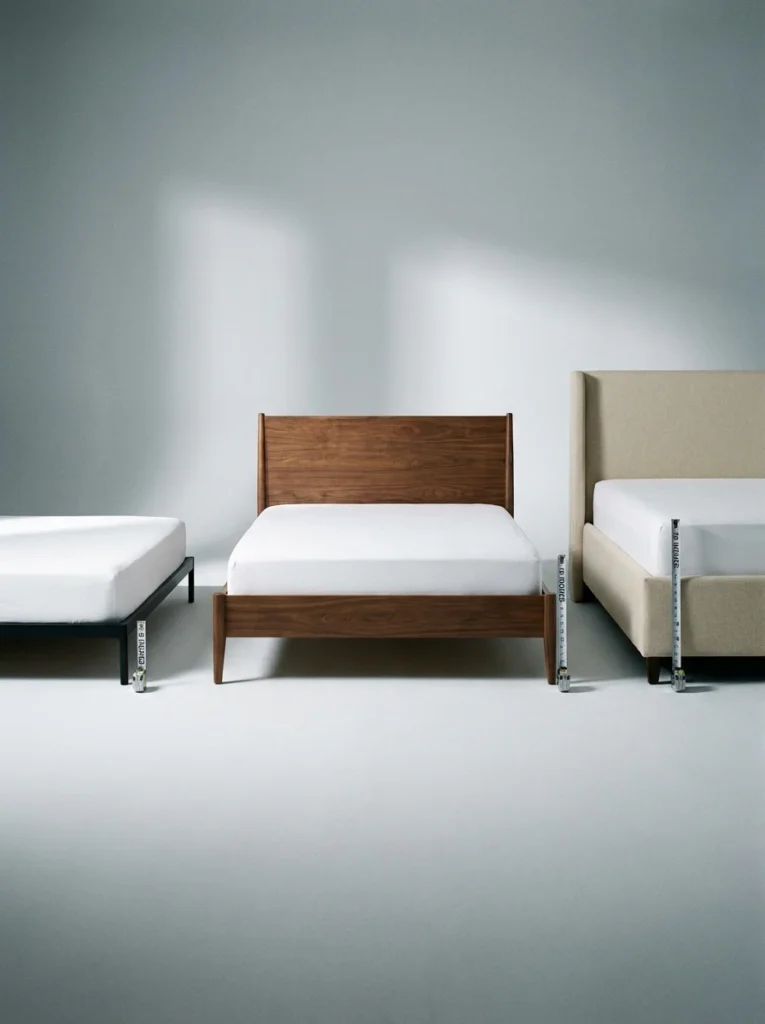
Before anything else, let’s get on the same page. Bed frame height refers to the distance from the floor to the top of the bed frame rails, not including the mattress.
However, when most people talk about bed height, they mean the total height from the floor to the top of the mattress, which is the surface you actually sleep on.
The Three Common Height Categories
Bed frames generally fall into three categories:
- Low profile (under 12 inches): These sit close to the ground and give a modern, minimalist feel.
- Standard height (18 to 24 inches): The most common range, designed to work well for most adults.
- Tall or high-profile (25 inches and above): These grand, elevated frames make a bedroom feel luxurious, but they come with their own trade-offs.
Knowing which category suits your lifestyle helps you narrow down your options fast.
Why Bed Frame Height Actually Affects Your Daily Life

Here is where it gets interesting. The height of your bed is not just a style decision. It touches on comfort, accessibility, and even the amount of storage space you can squeeze out of your bedroom.
Getting In and Out of Bed
Think about your first five seconds every morning. You swing your legs over the side, and your feet either land flat on the floor or dangle awkwardly in mid-air.
The ideal bed height lets your feet rest flat on the floor when you sit on the edge, with your knees bent at roughly a 90-degree angle.
If your bed sits too high, you practically have to hop down, which is nobody’s idea of a graceful morning.
If it sits too low, getting up feels like a workout, which might be great for your quads but terrible for your mood before coffee.
Back and Joint Health
Your joints will thank you for getting this right.
People with knee pain, hip issues, or lower back problems generally do better with a medium to high bed frame, because it reduces the strain of bending deeply to sit or stand.
A low platform bed might look sleek, but if your knees protest every time you get up, that style comes at a cost.
On the flip side, very tall beds can put stress on your hips and lower back because of the angle required to climb in. Balance is everything here.
How to Find Your Personal Ideal Bed Height
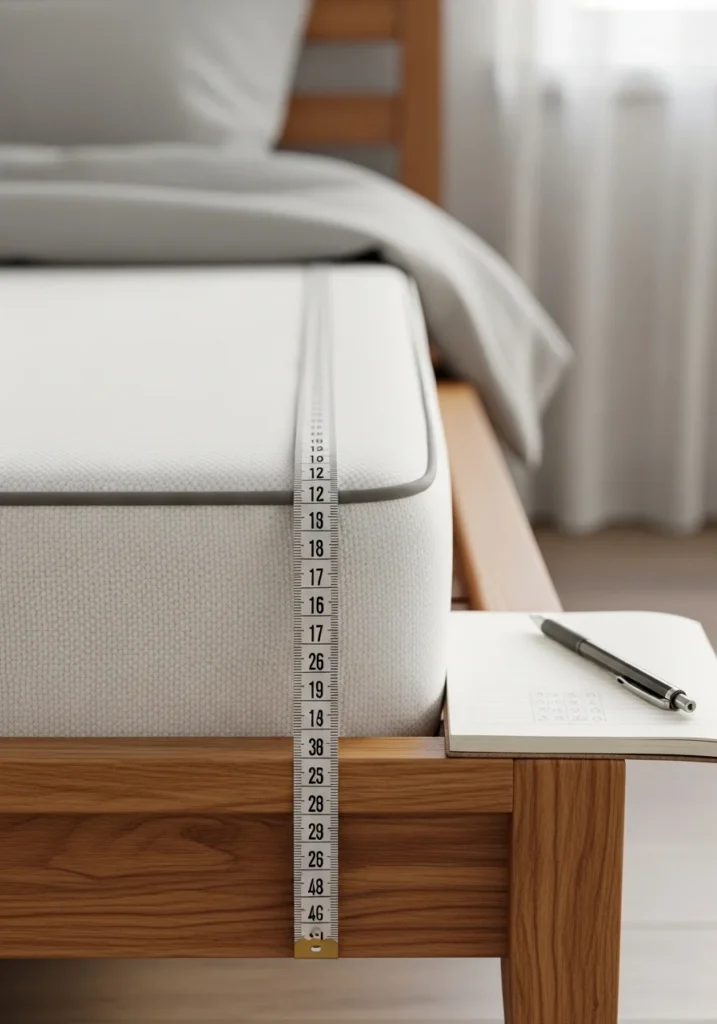
There is a surprisingly simple way to figure out what works for your body. Sit on the edge of a chair or surface that feels comfortable for sitting and standing.
Measure the height from the floor to the back of your knees. That measurement is your sweet spot.
Factor in Your Mattress Thickness
Here is the part most people miss. Your bed frame height and your mattress thickness add together to create your total sleeping height. A typical mattress ranges from:
- 8 to 10 inches: Slim or budget mattresses
- 10 to 12 inches: Standard mattresses
- 12 to 14 inches: Thick, plush, or hybrid mattresses
- 14 inches and above: Ultra-plush or luxury mattresses
If you have a 14-inch mattress and a 12-inch bed frame, your total sleeping surface sits at 26 inches off the ground.
That might feel like you need a stepladder, or it might be perfect, depending on your height. Do the math before you buy.
Your Height Plays a Role
Your physical height is a major factor in this decision. Here is a quick general guide:
- Under 5’3″: A lower bed frame (10 to 16 inches) tends to work better so you can sit comfortably on the edge.
- 5’3″ to 5’10”: A standard height frame (18 to 24 inches total bed height) usually hits the sweet spot.
- Over 5’10”: A taller frame or a combination of a standard frame with a thick mattress often feels more natural.
These are starting points, not rules carved in stone. Your own comfort always wins.
Bed Frame Height and Bedroom Aesthetics

Okay, let us talk about the elephant in the room, which is that looks matter. The height of your bed dramatically changes the feel of your entire bedroom.
Low Beds Create a Modern, Airy Look
Low-profile bed frames give a room a sleek, contemporary, Japanese-inspired aesthetic. They work beautifully in rooms with high ceilings because they emphasize space and openness.
However, they can make a small room feel even smaller if the design is not balanced well.
High Beds Add Drama and Storage
Tall bed frames bring a sense of grandeur and traditional elegance to a room. They also offer a significant bonus: storage space underneath.
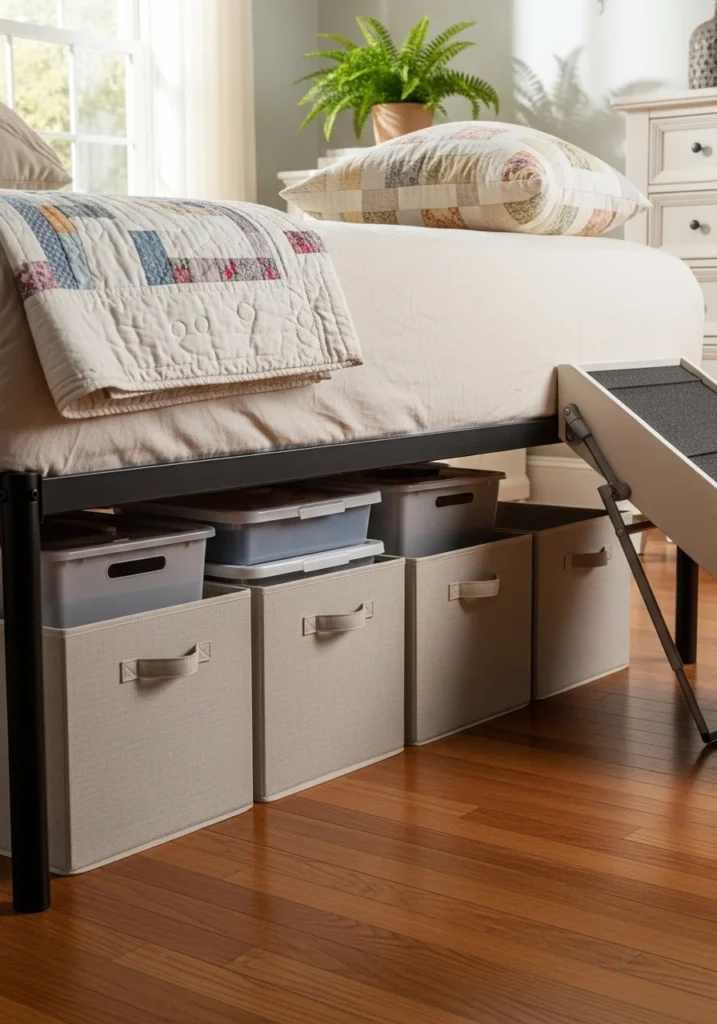
If your bedroom is short on closet space, a tall bed frame that accommodates storage bins or drawers underneath can be a game-changer. Who knew your bed could moonlight as a storage unit?
Matching Frame Height to Room Proportions
A general rule that interior designers swear by is this: the taller the ceiling, the higher the bed can be without overwhelming the space.
In a room with 8-foot ceilings, a very tall bed can feel cramped. In a room with 10-foot ceilings, that same bed looks intentional and elegant.
Practical Considerations You Should Not Overlook
Beyond comfort and aesthetics, a few practical factors deserve serious attention when you choose a bed frame height.
Storage Underneath the Bed
Under-bed storage is one of the most underrated features in bedroom furniture. If you plan to use the space beneath your bed for storage, you need at least 12 to 15 inches of clearance.
Most standard and tall frames provide this. Low-profile and platform frames typically do not, so keep that in mind if storage is a priority.
Explore Under-Bed Storage Options On Amazon
Partner and Pet Preferences
Sharing a bed means sharing decisions. If your partner is significantly taller or shorter than you, consider whose comfort takes priority, or find a middle ground that works for both.
And if your pets sleep with you, a very high bed might mean installing a little ramp for your dog, which is adorable but also a sign that the bed might be too tall.
Kids and Elderly Family Members
For children or elderly individuals, a lower to mid-height bed is almost always the safer choice.
Falls from high beds can cause serious injuries, and the ease of getting in and out independently matters a great deal for quality of life. Safety should always come before style in these cases.
The Role of Box Springs and Bed Risers
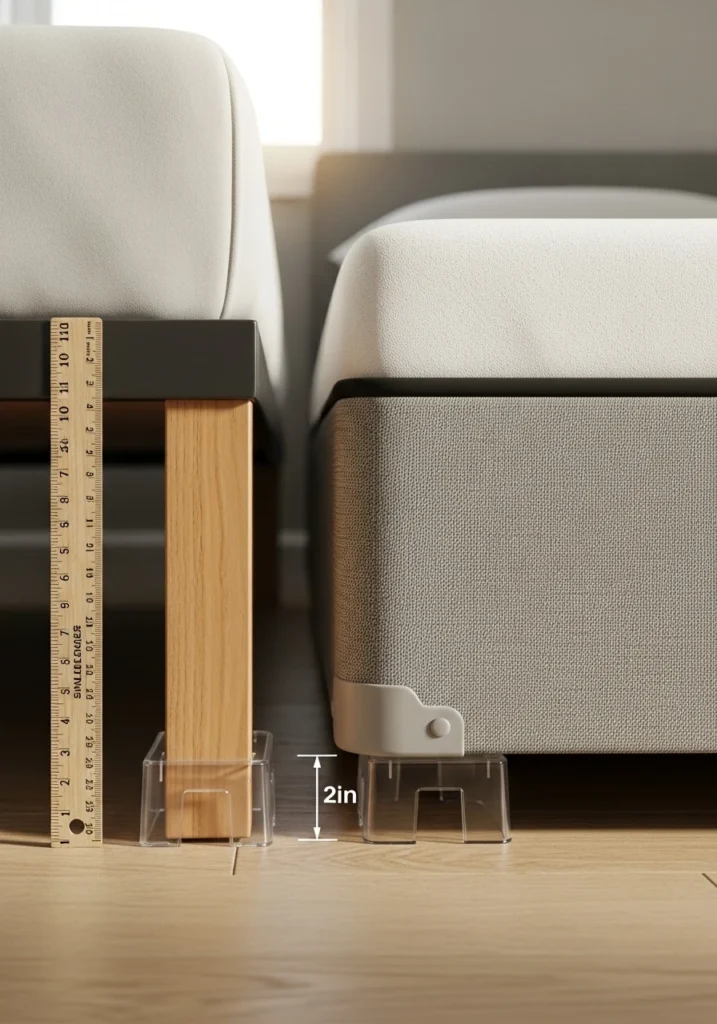
Sometimes the perfect bed frame just needs a little adjustment to hit the right height. That is where box springs and bed risers come in.
Box springs add roughly 5 to 9 inches to your sleeping height and provide extra support for certain mattress types.
They work well if your bed feels too low and your mattress needs the added support layer.
Bed risers are inexpensive plastic or steel supports that slip under your bed legs and lift the entire frame by a few inches.
They are a surprisingly effective hack if you want more under-bed storage or simply find your current bed height a bit too low.
Making the Final Call

So how do you pull all of this together? Here is a straightforward decision process to guide you:
- Measure your knee height from the floor while sitting to find your comfort baseline.
- Calculate your total bed height by adding your frame height and mattress thickness together.
- Consider your room’s ceiling height to balance the aesthetic.
- Think about storage needs and how much clearance you actually need under the bed.
- Factor in any health, mobility, or safety concerns for everyone who will use the bed regularly.
When those five points line up, you have your answer.
Wrapping It All Up

Choosing the perfect bed frame height is not complicated, but it does require you to think beyond looks. Your comfort, your body, your bedroom size, and your daily habits all play into this decision.
The good news is that once you nail it, you stop noticing it entirely, because everything just feels right every time you sit down, lie back, and wake up.
Get the height wrong, and your bed becomes a minor daily annoyance you can never quite explain.
Get it right, and your bedroom transforms into the restful retreat it was always supposed to be. That is a worthwhile five minutes of measuring and planning if you ask me.
What Is the Standard Bed Frame Height?
The standard bed frame height is between 18 and 24 inches from the floor to the top of the frame rails, not counting the mattress.
When you add a typical mattress thickness of 10 to 12 inches, the total sleeping surface is about 25 to 36 inches off the ground. This range suits most average-height adults.
It lets your feet rest flat on the floor while sitting on the bed’s edge with your knees bent at a natural 90-degree angle. However, “standard” is just a guideline.
Your height and mobility needs should guide your final choice.
How Do I Know If My Bed Frame Is Too High or Too Low?
The clearest sign your bed frame is too high is when your feet dangle while sitting on the edge.
This makes you hop down instead of stepping off naturally. If your bed is too low, getting up can feel like a major effort, especially if your knees or hips are stiff in the morning.
To test the height, sit on the edge with your feet flat on the floor.
If your knees bend at about a right angle and your thighs are parallel to the ground, the height is good for you. Any big change from this position needs attention.
Does Bed Frame Height Affect Sleep Quality?
Bed frame height doesn’t directly impact sleep quality like mattress firmness or room temperature. However, it does affect comfort and your sleep routine.
A bed that’s hard to get into or out of can create strain. This strain may disrupt your morning and evening rituals, making you feel less rested.
For those with chronic back pain, joint issues, or mobility challenges, the wrong bed height can lead to real discomfort and affect sleep.
Finding the right height smooths out the sleep experience. This small change can significantly improve your daily wellbeing.
What Is the Best Bed Frame Height for People With Back Pain?
For most people with lower back pain, a medium to high bed frame works best. A total sleeping height of 24 to 27 inches is ideal.
This height reduces the need to bend deeply when sitting or standing. As a result, it puts less stress on the lumbar spine and nearby muscles.
Very low platform beds can force the body into a deep squat when getting up. Many back pain sufferers find this motion aggravating over time.
It’s always a good idea to consult a physiotherapist or doctor for personalized advice.
Generally, a bed height that allows you to sit and stand with little bending at the waist is the safest and most comfortable choice for back health.
Can I Adjust My Bed Frame Height After Purchase?
Yes, you can adjust your bed frame height after purchase. Here are a few practical options:
- Bed risers are a budget-friendly choice. They lift your frame by 2 to 8 inches, depending on the product. You place them under the bed legs, and they are easy to find online or in stores.
- If your bed is too high, consider switching to a lower-profile mattress or removing the box spring. This can significantly lower the total height.
- Some modern bed frames have adjustable legs. These let you change the height directly without any extra accessories.
- If these options don’t work for you, replacing the frame is also an option. The right bed height can greatly improve comfort and support joint health.