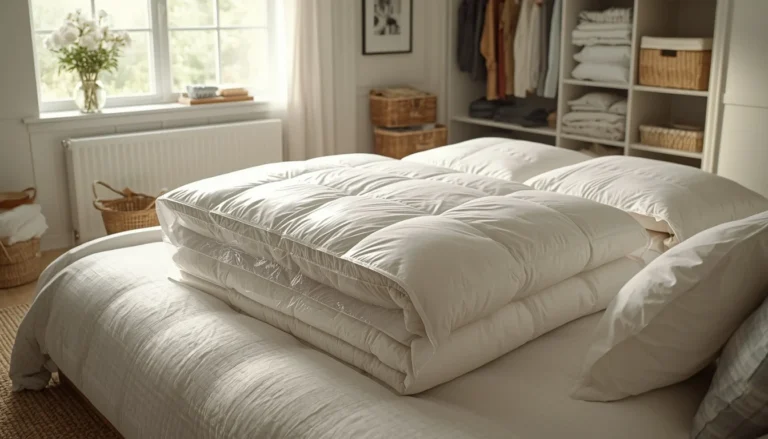
How to Store Off Season Clothes the Right Way
You open your closet in October, ready for your favorite sweater. Instead, you find it stretched, musty, and covered in strange wrinkles.
Sound familiar? Storing off-season clothes seems simple, but many people do it wrong, and their wardrobe suffers.
I’ve made every mistake. I’ve stuffed summer dresses into garbage bags. I’ve piled winter coats under beds without a thought.
I’ve watched moths ruin a perfectly good cashmere sweater. After years of trial and error, I finally learned what works, and I’ll share it with you.
Start With a Clean Slate (Literally)
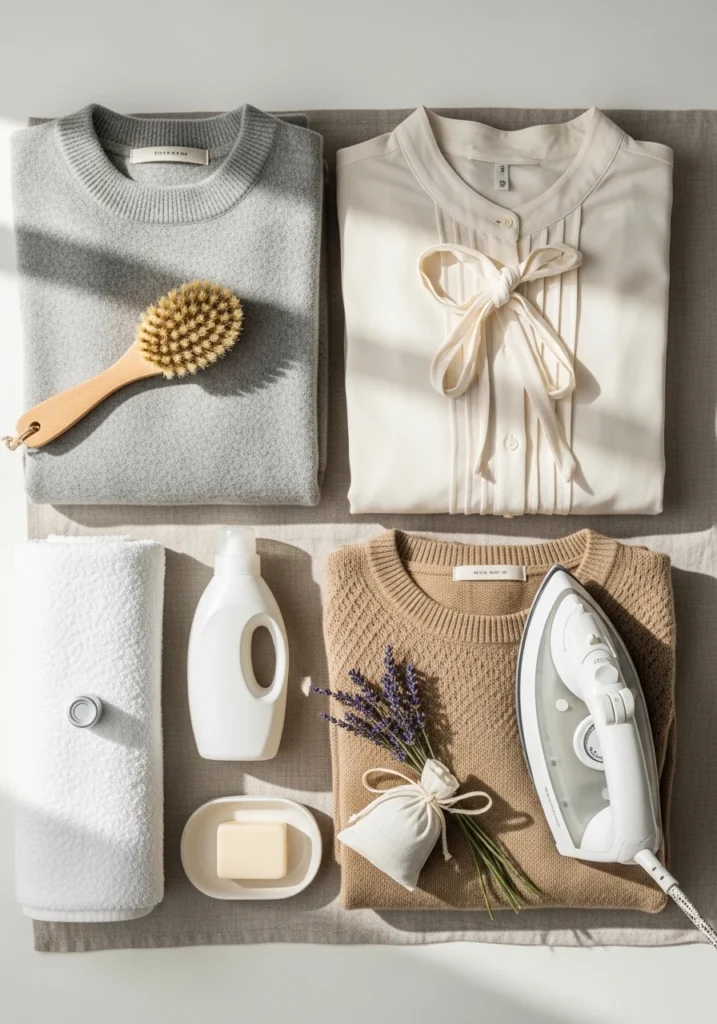
Here is the single most important rule of off season clothes storage: never store dirty clothes.
I know it sounds obvious, but you would be surprised how many people skip this step because the clothes “look fine.”
Dirt, sweat, body oils, and even invisible food residue attract moths and insects. They also cause stains to set permanently over several months in storage.
What looks like a small, faint stain in April can come out looking like a full-on art project by November.
Wash Everything Before Packing
Before anything goes into storage, wash it or take it to the dry cleaner. For delicate fabrics like wool, silk, or cashmere, always check the care label and follow it to the letter.
Skipping this step is basically rolling out a welcome mat for pests and permanent damage.
Also, make sure everything is completely dry before you pack it. Storing even slightly damp clothes is a recipe for mold and mildew, and trust me, that smell does not come out easily.
Give freshly washed items a full 24 hours to air out before folding or hanging.
Sort and Declutter Before You Store
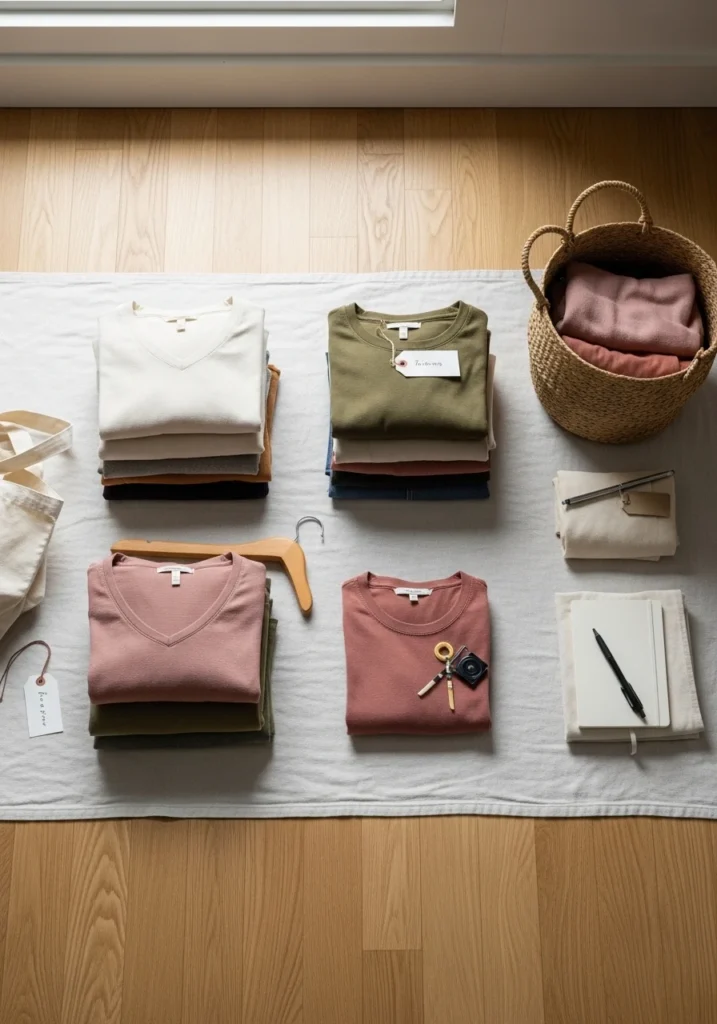
Seasonal clothing transitions are actually the perfect opportunity to do a proper closet audit. Why pack and store something you never wore this season? Be ruthless about it.
Ask yourself: Did I reach for this item even once? Does it still fit? Is it in good condition? If the answer to any of these is no, it is time to donate, sell, or recycle it.
Storing items you do not love or use is just borrowing a problem for future you.
How to Sort Efficiently
Go through each category of clothing separately rather than tackling everything at once. It is easier and faster when you stay focused.
- Keep: Items you wore and loved, or pieces you genuinely plan to use next season
- Donate: Clean, wearable items that no longer fit your lifestyle or size
- Repair pile: Things worth fixing before storing, like a missing button or a loose seam
- Toss: Worn-out, stained, or damaged items beyond saving
Once you have done this sort, you will likely have far less to store than you thought, which makes the whole process significantly easier.
Choose the Right Storage Containers
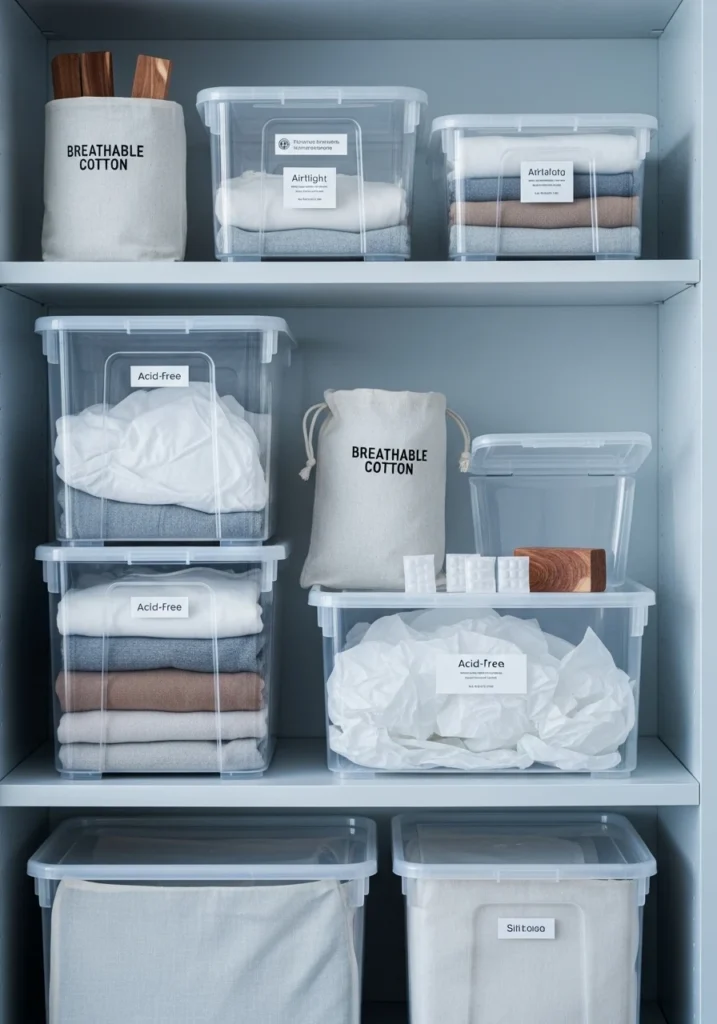
Not all storage containers are created equal, and picking the wrong one can ruin your clothes just as fast as skipping the washing step. The container you choose really does matter.
Plastic bins with airtight lids work well for most clothing because they keep out moisture, dust, and pests.
Go for clear bins so you can see what is inside without opening everything when you need to find something specific. Labeled bins are even better.
What to Avoid
A lot of people default to plastic bags or garbage bags for storage, and I completely understand the appeal. They are cheap and easy.
But here is the problem: plastic traps moisture, which leads to mildew, and it also prevents fabrics from breathing, which can damage fibers over time.
Also skip cardboard boxes if you can. They absorb moisture, attract silverfish, and offer zero protection against humidity.
If cardboard is your only option, line the inside with acid-free tissue paper, which at least helps protect the fabric.
For specialty items like wool sweaters or cashmere, fabric storage bags or breathable cotton bags are your best friend. They allow air circulation while still keeping dust and pests out.
Browse Fabric Storage Bags On Amazon
Fold vs. Hang: Knowing the Difference
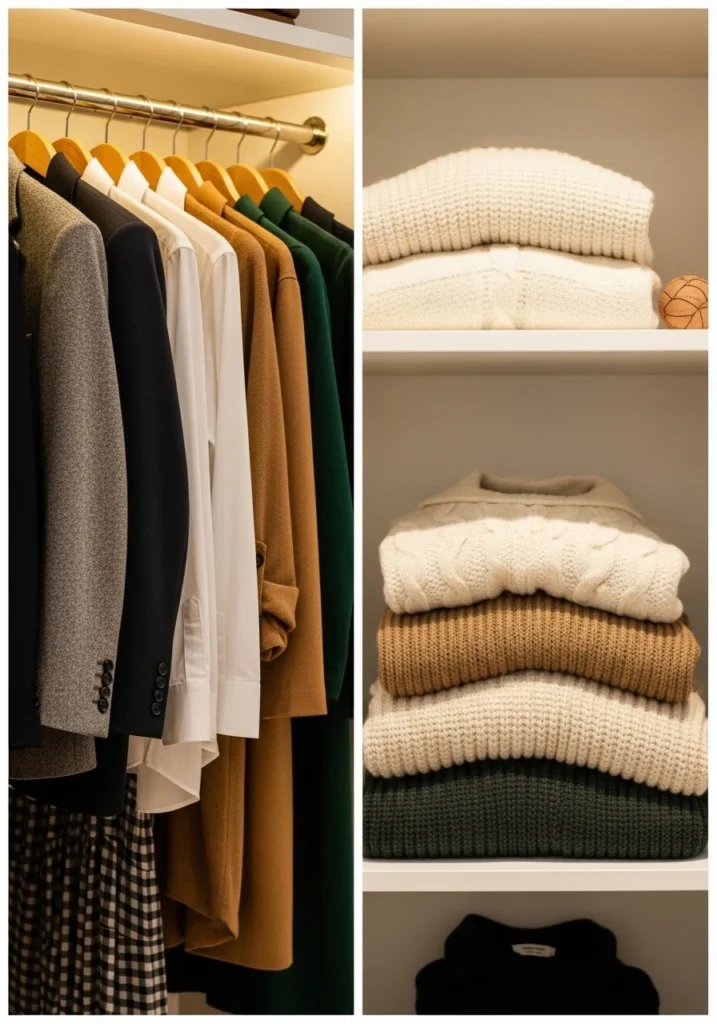
One of the most overlooked parts of storing clothes properly is knowing what to fold and what to hang. Getting this wrong can permanently stretch or distort your clothing.
Hang these items:
- Blazers and structured jackets
- Dress shirts and blouses
- Dresses and skirts
- Anything prone to wrinkling
Fold these items:
- Knitwear, wool, and cashmere (hanging stretches them out)
- Heavy sweaters
- T-shirts and casual tops
- Jeans and casual trousers
If you hang knitwear, you will come back to something that looks like it gained a foot in length over the hips. Gravity is not kind to knits.
Proper Folding Technique Matters
When you fold sweaters and knitwear for storage, fold them loosely rather than compressing them tightly.
Squashing them down strains the fibers. Stack no more than three or four items on top of each other to keep the pressure light.
For items you plan to hang in a garment bag, use padded or wooden hangers rather than wire ones. Wire hangers distort shoulder shapes over time, especially on delicate fabrics.
Protect Against Pests and Moisture

Moths are the bane of any clothing storage situation, especially when wool or natural fibers are involved.
One ignored storage season is all it takes for a moth to turn a beautiful cashmere piece into something that looks like it went through a paper shredder.
Cedar blocks and cedar balls are a natural, effective, and non-toxic way to repel moths. Place them inside your storage containers or on the shelves near your stored items.
Replace or sand them lightly every season to refresh their scent, since the cedar oil is what actually does the repelling.
Avoid Mothballs If You Can
Mothballs work, but the tradeoff is a smell that clings to fabric for what feels like forever. Unless you enjoy your winter coat smelling like your grandmother’s attic, cedar is the far better option.
For moisture control, silica gel packets are incredibly useful. Toss a few into your storage bins to absorb excess humidity, especially if you live in a naturally humid climate.
They are inexpensive and do a solid job of keeping that musty smell at bay.
Find Cedar Blocks And Balls On Amazon
Pick the Right Storage Location
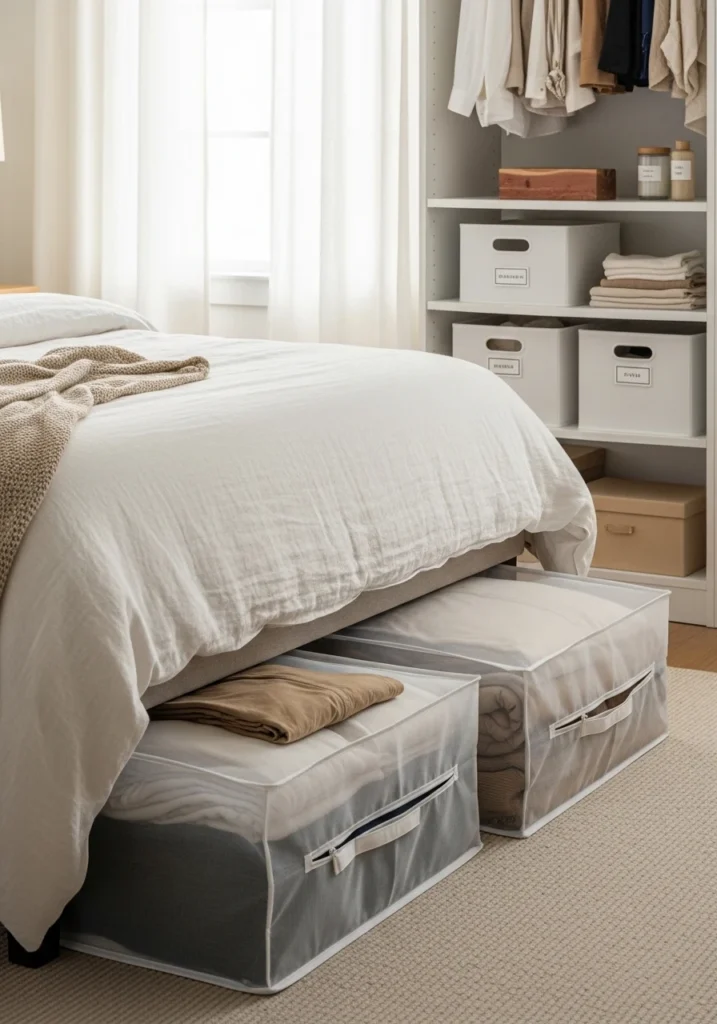
Where you store your clothes matters just as much as how you store them. Temperature fluctuations and high humidity are the two biggest enemies of stored clothing.
Avoid these spots:
- Attics (extreme heat in summer, extreme cold in winter)
- Basements (high moisture and risk of flooding)
- Garages (dust, pests, and humidity)
- Anywhere near exterior walls prone to condensation
The ideal storage location is a cool, dry, dark area with stable temperature.
A bedroom closet shelf, a spare room, or an under-bed storage setup in a climate-controlled room all work well. Darkness also helps prevent fabric colors from fading.
Under-Bed Storage Done Right
Under-bed storage is genuinely underutilized, especially in smaller spaces.
Flat, zippered fabric storage bags designed for under-bed use slide in neatly and keep clothes dust-free. Just make sure the area is not prone to drafts or moisture from the floor.
Shop Under-Bed Storage Bags On Amazon
Label Everything So Future You Does Not Suffer
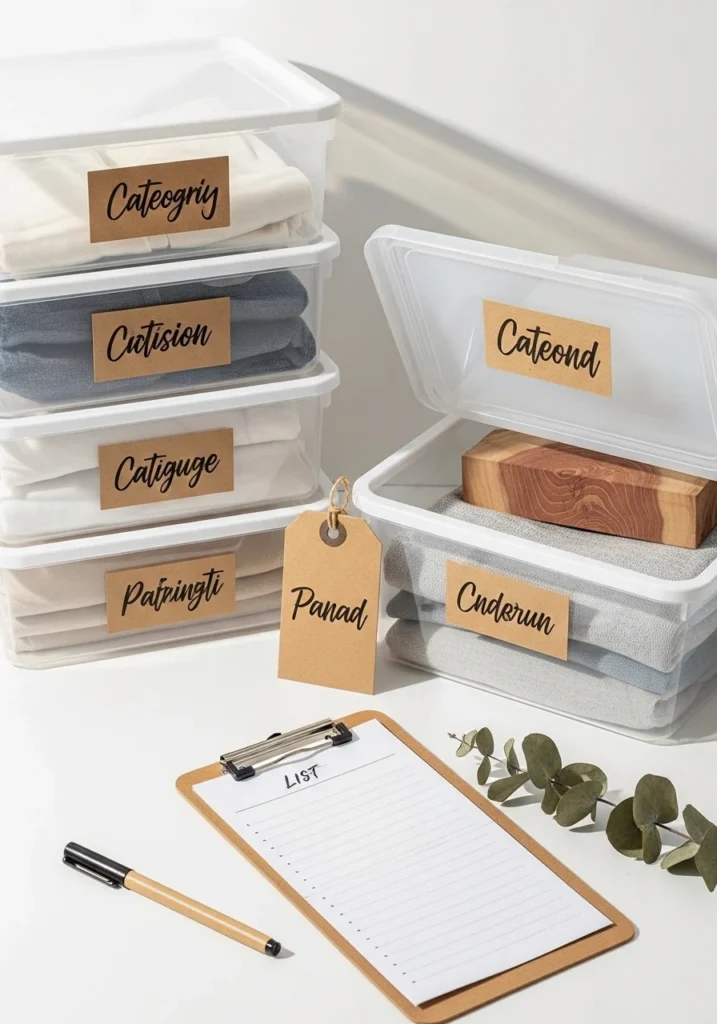
This sounds painfully basic, but please label your storage containers. Not just with “winter clothes” either. Be specific.
Write “heavy wool sweaters,” “holiday outfits,” or “summer linen shirts.” Your future self will genuinely thank you.
A quick labeling system to try:
- Label the container on the front and the lid
- Include a rough count of what is inside if possible
- Note any items that need repair before wearing again
- Add the storage date so you know exactly how long things have been sitting
Taking two extra minutes to label properly saves you from tearing through every single bin next season trying to find one specific item.
Conclusion
Storing off season clothes the right way is not complicated, but it does require some intention.
Wash everything first, sort ruthlessly, pick the right containers, know what to fold versus hang, protect against pests and moisture, store in the right location, and label like your organizational life depends on it.
The extra effort you put in now pays off every single time you pull out a piece of clothing next season and it looks exactly the way you left it.
No weird smells, no mystery stains, no stretched-out necklines. Just clean, ready-to-wear clothes waiting for you like you deserve.
Your wardrobe works hard for you. The least you can do is give it a proper off-season rest.
How Do You Prevent Clothes From Smelling Musty During Storage?
Moisture is the main cause of musty-smelling clothes. Always ensure that each item is completely dry before storing it. Even a little dampness can lead to mold and mildew.
Place a few silica gel packets in each storage bin to absorb extra humidity. Cedar blocks or balls also help by keeping the area fresh and naturally repelling moths.
Is It Better to Fold or Hang Clothes During Long-Term Storage?
It depends on the fabric and garment type. Structured pieces like blazers, dress shirts, and dresses keep their shape better on padded or wooden hangers in a breathable garment bag.
Knitwear, wool sweaters, and cashmere should always be folded and stored flat. Hanging these fabrics can stretch them out of shape.
When unsure, folding is the safer choice for most items in bins or bags for months.
What Are the Worst Places to Store Off Season Clothing?
Attics, basements, and garages are the worst places to store off-season clothes. Attics have big temperature swings, which can stress fabric.
Basements are damp and at risk of flooding, promoting mold and pests. Garages expose clothes to dust, humidity, and insects, with no climate control.
The best choice is a cool, dry, dark space inside your home. This could be a climate-controlled closet shelf, a spare room, or under a bed in a stable bedroom.
How Do You Protect Wool and Cashmere From Moths During Storage?
Moths target natural protein fibers, which makes wool and cashmere especially vulnerable during long storage periods.
Cedar blocks, cedar balls, and cedar hangers work as an effective and non-toxic repellent, as long as you refresh or lightly sand the cedar each season to reactivate the scent.
Lavender sachets offer a similar repelling effect with a far more pleasant smell.
Always store wool and cashmere in breathable fabric bags rather than sealed plastic, since airflow matters for maintaining the integrity of natural fibers while still keeping pests out.
How Long Can You Safely Store Off Season Clothes Without Checking on Them?
Most well-prepared clothing stores safely for a full season, typically three to six months, without needing attention.
However, if you live in a humid climate or your storage area experiences temperature changes, it is worth doing a quick check around the midpoint of the storage period.
Open the bins, air items out briefly, and replace any silica gel packets that have become saturated.
Catching a moisture or pest problem early saves the clothes. Waiting until the next season is a gamble that does not always pay off.