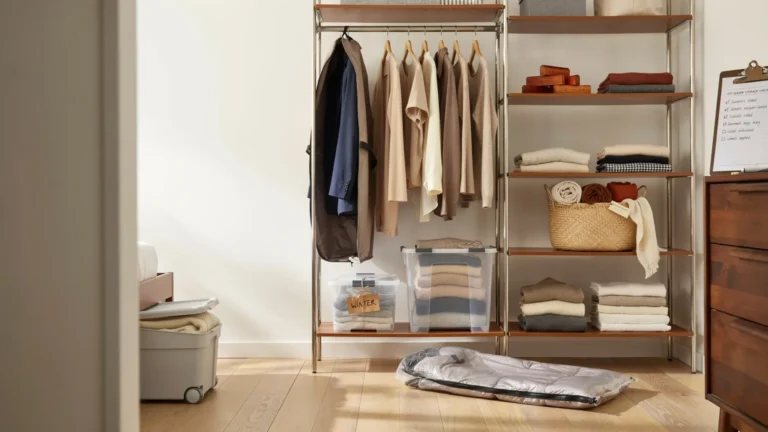
Vacuum Storage Bags for Comforters That Save Space
If your linen closet looks like a overstuffed suitcase that someone sat on and gave up, you are not alone. Comforters are wonderfully cozy and absolutely terrible at fitting anywhere.
That is the exact frustration that sent me down the rabbit hole of vacuum storage bags, and honestly, it changed how I think about bedroom storage forever.
These bags are not just a gimmick you see on late-night shopping channels.
They actually work, and when you pick the right ones for bulky bedding like comforters, duvets, and quilts, you reclaim serious storage real estate without spending a fortune on new furniture or renting a storage unit.
Shop Vacuum Storage Bags for Comforters on Amazon
Why Comforters Are the Worst Offenders in Your Closet
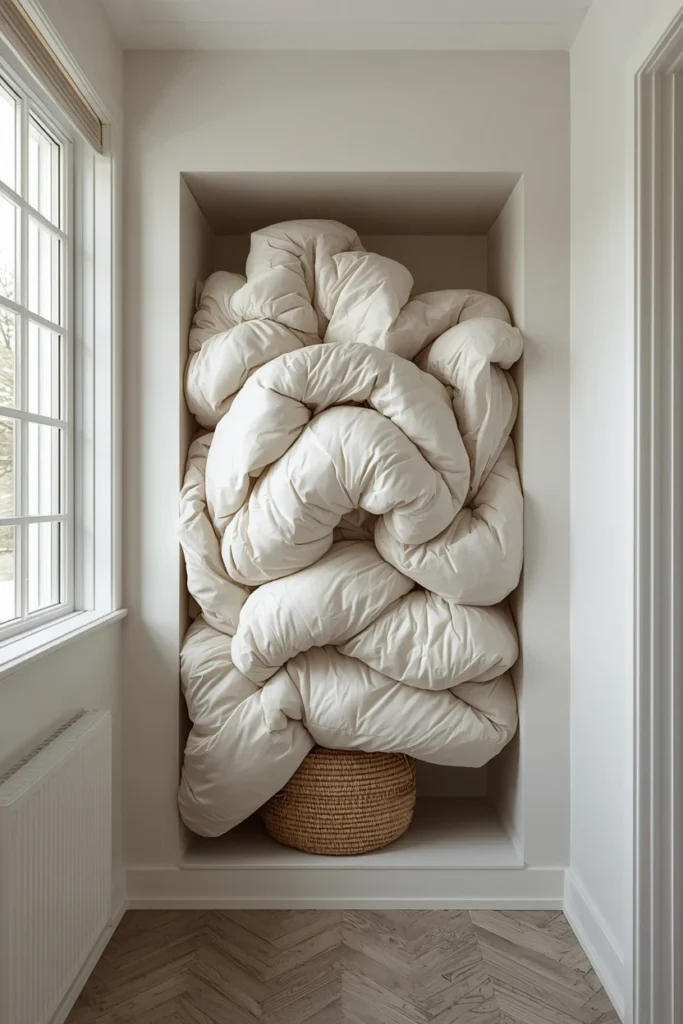
Let’s be real for a second. A single king-size comforter can puff up to the size of a small cloud.
You fold it, you stuff it, you wrestle it onto a shelf, and then it slowly re-inflates like it is mocking you. That is the nature of down and synthetic fill.
Comforters take up so much space because the filling traps air.
Whether you own a down alternative duvet or a premium goose-down comforter, the fluffy fill is literally designed to hold air for insulation.
That is great for warmth in bed and absolutely terrible for your closet.
Vacuum storage bags solve this by removing that trapped air completely.
You compress the bag using a vacuum cleaner or a hand pump, and the comforter shrinks down to a flat, dense package that stacks neatly on a shelf or slides under a bed with ease.
How Vacuum Storage Bags Actually Work
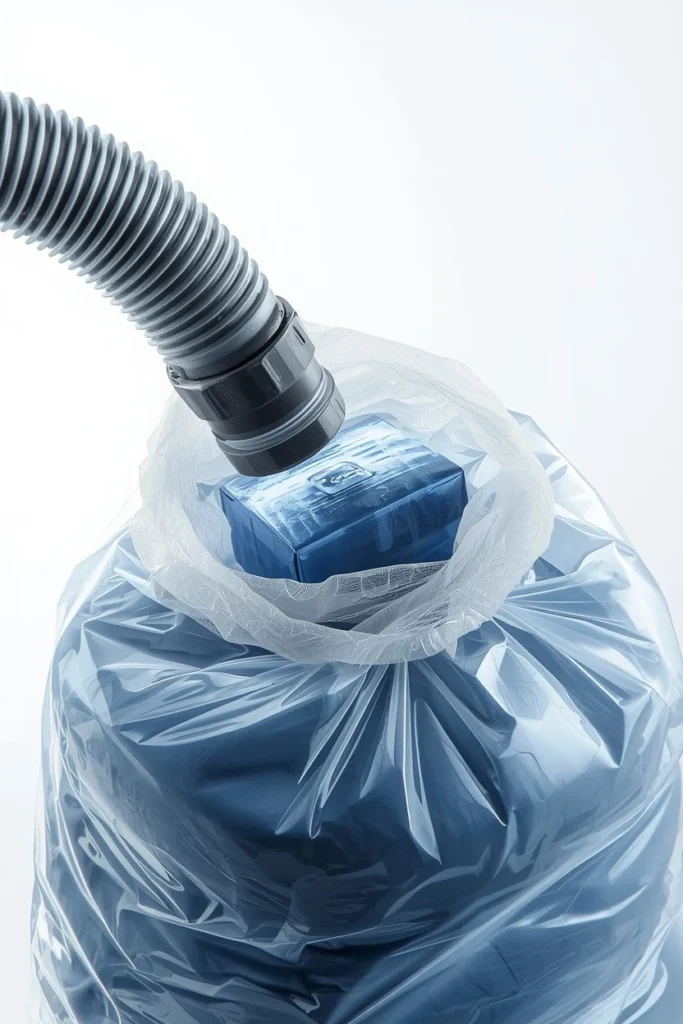
The science here is refreshingly simple. Each bag features a one-way valve that lets air exit but does not allow it back in.
You place your comforter inside, seal the zip-lock closure, attach your vacuum hose to the valve, and watch the bag flatten like someone let the air out of a bouncy castle.
The Sealing Process
Getting a proper seal matters more than most people realize. A weak zip seal means air sneaks back in over time, and you wake up a week later to a half-puffed bag taking up twice the space it should.
When you load your comforter, press out as much air as you can by hand before you even touch the vacuum. Then run the vacuum until the bag feels hard and compact.
Most quality bags hold their compression for three to six months without you needing to re-vacuum.
Some premium options hold the seal even longer, which matters a lot if you are storing off-season bedding for an entire summer or winter.
Hand Pump vs. Vacuum Cleaner
Here is a question worth thinking about: do you always have your vacuum nearby when you need to store or retrieve bedding? Probably not.
That is why bags with included hand pumps are a genuine convenience win.
Hand pump bags take a bit more effort and arm strength, but they are portable and do not require you to drag out a full-size vacuum.
If you travel or move between homes seasonally, a hand pump bag is the practical choice. If you are storing at home and do not mind pulling out the vacuum, either option works perfectly well.
Find Vacuum Storage Bags With Hand Pumps on Amazon
What to Look for When Buying Vacuum Bags for Comforters
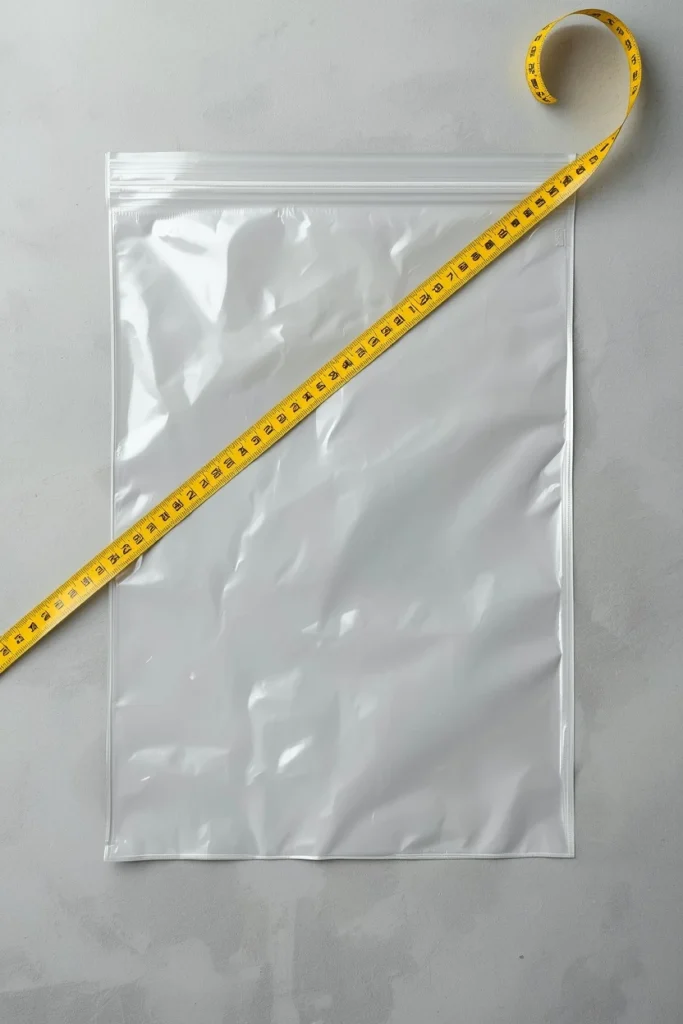
Not all vacuum storage bags are created equal, and buying the wrong ones for comforters specifically will leave you frustrated.
Comforters need large or jumbo-sized bags, and the material quality has to be thick enough to handle repeated use without cracking along the folds.
Size Matters More Than You Think
Always buy bags labeled “jumbo” or “extra-large” for comforters.
A standard medium bag designed for sweaters will technically fit a small comforter, but you will spend twenty minutes cramming it in and still get subpar compression.
Jumbo bags typically measure around 31 by 40 inches or larger, giving your comforter room to compress evenly instead of bunching up in one corner.
A king comforter usually needs the largest size available. A twin or full comforter can sometimes fit into a large bag, but when in doubt, go bigger.
You lose nothing by having extra room in the bag, but you lose your patience trying to force bedding into one that is too small.
Browse Jumbo Vacuum Storage Bags on Amazon
Material Thickness and Durability
Cheap bags crack, puncture, and lose their seal. Look for bags made from multi-layer PA and PE film (polyamide and polyethylene).
This combination gives you flexibility without brittleness, which matters a lot when the bag gets compressed flat and then stored at the bottom of a pile.
Thickness is measured in microns, and anything below 80 to 90 microns tends to fail after just a few uses. The best bags on the market run between 100 and 120 microns.
That extra thickness feels noticeably sturdier when you handle the bag, and it protects your comforter from moisture and dust far more effectively.
Double-Zip Seals vs. Single Seals
A single zip-lock seal does the job, but a double-zip seal gives you a much more reliable airtight closure.
Think of it like a zip-lock sandwich bag compared to a heavy-duty freezer bag. Both zip, but one holds up under pressure far better than the other.
When you press the seal shut, run your finger along it twice and check for any gaps near the corners.
The corners are where most bags fail first, and a reinforced double seal handles corner stress much better.
The Best Ways to Use Vacuum Bags for Comforters
Buying the bags is the easy part. Using them correctly is where most people cut corners, and then wonder why their comforter comes out wrinkled, compressed unevenly, or still taking up half the shelf.
Folding Before Sealing
Fold your comforter neatly before placing it in the bag. Rolling actually works even better for even compression.
A rolled comforter compresses into a more uniform shape than a folded one, which means it stores flatter and puts less stress on the bag seams.
Place the rolled or folded comforter in the center of the bag rather than pushing it to one side.
Centering it helps the bag compress evenly when you apply the vacuum, and you end up with a neat, brick-like package instead of a lopsided blob.
Where to Store Compressed Bags
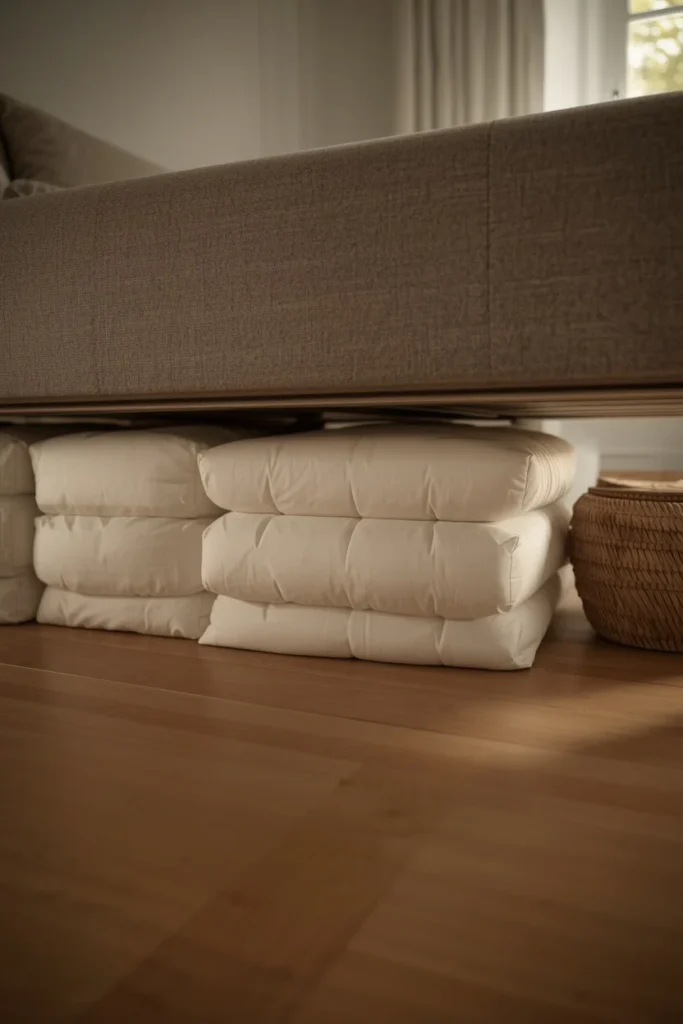
Under the bed is the obvious choice, and it genuinely works brilliantly. A compressed king comforter stored in a jumbo vacuum bag fits easily into the under-bed clearance of most bed frames.
You can store two or three bags side by side, which means an entire season’s worth of bedding lives out of sight and out of the way.
Closet shelves, storage ottomans, and suitcases are all excellent alternatives.
The compressed bags are also easier to label, and you can actually read the label since the bag sits flat instead of flopping around like a pile of fabric.
Do Not Store Wet or Damp Comforters
This one sounds obvious but deserves its own sentence: never vacuum-seal a comforter that is not completely dry.
Sealing moisture inside the bag creates a perfect environment for mildew and that distinctive musty smell that is nearly impossible to get out of down fill.
Wash your comforter, dry it fully on a low heat cycle, and let it air out for at least an hour before sealing.
Are Vacuum Bags Safe for Down Comforters?
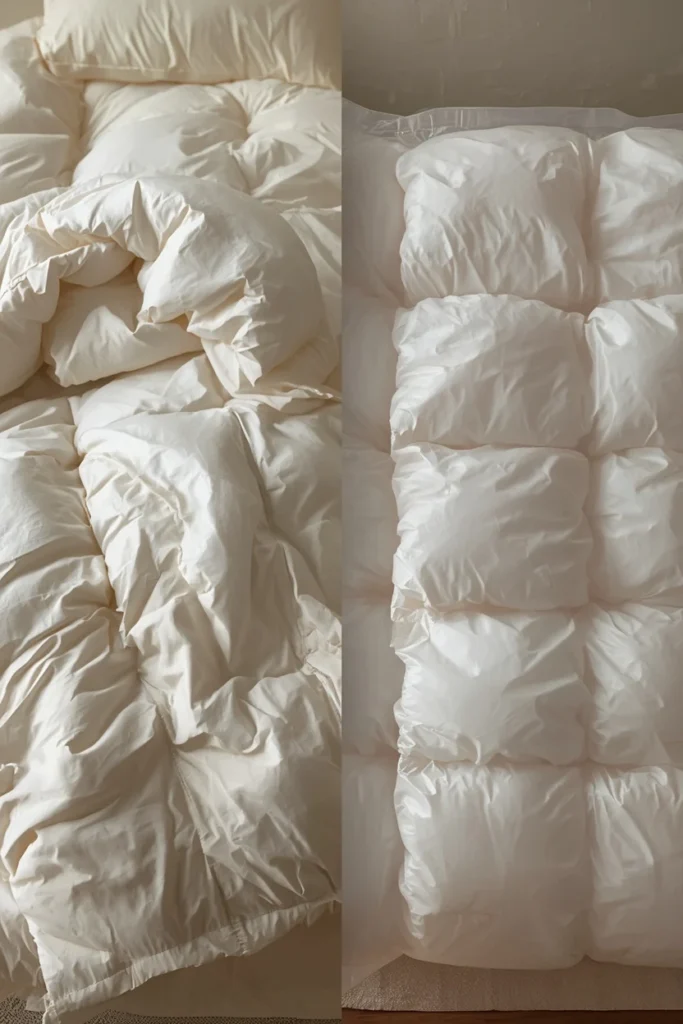
This question comes up constantly, and the short answer is yes, with a caveat.
Vacuum bags work safely with down and down-alternative comforters, but you should not store down bedding compressed for more than three to six months at a stretch.
Extended compression can permanently damage the loft of the down clusters, meaning your comforter loses some of its ability to puff back up and trap heat effectively.
For long-term storage beyond six months, use breathable cotton storage bags instead and save the vacuum bags for seasonal rotation.
If you are switching your bedding out with the seasons, vacuum bags are absolutely the right tool for the job.
The Real Space-Saving Numbers
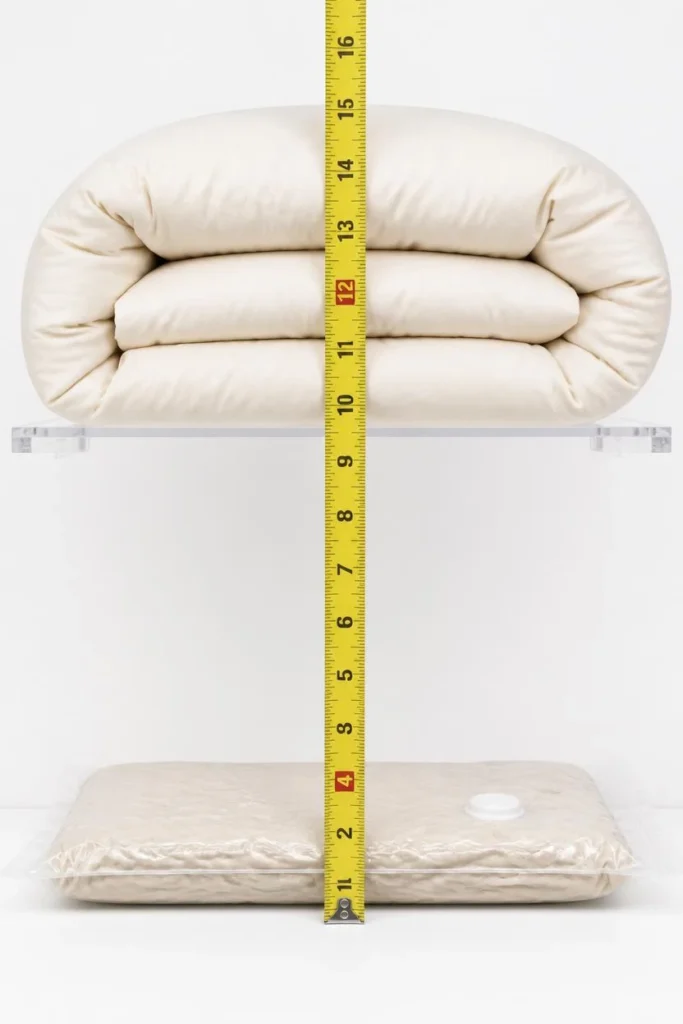
Want to put this in perspective? A standard king comforter that takes up roughly 12 inches of shelf space compresses down to about 3 to 4 inches.
That is a 70 percent reduction in volume. Multiply that across two or three comforters and you have freed up the equivalent of an entire shelf in your linen closet.
For smaller spaces, like studio apartments or homes with limited closet storage, that difference is not just convenient; it is genuinely transformational.
You stop buying storage furniture you do not have room for and start working smarter with the space you already own.
Final Thoughts on Picking the Right Bags
Vacuum storage bags for comforters are one of those rare home organization tools that actually deliver exactly what they promise.
They save meaningful space, protect your bedding from dust and moisture, and cost far less than any storage furniture solution you would otherwise consider.
Go for jumbo-sized bags with double-zip seals and thick multi-layer film.
Look for sets that include a hand pump if portability matters to you.
Store your bags under the bed, in the closet, or inside a storage ottoman, and you will wonder how you ever managed bedding storage without them.
Your closet has been suffering long enough. Give it the breathing room it deserves, even if your comforters no longer get any.
Shop Vacuum Storage Bags for Comforters on Amazon
How Long Can You Store a Comforter in a Vacuum Storage Bag?
You can safely store a comforter in a vacuum storage bag for three to six months without causing damage to the fill.
This timeframe works perfectly for seasonal bedding rotation, such as switching between a winter comforter and a lighter summer duvet.
If you need to store bedding beyond six months, consider using a breathable cotton storage bag instead to protect the loft of down fill from permanent compression damage.
Do Vacuum Storage Bags Ruin Down Comforters?
Vacuum storage bags do not ruin down comforters when you use them correctly and for the right duration. The key is to limit compression storage to no more than three to six months at a time.
Extended compression beyond that window can flatten the down clusters and reduce the comforter’s ability to trap heat and puff back up.
For seasonal storage, vacuum bags are perfectly safe and highly effective for both down and down-alternative comforters.
What Size Vacuum Storage Bag Do I Need for a King Comforter?
A king-size comforter requires a jumbo or extra-large vacuum storage bag, typically measuring at least 31 by 40 inches or larger.
Standard or large bags designed for clothing will not give your comforter enough room to compress evenly, and you risk stressing the seams or getting poor compression.
Always check the bag’s stated capacity before buying, and when two sizes seem close, choose the larger one for the best results.
Can You Use a Hand Pump Instead of a Vacuum Cleaner With These Bags?
Yes, many vacuum storage bags come with a hand pump that works as a practical alternative to a vacuum cleaner.
Hand pump bags take slightly more effort and time, but they are portable and convenient when you do not have a vacuum nearby or when you are packing for travel.
If you are storing comforters at home and have easy vacuum access, either method works well. For maximum convenience and flexibility, look for bags that are compatible with both options.
How Do You Keep Vacuum Storage Bags From Losing Their Seal Over Time?
The best way to maintain a lasting seal is to choose bags with double-zip closures and thick multi-layer film of at least 100 microns.
Before sealing, press out as much air as possible by hand, then run your vacuum or hand pump until the bag feels firm and compact.
Check the corners carefully after sealing since that is where most bags fail first.
Store the compressed bags flat, avoid sharp objects nearby, and keep them away from extreme heat, which can weaken the valve seal over time.