Declutter Your Bedroom Fast Without the Overwhelm
Your bedroom is supposed to be your sanctuary. Instead, it looks like a storage unit that also happens to have a bed in it.
Sound familiar? You are not alone, and the good news is that you do not need an entire weekend, a dumpster, or a dramatic life overhaul to fix it.
This guide walks you through a practical, no-nonsense approach to decluttering your bedroom fast, even if you only have an hour to spare.
No overwhelming checklists, no guilt trips about the sweater you bought three years ago and never wore. Just real steps that actually work.
Why Your Bedroom Keeps Getting Cluttered in the First Place
Before you start tossing things into boxes, it helps to understand why the clutter keeps coming back.
Most people treat their bedroom like a dumping ground for anything that does not have a clear home elsewhere in the house.
Books from the living room, gym clothes from the bathroom, random cables from who knows where.
The root problem is not laziness. It is a lack of intentional systems.
When everything has a designated spot, clutter stops accumulating because you stop dropping things randomly and start putting them away properly. That shift alone changes everything.
The “Bedroom Creep” Problem
Ever noticed how one jacket draped over a chair somehow multiplies overnight? That is what I call bedroom creep, and it happens to the best of us.
Small items migrate into your bedroom because it feels like a private, consequence-free zone. Nobody judges you for the pile on your nightstand.
The fix is simple in theory: your bedroom should only hold items that belong there.
Anything that serves a function in another room needs to leave. Once you commit to that rule, you eliminate about half your clutter problem before you even pick up a single item.
How to Start Without Feeling Paralyzed
The biggest reason people avoid decluttering is that they try to tackle everything at once.
They walk into the bedroom, look around, feel instantly overwhelmed, and then go watch something on their phone instead. Honestly, a very relatable coping mechanism, but not exactly productive.
Start with a 15-minute sprint. Set a timer, pick one small zone, and work only in that zone until the timer goes off. No wandering around the room.
No stopping to reorganize your entire dresser when you were supposed to be clearing your nightstand. Focused effort beats scattered effort every single time.
The Three-Box Method
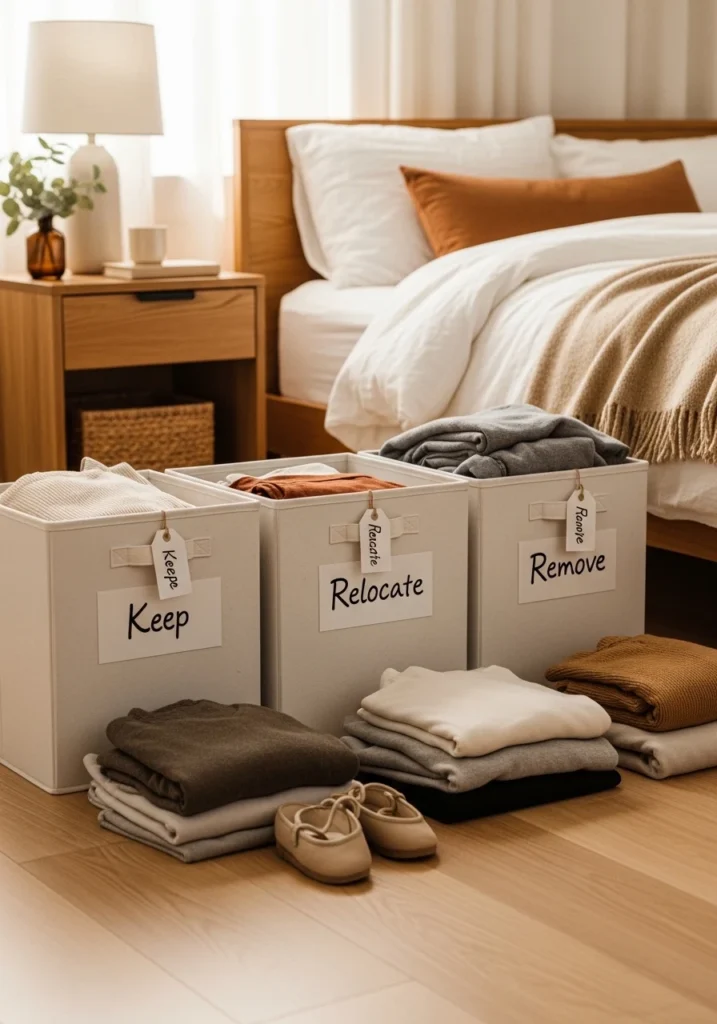
This method is simple, fast, and genuinely effective. Grab three boxes or bags and label them:
- Keep: Items that belong in the bedroom and you actually use
- Relocate: Items that belong somewhere else in the house
- Remove: Items to donate, sell, or throw away
Work through one area at a time and drop every item into one of those three boxes without overthinking it.
The moment you start debating whether you might use something “someday,” you slow yourself down. If you have not touched it in six months, it goes in the Remove box. Full stop.
Shop Storage Boxes And Organizer Bins On Amazon
Tackling Each Zone of Your Bedroom
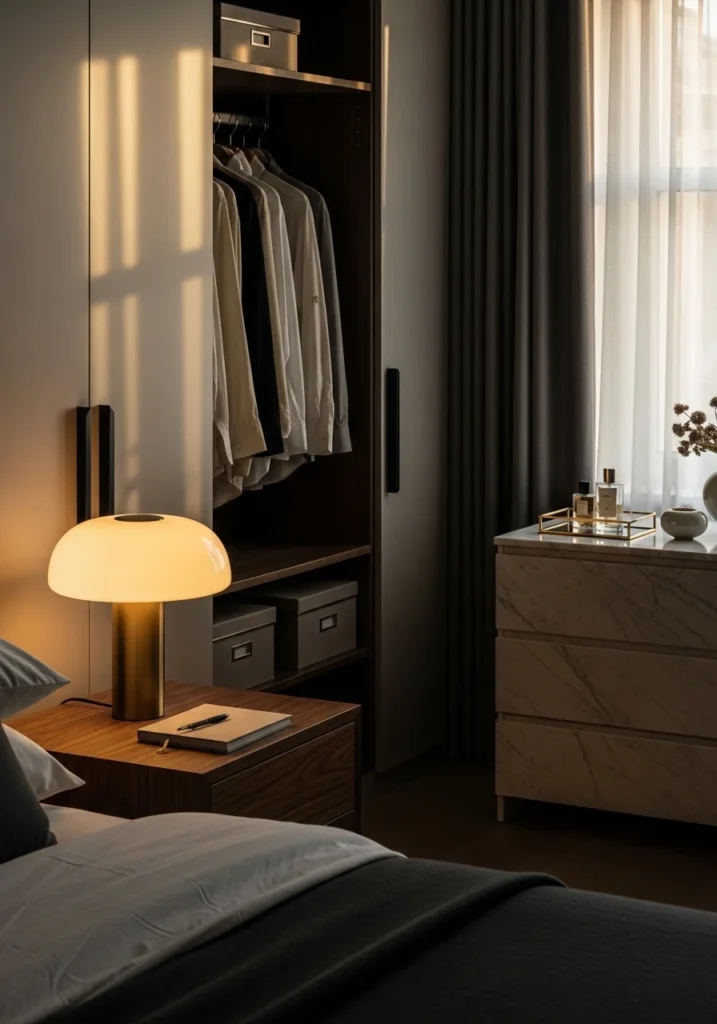
A bedroom has several distinct zones, and treating them separately keeps the process manageable.
You do not have to do them all in one session. In fact, spreading this out over a few short sessions often works better than one exhausting marathon.
The Nightstand
Your nightstand is prime real estate, and most people waste it on junk. Old receipts, expired lip balm, three chapsticks, a charger for a phone you no longer own.
Clear it completely, wipe it down, and only put back what you genuinely reach for every single night.
Nightstand essentials worth keeping:
- A lamp or charging device
- One book or journal if you actually read before bed
- A glass or water bottle
- Any nighttime skincare or medication you use daily
Everything else goes. Your nightstand should feel calm, not chaotic.
Browse Nightstand Organizers And Bedside Essentials On Amazon
The Wardrobe and Clothing Areas
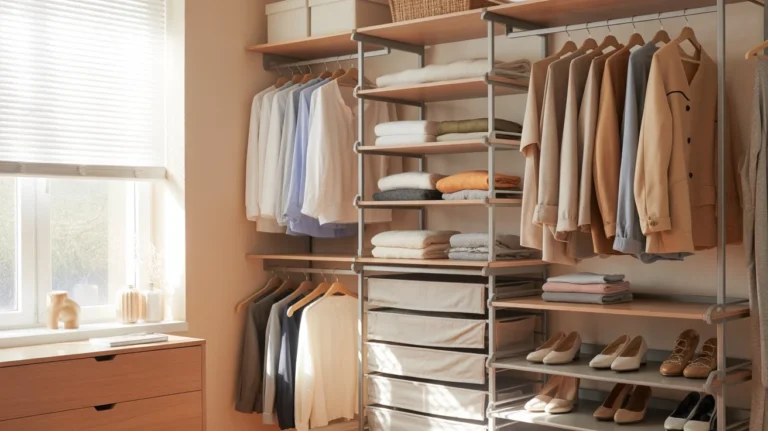
Clothing clutter is the biggest offender in most bedrooms. Clothes end up on chairs, on the floor, half-folded on shelves, and draped across the door handle like some kind of textile art installation.
Start with the floor and surfaces first. Pick up every piece of clothing and make a quick decision: does it go in the laundry, back in the wardrobe, or into the donate pile?
Do not let yourself hang anything back up without deciding if you actually still wear it.
If it does not fit, does not suit you, or just makes you feel blah every time you see it, that item is not earning its shelf space.
Under the Bed
Under the bed is either a smart storage solution or a black hole of forgotten possessions. For most people, it is the second one. Pull everything out and sort it using the three-box method.
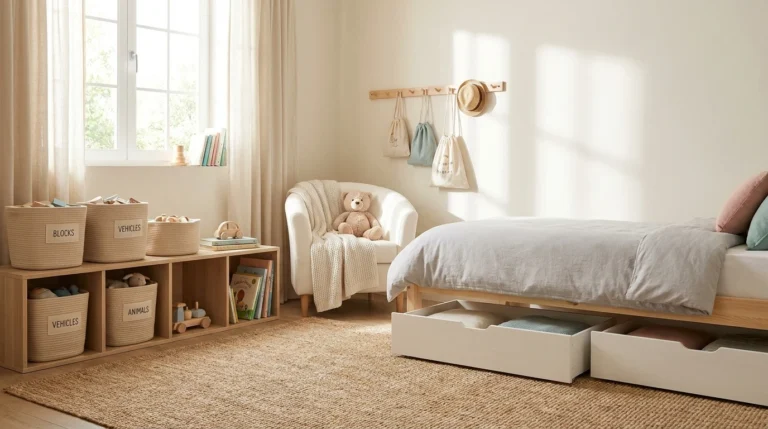
If you want to use under-bed storage intentionally, invest in flat storage containers with lids and use that space only for seasonal items like extra bedding or off-season clothing.
Labeling those containers is non-negotiable, unless you enjoy pulling out a box of winter scarves when you were looking for your spare pillow.
Find Under-Bed Storage Containers On Amazon
Surfaces, Shelves, and Dressers
Surfaces attract clutter like magnets. The dresser top, the windowsill, the random shelf above the wardrobe.
These spaces fill up because they are flat and available, not because you made a thoughtful decision to put things there.
Clear every surface completely and ask yourself what genuinely belongs there. A small tray for jewelry or your watch? Fine. A framed photo? Absolutely.
A collection of receipts, hair ties, old batteries, and a half-used candle from 2021? No. Surfaces should hold decorative or functional items only, not random life debris.
Shop Decorative Trays And Desk Organizers On Amazon
Building Habits That Keep the Clutter From Coming Back
Decluttering your bedroom once feels great. Decluttering it again in three weeks because you slipped back into old habits feels significantly less great.
The key is building small, consistent habits that keep things in order without turning maintenance into a daily chore.
The One-In, One-Out Rule
Every time something new enters your bedroom, something old leaves. Buy a new book? One old book goes to the donate pile. Get a new throw pillow? The old one moves to another room or goes.
This rule sounds almost too simple, but it works because it forces you to make active decisions instead of passively accumulating things.
The Two-Minute Reset
Every evening, spend two minutes doing a quick visual scan of your bedroom. Put away anything out of place, toss any rubbish, and straighten surfaces.
Two minutes. That is it. This tiny habit prevents small messes from snowballing into full-blown declutter projects.
Most people skip this because they assume it will take longer than it does. Time yourself once and you will see just how fast a two-minute tidy actually moves.
Assign Every Item a Home
Random clutter almost always happens because an item has no designated spot. When something does not have a home, it just lands wherever you set it down.
Go through your bedroom and make sure every single item has a specific place it belongs.
This sounds tedious, but you only have to do it once. After that, putting things away becomes automatic rather than a mental negotiation every time you set something down.
The Mindset Shift That Makes Decluttering Stick
Here is something most decluttering guides skip over: how you think about your stuff matters as much as how you organize it.
If you attach guilt, sentiment, or hypothetical future value to everything, you will struggle to let go of things that are genuinely just taking up space.
A cluttered bedroom is not a reflection of your character. It just means you accumulated more than your space can comfortably hold.
Letting things go is not wasteful, especially when you donate them and someone else actually gets to use them.
Think of decluttering as an act of curation rather than loss. You are choosing what deserves a place in your personal space and what does not.
That framing makes the whole process feel empowering instead of stressful.
Wrapping It All Up
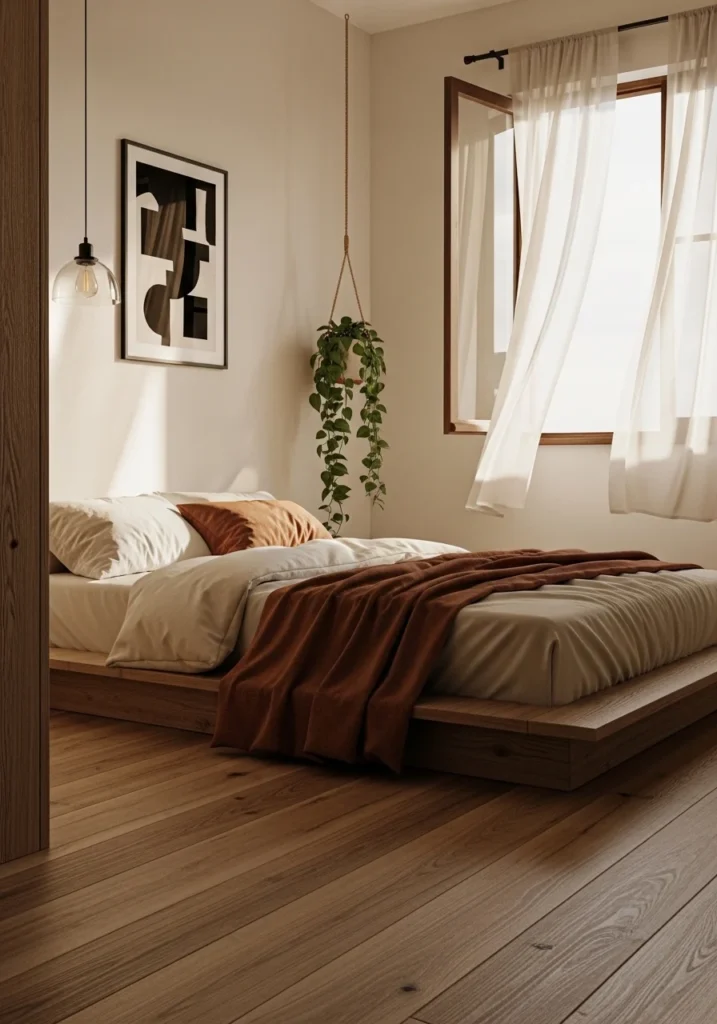
Decluttering your bedroom does not have to be a whole production.
Start small, work in zones, use the three-box method, and build the tiny daily habits that keep things tidy long after the initial declutter is done.
The goal is not a Pinterest-perfect bedroom. The goal is a space where you can actually breathe.
Your bedroom sets the tone for how you start and end every single day. It deserves a little intentional attention.
And if that means finally evicting the jacket that has lived on your chair since last October, well, consider it long overdue.
How Do You Declutter a Bedroom When You Feel Overwhelmed?
Start with a single small zone rather than the entire room. Set a 15-minute timer, pick one surface or corner, and work only in that area until the timer stops.
Breaking the process into short, focused sprints removes the mental weight of tackling everything at once and makes it far easier to build momentum.
What Is the Fastest Way to Declutter Your Bedroom?
The fastest method is the three-box system.
Label three boxes Keep, Relocate, and Remove, then work through each zone of your bedroom, placing every item into one of those three categories without overthinking.
Making quick, decisive choices rather than debating each item cuts your decluttering time significantly.
How Often Should You Declutter Your Bedroom?
A thorough declutter twice a year works well for most people, typically at the start of spring and again heading into winter.
Between those sessions, a daily two-minute reset and a consistent one-in, one-out rule for new purchases will prevent clutter from building back up in the first place.
What Should You Not Keep in Your Bedroom?
Your bedroom should only hold items that serve a clear purpose in that space.
Items that regularly creep in but do not belong there include books from other rooms, gym equipment, excess paperwork, chargers for devices you no longer own, and clothing that no longer fits or that you have not worn in over six months.
Anything in that category belongs somewhere else or needs to leave entirely.
How Do You Keep Your Bedroom Clutter-Free Long Term?
Three habits make the biggest difference over time. First, apply the one-in, one-out rule every time a new item enters the room.
Second, make sure every single item in your bedroom has a designated spot so nothing gets set down randomly.
Third, do a brief two-minute visual reset each evening to catch small messes before they grow into bigger ones.