Shared Bedroom Ideas for Boy and Girl in Small Rooms
Need to fit a boy and girl into a tiny bedroom without losing your mind? I get it. You want peace; they want space. And the room? It wants none of that.
I once helped create a shared room that felt like a game of Tetris.
But here’s the good news: with the right ideas, even a small room can feel organized, fun, and surprisingly spacious. Let’s explore how to make that happen.
Start With Smart Zoning
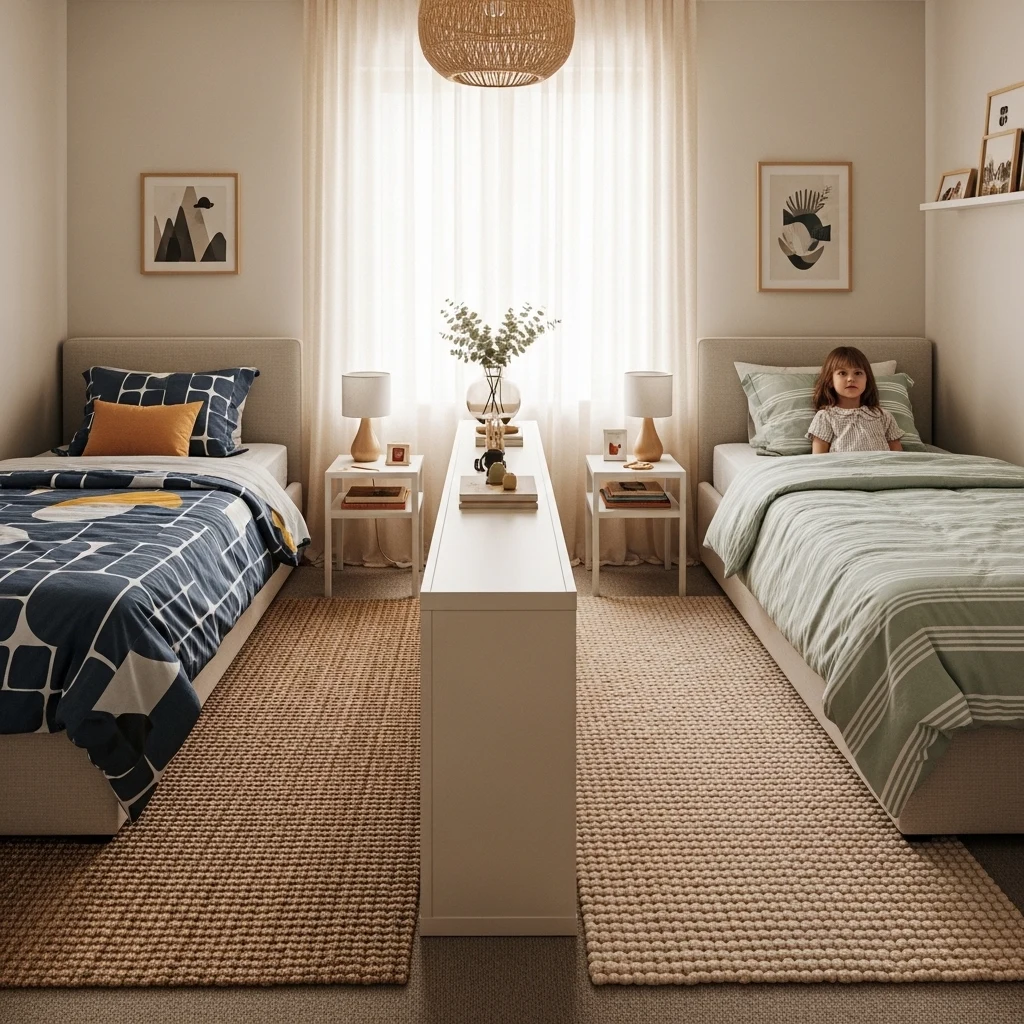
When two kids share a room, clear zones make everything easier. You do not need walls. You just need visual separation.
Use Furniture to Define Spaces
You can create “mini territories” using simple tricks:
- Place beds on opposite walls
- Use a bookshelf as a divider
- Add rugs to define each child’s area
This gives each child a sense of ownership. And honestly, fewer arguments over “my side” vs “your side” is always a win.
Why Zoning Works So Well
Kids feel more comfortable when they have a space that feels like theirs. Ever noticed how even adults get picky about their side of the bed? Same logic applies here.
Key takeaway: A small room feels bigger when it has structure.
Shop Storage Bins For Kids Shared Rooms
Choose Space-Saving Beds
Let’s be honest. Beds eat up most of the room. So if you pick the wrong ones, everything else becomes a struggle.
Bunk Beds for the Win
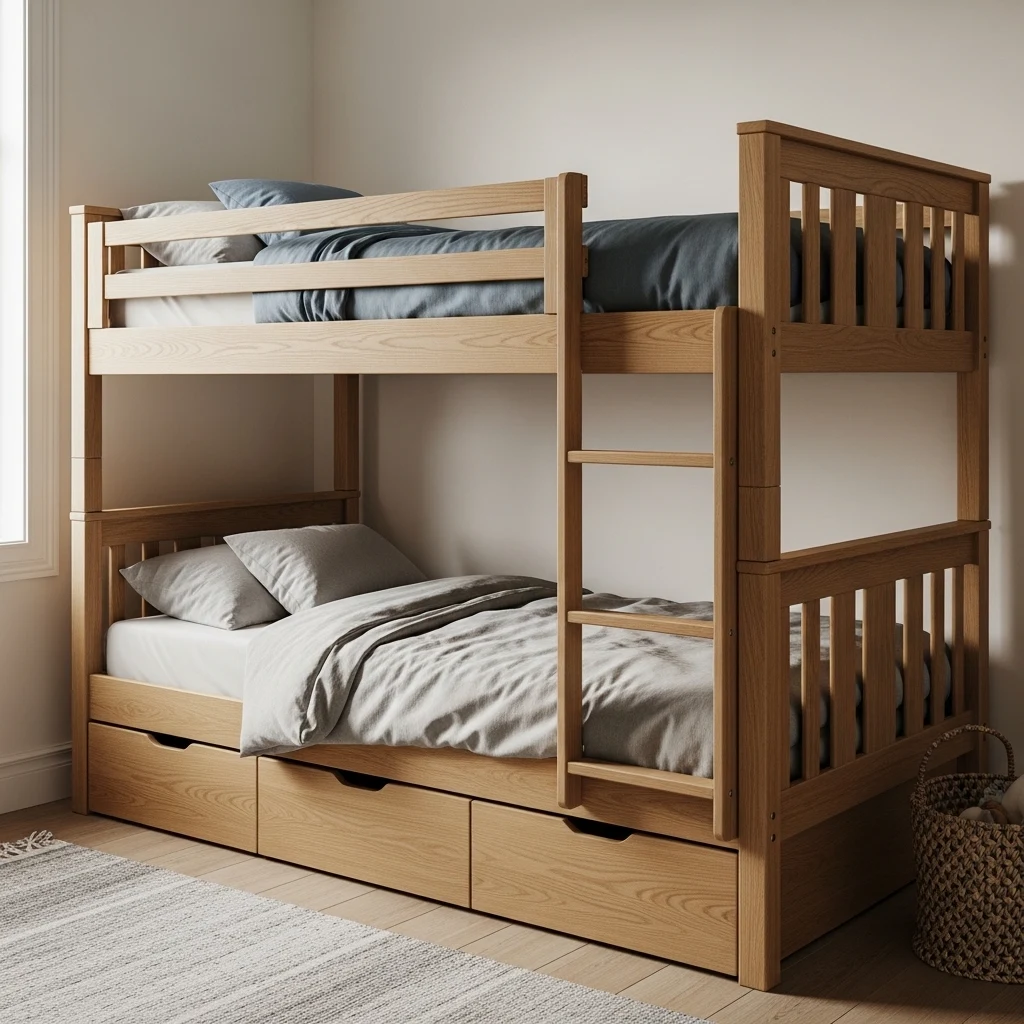
Bunk beds remain one of the best solutions for small shared bedrooms.
- They free up floor space instantly
- Kids usually love them
- You can add storage underneath
I have seen siblings fight over who gets the top bunk. So maybe flip a coin before chaos begins.
Alternative Options
Not a fan of bunk beds? You still have choices:
- Trundle beds for sleepovers
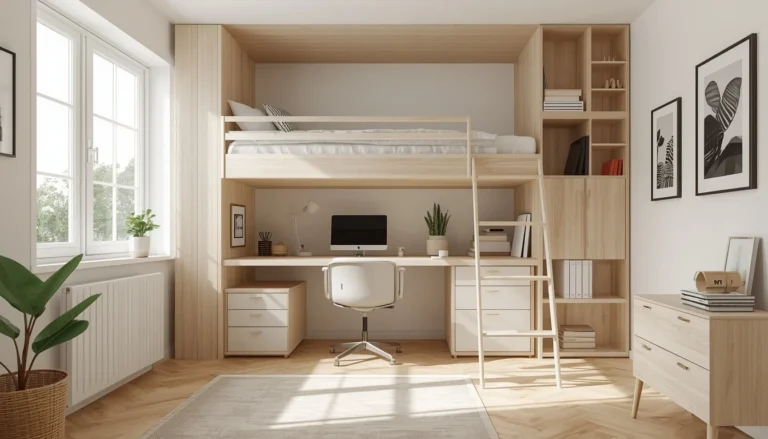
- Loft beds with desks underneath
- Daybeds that double as seating
Each option helps you maximize space without making the room feel cramped.
Shop Space-Saving Bunk Beds On Amazon
Go Neutral With Personal Pops
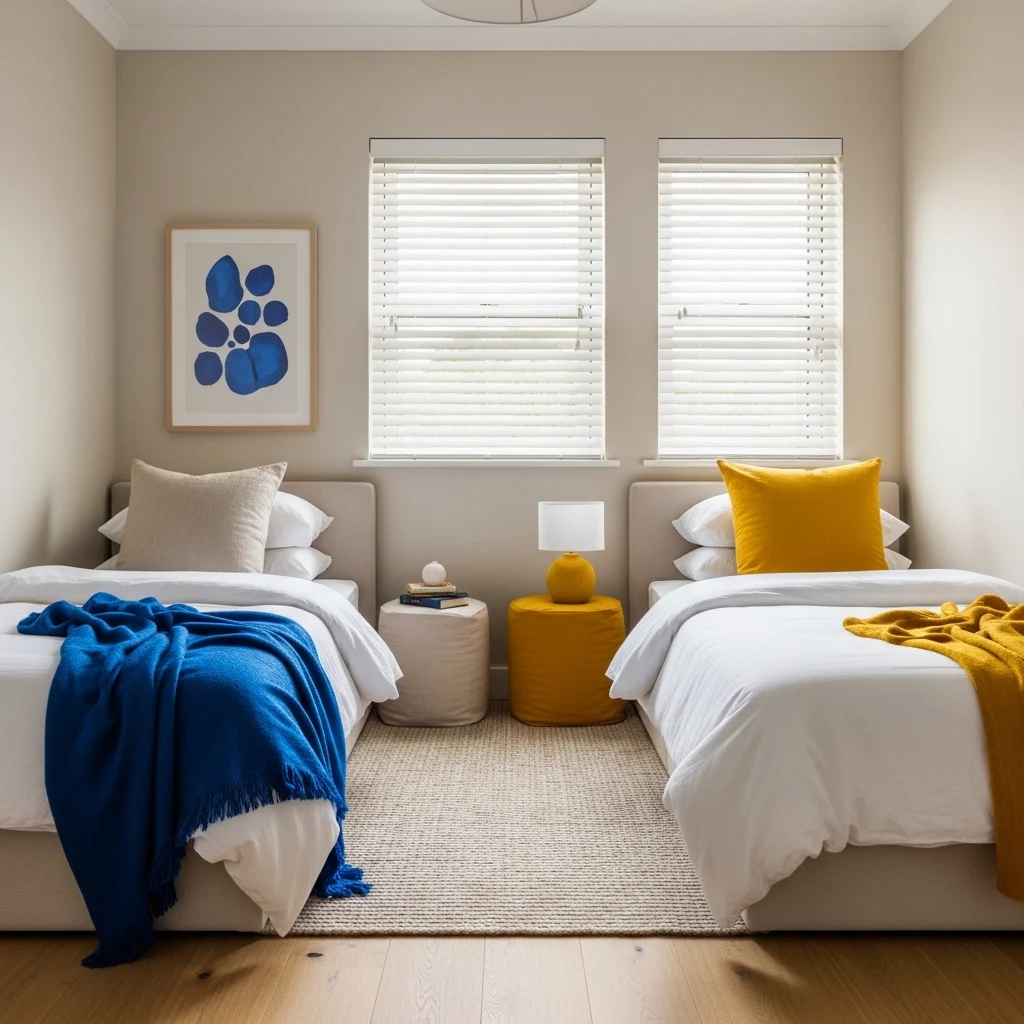
You might feel tempted to split the room into “blue vs pink.” Please do not. That approach ages fast and limits creativity.
Pick a Shared Base Theme
Start with neutral colors like:
- White
- Beige
- Light gray
Then let each child add personality through:
- Bedding
- Wall art
- Pillows
This keeps the room cohesive while still feeling personal.
Why This Matters
A neutral base gives you flexibility. Kids grow fast. Their tastes change even faster. Do you really want to repaint every year?
Smart tip: Keep the base simple and swap accessories instead.
Maximize Vertical Space
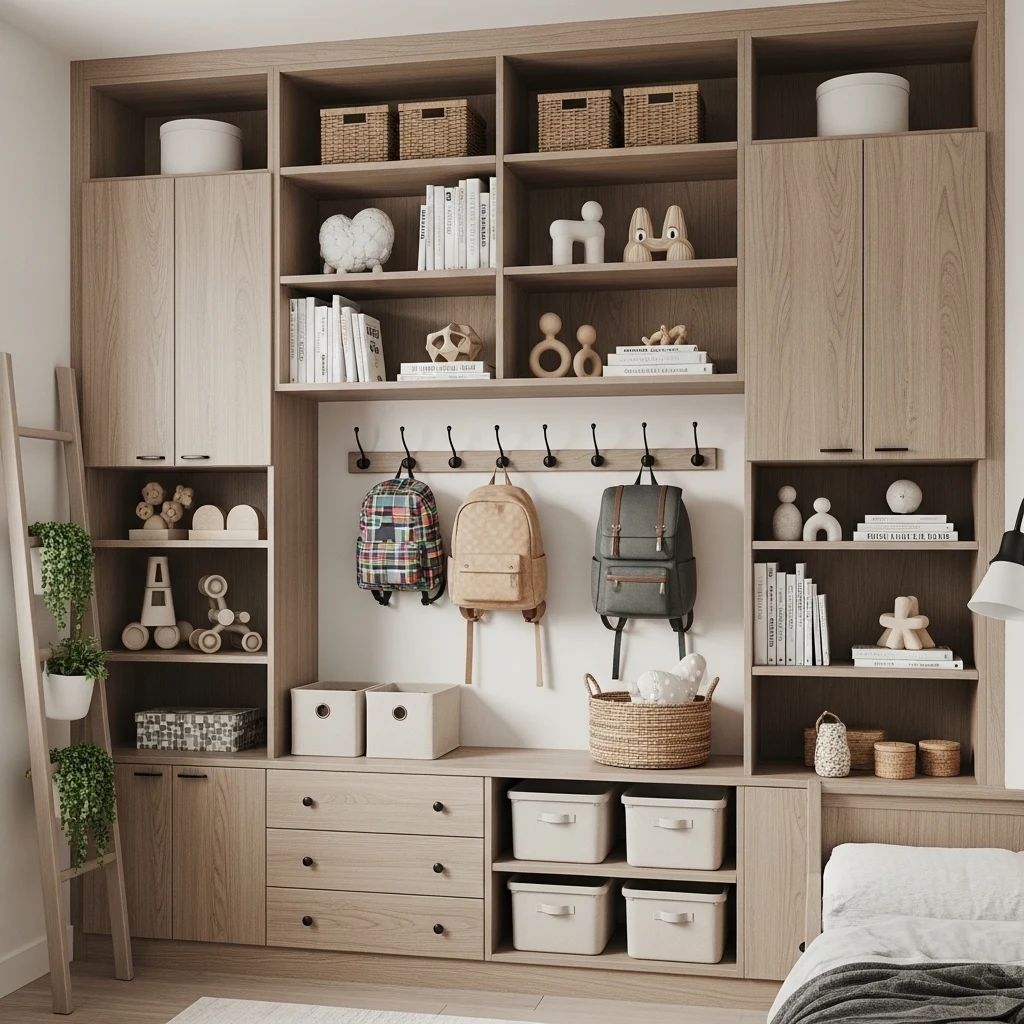
When floor space runs out, look up. Seriously, your walls are begging for attention.
Install Wall Storage
Use vertical space for:
- Floating shelves
- Wall hooks
- Hanging organizers
These keep clutter off the floor and make the room feel more open.
Add Tall Storage Units
Tall dressers or cabinets help you store more without spreading out. Just make sure you secure them properly. Safety first, always.
Ever walked into a room where everything sits on the floor? It feels chaotic instantly. Vertical storage fixes that problem fast.
Get Floating Shelves For Extra Storage Space
Create Shared and Private Storage
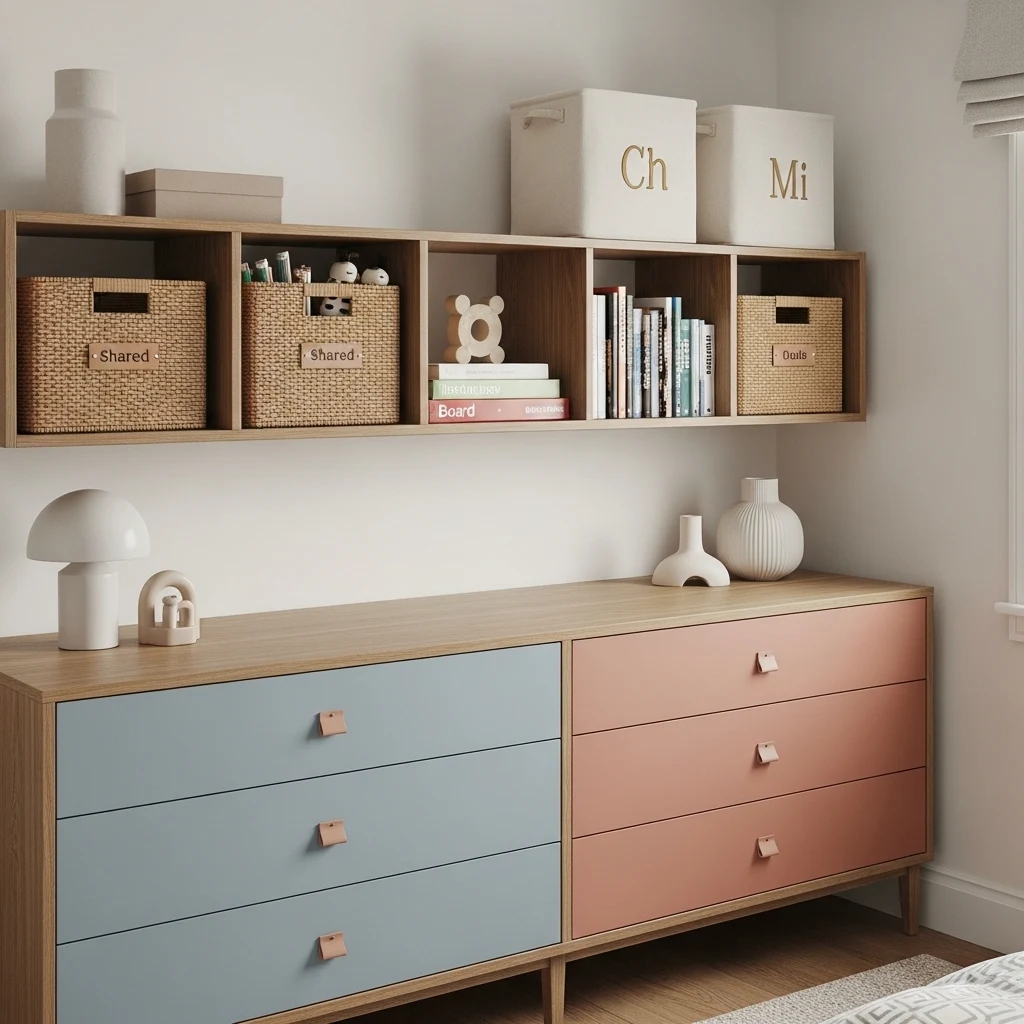
Storage can either save your life or ruin it in a shared bedroom. There is no middle ground.
Divide Storage Clearly
Give each child:
- Their own drawer section
- Separate bins or baskets
- Labeled storage areas
This reduces the classic “that is mine” argument.
Add Shared Storage Too
Not everything needs to be separate. Use shared storage for:
- Toys
- Books
- Games
This encourages cooperation. Or at least reduces the number of arguments slightly.
Key point: Clear storage systems keep the room organized and your sanity intact.
Use Multi-Functional Furniture
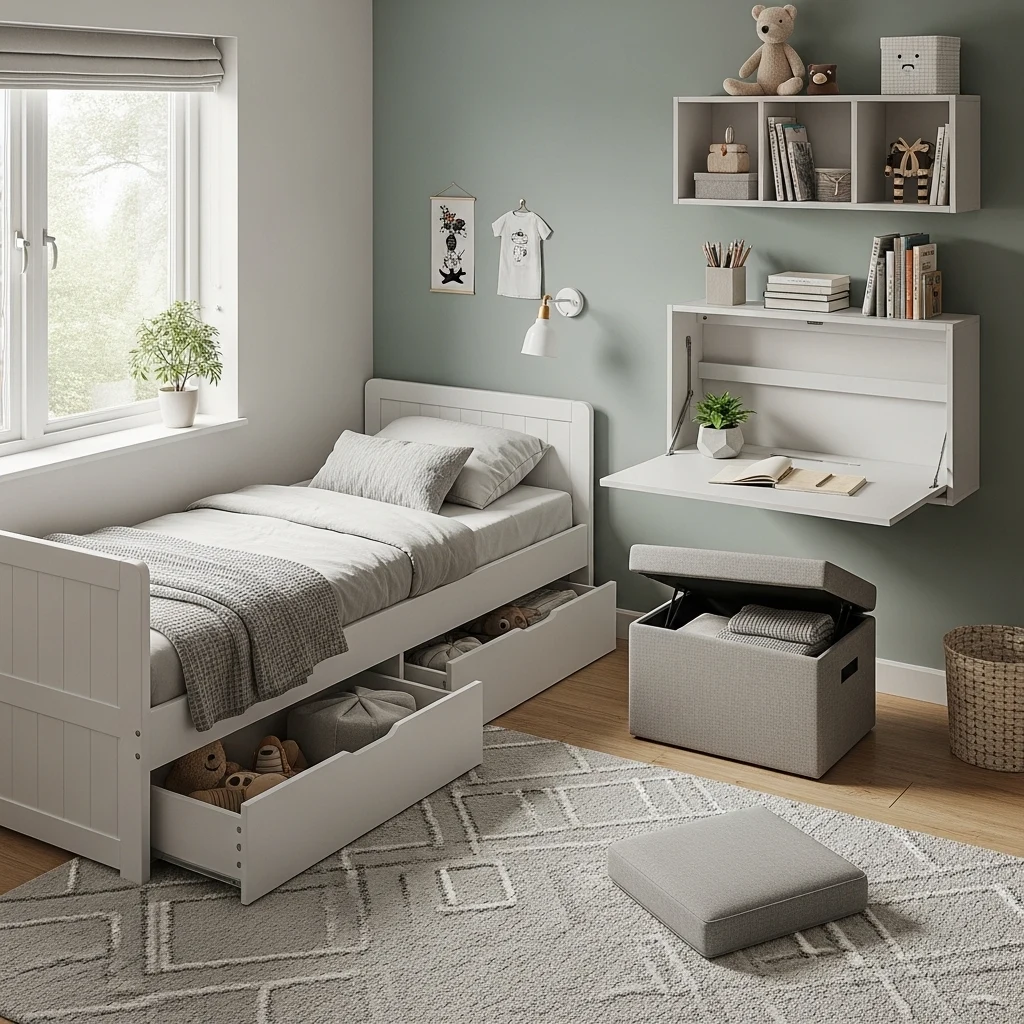
In a small room, every piece of furniture should earn its place.
Smart Furniture Choices
Look for items that do more than one job:
- Beds with built-in drawers
- Ottomans with storage inside
- Foldable desks
These save space and reduce clutter.
Why Multi-Functional Works
You get more use out of less furniture. And in a small room, that matters a lot.
I once swapped a bulky dresser for a bed with drawers. The difference felt huge. Same room, same size, but suddenly it breathed better.
Browse Storage Beds For Small Bedrooms
Keep Decor Fun but Balanced
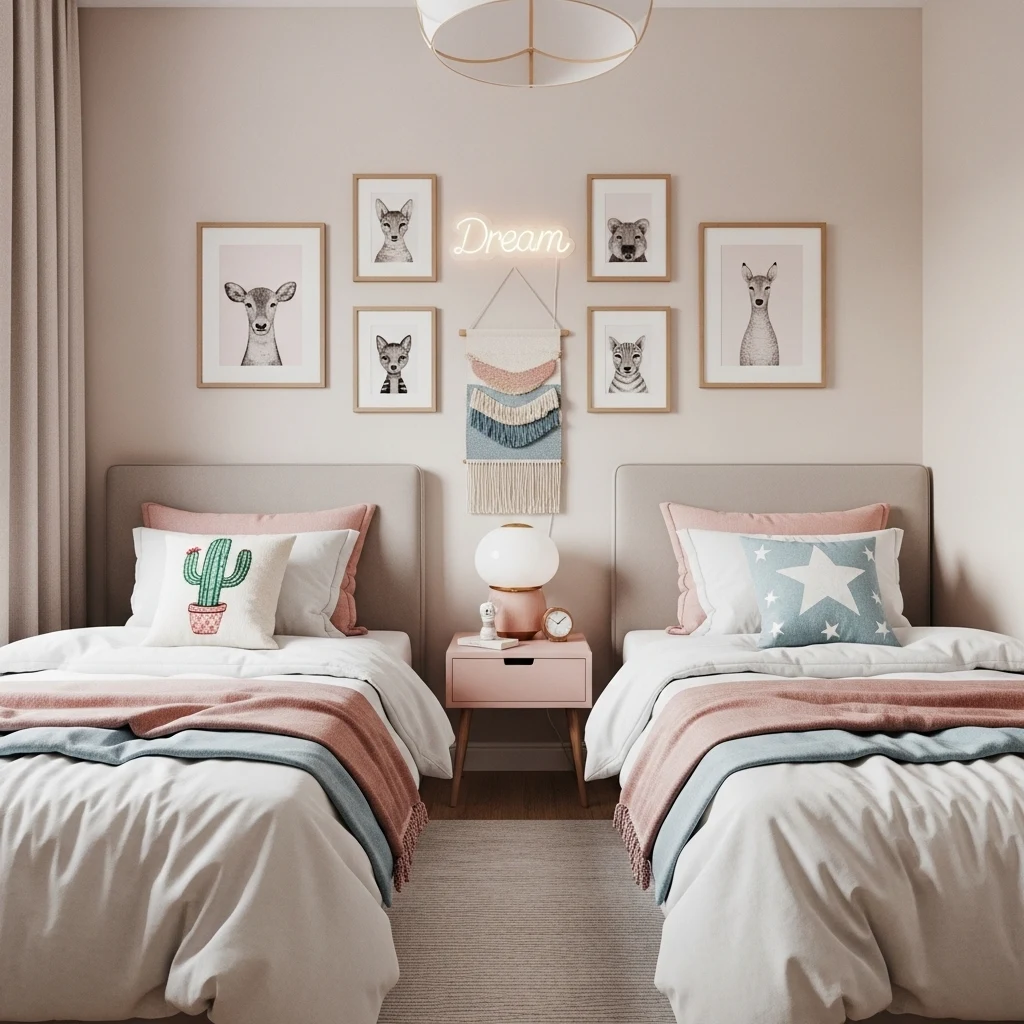
You want the room to feel fun, not chaotic. There is a fine line here.
Mix Both Personalities
Let each child choose a few decor items. Then blend them together:
- One wall for shared art
- Coordinated color accents
- Matching furniture with different accessories
This creates harmony without killing individuality.
Avoid Overcrowding
Too many decorations can overwhelm a small space. Keep it simple.
Ask yourself this. Does this item add value or just take up space? If it is the second one, it goes.
Important tip: Less clutter equals more breathing room.
Use Lighting to Open Up the Space
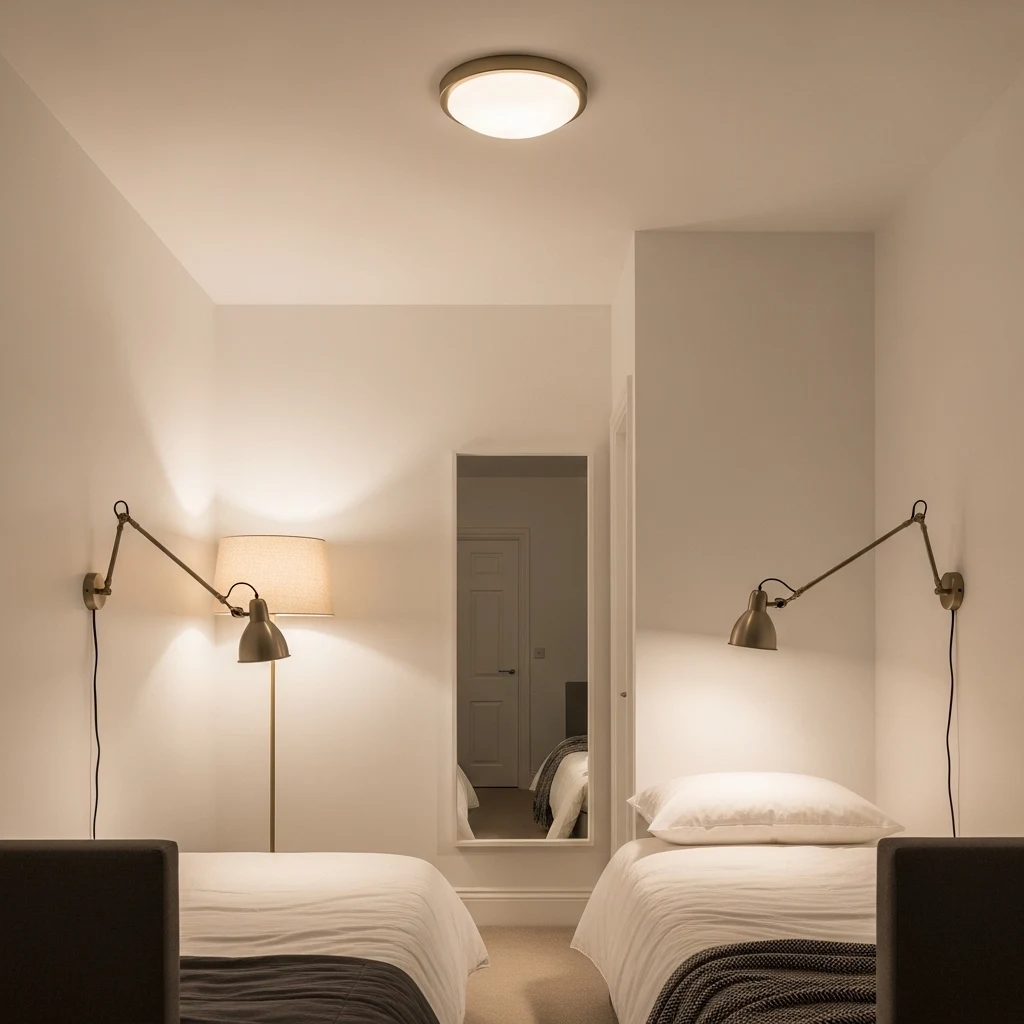
Lighting changes everything. A poorly lit room feels smaller than it is.
Layer Your Lighting
Combine different types of lighting:
- Ceiling lights for overall brightness
- Bedside lamps for personal use
- Wall lights to save space
Choose Bright, Soft Light
Soft white lighting creates a cozy feel without making the room look dull.
Ever walked into a dim room and felt instantly cramped? Good lighting fixes that immediately.
Encourage Cooperation in Design
This part sounds simple, but it matters more than anything else.
Let Kids Have a Say
Ask them:
- What colors do you like?
- What theme feels fun?
- What do you want in your space?
This reduces resistance later.
Why This Works
Kids feel proud of a space they helped design. And they are more likely to keep it clean. Well, slightly more likely.
Real talk: You still might step on a toy at 2 AM. But at least the room will look good during the day.
Add a Study or Activity Corner
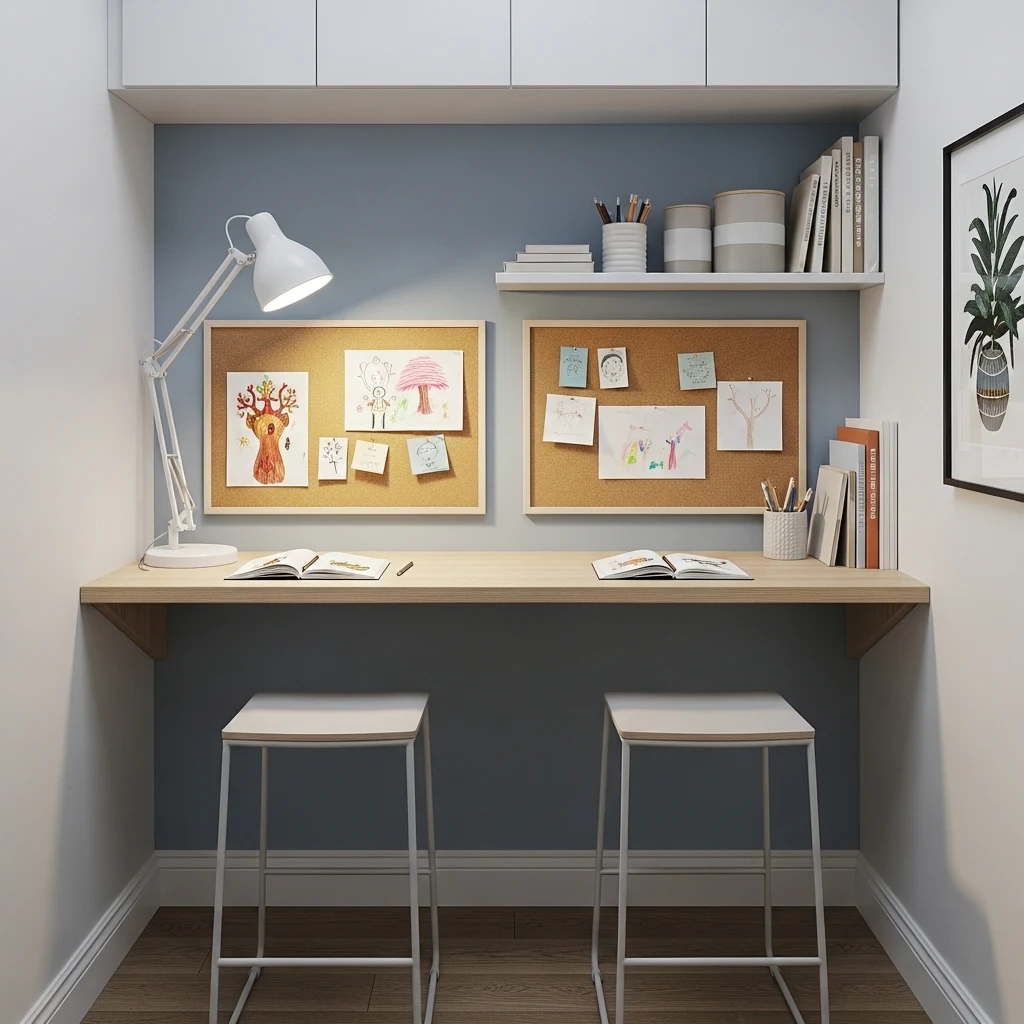
Even in a small room, you can create a functional study area.
Keep It Compact
Use:
- A shared desk
- Wall-mounted tables
- Fold-down workstations
Separate Work Zones
If possible, give each child their own study spot. Even a small divider helps.
This supports focus and reduces distractions. And let’s be honest, fewer distractions mean fewer excuses.
Browse Compact Study Desks For Small Rooms
Make It Flexible for the Future
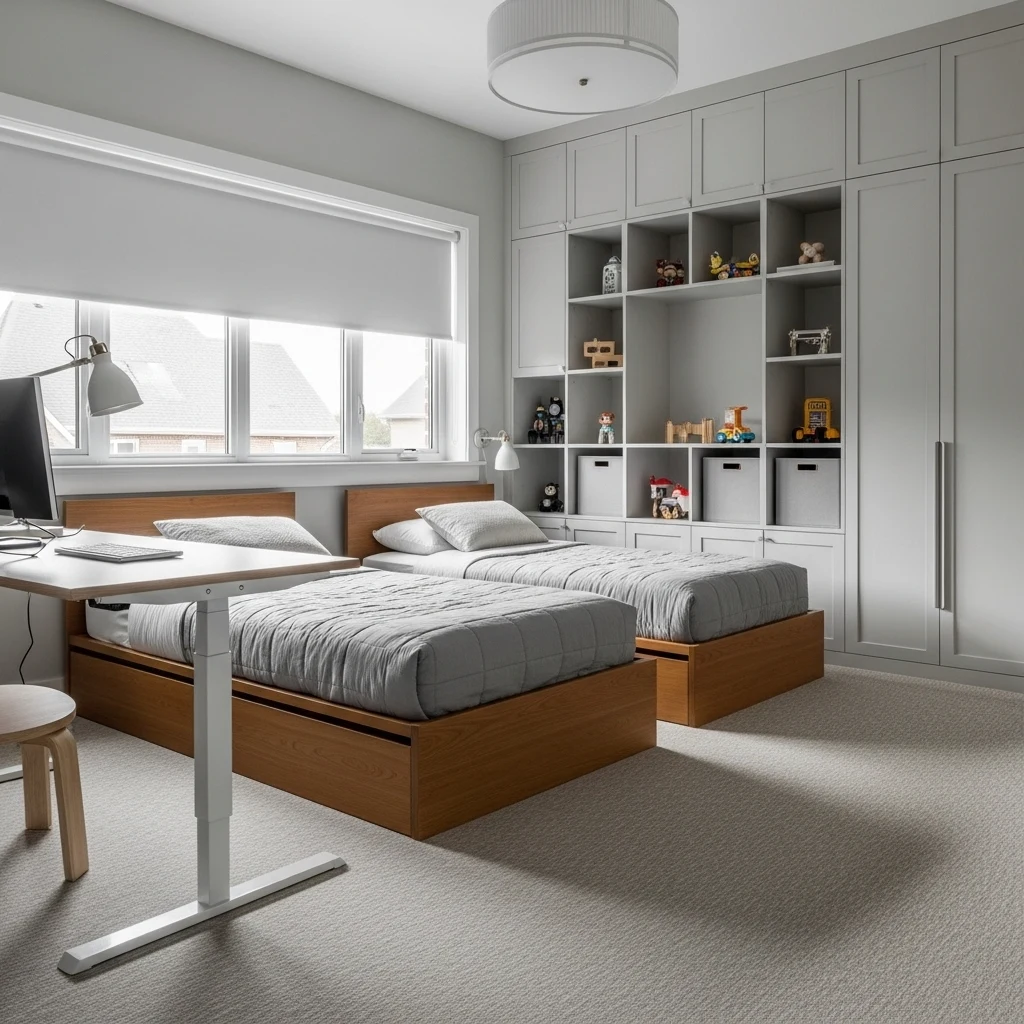
Kids grow. Their needs change. Your design should keep up.
Choose Adjustable Elements
Go for:
- Adjustable desks
- Expandable storage
- Neutral furniture
Plan for Change
What works for a 6-year-old will not work for a 12-year-old. Design with the future in mind.
Smart move: Invest in pieces that adapt over time.
Final Thoughts
Designing a shared bedroom for a boy and a girl in a small room feels tricky at first. But once you focus on smart layout, space-saving furniture, and balanced design, everything starts to fall into place.
Keep it simple. Keep it flexible. And most importantly, keep it functional.
And if things still get a little messy? That just means real kids live there. Honestly, that is part of the charm.
How Do You Separate A Small Shared Bedroom For Boy And Girl?
You can separate a small shared bedroom using visual and functional zoning instead of walls. I like using rugs, bookshelves, or bed placement to define each child’s space.
This method helps each child feel they have their own area while still sharing the room. It also reduces conflict because boundaries are clear without taking up extra space.
What Is The Best Bed Type For A Shared Small Bedroom?
The best bed types for a shared small bedroom are bunk beds, trundle beds, and loft beds. I prefer bunk beds because they save the most floor space.
Trundle beds are great for sleepovers since they offer flexibility. Loft beds work well if you want to add a desk underneath.
How Do You Decorate A Shared Bedroom Without Clashing Styles?
You can decorate a shared bedroom with a neutral base color. Let each child personalize their side. I suggest starting with soft tones like white or light gray.
Next, add personality with bedding, posters, and small decor items. This way, the room stays balanced and feels personal for both kids.
How Can You Make A Small Shared Bedroom Look Bigger?
To make a small shared bedroom feel bigger, use vertical storage, light colors, and keep clutter minimal. Rooms seem larger when the floor stays clear.
Wall shelves and tall storage units store items up high, avoiding a spread-out look. Good lighting is also key for an airy feel.
How Do You Keep A Shared Kids Bedroom Organized?
You can keep a shared kids’ bedroom organized by giving each child their own storage space. Label everything clearly. I suggest using bins, drawers, and color-coded sections.
Reserve shared storage for toys and common items. This cuts down on confusion and teaches kids to be responsible for their space.