Loft Bed with Desk Underneath for Small Bedrooms
Small bedroom? No problem. A loft bed with a desk underneath might just be the smartest furniture decision you ever make for a cramped space.
I say this as someone who spent years fighting a bulky traditional bed-desk combo that ate up half my room and left zero breathing room for anything else.
Here is the thing: you do not need a bigger room. You need a smarter layout.
And a loft bed with a built-in desk underneath gives you exactly that, stacking your sleeping and working zones vertically so your floor space can finally breathe.
Why a Loft Bed with Desk Makes Perfect Sense for Small Bedrooms
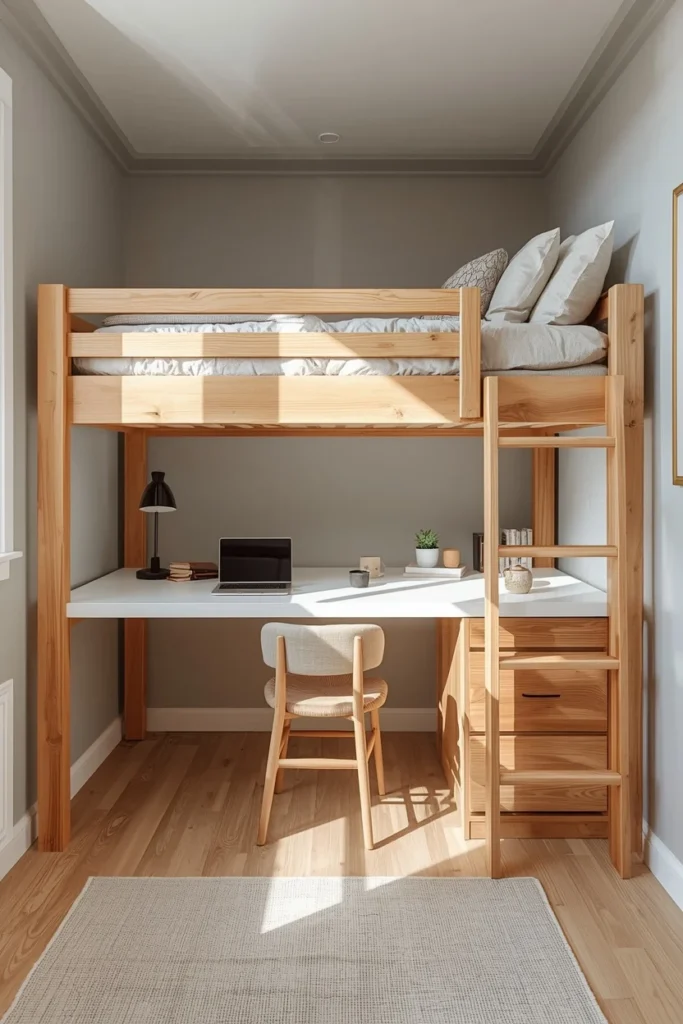
Let me paint you a picture. You wake up, climb down from your bed, and sit straight at your desk without shuffling around a maze of furniture.
That is the daily reality a loft bed with a desk underneath creates, and once you experience it, going back to a regular bed-desk setup feels almost criminal.
Small bedrooms demand vertical thinking. Most people immediately think about downsizing their furniture when space gets tight. But the smarter move is to go upward, not inward.
A loft bed lifts your sleeping area off the floor and hands that recovered square footage right back to you.
The Space Math Actually Works in Your Favor
A standard twin loft bed occupies roughly the same floor footprint as a twin flat bed, which sits around 38 by 75 inches.
But unlike a flat bed, a loft bed opens up the entire area beneath it for a functional workspace. You go from losing floor space to gaining it, which is a trade I will take every single time.
Think about it this way: a desk alone typically needs about 24 to 30 inches of depth and at least 48 inches of width to be genuinely useful.
Without a loft bed, fitting both a regular bed and a proper desk in a small room often means compromising on one of them. With a loft bed, you get both without cutting corners.
What to Look for When Choosing a Loft Bed with Desk
Not all loft beds are created equal, and trust me, you will feel that difference the moment you start using the wrong one daily. Here are the key features that actually matter.
1. Weight Capacity and Build Quality
Before anything else, check the weight capacity of the loft bed, both for the sleeping platform and the desk surface.
A solid loft bed should support at least 200 to 250 pounds on the sleeping platform for adults.
The desk surface should comfortably handle your laptop, monitor, books, and whatever else you pile on it without wobbling.
Look for beds built from:
- Solid wood (pine, rubberwood, or hardwood) for durability and a classic look
- Metal frames for a more industrial, modern style with excellent structural strength
- MDF or engineered wood for budget-friendly options, though these require more careful assembly
2. Desk Depth and Surface Size
A desk that is too shallow will frustrate you every single day. Aim for a desk depth of at least 20 inches, though 24 inches is the sweet spot for comfortable work or studying.
If you plan to use a desktop monitor, you need that extra depth or you will be squinting at a screen six inches from your face.
3. Ladder Placement and Safety
The ladder is something people overlook until they are climbing up to bed half-asleep at midnight. Vertical ladders save floor space but require a bit more coordination.
Angled ladders are easier and safer to climb but do eat into a few extra inches of floor space. Some models also offer staircase designs that double as storage, which is a genuinely clever solution.
4. Ceiling Height Clearance
This one is non-negotiable. You need at least 33 to 36 inches of clearance between the top of the mattress and your ceiling.
Anything less and you will be hunching uncomfortably every time you sit up in bed. Measure your ceiling height before you commit to any loft bed, and factor in the mattress thickness too.
5. Built-in Storage Options
The best loft bed with desk combos do not stop at just a bed and a workspace. They include:
- Shelving units above or beside the desk
- Drawers or cubbies under the stairs
- Bookcase headboards or side shelves at mattress level
- Open storage compartments built into the frame
These extras multiply your storage without adding any extra furniture to the room.
Loft Bed Styles That Work Best for Small Bedrooms
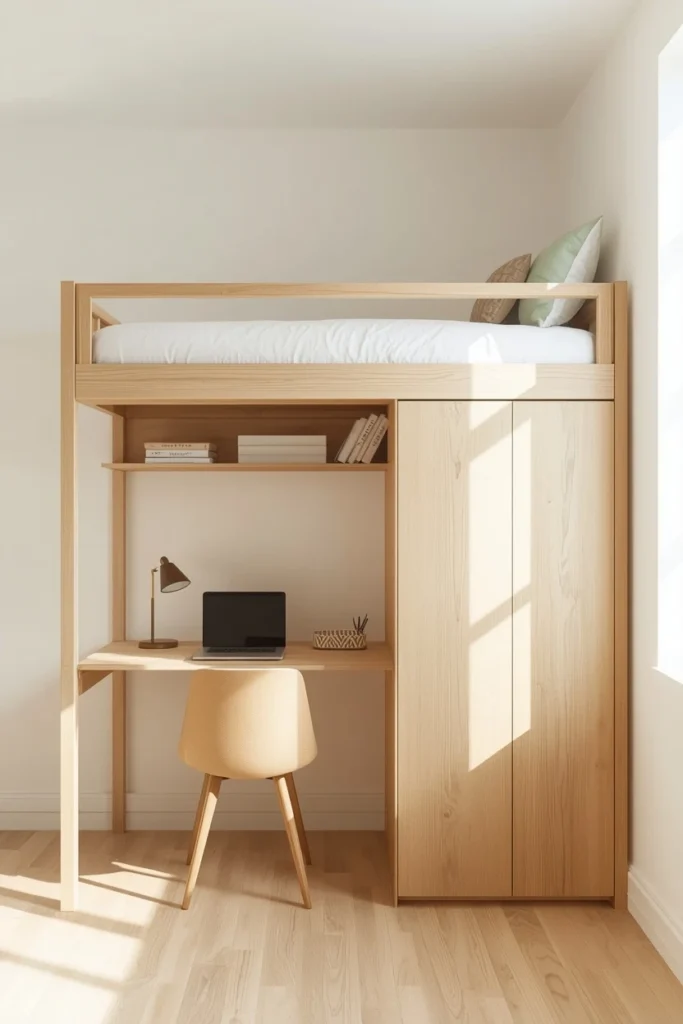
The Classic Twin Loft Bed with Desk
This is the standard option and the one most people picture first. It features a twin-size sleeping platform raised to the top, with a desk fitted snugly underneath.
It works brilliantly in kids’ rooms, teen bedrooms, and studio apartments. The twin mattress keeps the overall footprint compact, and the open design underneath the bed rarely feels claustrophobic.
Full-Size Loft Bed with Desk
If you need a bigger sleeping surface or you share the bed occasionally, a full-size loft bed gives you more room to sleep without blowing up your floor plan too dramatically.
The desk underneath tends to be a bit longer too, which helps when you need more workspace spread.
L-Shaped Loft Bed with Desk
The L-shaped design wraps the desk around one or two sides of the loft frame, creating an ergonomic corner workspace that maximizes the area directly beneath the bed.
This setup suits people who work from home or students who regularly need multiple screens, notebooks, and reference materials spread out at once.
Loft Bed with Desk and Wardrobe Combo
Some designs take things even further by incorporating a wardrobe or closet section alongside the desk underneath the loft.
If your small bedroom lacks built-in closet space, this type of loft bed essentially replaces an entire standalone wardrobe while keeping everything unified under one frame.
How to Style and Set Up the Desk Area Underneath
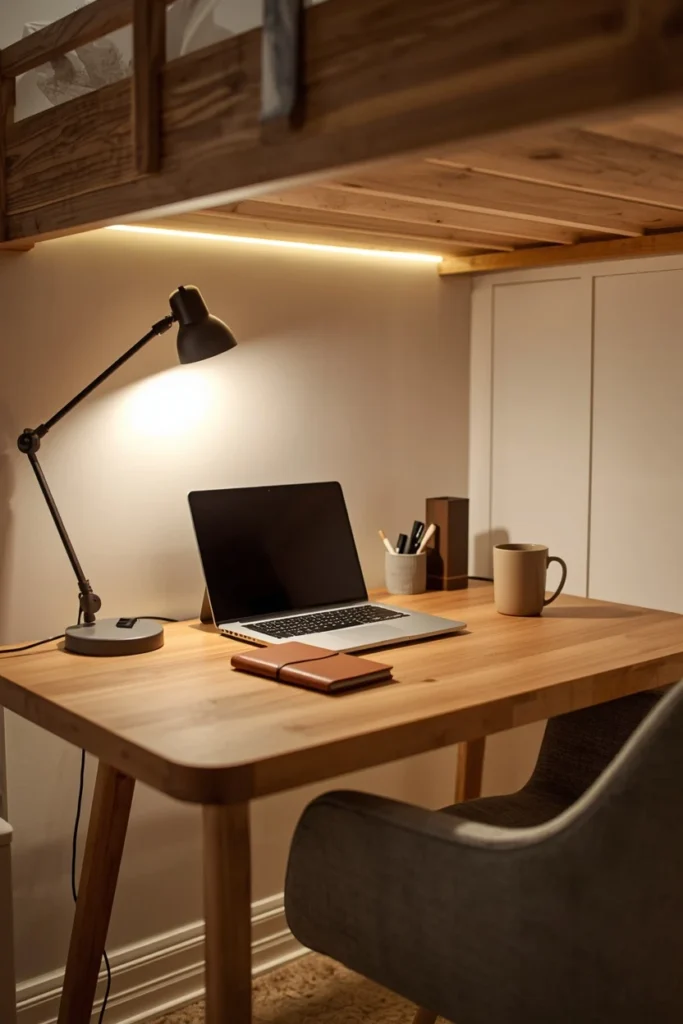
Getting the loft bed is half the battle. Setting up the desk area so it actually feels like a productive, comfortable workspace is where the real magic happens.
Lighting matters more than you think. The space underneath a loft bed tends to be shadier than the rest of the room.
A good LED desk lamp with adjustable brightness will make a significant difference in how comfortable it feels to work down there.
Some people also add LED strip lights along the underside of the bed frame for ambient lighting, which looks great and adds practical brightness.
Keep the desk surface organized from day one. Clutter below a loft bed feels more suffocating than clutter on a regular desk because the bed frame above creates a natural boundary. Use:
- Desk organizers or trays to corral pens, chargers, and small items
- Cable management clips along the desk legs or frame to keep cords tidy
- A monitor stand or arm to free up desk surface and improve your eye-line
Add a comfortable desk chair that fits the desk height without bumping into the bed frame above when you push back. Measure the clearance carefully before buying a chair.
Common Mistakes to Avoid
People make a few predictable errors when buying loft beds, and you do not want to be the person reassembling furniture three times because of an avoidable oversight.
Ignoring the mattress thickness: A thick mattress on a loft bed reduces your headroom significantly. Stick to mattresses between 6 and 10 inches for most loft bed setups.
Shop Loft Bed Mattresses On Amazon
Buying a bed with no weight specs listed: If a retailer does not clearly state the weight capacity, that is a red flag worth taking seriously.
Underestimating assembly time: Most loft beds require a solid two to four hours to assemble, and some require two people. Clear your Saturday afternoon before that flat-pack box arrives.
Overlooking the desk chair height: A chair that is too tall will have you banging your knees on the desk surface or your head on the bed frame. Check dimensions before you add anything to your cart.
Shop Desk Organization Essentials On Amazon
Is a Loft Bed with Desk Worth It for Small Bedrooms?
Short answer: absolutely yes. A longer answer involves talking about how much more livable a small bedroom becomes when you stop fighting the square footage and start working with it vertically.
You reclaim floor space, add storage, create a defined workspace, and still have a comfortable bed. That is four wins from one piece of furniture, which is a pretty hard deal to beat.
Whether you are a student, a remote worker, or just someone who refuses to accept that a small bedroom means a cramped life, a loft bed with a desk underneath delivers a genuinely practical solution.
The bedroom you have right now is probably more capable than you give it credit for. You just need the right furniture to unlock it.
Final Thoughts
A loft bed with a desk underneath transforms a small bedroom from a place where you merely sleep and work into a space that actually supports how you live.
The vertical design does the heavy lifting so your floor plan does not have to.
Pick the right size, confirm your ceiling clearance, invest in good lighting, and keep the desk area organized from the start.
Do those four things and you will wonder how you ever managed without it. Sometimes the best room upgrade is not a bigger room. Sometimes it is just a better bed.
What Is the Best Loft Bed with Desk Underneath for a Small Bedroom?
The best loft bed with a desk underneath for a small bedroom depends on your specific needs, but a twin-size loft bed with a built-in desk is the top choice for most people working with limited floor space.
Look for a model that offers a desk depth of at least 20 to 24 inches, solid construction with a weight capacity of 200 pounds or more on the sleeping platform, and additional storage features like shelves or drawers.
Brands like Max and Lily, Donco Kids, and DHP consistently receive strong reviews for their small-bedroom loft bed and desk combinations.
Always confirm ceiling clearance before purchasing, since you need at least 33 to 36 inches between the top of your mattress and the ceiling for comfortable use.
How Much Ceiling Height Do You Need for a Loft Bed with a Desk?
You need a minimum ceiling height of around 9 feet to comfortably accommodate most standard loft beds with a desk underneath, though some lower-profile models can work in rooms with 8-foot ceilings.
The key measurement is the clearance between the top of your mattress and the ceiling, which should be at least 33 to 36 inches so you can sit upright in bed without hunching.
Always measure your room’s ceiling height first, then subtract the loft bed frame height and your mattress thickness to calculate your actual clearance.
If your ceilings are lower than 8 feet, look for low-ceiling loft bed designs specifically built for tighter vertical spaces.
Can Adults Use a Loft Bed with a Desk Underneath in a Small Bedroom?
Yes, adults can absolutely use a loft bed with a desk underneath in a small bedroom, provided they choose a model with an adequate weight capacity and a full-size or queen-size sleeping platform.
Most adult-friendly loft beds support between 250 and 500 pounds on the sleeping surface and feature staircase-style ladders rather than vertical ones for safer, easier access.
The desk area underneath works just as well for adult home office setups as it does for student study zones.
The key is selecting a sturdy, well-built frame, ideally from solid wood or heavy-gauge metal, and pairing it with a quality mattress that does not exceed 10 inches in thickness to preserve headroom.
How Do You Decorate the Desk Area Underneath a Loft Bed?
Decorating the desk area underneath a loft bed is all about balancing function with visual comfort.
Start with good lighting, since the space under a loft bed tends to be darker than the rest of the room, and a quality LED desk lamp or LED strip lights along the underside of the bed frame makes a huge difference.
Keep the desk surface organized using trays, desk organizers, and cable management clips to prevent clutter from making the enclosed space feel cramped.
You can personalize the area with a small plant, a pinboard, or framed artwork on the wall beside the desk.
Choosing a light-colored desk chair and keeping the surrounding walls in a light or neutral tone also helps the space feel more open and less boxed in.
What Is the Difference Between a Loft Bed and a Bunk Bed with a Desk?
A loft bed raises a single sleeping platform to an elevated height and leaves the entire space underneath open for a desk, storage, or any other use you choose.
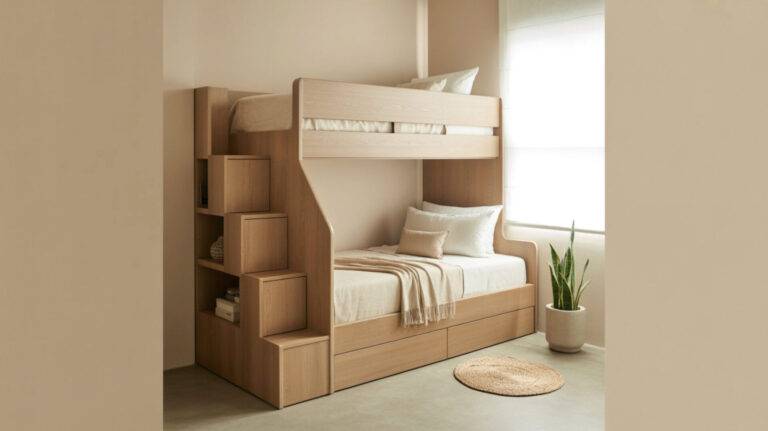
A bunk bed, by contrast, stacks two sleeping surfaces on top of each other and typically does not include a dedicated workspace underneath, though some bunk bed models do incorporate a small desk on one side.
For small bedrooms where only one person sleeps in the room, a loft bed with a desk underneath is the far more practical and space-efficient choice.
Bunk beds make more sense when two people need to sleep in the same room, while loft beds are the clear winner for solo occupants who want to maximize both their sleeping and working space within a single furniture footprint.