Best Mattress Support Without a Box Spring
You bought a great mattress. You set it up, climbed in, and something feels off. The mattress is either on the floor or on a frame that doesn’t seem right.
Sound familiar? The good news is you don’t need a box spring for solid support. There are better options available today. Once you know them, you’ll wonder why box springs were ever the standard.
Let’s explore what you need to know. We’ll look at the best alternatives and what happens to your mattress if you skip proper support.
Why Mattress Support Matters More Than You Think
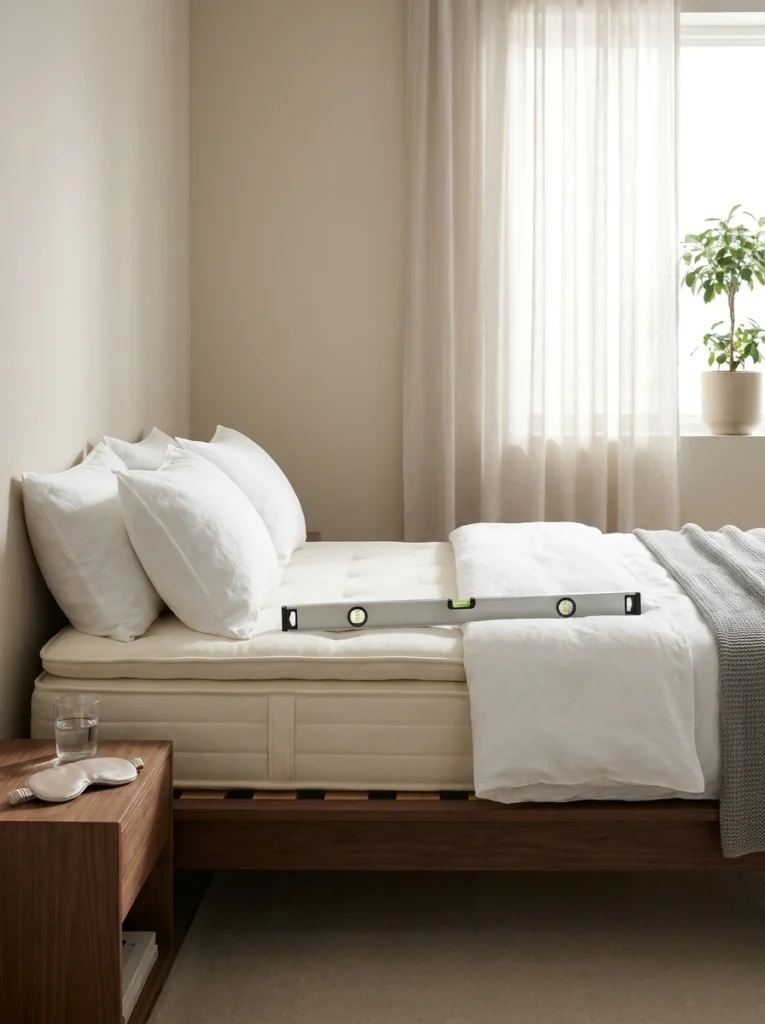
Here is something most people never consider: your mattress is only as good as what sits underneath it.
You could spend $2,000 on a premium memory foam mattress and still wake up with back pain if the support underneath is garbage.
Good mattress support does three things:
- It keeps the mattress surface even so your spine stays aligned while you sleep.
- It prevents premature sagging, which can shave years off your mattress’s lifespan.
- It provides adequate airflow underneath the mattress to prevent moisture buildup and mold.
A box spring used to be the standard solution for all three. But modern mattresses, especially foam and hybrid models, do not actually need the spring component.
What they need is a firm, stable, well-ventilated base. And there are smarter ways to get that now.
The Best Mattress Support Options Without a Box Spring
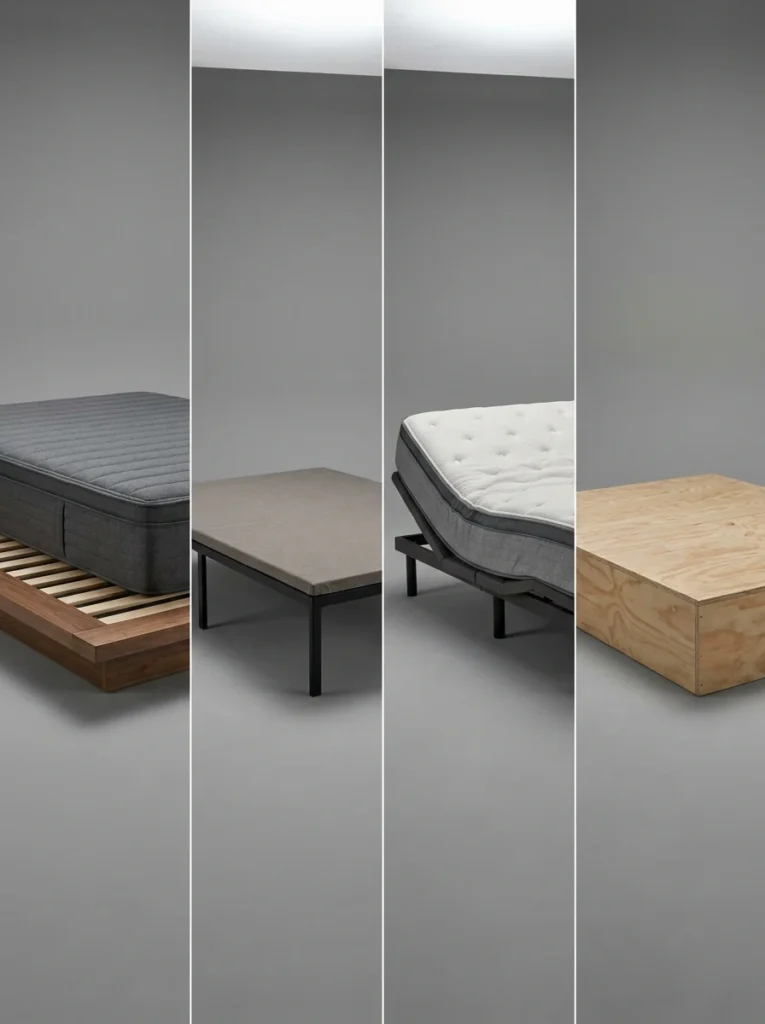
Platform Beds
If you want the cleanest solution that handles everything in one purchase, a platform bed frame is your best bet.
Platform beds come with a built-in solid or slatted surface, which means no box spring required and no extra parts to deal with.
A platform bed with a slatted base works well for most mattress types, but there is one important rule: the slats should be no more than 3 inches apart.
Anything wider and you risk the mattress sagging between the gaps, especially with memory foam.
Some people learn this lesson the hard way after watching their mattress slowly swallow itself between the slats.
Solid platform beds, on the other hand, offer wall-to-wall surface support. They work particularly well for latex and foam mattresses that need consistent pressure distribution across the entire base.
Shop Platform Bed Frames on Amazon
Bunkie Boards
A bunkie board is essentially a thin, flat board that sits between your mattress and your bed frame.
It is typically 1 to 3 inches thick and provides a solid, even surface without adding much height to your bed.
Why would you choose a bunkie board?
- You already have a bed frame you love but it lacks center support.
- You want a low-profile setup without raising the bed too high.
- You need an affordable solution that does not require replacing your entire frame.
Bunkie boards come in wood, particleboard, and upholstered versions.
For long-term durability, solid wood or plywood options tend to hold up better than particleboard, which can warp over time with humidity changes.
Browse Bunkie Boards on Amazon
Adjustable Bases
Adjustable bases have gone from being a luxury hospital-room item to something millions of regular people use every night.
They let you raise the head or foot of your mattress electronically, which works great for people who read in bed, deal with acid reflux, or just like having options.
What makes them a strong support choice:
- The base provides a consistent, firm surface across the entire mattress.
- Most adjustable bases include a solid deck surface, so there are no gaps or slats to worry about.
- They work best with memory foam, latex, and most hybrid mattresses.
The main tradeoff is cost. A decent adjustable base starts around $300 and goes up from there depending on features.
But if you consider the long-term value of better sleep plus extended mattress life, the math starts to make sense.
Compare Adjustable Bases on Amazon
Solid Wood or Plywood Foundation
Sometimes the simplest solutions are the most effective.
A solid wood foundation, essentially a wooden box frame with a plywood top, gives you firm, even support at a fraction of the cost of a fancy adjustable base.
You can buy these pre-made or, if you are handy, build one yourself for very little money. A sheet of high-quality plywood over a basic frame does the job surprisingly well for most mattresses.
This option works especially well if you:
- Have a foam or latex mattress that requires a non-flexible base.
- Want a no-fuss, durable solution that lasts for years.
- Are setting up a guest room and do not want to overspend.
Just make sure whatever you build or buy sits flat on the floor or attaches securely to a frame. An uneven base transfers directly to an uneven sleep surface.
Metal Bed Frames with Center Support
Standard metal bed frames often get overlooked as a legitimate support option, but a heavy-duty metal frame with center support legs can hold a mattress very well.
The key word there is center support. Without it, even a sturdy metal frame can bow in the middle under the weight of a mattress and two sleeping adults.
Look for frames that include:
- Center support legs that touch the floor
- Multiple support beams running across the width of the frame
- Weight capacity rated for at least your mattress weight plus your body weight
Metal frames are also a good choice if you move frequently. They break down quickly, pack flat, and reassemble without any tools in most cases.
Find Heavy-Duty Metal Bed Frames on Amazon
Floor Placement (Yes, Really)
Before you roll your eyes, hear this out. Placing your mattress directly on the floor is a legitimate option in certain situations, and it is not as rough as it sounds.
When floor placement works:
- You prefer a low sleeping position for aesthetic or personal reasons.
- You are in a temporary living situation and need a simple setup.
- You have a mattress with excellent edge support and do not need extra height.
When it does not work:
- In humid climates where trapped moisture leads to mold growth.
- With foam mattresses that need airflow underneath to regulate temperature.
- If your manufacturer’s warranty requires a supported base, because violating that could void the warranty.
If you go the floor route, make sure you lift and air out the mattress at least once a week. The last thing you want is to flip your mattress over one day and discover a science experiment growing underneath.
What Mattress Types Need What Support?
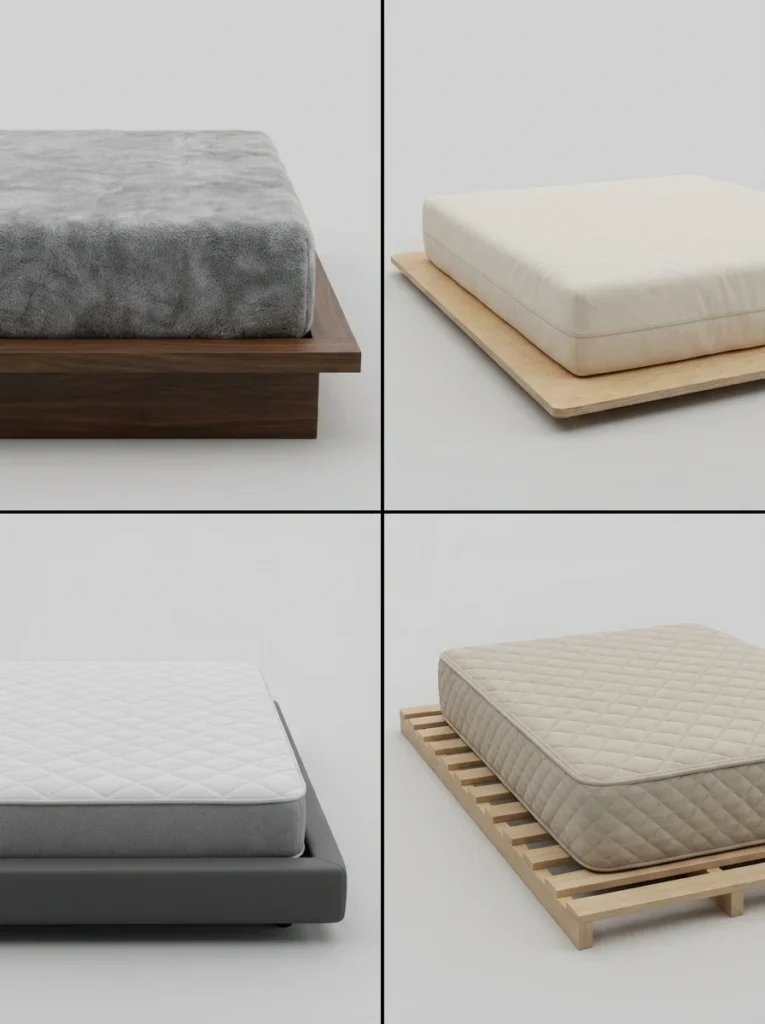
Not all mattresses play well with every support surface. Here is a straightforward breakdown:
Memory Foam Mattresses Memory foam needs a solid, rigid surface. Avoid any slatted base with gaps wider than 3 inches. Platform beds with solid tops or bunkie boards work great.
Never put memory foam on a traditional box spring because the springs create uneven pressure points and the mattress will sag prematurely.
Latex Mattresses Latex is dense and heavy, so it needs strong, consistent support. A solid platform bed or a flat foundation is ideal.
Slatted bases work only if the slats are close together and made from sturdy wood that will not flex under weight.
Hybrid Mattresses Hybrids are a bit more flexible. They can handle slatted bases as long as the slats are close enough together.
They also work well on platform beds and adjustable bases, though you want to check with your manufacturer if you plan to use an adjustable base, since not all hybrids are rated for it.
Innerspring Mattresses Traditional innerspring mattresses are the most forgiving. They work on a wider range of surfaces, including slatted frames with slightly wider gaps.
That said, proper center support is still important for preventing body impressions over time.
Common Mistakes That Ruin Good Mattress Support
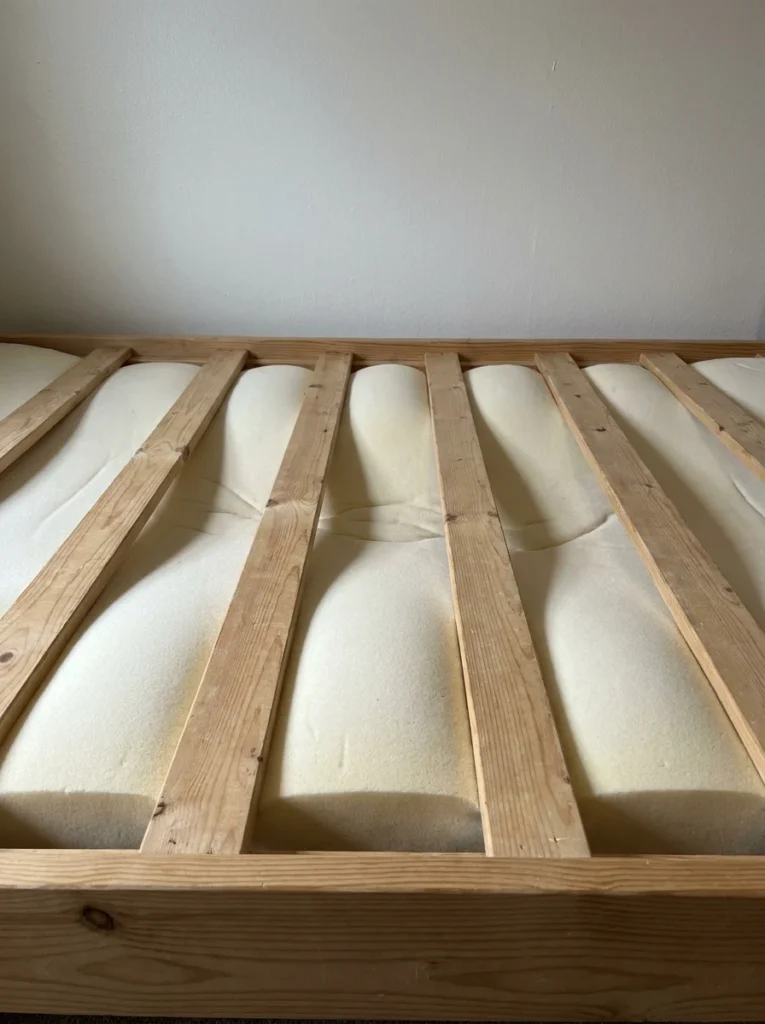
People spend good money on mattresses and then undermine everything with a poor support setup. Here are the mistakes worth avoiding:
Using a frame without center support legs. This is the single most common mistake.
The middle of the mattress bears the most weight night after night, and without center support, that area sinks and takes your mattress with it.
Ignoring slat spacing. Wide slat gaps seem harmless until you notice your foam mattress slowly mushrooming through the gaps. Once that happens, the damage is often permanent.
Choosing the wrong base for your mattress type. Putting a memory foam mattress on a traditional spring box might seem like double the support.
In practice, it creates uneven surface tension and speeds up wear on both the mattress and the box spring.
Skipping the weight capacity check. Bed frames and bases all have weight limits.
If you are a heavier sleeper or share the bed, exceeding that limit leads to frame bending, sagging, and eventually structural failure. Always check the rating before you buy.
How to Choose the Right Option for Your Situation
There is no single right answer here because the best support depends on a few personal factors. Ask yourself these questions before making a decision:
- What type of mattress do you have? Foam and latex need firm, solid support. Innerspring and hybrid are more flexible.
- What is your budget? Bunkie boards and solid foundations cost much less than adjustable bases. Platform beds fall somewhere in the middle.
- Do you want bed height options? Adjustable bases raise the profile significantly. Bunkie boards keep it low. Platform beds vary.
- How important is airflow for your mattress? If you sleep hot, a slatted base promotes better airflow than a solid surface.
Once you answer those questions, the right choice usually becomes pretty clear.
Shop Mattress Support Foundations on Amazon
The Bottom Line on Box Spring Alternatives
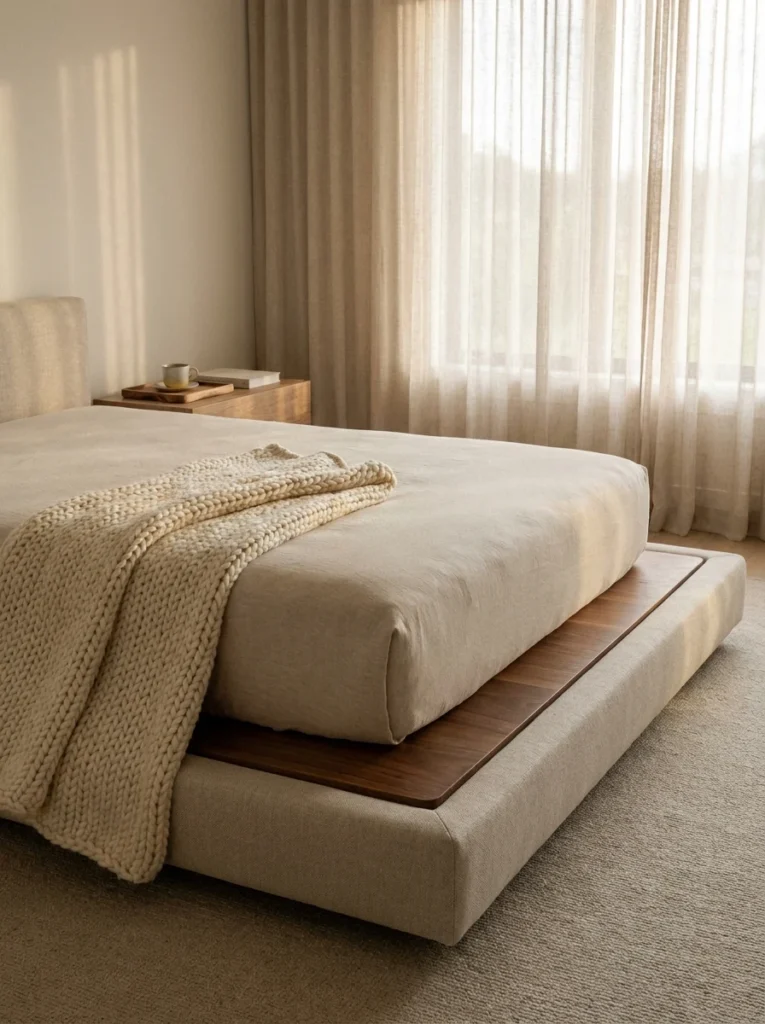
Box springs made sense when innerspring mattresses needed the flex of the spring system to work properly. Modern mattresses do not.
They need firm, stable support, and there are now multiple ways to provide that without dragging a bulky box spring into your bedroom.
Whether you go with a sleek platform bed, a simple bunkie board, an adjustable base with all the bells and whistles, or just a well-built wooden foundation, the goal is the same: keep your mattress flat, stable, and properly ventilated.
Get that right and your mattress will last longer, your back will thank you, and you will actually get the sleep you paid for. That, honestly, is the whole point.
Can You Put a Mattress Directly on a Bed Frame Without a Box Spring?
Yes, but only if the frame offers enough support. A bed frame with slats no more than 3 inches apart or a solid surface works well.
Frames without center support legs often sag in the middle over time. This sagging can damage your mattress and hurt your sleep quality.
What Is the Best Alternative to a Box Spring for Memory Foam Mattresses?
A solid platform bed or bunkie board works best for memory foam. Memory foam needs a flat, firm surface to avoid sagging.
Don’t use traditional box springs with memory foam. The springs create uneven pressure points, which can wear out the mattress quicker.
Does Sleeping Without a Box Spring Void Your Mattress Warranty?
It depends on your mattress maker. Many modern warranties need a “proper support surface.” This includes platform beds, slatted frames, and solid foundations.
Check your warranty documents first. Using an unsupported surface might void your coverage.
How Many Slats Does a Bed Frame Need to Support a Mattress Properly?
The slats should be no more than 3 inches apart for proper mattress support. For a queen-size bed, use at least 10 to 12 slats across the frame’s width.
Fewer slats or wider gaps may cause the mattress to sink, especially with softer foam.
Is a Bunkie Board the Same as a Box Spring?
No, they are quite different. A bunkie board is a thin, flat board, usually 1 to 3 inches thick. It sits between the mattress and the frame to create a solid, even surface.
A box spring has internal coils and is taller, around 8 to 9 inches. Bunkie boards have a lower profile and work better with modern foam and hybrid mattresses.