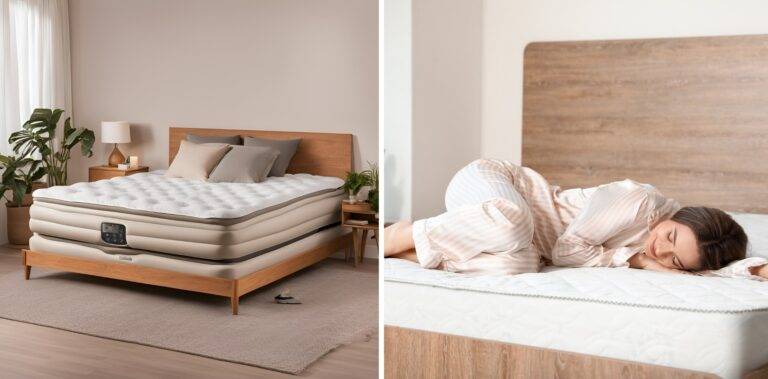
Blackout Curtains vs Sleep Mask for Better Sleep
If you’ve ever been awake at 5 a.m. watching the sunrise peek through your curtains, you know how tough light can be on sleep.
The big question is: should you block the light at the source with blackout curtains or at your face with a sleep mask? Both promise dark, restful nights, but they work differently and fit different lifestyles.
I’ve tried both, and each has its strengths and frustrations. Let’s break it down, compare them side by side, and help you find the best option for your life.
Why Darkness Matters So Much for Sleep Quality
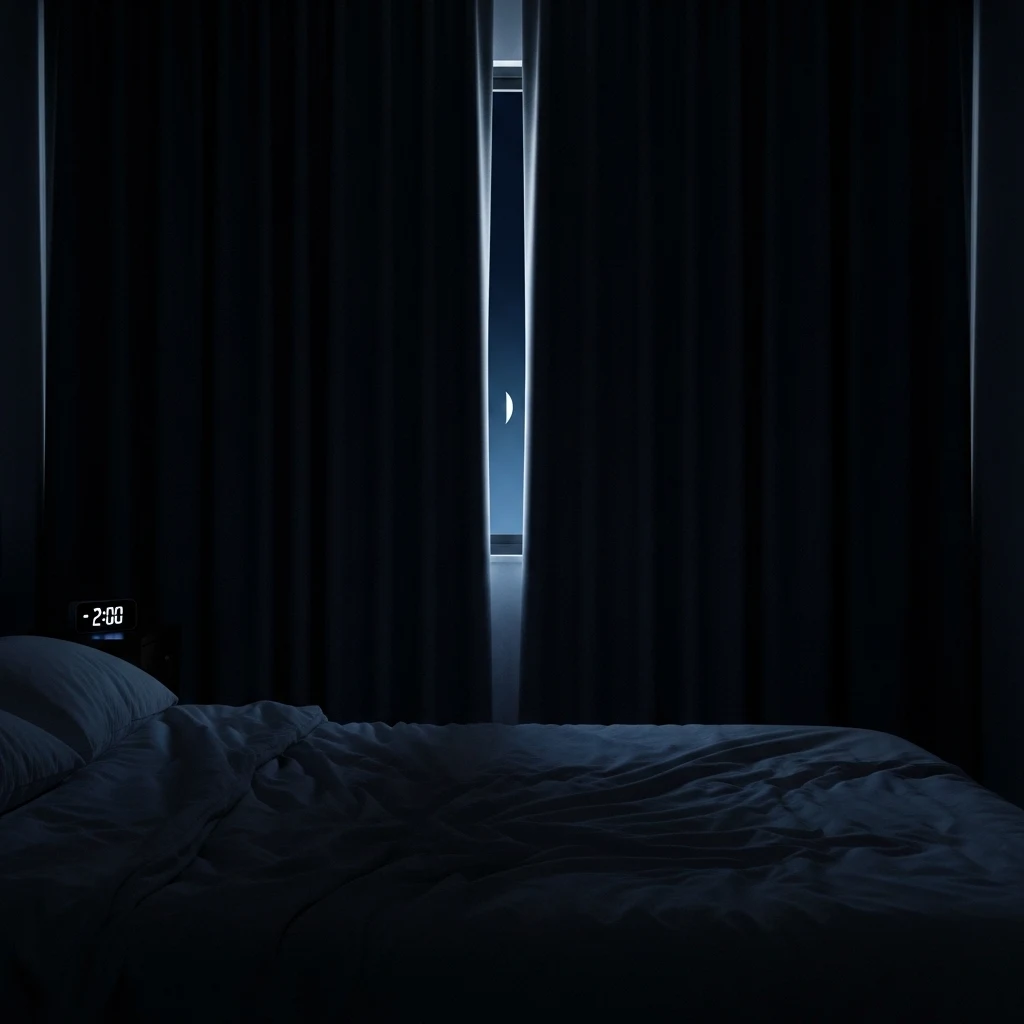
Before we pit these two sleep tools against each other, let us talk about why blocking light matters in the first place.
Your brain relies on darkness as a signal to produce melatonin, the hormone that tells your body it is time to sleep.
Even small amounts of artificial light, think streetlights, early morning sun, or a neighbor’s porch light, can suppress melatonin production and leave you staring at the ceiling wondering why sleep will not come.
Light exposure at the wrong time disrupts your circadian rhythm. That internal clock governs not just when you feel sleepy but also your mood, metabolism, and cognitive function.
So choosing the right light-blocking solution is not just about comfort. It genuinely affects your health.
The Science of Complete Darkness
Studies on sleep quality consistently show that sleeping in a completely dark environment improves both sleep duration and sleep depth.
People who sleep in darker rooms tend to experience more slow-wave sleep, the deep, restorative stage where your body repairs tissue and consolidates memory.
That alone should make you take your bedroom darkness situation seriously.
What Are Blackout Curtains?
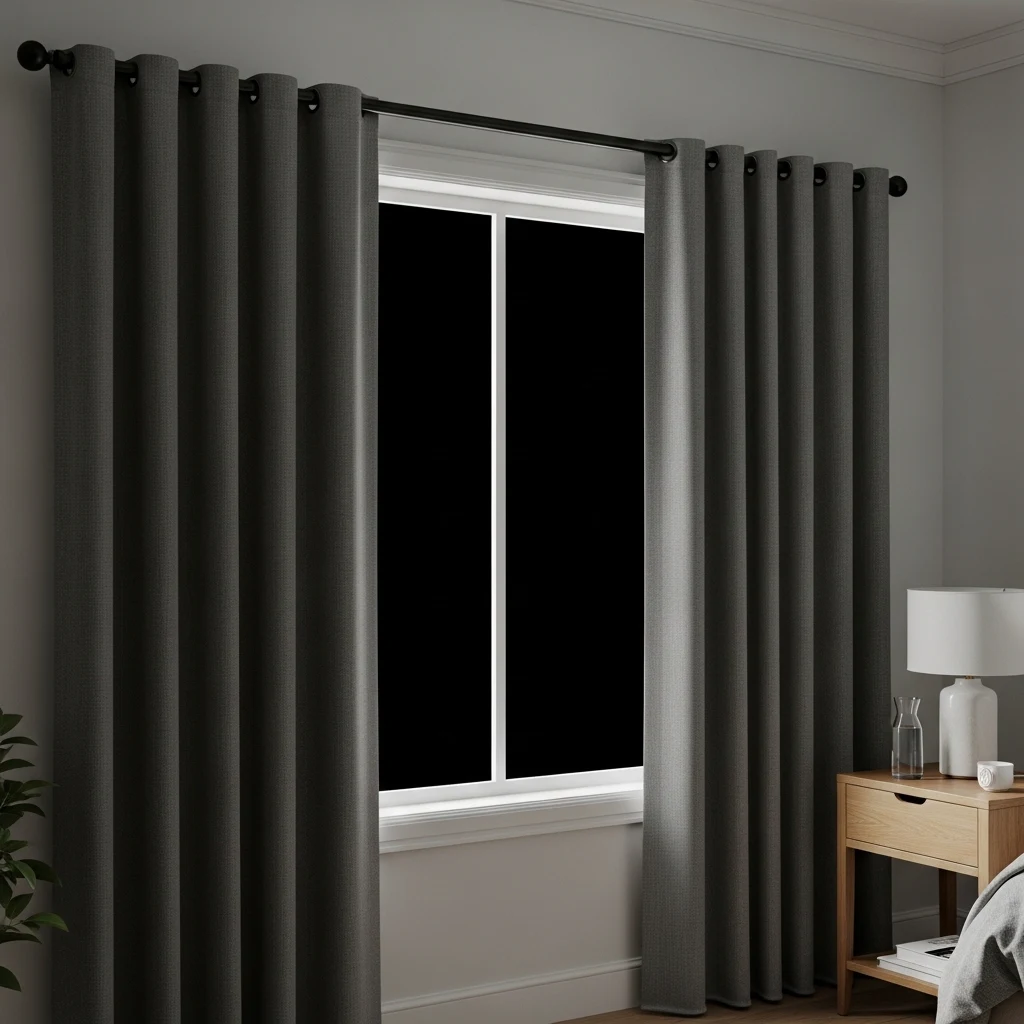
Blackout curtains are thick, tightly woven window treatments designed to block virtually all outside light from entering a room.
They typically feature a dense lining or a special coating that prevents light from passing through the fabric.
Good blackout curtains can block up to 99% of outside light, and the best ones also provide thermal insulation and noise reduction as a bonus.
Benefits of Blackout Curtains
- Complete room darkness: They block light for everyone in the room, not just the person wearing something on their face.
- Temperature regulation: Quality blackout curtains help keep rooms cooler in summer and warmer in winter, which can actually improve sleep comfort independently.
- Noise reduction: The thick fabric absorbs some external sound, giving you a quieter sleeping environment.
- No physical contact with your face: If you dislike wearing anything while you sleep, blackout curtains solve the problem without touching you.
- Great for households with children: When your toddler needs to nap at 2 p.m. in broad daylight, blackout curtains do the heavy lifting without requiring a three-year-old to keep a sleep mask on their face. Good luck with that one.
Drawbacks of Blackout Curtains
- They stay in the room: You can not take your curtains with you to a hotel or a friend’s house.
- Installation required: You need a curtain rod, proper measurements, and at least a basic understanding of how to hang things on walls.
- Cost: A good pair of blackout curtains for a standard window can run anywhere from $30 to well over $150, and large windows cost even more.
- Light gaps: Unless you install them with precision, light tends to leak in around the edges. That annoying strip of sunlight along the side of the curtain? It defeats the purpose faster than you think.
Shop Blackout Curtains On Amazon
What Is a Sleep Mask?
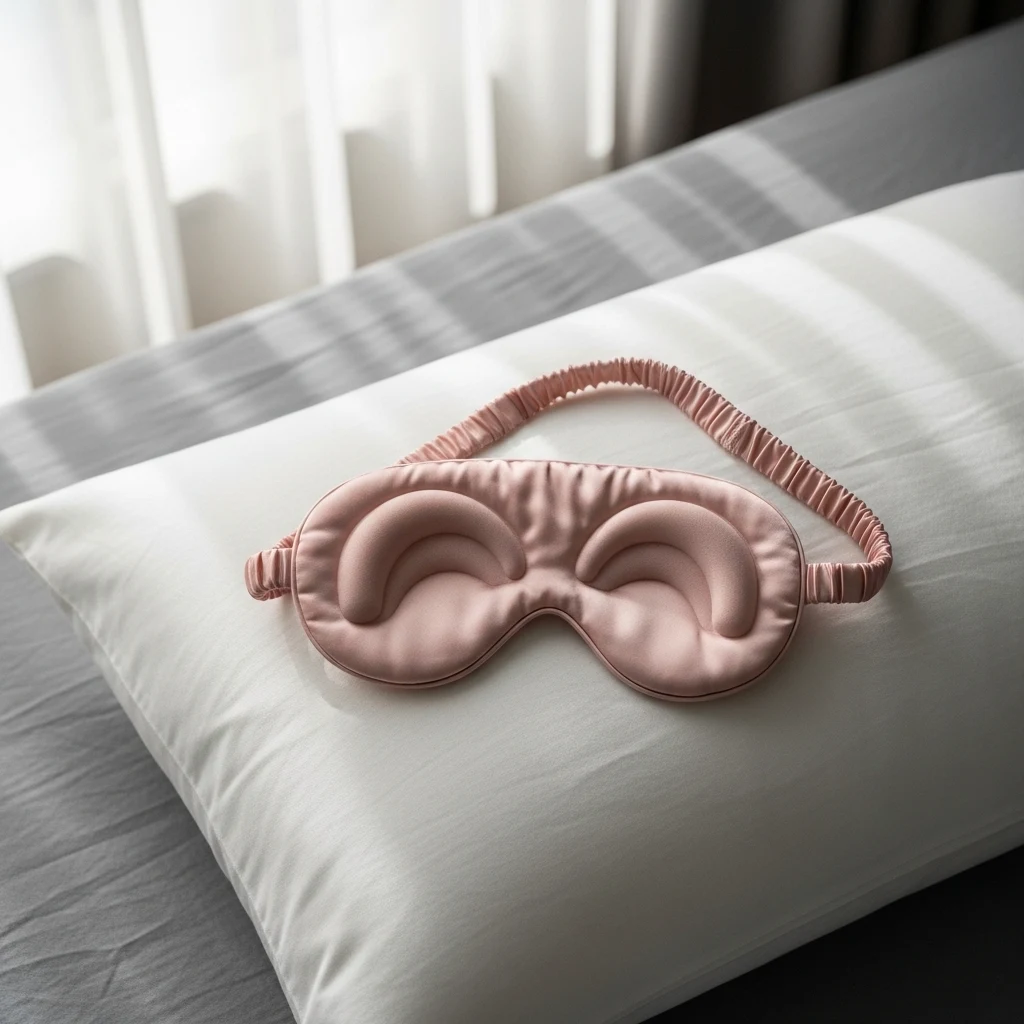
A sleep mask is a small, wearable cover that sits over your eyes to block light directly at the source.
Modern sleep masks come in a surprising range of styles: flat cotton versions, contoured masks that leave space around your eyes, silk masks for sensitive skin, and even weighted masks that apply gentle pressure to help with relaxation.
Benefits of a Sleep Mask
- Portability: This is where a sleep mask genuinely wins without contest. You can toss it in your carry-on bag, your gym bag, or your desk drawer. Wherever you go, your darkness goes with you.
- Affordable: A solid sleep mask costs anywhere from $10 to $50. Even the fancy silk ones rarely push past $60.
- No installation: You put it on your face. That is it. No measuring, no drilling, no curtain rods.
- Works anywhere: Hotel rooms, overnight flights, camping trips, napping at your in-laws’ impossibly bright guest room.
- Blocks light from all angles: A well-fitted sleep mask blocks light from above, below, and the sides when the fit is right, which is something curtains with gaps absolutely cannot claim.
Drawbacks of a Sleep Mask
- Comfort challenges: Not everyone tolerates wearing something on their face during sleep. If you move around a lot at night, the mask shifts, slips off, or ends up around your neck by 3 a.m.
- Skin and eye concerns: Some people find that masks press against their eyelashes or cause skin irritation, particularly around the nose bridge area.
- Only helps the wearer: If your partner also struggles with light sensitivity, you both need masks. The room itself stays bright.
- Heat retention: Some masks, especially thicker ones, trap warmth around your face, which some people find uncomfortable in summer.
Blackout Curtains vs Sleep Mask: The Head-to-Head Comparison
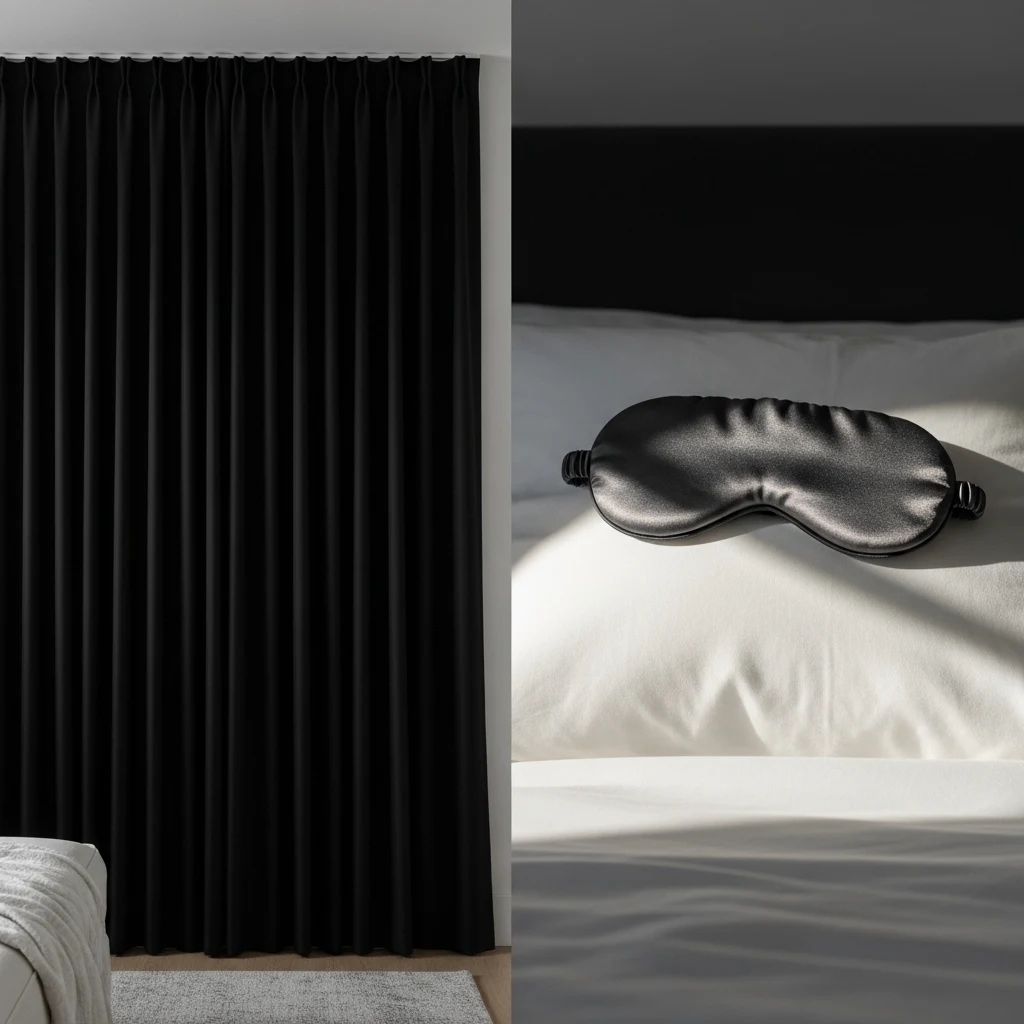
Now here is where things get interesting. Rather than declaring an outright winner, let us look at the specific situations where each option clearly outperforms the other.
Light Blocking Effectiveness
Blackout curtains win on paper, because they eliminate light from the entire room before it even reaches you. However, poor installation with gaps along the edges can ruin this advantage completely.
A contoured sleep mask with a snug fit, on the other hand, blocks light directly at your eyes with no gaps if it fits properly.
In practice, both can achieve near-total darkness, but the execution matters enormously for both.
Convenience and Travel
Sleep masks win this category without a fight. Blackout curtains are furniture. Sleep masks are accessories.
If you travel frequently for work, fly long-haul routes, or stay in hotels more than a few nights a year, a quality sleep mask is non-negotiable. Curtains simply cannot follow you around.
Cost Over Time
Sleep masks are far cheaper upfront and carry almost no ongoing cost. Blackout curtains cost more initially but add real value to your home through energy savings and room aesthetics.
If you own your home and plan to stay a while, blackout curtains start making financial sense relatively quickly.
Partner and Family Compatibility
Blackout curtains work for everyone in the room simultaneously. If your partner is equally light-sensitive, one set of curtains solves both your problems.
With sleep masks, each person needs their own, and they each need to actually keep them on throughout the night. That second part is harder than it sounds.
Comfort During Sleep
This one is personal. Some people sleep through the night in a silk sleep mask and never give it a second thought. Others wake up with the mask halfway off their face, wondering when it staged its escape.
If you are a restless sleeper, blackout curtains offer darkness without requiring you to maintain any physical setup while unconscious.
When to Choose Blackout Curtains
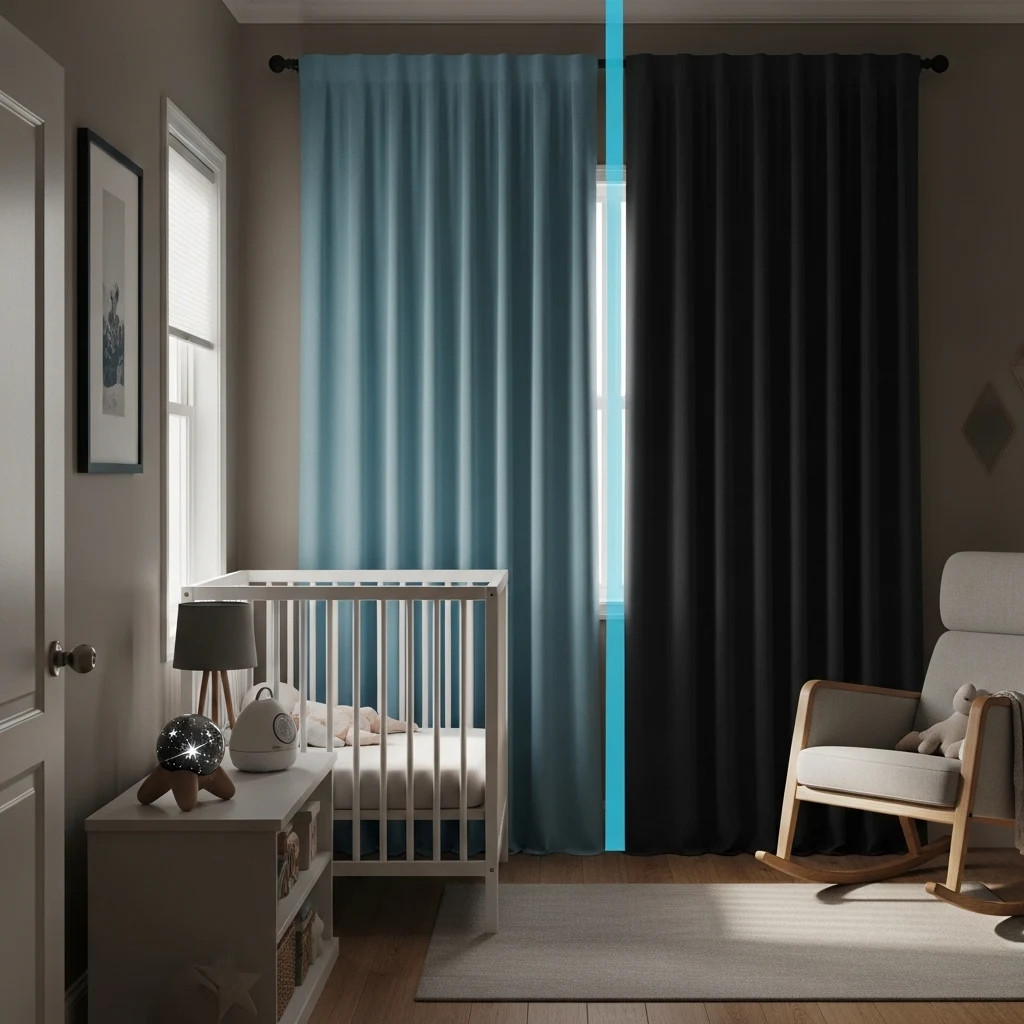
You should lean toward blackout curtains if you meet any of these descriptions:
- You are a light sleeper who wakes at sunrise and your bedroom faces east.
- You have young children who nap during the day and need a dark room to settle down.
- You work night shifts and sleep during daytime hours regularly.
- You own your home and want a permanent, attractive solution that also insulates and reduces noise.
- You dislike wearing anything on your face during sleep, full stop.
- Multiple people in your household share the same light-sensitivity issue.
When to Choose a Sleep Mask
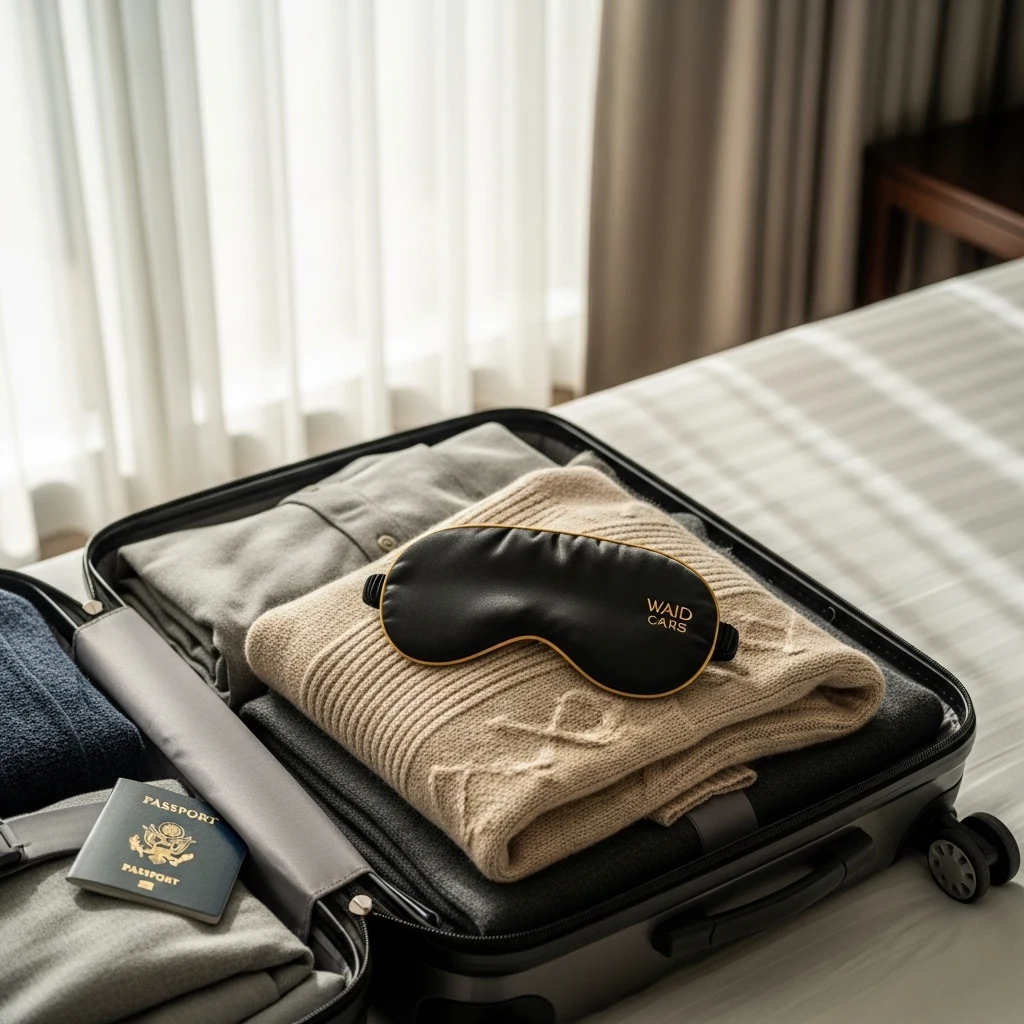
Go with a sleep mask if these situations sound familiar:
- You travel frequently and cannot control the lighting in hotel rooms or other people’s homes.
- You are on a tight budget and need an immediate, affordable solution.
- You rent your home and cannot install curtain rods or modify window setups.
- You take naps in various locations and need flexibility.
- Your bedroom setup already works well but you need just a little extra darkness to fall asleep faster.
Can You Use Both? Absolutely.
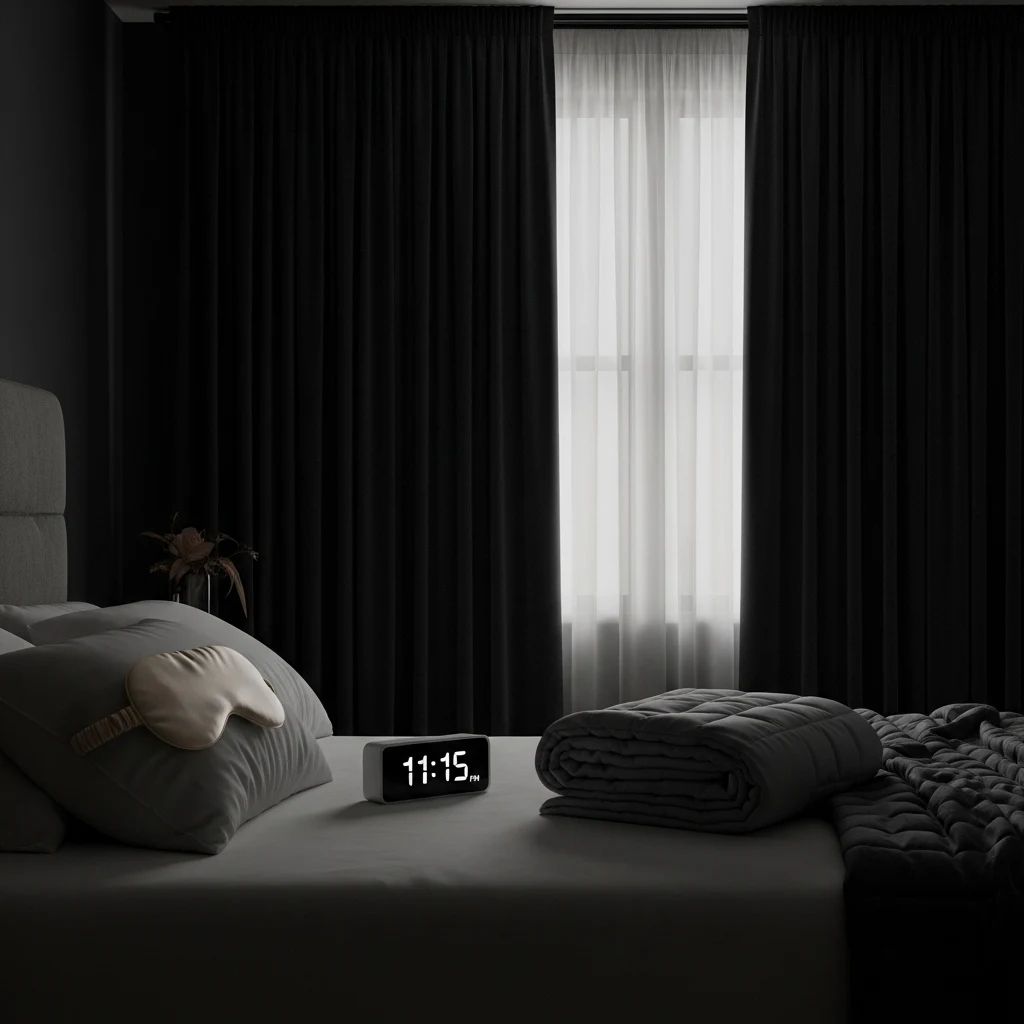
Here is something nobody talks about enough: blackout curtains and sleep masks are not mutually exclusive. Many serious sleepers use both together, and honestly, it makes sense.
Blackout curtains handle the bulk of the light reduction in the room, and a sleep mask covers any remaining gaps or light leaks.
Together, they create an environment about as dark as the inside of a cave, which your melatonin production will thank you for.
If you really struggle with sleep and light sensitivity plays a role, layering both solutions costs less than most people spend on a single night out, and the return on investment in sleep quality is genuinely significant.
Tips for Getting the Most Out of Each Option
For blackout curtains:
- Install them wider and taller than the window frame to minimize light gaps on the sides and top.
- Use curtain clips or a wrap-around rod to eliminate the gap between the curtain and the wall.
- Choose curtains with a triple-weave or blackout lining rather than just dark fabric for true light blocking.
Find Blackout Curtains With Blackout Lining On Amazon
For sleep masks:
- Look for contoured designs that arch over your eyes rather than pressing flat against them. Your eyelashes will appreciate it.
- Silk or bamboo masks tend to be gentler on skin and stay cooler through the night.
- Make sure the strap is adjustable and comfortable enough to stay in place without cutting into the sides of your head.
Browse Silk And Bamboo Sleep Masks On Amazon
The Verdict
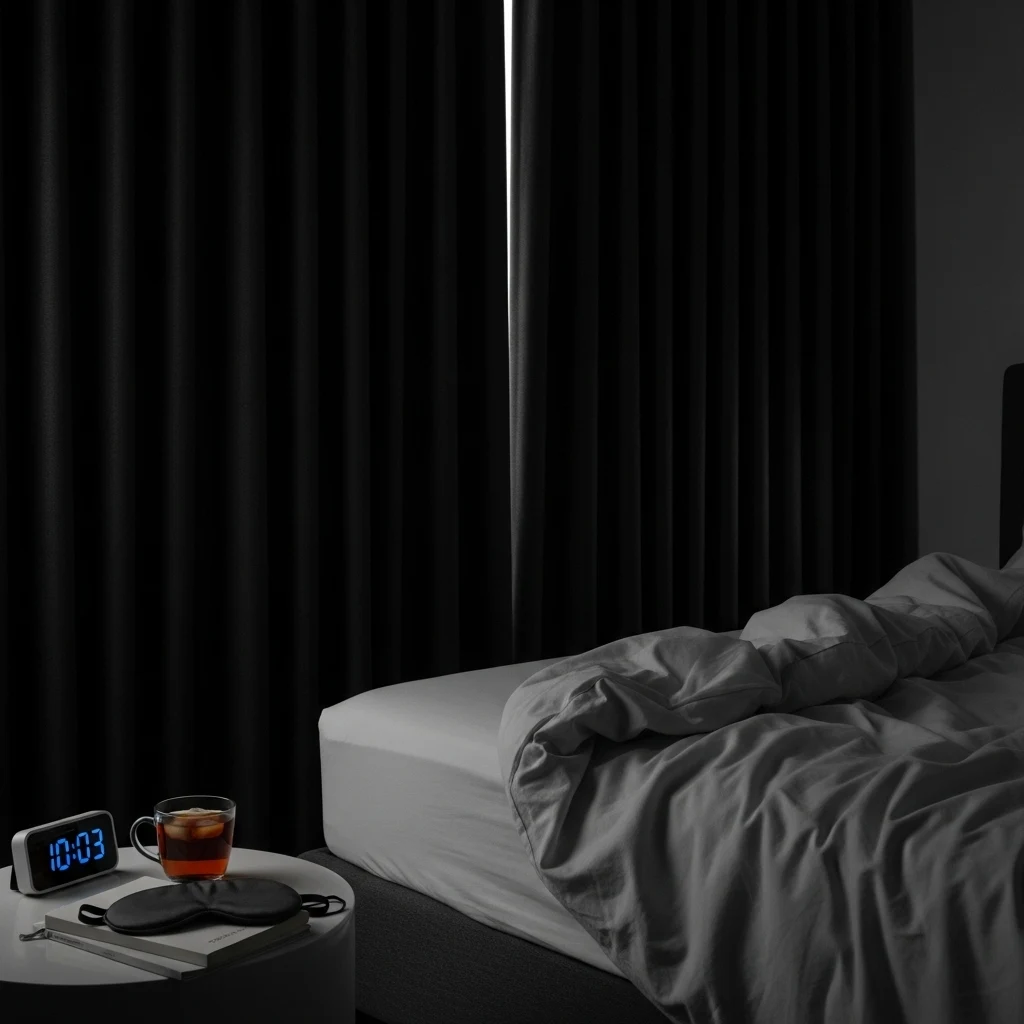
So, blackout curtains or sleep mask? The honest answer is that it depends entirely on your lifestyle, your living situation, and how you sleep.
Blackout curtains are the better long-term investment for a permanent bedroom setup, especially for families and shift workers.
Sleep masks are the smarter choice for travelers, renters, and budget-conscious sleepers who need flexibility without sacrificing darkness.
Neither option is objectively superior in every situation, and the best sleepers often use both.
What matters most is that you stop tolerating a bright room that is quietly sabotaging your rest every single night.
Pick the solution that fits your life, commit to it, and start sleeping the way your body actually needs you to.
Because at the end of the day, few things matter more than a genuinely good night’s sleep. And you deserve one.
Do Blackout Curtains Actually Help You Sleep Better?
Yes, blackout curtains genuinely improve sleep quality by blocking external light that suppresses melatonin production.
When your brain detects darkness, it signals your body to produce more melatonin, the hormone that regulates sleep.
This makes blackout curtains particularly effective for shift workers, early risers, and anyone whose bedroom receives strong morning or streetlight exposure.
Is a Sleep Mask as Effective as Blackout Curtains for Blocking Light?
A well-fitted sleep mask can block light as effectively as blackout curtains. The main difference is coverage. Blackout curtains darken the whole room, while a sleep mask only covers the eyes.
For solo travelers or renters, a good sleep mask offers similar results at a lower cost and effort.
Can You Use Blackout Curtains and a Sleep Mask at the Same Time?
Many serious sleepers do this. Blackout curtains block most of the light in the room. A sleep mask covers any small gaps around the curtains.
Using both together makes the room as dark as possible. This is great for those sensitive to light or for night shift workers who sleep during the day.
What Type of Sleep Mask Is Best for a Good Night’s Sleep?
Contoured sleep masks that arch over your eyes provide the best comfort. They don’t press directly on your eyelashes.
Silk and bamboo masks are popular because they stay cooler and cause less irritation. Choose a mask with an adjustable strap.
It should hold the mask securely without pressing on the sides of your head, especially if you move a lot while sleeping.
How Do You Stop Light From Leaking Around Blackout Curtains?
The best solution is to install blackout curtains wider and taller than the window frame. This allows the fabric to overlap the wall on all sides.
Using a wrap-around curtain rod or clips that pull the fabric tight against the wall also reduces side gaps.
For stubborn light leaks at the top, a ceiling-mounted curtain track provides a near-seamless blackout effect that standard rods can’t match.