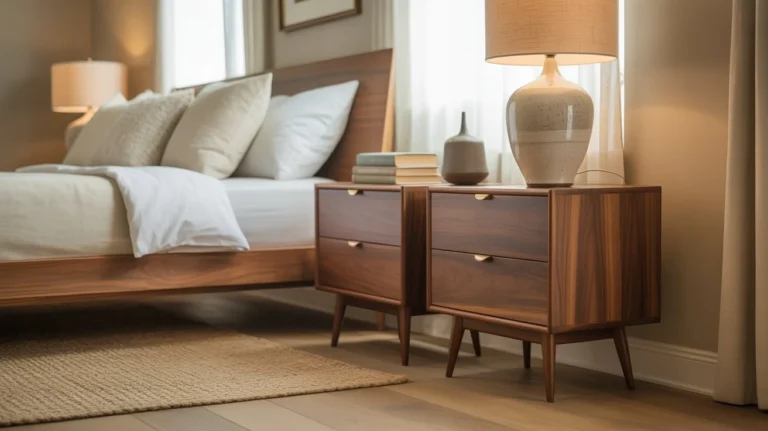
Small Bedroom Ideas That Make Any Space Feel Bigger
You open the door, squeeze past the bed, and feel the walls close in. Sound familiar? A small bedroom shouldn’t feel like a cramped closet.
With a few tricks, even the tiniest space can feel open, airy, and even luxurious.
I’ve spent too many late nights rearranging furniture and testing paint colors to find that perfect balance between function and space.
So trust me, these ideas work. You don’t need a contractor or a big budget to make them happen.
Use Light Colors to Trick the Eye
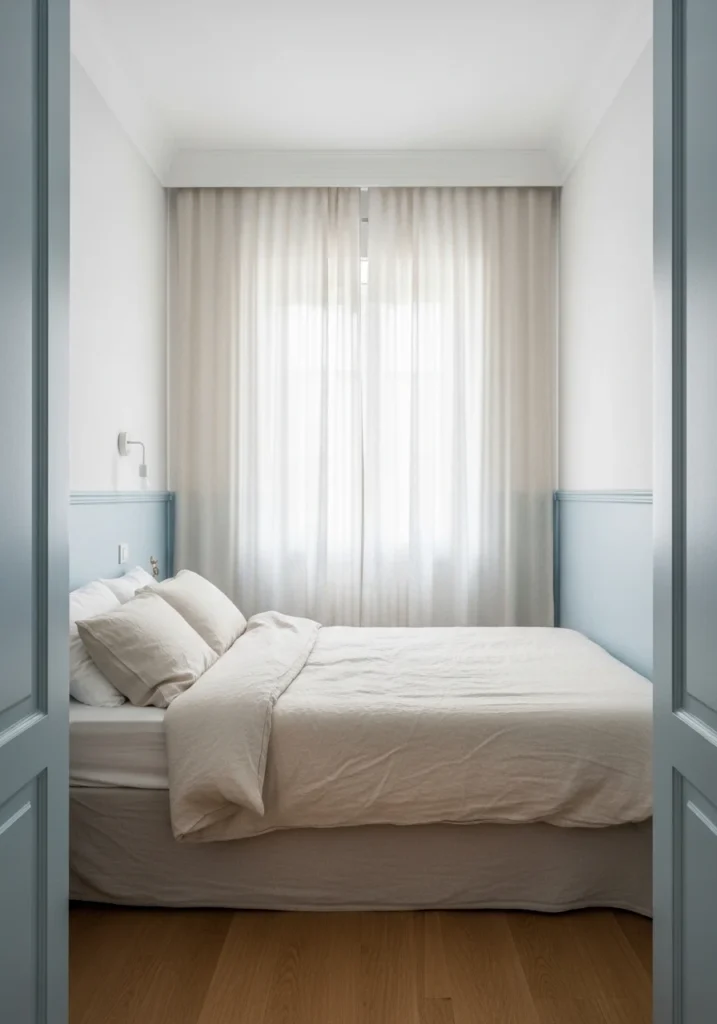
Here is the thing about color: it is basically magic when you use it right. Light, neutral tones reflect more natural light, which makes a room feel larger than it actually is.
Dark colors absorb light and pull the walls inward, which is the last thing you want in a small bedroom.
Best Colors for Small Bedrooms
Stick to these tried-and-true shades when painting your walls:
- Soft white or warm ivory for a clean, airy feel
- Pale blue or sage green for a calming, open atmosphere
- Light greige (grey-beige) for a sophisticated but spacious look
- Blush pink or soft lavender for warmth without heaviness
You do not have to paint every wall the same shade either. A slightly lighter ceiling than your walls creates an upward visual pull, making the room feel taller.
One simple can of paint and a Sunday afternoon can genuinely change everything.
Embrace Multifunctional Furniture
Nothing eats up floor space faster than furniture that only does one thing.
In a small bedroom, every single piece needs to pull double duty, or it has no business being there. Harsh? Maybe. Effective? Absolutely.
Storage Beds Are Your Best Friend
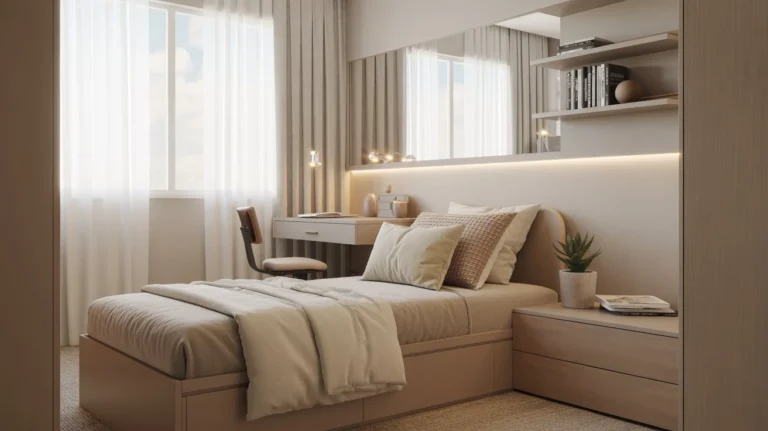
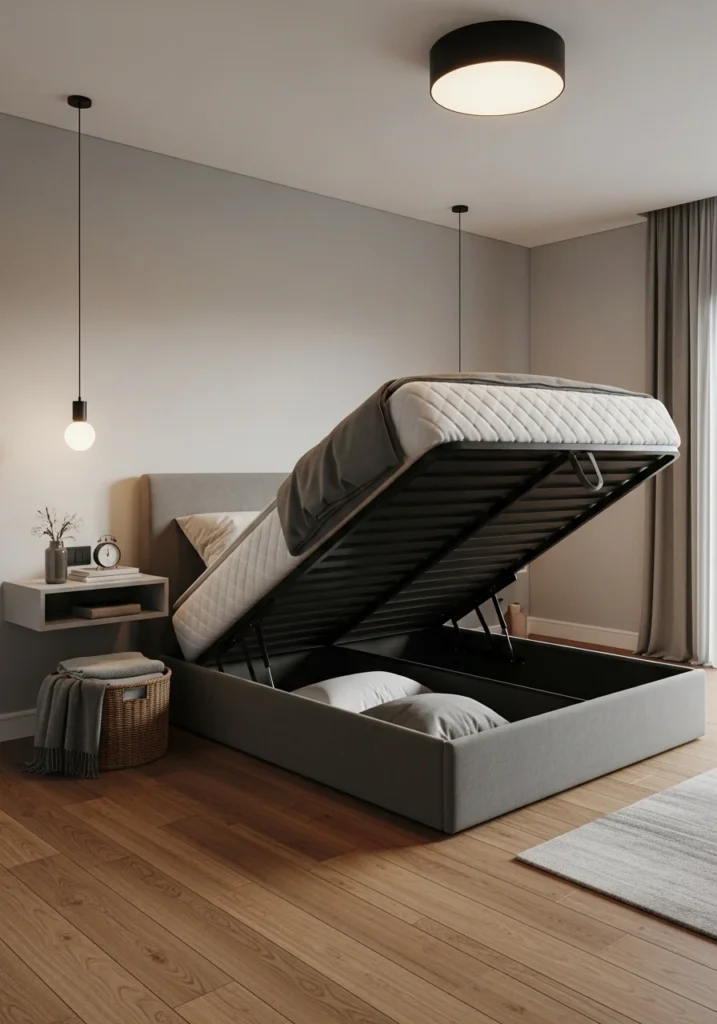
A bed with built-in storage drawers underneath is one of the smartest investments you can make in a small room.
You get your sleeping space and your dresser space all in one footprint. No more bulky chest of drawers taking up a quarter of the room.
Ottoman beds are another great option. You lift the mattress platform and suddenly there is a whole compartment underneath for bedding, seasonal clothes, or anything else you need out of sight.
Floating Nightstands and Wall-Mounted Shelves
Swap out traditional bedside tables for floating wall-mounted nightstands.
They give you the surface space you need for your lamp and your midnight glass of water, but they keep the floor completely clear. Clear floor equals the visual impression of more space. It is that simple.
Wall-mounted shelves above the bed also work beautifully. They draw the eye upward, give you storage or display space, and take up zero floor real estate.
Browse Wall-Mounted Nightstands On Amazon
Mirror, Mirror on the Wall
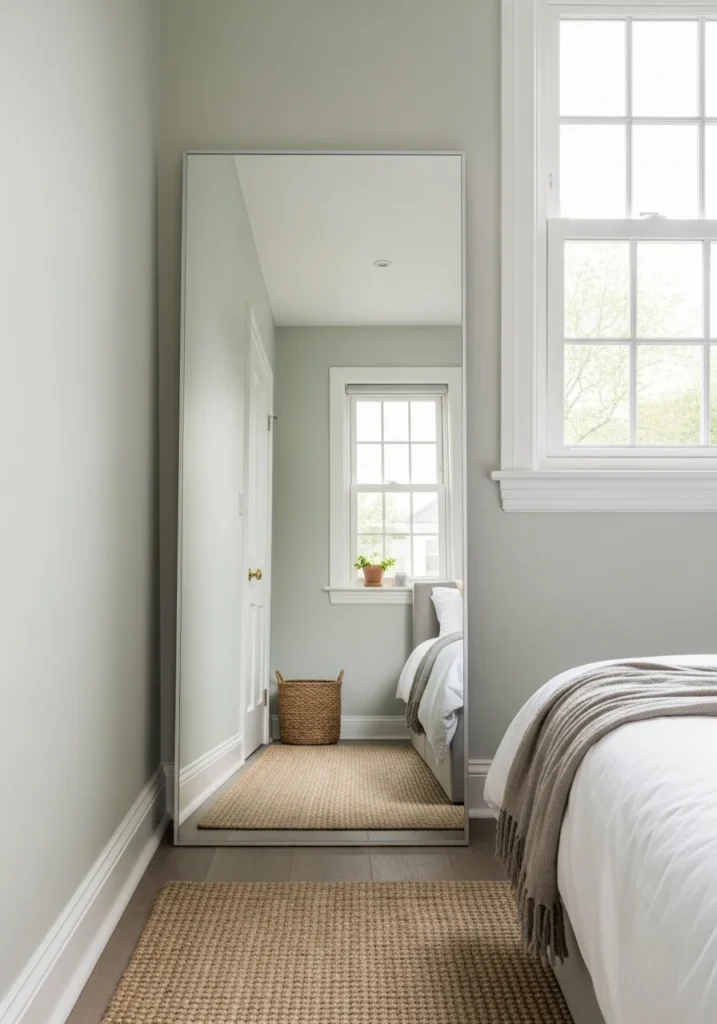
Mirrors are one of the oldest tricks in the interior design playbook, and they still work every single time.
A large mirror reflects both natural and artificial light, effectively doubling the perceived size of the room. Place one strategically and watch the space open up almost instantly.
Where to Place Mirrors for Maximum Effect
- Opposite a window to reflect outdoor light and create a sense of depth
- On a wardrobe door so it does not take up extra wall space
- As a full-length leaner mirror in a corner to add dimension without being too on-the-nose
- As a gallery wall of smaller mirrors for a stylish alternative to one large statement piece
Leaning a large mirror against a wall works just as well as mounting one, and it requires zero drilling. Ideal if you rent and your landlord gives you the stare of death every time you pick up a drill.
Find Large Bedroom Mirrors On Amazon
Keep Clutter Off the Floor
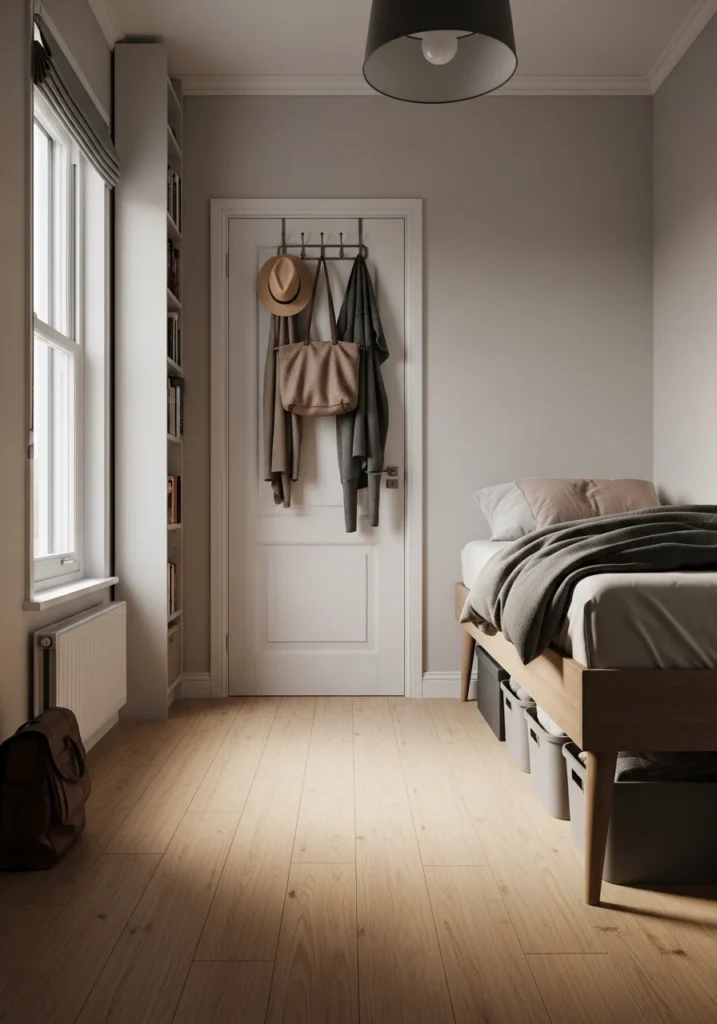
This one sounds obvious, but it is also the most ignored advice in the history of home decor.
Visual clutter is the enemy of a spacious-feeling room. The moment things pile up on the floor, the room shrinks by what feels like 50 percent.
Smart Storage Solutions That Actually Work
- Use vertical space by going tall with bookshelves or wardrobes that reach the ceiling
- Install hooks on the back of the door for bags, belts, and other odds and ends
- Use under-bed storage bins if your bed does not already have drawers
- Add a small floating shelf near the door for keys, sunglasses, and daily items that tend to pile up
The goal is to keep as much floor space visible as possible. The more you can see of the floor, the bigger the room feels. Think of the floor as prime visual real estate that you want to leave open.
Shop Bedroom Storage Solutions On Amazon
Let Natural Light Do the Heavy Lifting
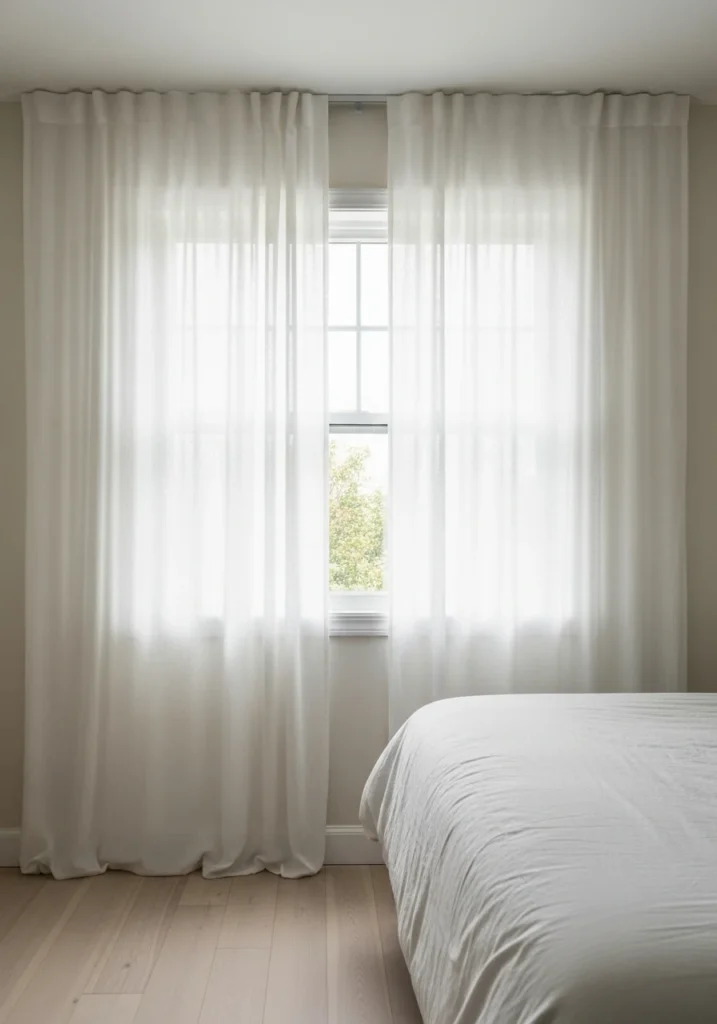
Natural light is free, it is beautiful, and it transforms any small space into something far more livable.
Blocking natural light in a small bedroom is a crime against your own sanity, so do whatever it takes to maximize it.
Window Treatments That Open Up a Room
Heavy, dark curtains are a hard no in a small bedroom. Instead, go with:
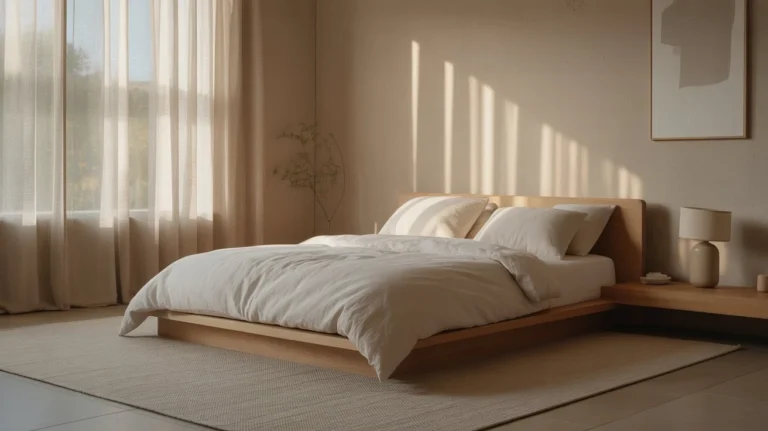
- Sheer white or linen curtains that filter light without blocking it
- Roller blinds that disappear when open and keep the window frame clean
- Curtains hung above the window frame and wider than the window itself to create the illusion of a larger window
Mounting curtain rods a few inches above the window and extending them several inches beyond the window frame on each side is one of those tricks that sounds too simple to work.
It absolutely works. The window looks bigger, and the room follows suit.
Browse Bedroom Curtains And Blinds On Amazon
Choose Low-Profile Furniture
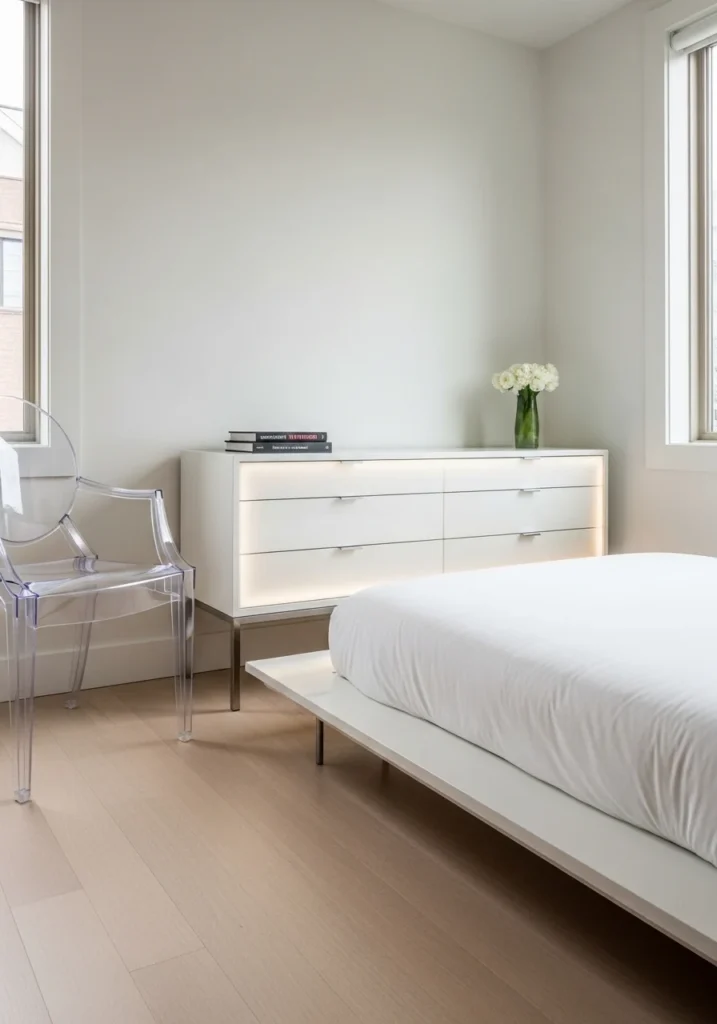
Big, bulky furniture with high backs and chunky legs makes a small bedroom feel stuffed.
Low-profile furniture sits closer to the ground, which leaves more visual space above it and creates a sense of openness.
Furniture Styles That Work in Small Rooms
- Platform beds without a headboard, or with a slim, upholstered headboard
- Streamlined dressers with clean lines and no ornate detailing
- Lucite or acrylic chairs if you need occasional seating, since you can see right through them
- Furniture with visible legs, which lets light pass underneath and keeps the room feeling lifted
Furniture on legs is a particularly underrated trick. When you can see the floor underneath a piece of furniture, the room reads as more spacious than when a solid base blocks the view.
A small bed frame with tapered wooden legs does more for a tiny bedroom than you might expect.
Use Vertical Space Creatively
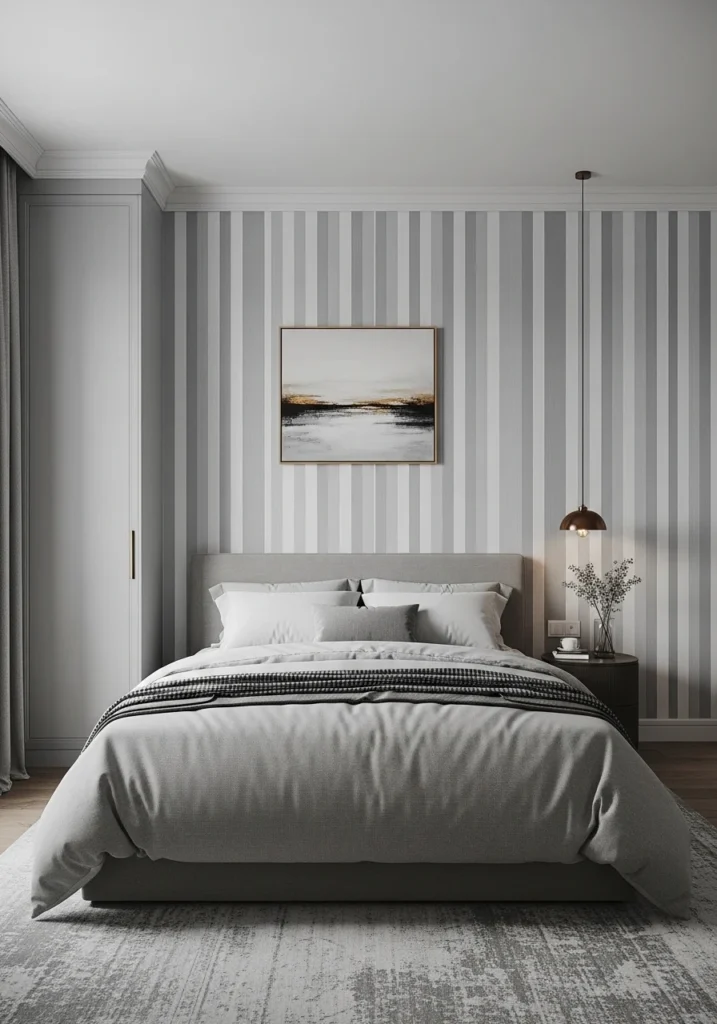
Most people think horizontally when they decorate. In a small bedroom, you need to think vertically.
The wall space above your eye line is some of the most underused real estate in any room, and it is yours for the taking.
How to Make Height Work for You
- Install floor-to-ceiling bookshelves or wardrobes to draw the eye upward and create the perception of height
- Use tall, narrow pendant lights instead of table lamps to free up surface space
- Hang artwork higher than you think you should to force the eye upward
- Add a bold ceiling color or wallpaper to make an architectural statement and turn a liability into a feature
A striped wallpaper running vertically is another great option. Vertical stripes make walls look taller.
It is the same principle as wearing vertical stripes on a shirt, except your bedroom does not have opinions about whether you look taller.
Keep the Color Palette Cohesive
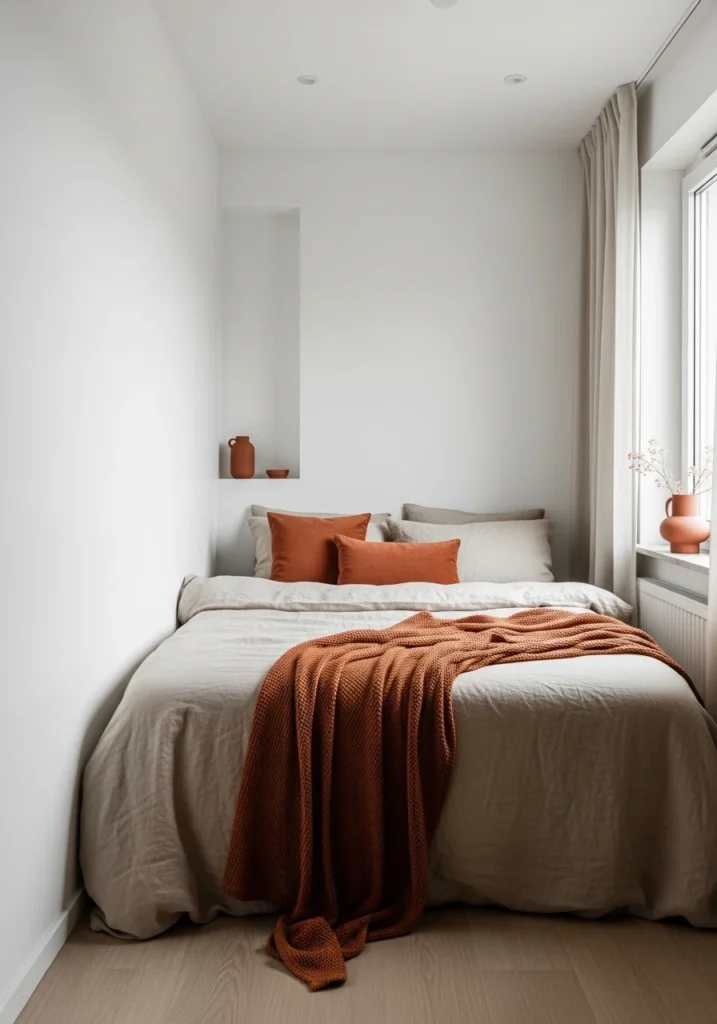
A small bedroom with too many competing colors feels chaotic and cramped. A cohesive, limited color palette makes the space feel deliberate and expansive.
Stick to two or three colors maximum, and let them flow from the walls to the bedding to the accessories.
How to Build a Small Bedroom Color Story
Pick one anchor color for your walls, one complementary tone for your textiles, and one accent for small details like cushions or a throw blanket. For example:
- Soft white walls + warm linen bedding + terracotta accents
- Pale sage walls + white bedding + warm wood tones
- Light grey walls + navy bedding + brass hardware accents
When everything speaks the same visual language, the eye moves smoothly around the room without getting snagged.
That smooth visual flow reads as spaciousness, even when the actual square footage has not changed by a single inch.
Add Lighting Layers to Set the Mood
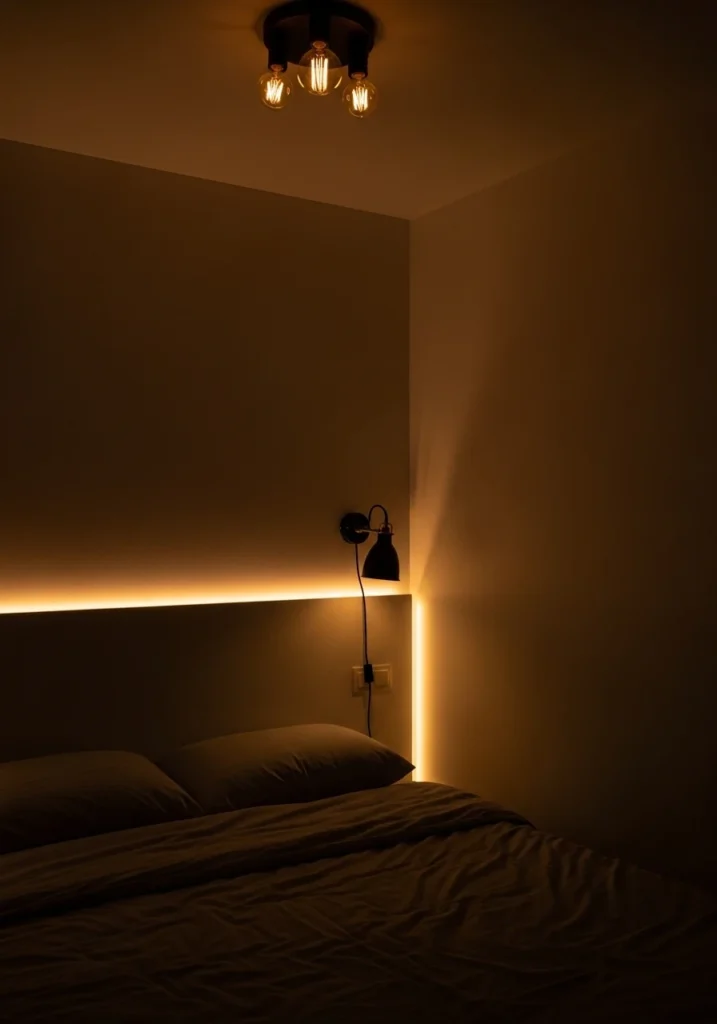
Overhead lighting alone makes a small room feel like a hospital waiting room. Layered lighting adds depth and dimension, which tricks the brain into perceiving the space as larger and more interesting.
Lighting Layers to Include
- Ambient lighting from a ceiling fixture or recessed lights as your base layer
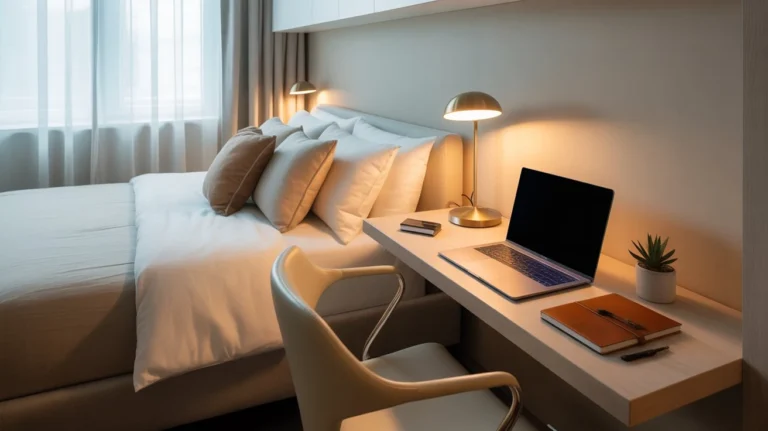
- Task lighting like a wall-mounted reading light next to the bed to keep nightstands clear
- Accent lighting such as LED strip lights behind a headboard or under a shelf for warmth and atmosphere
Warm-toned bulbs (around 2700K to 3000K) create a cozy, expansive feel. Cool, harsh light contracts a space. You want your bedroom to feel like a retreat, not an interrogation room.
Shop Bedroom Lighting On Amazon
Do Not Underestimate the Power of Decluttering
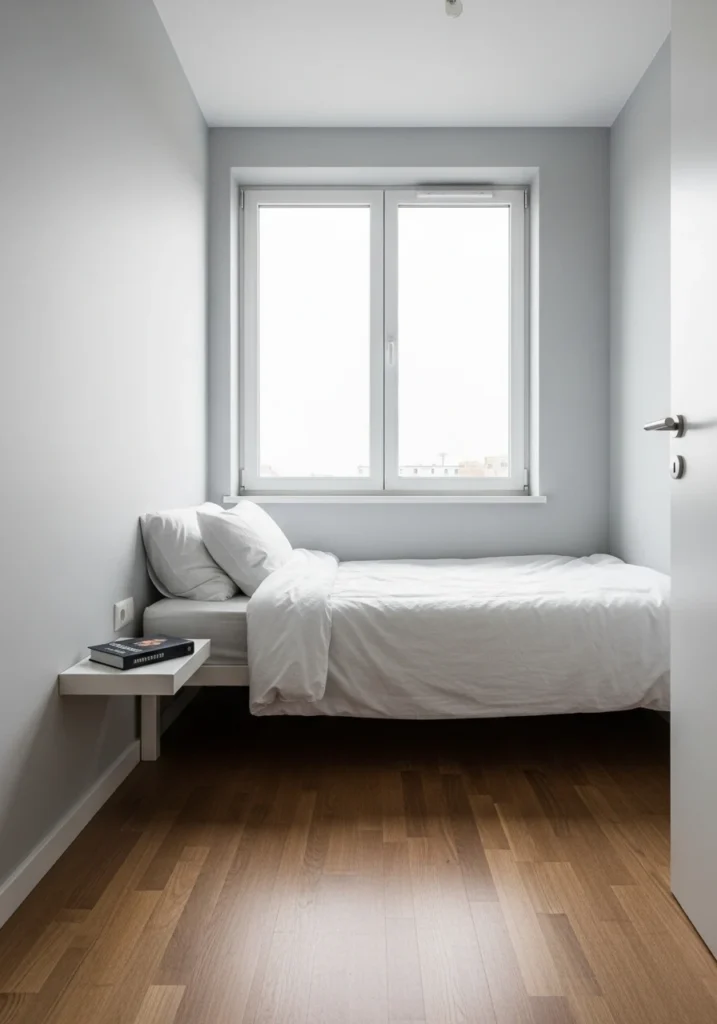
Before you buy a single new piece of furniture or open a single paint can, declutter. Seriously.
A small bedroom with fewer, better-chosen items always beats one that is packed with stuff no matter how cleverly arranged.
Getting rid of things you do not use or need is the fastest, cheapest, and most effective small bedroom upgrade available.
Go through your wardrobe, your surfaces, and under your bed. Donate what you do not use. Store seasonally.
Keep only what you genuinely need or love. Then layer in the design tricks above. The combination is almost unfair in how well it works.
The Bottom Line
A small bedroom does not have to feel like a compromise.
With the right color choices, smart furniture, strategic lighting, and a ruthless approach to clutter, you can create a space that feels genuinely generous, even if the square footage says otherwise.
Start with one or two of these ideas rather than tackling everything at once. Paint the walls a lighter color. Swap out the curtains. Add a mirror opposite the window.
Small changes compound quickly in a small space, and before long you will wonder why the room ever felt cramped at all.
Your bedroom should feel like a retreat, not a puzzle you are trying to solve every morning. Give these ideas a proper try, and it will.
What Colors Make a Small Bedroom Look Bigger?
Light, neutral tones are ideal for making a small bedroom feel spacious. Colors like soft white, pale blue, light grey, and warm ivory reflect natural light. This reflection visually pushes the walls back.
You might also paint the ceiling a shade lighter than the walls. This creates an upward pull, making the room feel taller.
Avoid dark, saturated colors on all four walls. They tend to make a room feel closed in.
What Type of Furniture Works Best in a Small Bedroom?
Multifunctional and low-profile furniture is ideal for a small bedroom. Storage beds with built-in drawers replace the need for a dresser.
Floating wall-mounted nightstands save floor space and keep the room open. Low-profile platform beds, slim wardrobes, and furniture with visible legs all create an airy, uncluttered look.
The rule is simple: if a piece of furniture serves only one purpose and takes up a lot of space, it likely doesn’t belong in a small room.
How Do Mirrors Help Make a Small Bedroom Feel Larger?
Mirrors reflect natural and artificial light, doubling a room’s brightness and depth. A large mirror opposite a window bounces outdoor light deep into the space, making it feel more open.
Full-length mirrors, mirrored wardrobe doors, and gallery arrangements of smaller mirrors all create this effect. The key is positioning.
A mirror reflecting a window or a bright wall works much better than one facing a dark corner.
How Can I Add Storage to a Small Bedroom Without Making It Feel Cluttered?
The best storage solutions for small bedrooms use vertical space and keep things hidden.
Consider floor-to-ceiling wardrobes, under-bed bins, back-of-door hooks, and floating shelves above eye level. The aim is to hide clutter, not showcase it.
When storage blends into the room’s design, it creates a calm feel instead of chaos. Visible, organized shelves work in small amounts, but open storage needs discipline to stay tidy.
What Window Treatments Work Best in a Small Bedroom?
Sheer curtains, linen panels, and slim roller blinds are ideal for small bedrooms. They let natural light flow freely. Mount the curtain rod a few inches above the window frame.
Extend it beyond the window on each side. This makes the window look larger and brings in more light.
Avoid heavy, dark drapes as they block light and make the space feel smaller. If you use them, pair with a sheer underlayer you can draw during the day.