Bedroom Plants That Release Oxygen While You Sleep
You spend about a third of your life in your bedroom. You’d hope the air there is worth breathing. But for many, it’s not as clean as they think.
The good news? A few smart plants can fix that while you sleep, and they look nice too.
Before you roll your eyes at another plant trend, listen up. This isn’t just about looks or boosting your Instagram feed.
It’s about plants that really improve your bedroom’s air quality and oxygen levels overnight. Let’s explore the ones that actually work.
Why Bedroom Plants Even Matter
The Air Inside Your Home Is Not as Fresh as You Think
Most people assume that indoor air is safe and clean. The reality? Indoor air can be anywhere from two to five times more polluted than outdoor air, according to the EPA.
Your bedroom traps dust, off-gassing from furniture, carbon dioxide from your own breathing, and sometimes mold spores. Not exactly a spa environment.
Plants help by absorbing carbon dioxide and releasing oxygen through photosynthesis. Some go even further by pulling toxins like benzene, formaldehyde, and trichloroethylene out of the air.
A few specific plants do this at night, which makes them especially useful in a bedroom setting.
How Plants Release Oxygen at Night
Here is where things get interesting. Most plants follow standard photosynthesis: they absorb CO2 and release oxygen during the day, then reverse the process at night. Not all of them, though.
Certain plants use a process called Crassulacean Acid Metabolism (CAM). They absorb CO2 at night and store it, then convert it during the day.
This means they release oxygen after dark, which is exactly when you need it most. Succulents, aloe vera, and snake plants all use this process. Pretty clever, right?
The Best Bedroom Plants That Release Oxygen While You Sleep
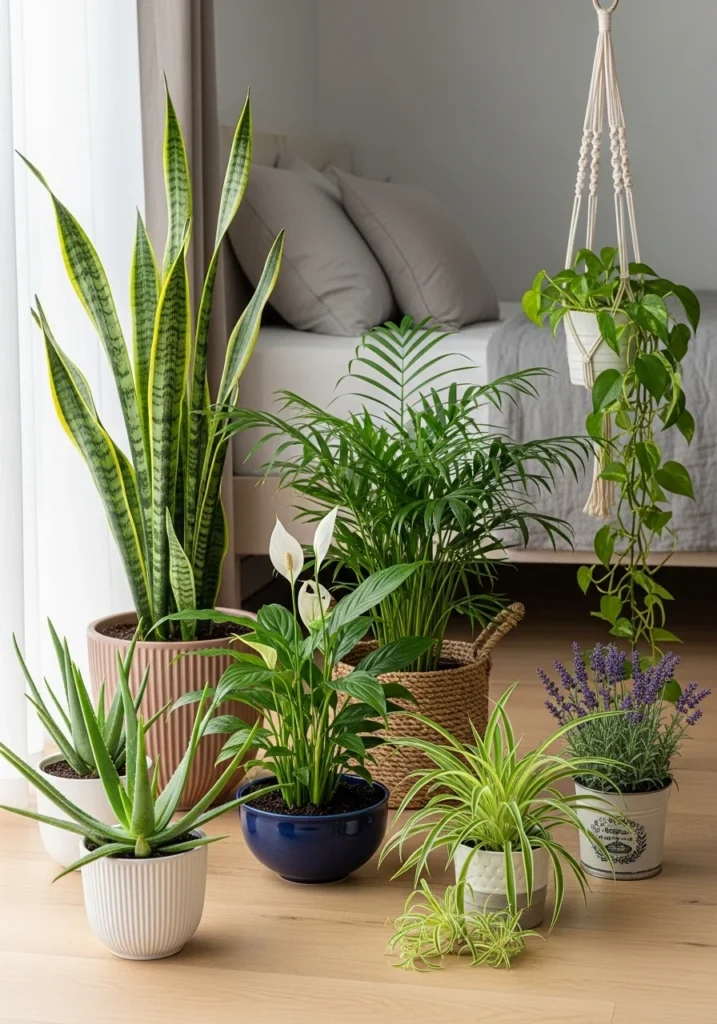
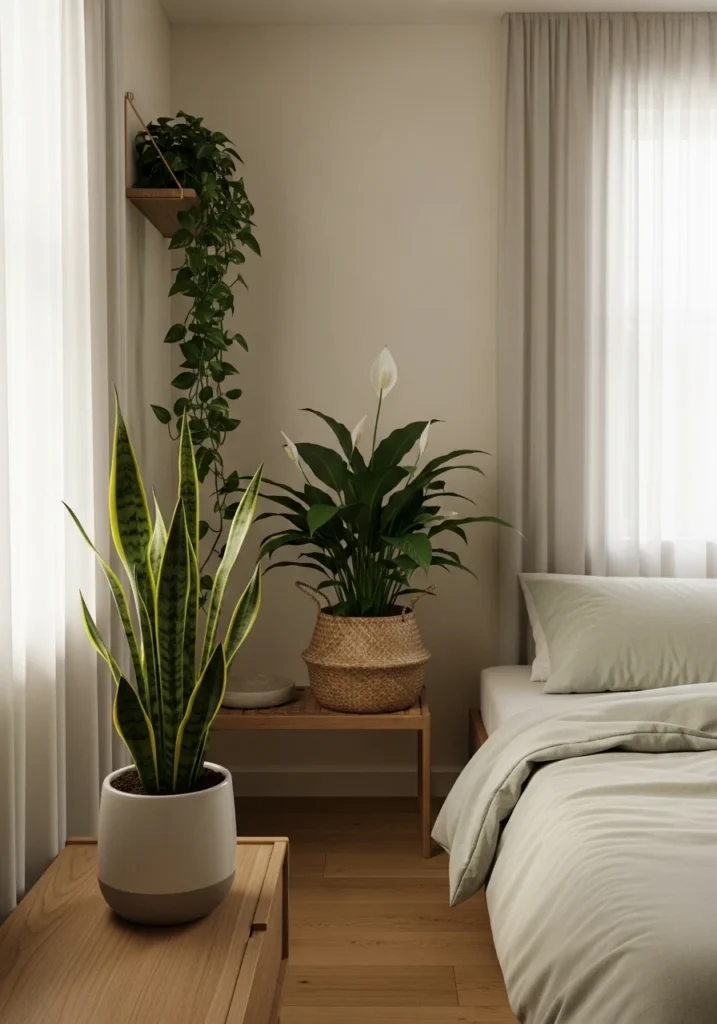
1. Snake Plant (Sansevieria trifasciata)
If you only get one plant for your bedroom, make it the snake plant. This is the gold standard for a reason.
Why it works:
- Uses CAM photosynthesis to release oxygen at night
- Filters toxins including formaldehyde, benzene, and xylene
- Thrives on neglect (low light, infrequent watering)
- Nearly impossible to kill, which is a feature, not a bug
Snake plants grow upright and tall, so they fit neatly in corners without taking up much floor space.
They are one of the few plants that NASA included in their famous Clean Air Study, which found that certain houseplants can remove significant amounts of volatile organic compounds (VOCs) from enclosed spaces.
If you have ever walked into a room and felt inexplicably stuffy even with a window cracked, a snake plant in that room might just change that experience entirely.
2. Aloe Vera
Aloe vera is the overachiever of the plant world. It heals your sunburns, treats dry skin, and simultaneously improves your bedroom air quality overnight. What a resume.
Why it works:
- Also uses CAM photosynthesis, releasing oxygen at night
- Removes formaldehyde and benzene from the air
- Requires very little water (once every two to three weeks is plenty)
- Produces offshoots you can repot and share (or hoard, no judgment)
Place aloe vera on a windowsill where it gets plenty of indirect sunlight during the day.
It will do its air-cleaning work at night without you lifting a finger. Just do not overwater it. Aloe vera drowns far more easily than it dries out.
Find Aloe Vera Plants On Amazon
3. Peace Lily (Spathiphyllum)
The peace lily looks elegant, flowers without much fuss, and punches well above its weight when it comes to air purification.
It is also one of the few flowering plants that performs well in low-light bedrooms.
Why it works:
- Filters benzene, formaldehyde, trichloroethylene, ammonia, and xylene
- Releases moisture into the air, which helps with dry throats and sinuses
- Blooms in low light conditions
- Absorbs acetone vapors from nail polish and certain cleaning products
One thing worth noting: peace lilies are toxic to cats and dogs. If you share your bedroom with a four-legged sleeper, keep this one out of reach or skip it entirely. Your pet’s safety comes before air quality.
Browse Peace Lily Plants On Amazon
4. Areca Palm (Dypsis lutescens)
If you want something that makes a visual statement AND improves your sleep environment, the areca palm is your answer. It is lush, tropical-looking, and genuinely effective at purifying air.
Why it works:
- One of the most efficient air-purifying plants tested in NASA’s study
- Releases significant amounts of moisture, acting as a natural humidifier
- Removes xylene and toluene from the air
- Produces a high volume of oxygen relative to its size
The areca palm does need more light than a snake plant, so position it near a window. It also prefers its soil to dry out a bit between waterings. Get those two things right, and it will thrive for years.
5. Spider Plant (Chlorophytum comosum)
Do not let the unglamorous name fool you. The spider plant is one of the most effective air purifiers available, and it grows with almost zero effort on your part.
It is also non-toxic to pets, which immediately gives it bonus points in many households.
Why it works:
- Highly effective at removing carbon monoxide and formaldehyde
- Grows quickly and produces “babies” that hang from long runners
- Thrives in indirect light and tolerates irregular watering
- Safe for pets and children
Spider plants look great in hanging baskets near a bedroom window. They add a pleasant trailing element to the room while quietly doing their purification work around the clock.
6. Pothos (Epipremnum aureum)
Pothos is the plant that refuses to die. Seriously, you can leave it in a dark corner, forget to water it for three weeks, and come back to find it still going strong.
It is the cockroach of the plant world, and that is meant as a compliment.
Why it works:
- Removes formaldehyde, benzene, and carbon monoxide
- Grows aggressively even in low-light environments
- Requires minimal watering (let the soil dry between waterings)
- Trails beautifully along shelves or hangs from planters
One caution: pothos is toxic if ingested, so keep it away from small children and curious pets.
But if that is not a concern in your household, this plant is one of the easiest ways to start improving your bedroom air quality immediately.
7. Lavender
Lavender earns its spot on this list not just for oxygen production but for something arguably more valuable in a bedroom: its proven effect on sleep quality.
Multiple studies have found that lavender’s scent reduces anxiety, slows heart rate, and promotes deeper sleep.
Why it works:
- Releases a calming scent that has measurable effects on sleep quality
- Produces oxygen throughout the day and helps regulate room humidity
- Acts as a natural deterrent for mosquitoes and moths
- Doubles as a source of dried lavender for sachets and potpourri
Lavender does need direct sunlight, so a south or west-facing windowsill works best. It also dislikes overwatering.
Think of it as a Mediterranean plant that prefers dry, sunny conditions. Nail those requirements, and lavender will reward you with fragrant, sleep-enhancing blooms.
How Many Plants Do You Actually Need?
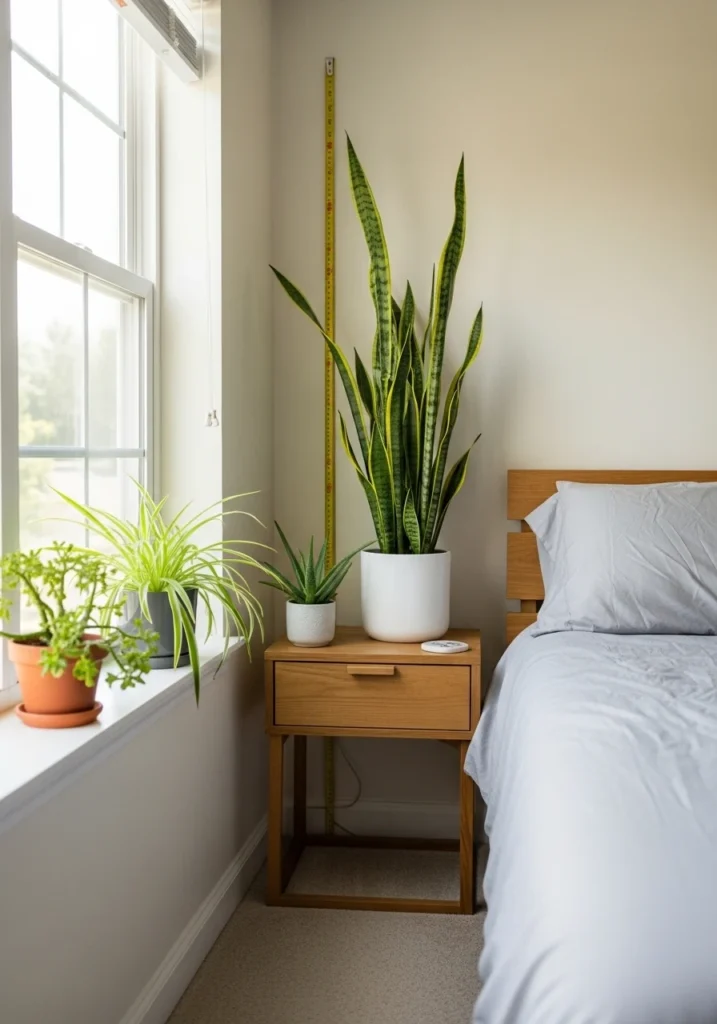
This is the question everyone asks, and the honest answer is: it depends on your room size.
The NASA Clean Air Study suggested roughly one plant per 100 square feet as a starting guideline for meaningful air quality improvement.
For an average bedroom of around 150 to 200 square feet, aim for two to three medium-sized plants or one large specimen like an areca palm.
You do not need to turn your bedroom into a greenhouse to see results. A handful of the right plants makes a real difference.
Quick guide by room size:
- Small bedroom (under 100 sq ft): 1 to 2 plants
- Medium bedroom (100 to 200 sq ft): 2 to 4 plants
- Large bedroom (over 200 sq ft): 4 to 6 plants
Placement Tips for Maximum Oxygen Output
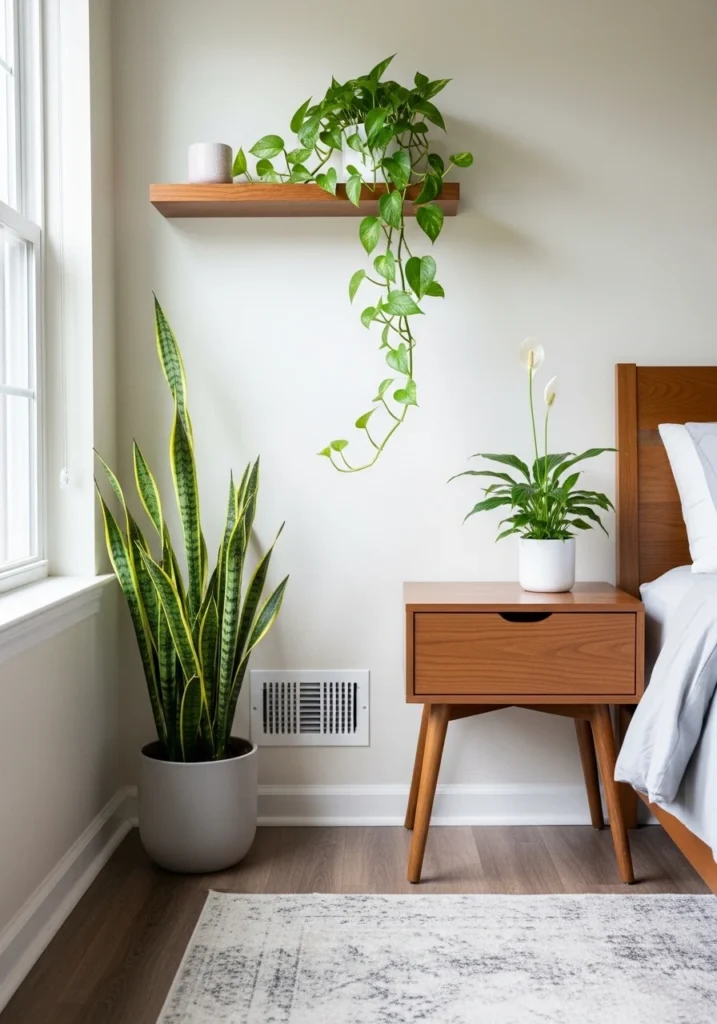
Where you put your plants matters almost as much as which plants you choose.
- Near windows: Most plants need some indirect sunlight to perform photosynthesis efficiently. A spot near a window (but out of harsh direct sun for most varieties) gives them the energy they need during the day.
- At eye or shoulder level: Taller plants like snake plants and areca palms work well in floor corners. Trailing plants like pothos and spider plants look natural on shelves or hanging planters.
- Away from air vents: Heating and cooling vents dry out plants quickly and can damage leaves. Keep your plants at least a few feet away from direct airflow.
- Not too close to your bed: A few feet of distance is fine. Piling plants immediately next to your pillow is unnecessary and can promote mold in the soil if the area is poorly ventilated.
Common Mistakes to Avoid
Even the most forgiving plants have limits. Here are the slip-ups that catch people out most often.
Overwatering is the number one killer of bedroom plants. Most people water too frequently. Check the soil with your finger before watering. If the top inch is still moist, wait another day or two.
Not enough light is the second biggest issue. Many bedrooms have limited natural light, especially in apartments or north-facing rooms.
Choose plants rated for low-light conditions, like snake plants, pothos, and peace lilies, if your room does not get much sun.
Ignoring humidity catches people off guard. Plants like ferns and peace lilies prefer higher humidity than the average bedroom provides, especially in winter when heating dries out the air.
A small pebble tray with water beneath the pot can help, or you can group plants together to create a microclimate.
Choosing toxic plants without checking first is an easily avoidable mistake. If you have kids or pets, double-check every plant before bringing it home.
The ASPCA maintains an updated list of toxic and non-toxic plants for animals at their website.
Final Thoughts
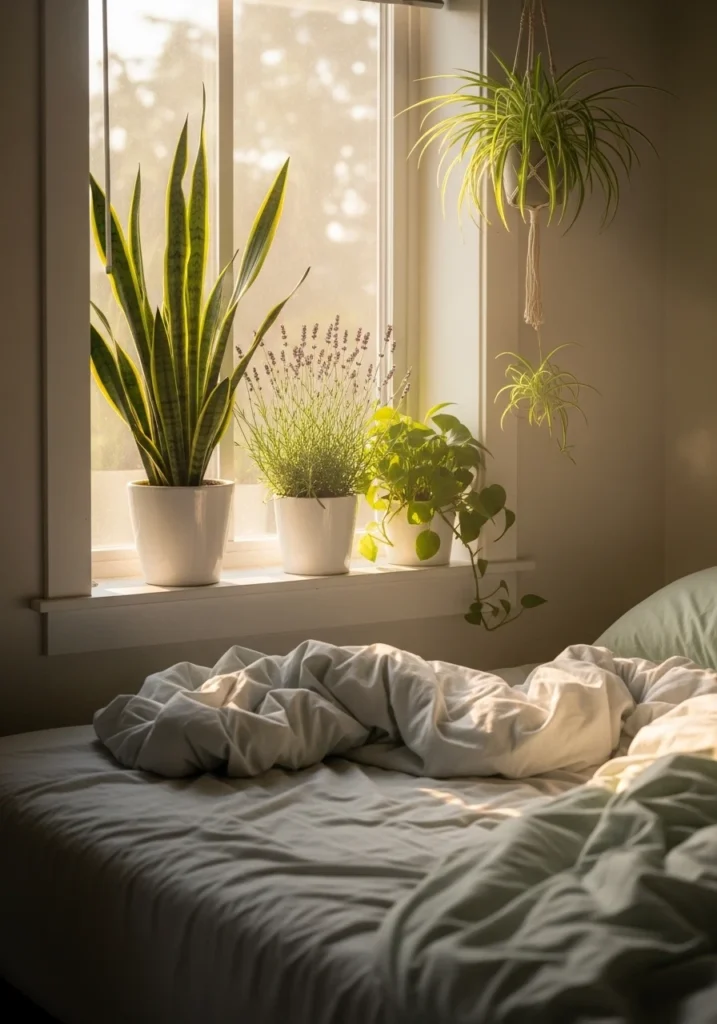
Improving your bedroom air quality does not require expensive air purifiers or complicated routines. A few carefully chosen plants do the work quietly and consistently, night after night.
The snake plant, aloe vera, peace lily, areca palm, spider plant, pothos, and lavender are not just good-looking additions to your space. They are functional ones.
Start with one or two plants that match your light conditions and lifestyle, get comfortable caring for them, and build from there. Your lungs (and your sleep quality) will thank you for it.
And honestly, once you see how much better a bedroom feels with a bit of living greenery in it, the only real question is why you did not start sooner.
Which Plant Releases the Most Oxygen at Night?
The snake plant (Sansevieria trifasciata) is the best at releasing oxygen at night. It uses Crassulacean Acid Metabolism (CAM) photosynthesis.
This means it takes in carbon dioxide after dark and releases oxygen while you sleep. Aloe vera does the same and is a close second.
Both plants are low-maintenance, perfect for bedrooms where you want good results with little effort.
Is It Safe to Sleep With Plants in Your Bedroom?
Yes, it is safe to sleep with plants in your bedroom. Many believe plants compete with us for oxygen at night, but that’s a myth.
Most plants slow down oxygen production after dark. However, CAM plants like snake plants and aloe vera boost their oxygen output at night.
Just be sure to keep toxic plants away from pets and kids. Also, make sure the soil drains well to avoid mold growth.
How Many Plants Do You Need in a Bedroom for Better Air Quality?
A good starting point is one medium plant for every 100 square feet of bedroom space. In an average bedroom of 150 to 200 square feet, two to three plants can improve air quality.
Larger plants, like the areca palm, cover more space alone. Smaller plants, like pothos or spider plants, do better in groups.
The main point is consistency: a few well-cared-for plants will always beat a dozen neglected ones.
What Bedroom Plant Is Best for People With Allergies?
The spider plant and peace lily are great for allergy sufferers. Spider plants are non-toxic, have no irritating pollen, and help remove airborne allergens like formaldehyde and carbon monoxide.
Peace lilies do produce some pollen, but they excel at removing mold spores from the air, making them beneficial for those with allergies. If you are sensitive to strong scents, avoid heavily fragrant plants.
Do Bedroom Plants Actually Improve Sleep Quality?
Research shows that some bedroom plants can improve sleep quality in various ways. Lavender stands out, as studies show its scent reduces anxiety and helps with deeper sleep.
Other plants can raise humidity and filter toxins, making the sleep environment cleaner and more comfortable.
Better air quality leads to easier breathing at night, supporting restful and uninterrupted sleep.