Smart Storage Ideas for a Small Kids Bedroom
Your kid’s bedroom looks like a toy store had an argument with a laundry pile, and somehow both lost. I get it.
I’ve stood in that doorway at 9pm, stepping over Lego pieces like I’m defusing a bomb, wondering how one small human owns more stuff than I do.
The good news? You don’t need a bigger room. You need smarter storage.
I’ve redone my nephew’s tiny bedroom three times over the years (yes, three, because kids grow and their junk multiplies like rabbits), and I’ve picked up some tricks that actually work. Let’s get into it.
Start With Vertical Space, Not Floor Space
Here’s the thing nobody tells you when you’re staring at a cramped bedroom: your walls are storage you’re not using.
Floor space in a small kids room disappears fast, but the space above eye level? Practically untouched.
Think about it this way. A dresser eats up square footage you desperately need for play. Shelves mounted higher up hold just as much and take up zero floor real estate.
Ever notice how hotel rooms feel bigger than they are? That’s because designers use height instead of width.
Wall Shelves and Floating Ledges
Floating shelves are one of the cheapest, fastest upgrades you can make.
Install a few at different heights and suddenly you’ve got display space for books, trophies, or that terrifying collection of stuffed animals that somehow keeps growing.
- Use floating ledges for picture books, so covers face out and kids can actually find what they want
- Add a shelf above the closet door, an area most people completely forget exists
- Install corner shelves to use awkward angles that regular furniture can’t touch
I’ll be honest, I underestimated corner shelves for years. They looked fussy to me. Then I installed one in my nephew’s room and it swallowed an entire bin of art supplies overnight. Lesson learned.
Shop Floating Shelves And Wall Ledges
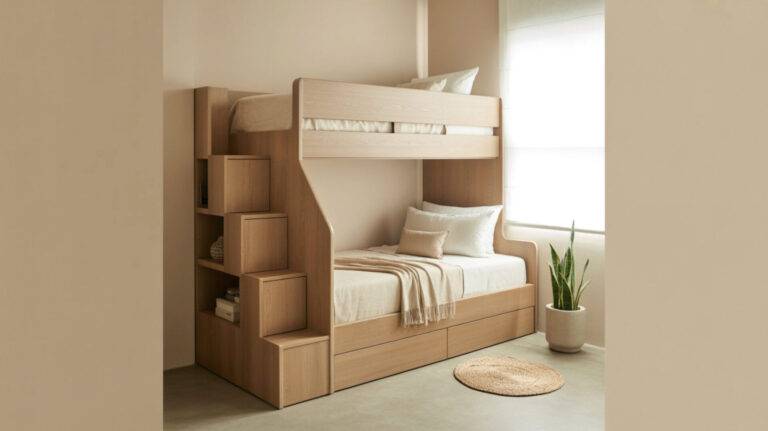
Bunk Beds and Loft Beds Aren’t Just for Space, They’re Storage Machines
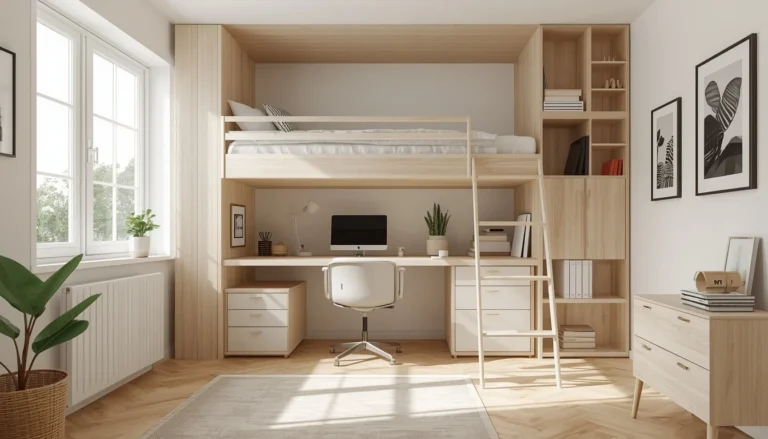
If you haven’t considered a loft bed, you’re missing one of the biggest storage wins available. Raising the bed frees up the entire footprint underneath for a desk, a reading nook, or storage bins.
Bunk beds work similarly if you’ve got two kids sharing a room, which, let’s face it, is basically a tiny apartment negotiation every single night.
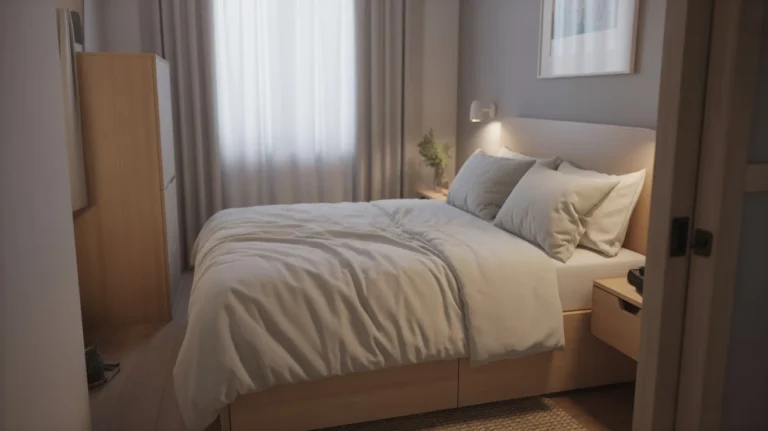
The trick is picking a bed frame with built-in drawers underneath rather than just open space you’ll forget to use.
What to Look For in a Loft or Bunk Bed
- Built-in drawers under the lowest bunk or loft ladder steps
- Solid guardrails and a sturdy frame rating, since safety always comes first
- A desk or shelf attachment that turns unused space into a homework zone
I went with a loft bed for my nephew’s room specifically because his old bedroom had zero closet space.
The area underneath now holds a desk, a bookshelf, and a beanbag chair. Nobody complains anymore, which, in kid-parenting terms, counts as a miracle.
Browse Loft Beds And Bunk Beds
Under-Bed Storage Is Criminally Underused
Ever pulled open a bed frame and found nothing but dust bunnies and a missing sock from three years ago? Same.
Most families waste the space under a standard bed frame, and that’s honestly a shame given how much fits under there.
Rolling storage bins designed for under-bed use are inexpensive and shockingly effective. Slide them out, dump the toys in, slide them back. Done. No fuss, no fancy organizing system required.
- Clear plastic bins let kids see what’s inside without opening every single one
- Bed risers add a few extra inches of clearance if your current bins don’t fit
- Labeled bins teach kids where things belong, which saves your sanity long term
I’ll admit, I resisted labeling bins for a long time because it felt like overkill for a five-year-old. Turns out kids respond really well to pictures and simple words on a box.
Who knew toddlers could follow a system better than some adults I know?
Multi-Functional Furniture Does Double Duty
Small rooms punish single-purpose furniture. A toy chest that only holds toys is fine, but a storage ottoman that holds toys and doubles as extra seating? That’s furniture earning its keep.
Furniture Pieces Worth Considering
- Storage benches at the foot of the bed for blankets, extra pillows, or off-season clothes
- Desks with built-in drawers instead of a plain table that needs a separate cabinet nearby
- Nightstands with shelves instead of solid closed cabinets, so small items stay visible and accessible
Compare a basic toy box to a storage ottoman with a padded lid, and the ottoman wins every time in a small room.
Why sacrifice seating space when the same object handles two jobs? It’s a small change that makes a surprisingly big difference.
Closet Organization Changes Everything
Most kids’ closets get treated like a black hole where clothes and shoes vanish forever. A few smart tweaks turn that closet into genuinely usable storage instead of a place you avoid opening.
Double hanging rods instantly double your hanging space without adding a single inch to the closet itself.
Lower one rod to a height your child can actually reach, because let’s be real, teaching independence starts with letting them pick their own shirt.
- Add stackable shoe organizers on the closet floor instead of letting shoes pile up loose
- Use hanging fabric bins on the closet rod for smaller items like hats, gloves, or extra socks
- Install a pull-down closet rod if your child is still too short to reach the main bar
I switched my nephew’s closet to a double rod setup last year, and it honestly felt like unlocking a cheat code. Suddenly there was room for a shelf unit on the closet floor too. Small changes, big payoff.
Shop Closet Organizers And Rods
Toy Rotation Beats Buying More Bins
Here’s an unpopular opinion: sometimes the answer isn’t more storage, it’s fewer toys visible at once. Toy rotation means keeping a portion of toys stored away and swapping them in every few weeks.
This trick does two things. It reduces clutter immediately, since half the toys aren’t sitting out at all. It also makes rotated-in toys feel new again, which keeps kids interested without buying anything extra.
- Store the “resting” toys in labeled bins in a closet, garage, or under the bed
- Rotate every two to four weeks depending on how attached your kid gets to certain items
- Involve your child in choosing what gets rotated, since forced decluttering rarely goes smoothly
I was skeptical the first time a friend suggested this. It sounded like extra work for no real benefit.
Then I tried it, and the room stayed tidy for way longer than usual, and the kid acted like his old dinosaur set was a brand new gift. Worth it.
Use the Back of Doors and Walls for Small Items
The back of a bedroom door is basically free real estate that almost nobody uses.
Over-the-door organizers hold shoes, small toys, art supplies, or hair accessories without taking up a single inch of floor or shelf space.
Pegboards mounted on a wall work beautifully too, especially for kids who love arts and crafts. Hang scissors, tape, and small containers right where your child can reach them.
- Over-the-door shoe organizers work great for small toys, not just shoes
- Pegboards hold frequently used craft supplies in clear view
- Command hooks on walls hold bags, jackets, or dress-up costumes without any drilling
I added a pegboard to my nephew’s wall mostly out of curiosity, honestly not expecting much.
It became the single most-used spot in the room within a week. Sometimes the simplest ideas end up working the best.
Shop Over-The-Door Organizers And Pegboards
Final Thoughts
A small kids bedroom doesn’t have to feel like a losing battle against clutter.
Vertical storage, multi-functional furniture, smart closet setups, and a bit of toy rotation go a long way toward making a tiny room feel twice its size.
Pick two or three ideas from this list and start there. You don’t need to overhaul the entire room in one weekend, and honestly, trying to do it all at once is a great way to burn out fast.
Start small, stay consistent, and that bedroom floor might actually become visible again.
What Is The Best Storage Solution For A Small Kids Bedroom?
Vertical storage almost always wins in a small room.
Wall shelves, floating ledges, and over-the-door organizers use space you’re already paying for but never touching, so start there before buying any new furniture.
How Can I Maximize Storage In A Small Kids Bedroom?
Combine a few strategies instead of relying on one. Add wall shelves, choose a loft bed with storage underneath, and use under-bed bins so every surface in the room is pulling its weight.
Are Loft Beds Good For Small Kids Bedrooms?
Yes, loft beds are one of the smartest upgrades for a tight space. Raising the bed frees up the entire footprint below for a desk, storage bins, or a reading nook you couldn’t otherwise fit.
How Often Should I Rotate My Kids Toys?
Every two to four weeks works well for most families. It keeps clutter down and makes stored toys feel new again once they come back into rotation.
What Furniture Works Best In A Small Kids Room?
Multi-functional furniture beats single-purpose pieces every time. A storage ottoman, a desk with built-in drawers, or a bed frame with drawers underneath all do double duty without eating up extra floor space.