The Ideal Bedroom Temperature for Deep, Restful Sleep
You know the feeling. You wake up at 3 a.m. Your sheets are damp, and you’re either freezing or sweating.
The next morning, you feel like you ran a marathon in your sleep. It’s frustrating. One simple fix could have saved you: getting your bedroom temperature right.
Many people focus on mattresses, pillows, and white noise machines. They often overlook the key factor sleep scientists keep highlighting, temperature. It’s not just about comfort.
It’s a biological need for deep, restorative sleep. Once you grasp this, you won’t underestimate its importance again.
Why Temperature Affects Your Sleep More Than You Think
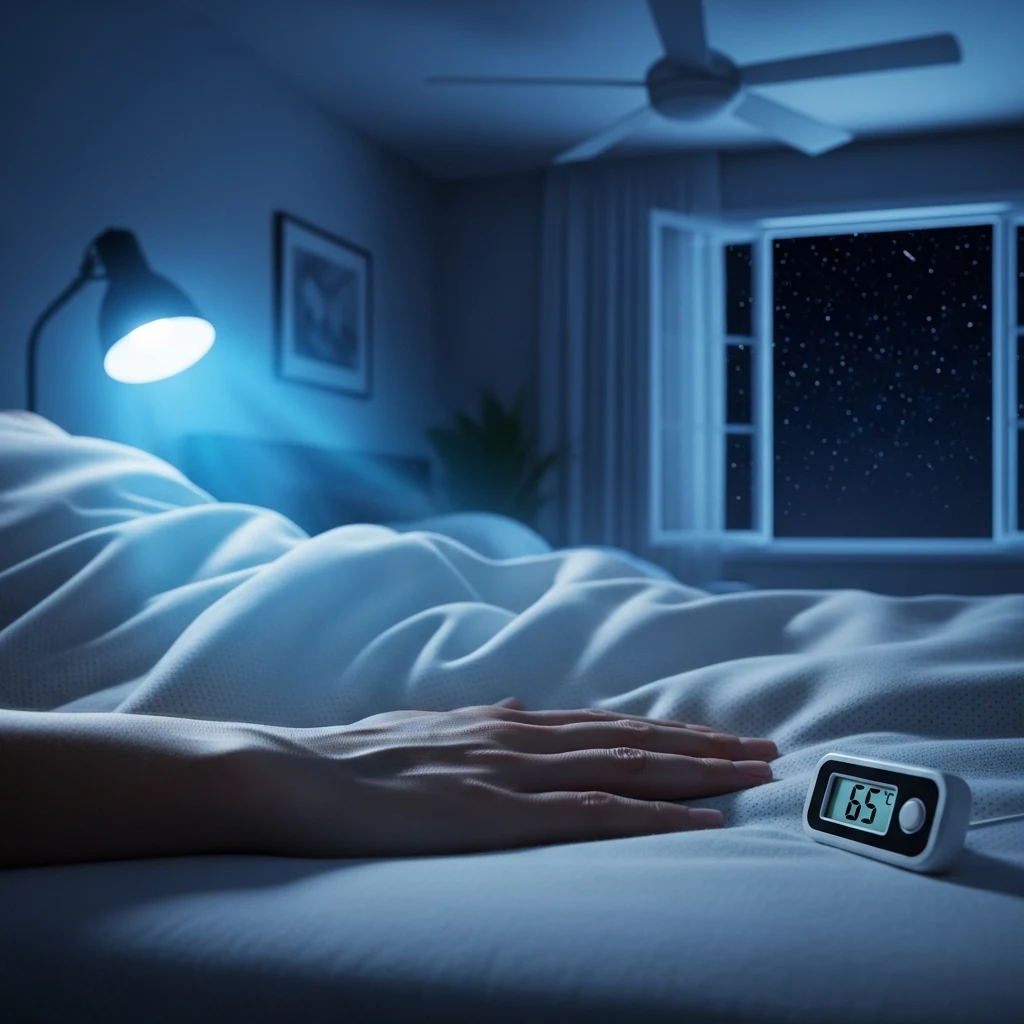
Your body is not passive when you sleep.
It actively works to lower its core temperature as part of a process called thermoregulation, and this temperature drop is one of the main triggers that pulls you into deep, slow-wave sleep.
When your bedroom is too warm or too cold, your body struggles to complete that process, and your sleep suffers for it.
Think of it this way: your brain is essentially trying to cool itself down to enter sleep mode, and a hot room is like trying to cool a laptop in a sauna. Not happening.
Research from sleep medicine consistently shows that temperature disruption fragments sleep architecture, meaning you spend less time in the deep and REM stages that actually restore your body and mind.
What Happens Inside Your Body at Night
As you fall asleep, your core body temperature drops by about 1 to 2 degrees Fahrenheit.
Your blood vessels near the skin dilate to release heat outward, which is why your hands and feet often feel warm right before you drift off.
Your brain reads this heat release as a signal to produce melatonin and begin the sleep cycle.
When your room temperature fights against this process, your body has to work overtime to compensate.
That extra effort keeps you in lighter sleep stages, makes you more likely to wake up, and reduces the overall quality of the rest you get.
The Ideal Bedroom Temperature Range
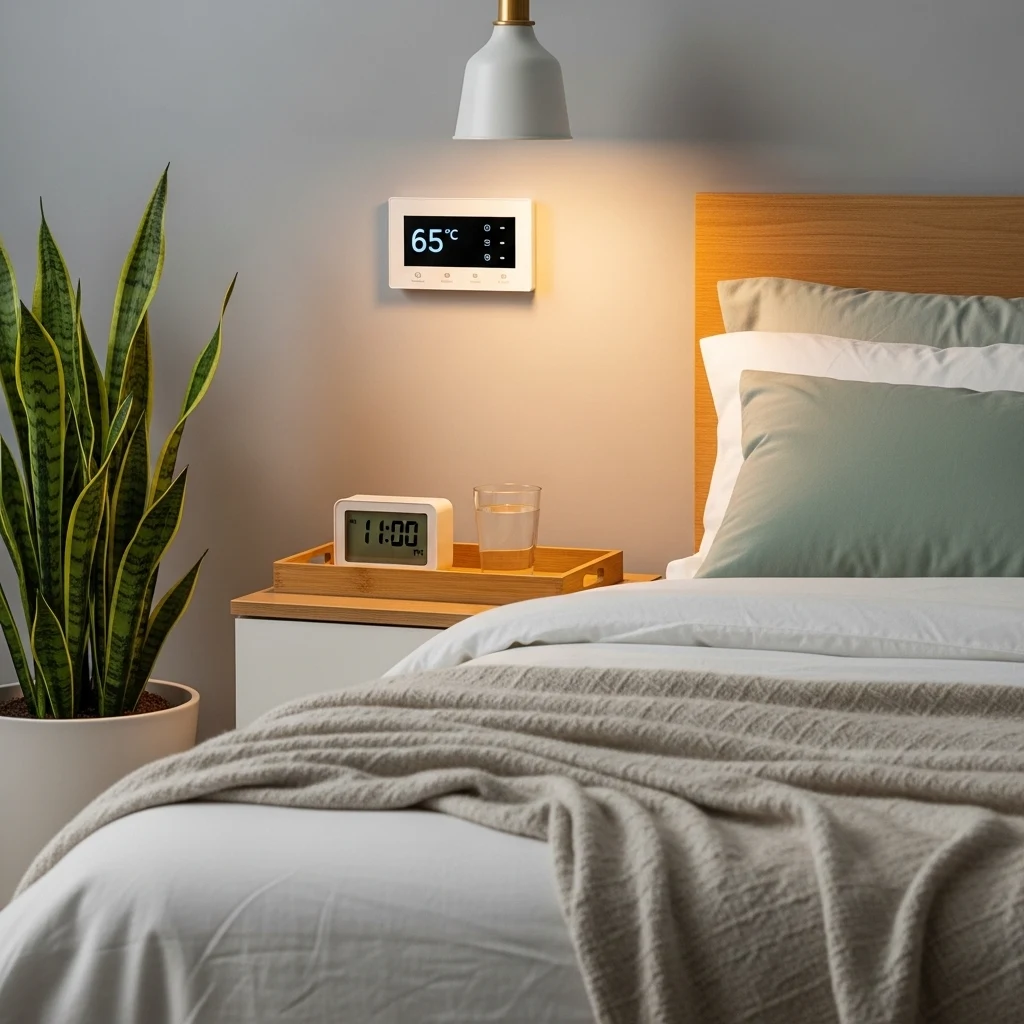
Alright, so what number are we actually shooting for? The sweet spot for most adults is between 60 and 67 degrees Fahrenheit (15.6 to 19.4 degrees Celsius).
That range comes up repeatedly in sleep research, and it aligns with what most sleep specialists recommend.
Within that range, many people find that 65 to 66 degrees Fahrenheit feels perfect.
It is cool enough to support the body’s natural temperature drop without being so cold that you spend the night shivering under three blankets.
That said, individual preferences do vary, and factors like age, hormonal fluctuations, and metabolic rate all influence where your personal sweet spot lands.
Temperature Needs Vary by Person
Not everyone runs at the same thermostat setting, and that is perfectly normal. Here are a few factors that shift the ideal temperature for different people:
- Age: Older adults tend to feel cold more easily and may prefer temperatures closer to 68 to 70 degrees Fahrenheit.
- Hormones: People going through menopause often experience hot flashes that make a cooler room (even below 65 degrees) feel more comfortable.
- Body composition: People with higher muscle mass tend to generate more body heat and often prefer cooler environments.
- Metabolism: A faster metabolism means more heat production, which pushes your preference toward the cooler end of the range.
The bottom line is that 60 to 67 degrees is your starting target, and you fine-tune from there based on how your body responds.
What Happens When Your Room Is Too Warm

A warm bedroom is the enemy of deep sleep, full stop. When the room temperature climbs above 70 degrees Fahrenheit, your body cannot shed heat efficiently.
Your sleep becomes fragmented, you spend more time in light sleep stages, and REM sleep in particular takes a serious hit.
REM sleep is where your brain consolidates memories, processes emotions, and restores cognitive function.
Cutting it short is basically the same as skipping the most important part of your nightly maintenance routine, and you will feel it the next day whether you realize the cause or not.
Signs Your Room Is Too Hot
If you are experiencing any of these regularly, your bedroom temperature is probably too high:
- Waking up sweaty or tangled in kicked-off blankets
- Feeling groggy and unrefreshed even after a full night of sleep
- Difficulty falling asleep even when you feel tired
- Increased restlessness and tossing throughout the night
- Vivid or disturbing dreams, which can increase with REM disruption
What Happens When Your Room Is Too Cold
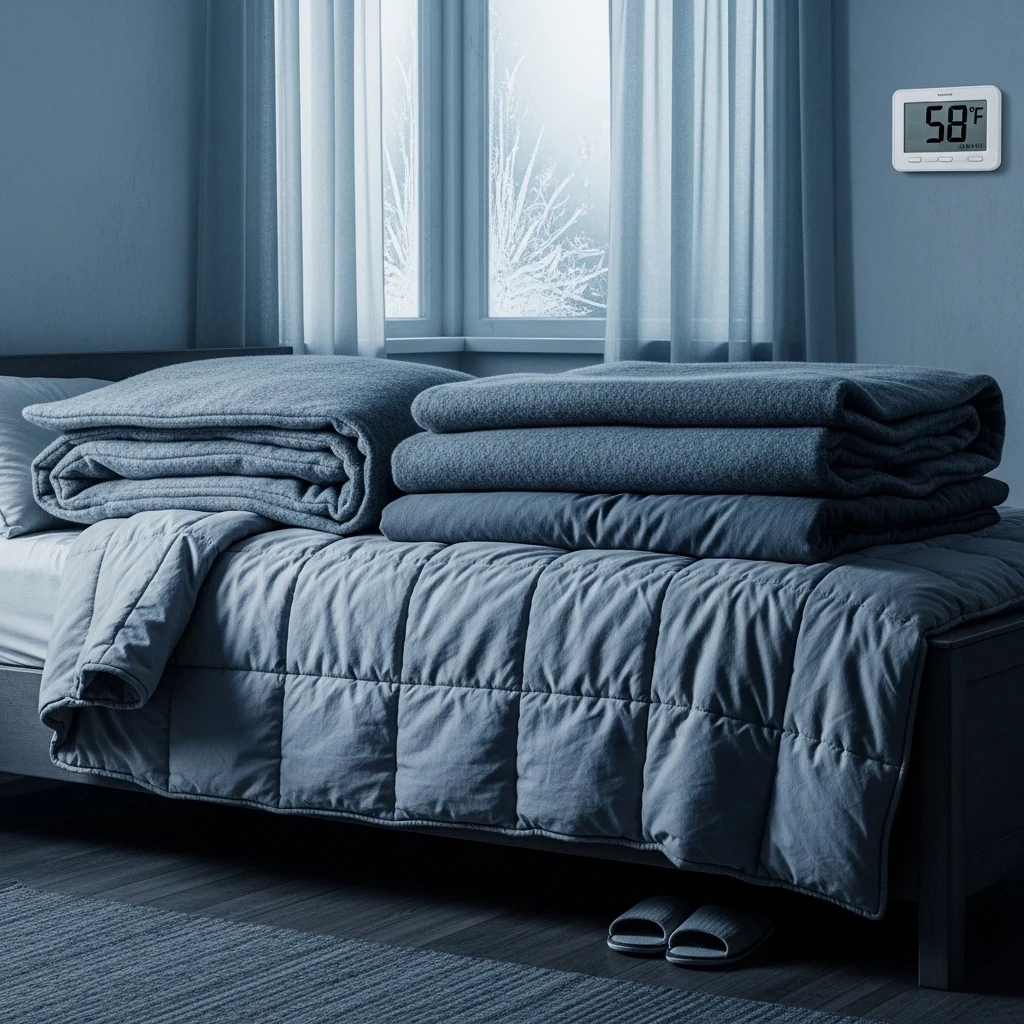
Here is the flip side that people often overlook: a room that is too cold is just as disruptive as one that is too warm.
When the temperature drops below 60 degrees Fahrenheit, your body shifts resources toward maintaining core temperature rather than supporting restorative sleep cycles.
Extreme cold also increases muscle tension, which can lead to restlessness and discomfort.
If you have ever woken up with a stiff neck after sleeping in a very cold room, now you know why. Your muscles were working all night.
The Right Balance Is Not About Comfort Alone
This is the part most people miss. You might feel comfortable at 72 degrees because you are used to it, but comfortable and optimal are two very different things.
Your body sleeps better in a cooler environment than it feels comfortable in while awake. That small distinction is worth taking seriously.
How to Optimize Your Bedroom Temperature for Better Sleep
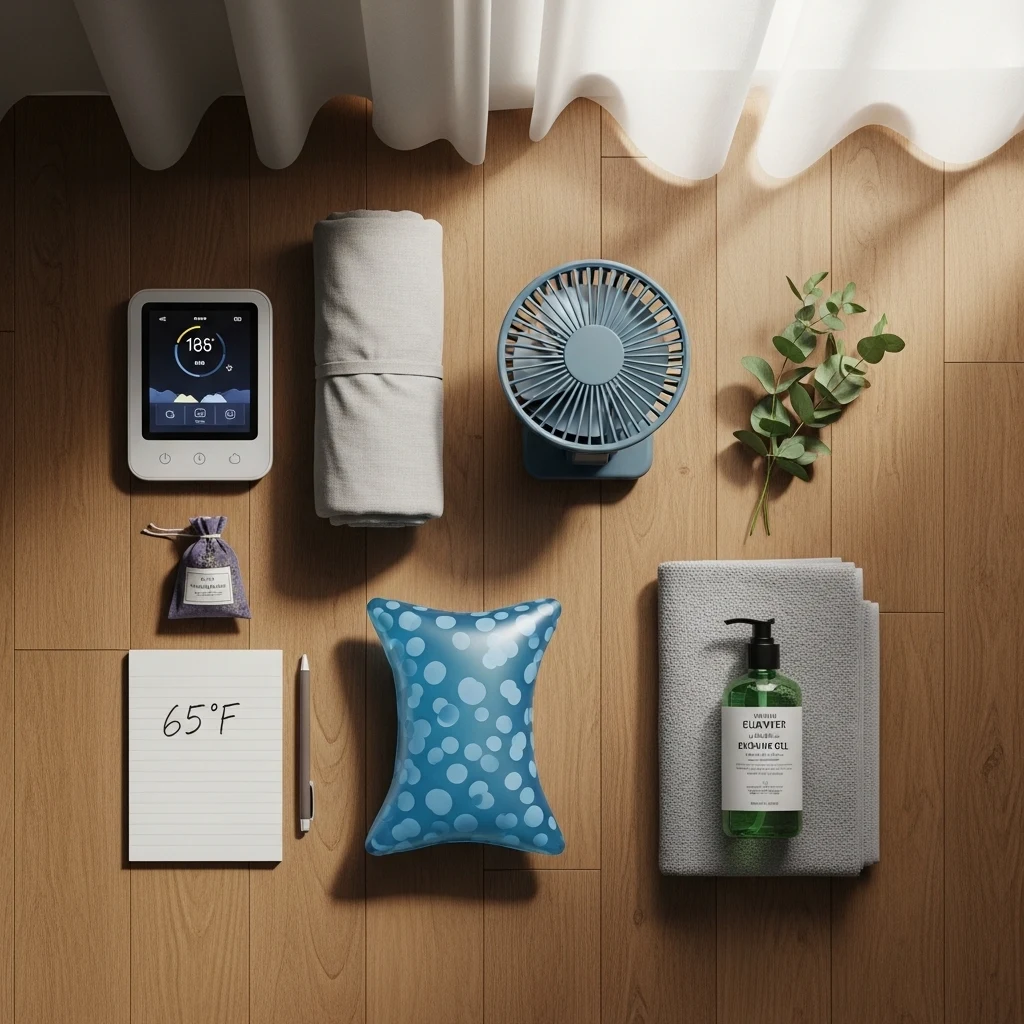
Knowing the target temperature is one thing. Actually achieving it consistently is another. Here are practical strategies that work:
Set Your Thermostat Intentionally
Program your thermostat to begin cooling about 30 to 60 minutes before your bedtime.
This gives the room time to reach the right temperature before you climb in, rather than your body having to battle residual heat from the day.
If your home does not have a programmable thermostat, a smart plug-in thermostat or a simple fan can make a significant difference.
Choose the Right Bedding
Your bedding traps or releases heat, and this matters almost as much as the room temperature itself. Consider the following:
- Lightweight, breathable materials like cotton, bamboo, or linen regulate temperature far better than polyester or fleece.
- Moisture-wicking sheets help if you tend to sweat during sleep.
- Layering lighter blankets gives you the flexibility to adjust without waking up fully.
- Avoid memory foam toppers if you sleep warm, as they retain body heat more than other materials.
Shop Breathable Bedding Sets On Amazon
Use Fans Strategically
A ceiling fan or a floor fan pointed away from you creates a cooling effect through air circulation without necessarily dropping the room temperature dramatically.
This is especially helpful in climates where nights do not cool down much.
Positioning matters: a fan blowing across your body promotes evaporative cooling, which directly supports your body’s heat-shedding process.
Try a Cooling Mattress Pad
If you share a bed with a partner who runs hotter or cooler than you do, a dual-zone cooling mattress pad is genuinely worth considering.
These products allow each person to control the temperature on their side of the bed independently, which is the kind of sleep technology that should have existed decades ago.
Find Dual-Zone Cooling Mattress Pads On Amazon
Take a Warm Shower Before Bed
This one sounds counterintuitive, but it works. Taking a warm shower 60 to 90 minutes before bed raises your skin temperature temporarily.
When you get out, your body rapidly dissipates that heat, accelerating the core temperature drop that signals your brain to prepare for sleep.
This is one of the simplest, most evidence-backed sleep hacks available, and it costs nothing.
Temperature and Sleep Quality Across Different Life Stages
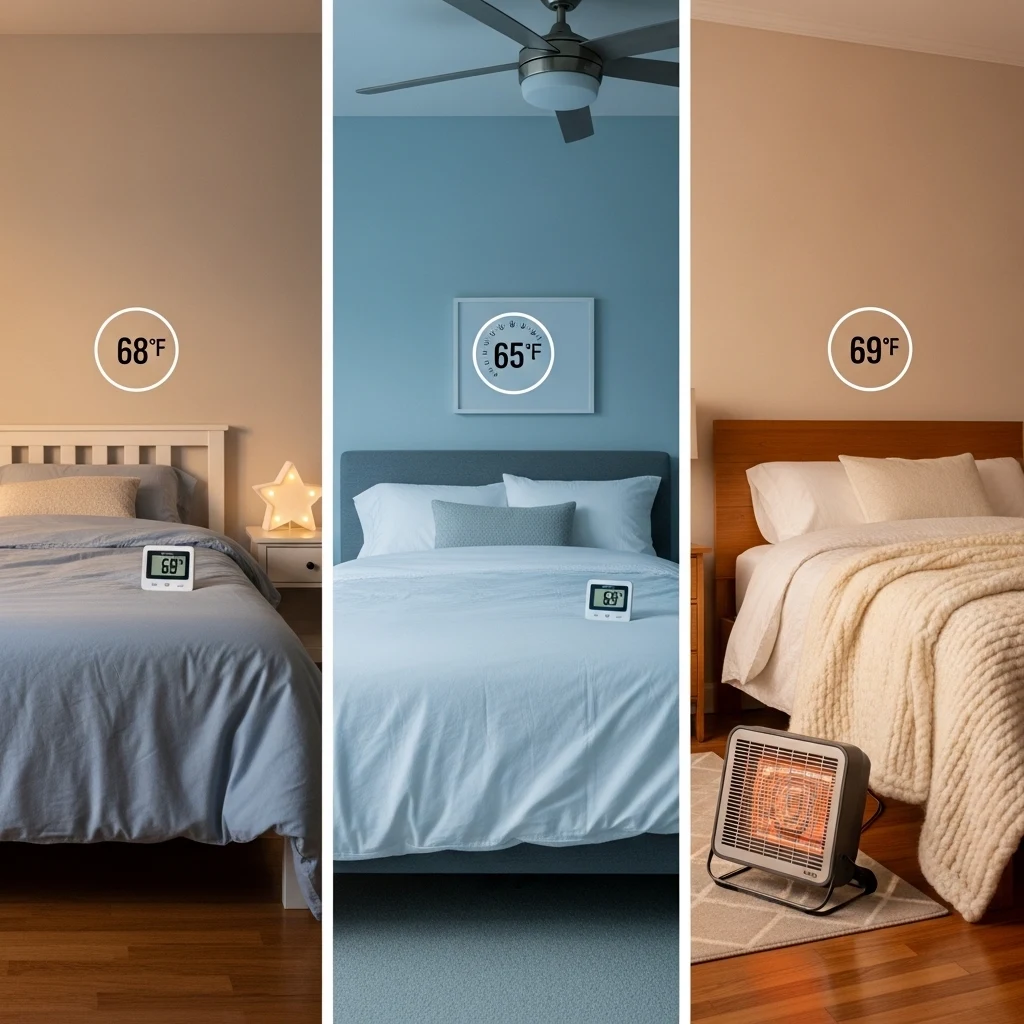
Sleep needs and temperature sensitivity evolve throughout your life. What worked for you at 25 might not serve you well at 45, and that is not a personal failure. It is just biology doing its thing.
Children and teenagers tend to sleep at slightly warmer temperatures than adults, with a range around 65 to 70 degrees Fahrenheit being well-tolerated.
Older adults often need to compensate for reduced circulation and lower metabolic heat production by keeping the room slightly warmer while still staying below 70 degrees.
Pregnant women frequently experience increased body temperature due to hormonal shifts, making a cooler bedroom especially important during pregnancy.
A Note on Seasonal Adjustments
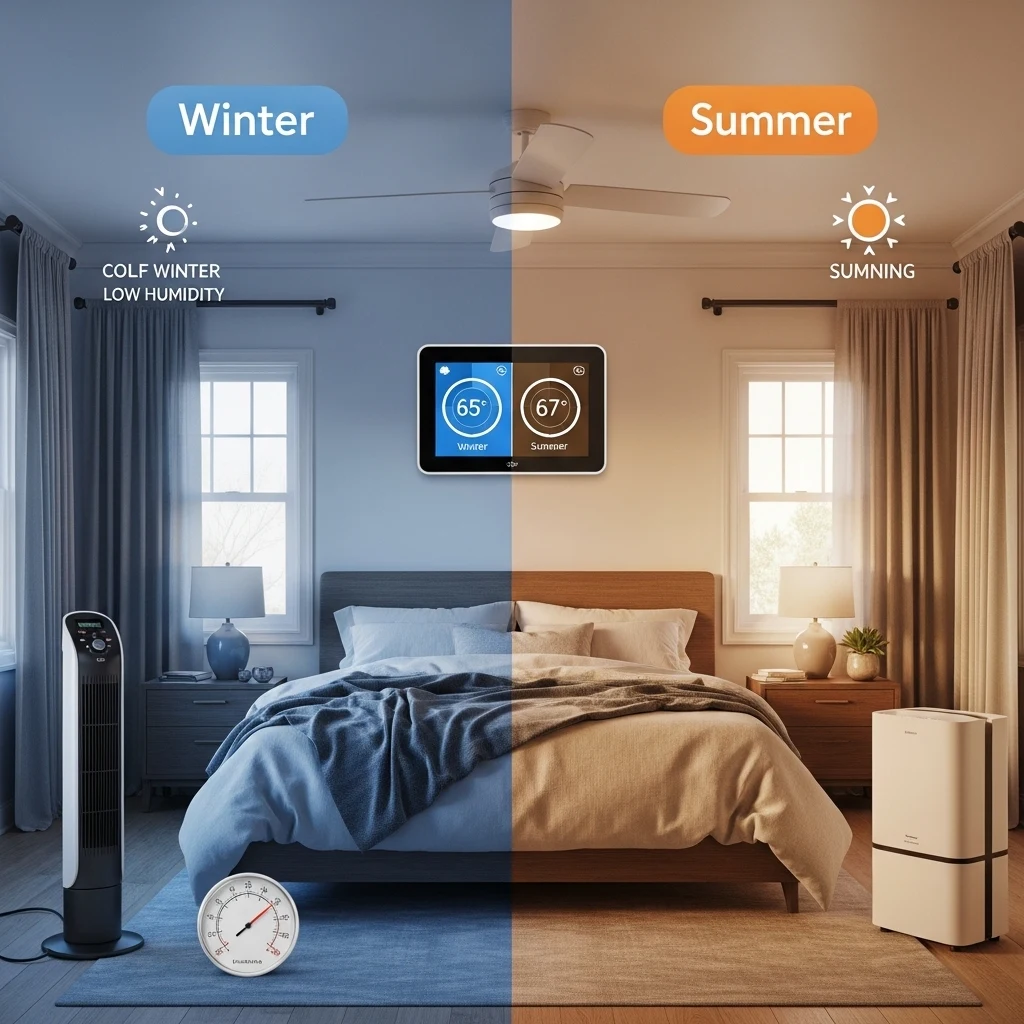
One of the most common mistakes people make is setting a bedroom temperature in winter and forgetting about it until summer, by which time they have been sleeping poorly for months without connecting the dots.
Revisit your bedroom temperature setup with the seasons, because outdoor temperature, humidity levels, and how much heat your body generates all shift throughout the year.
Humidity also plays a role worth mentioning.
High humidity reduces your body’s ability to cool itself through sweating, which means a room at 68 degrees with 80 percent humidity will feel and function like a much warmer room.
A dehumidifier or air conditioner that also manages humidity can significantly improve your sleep environment in warmer, wetter climates.
Shop Bedroom Dehumidifiers On Amazon
Putting It All Together
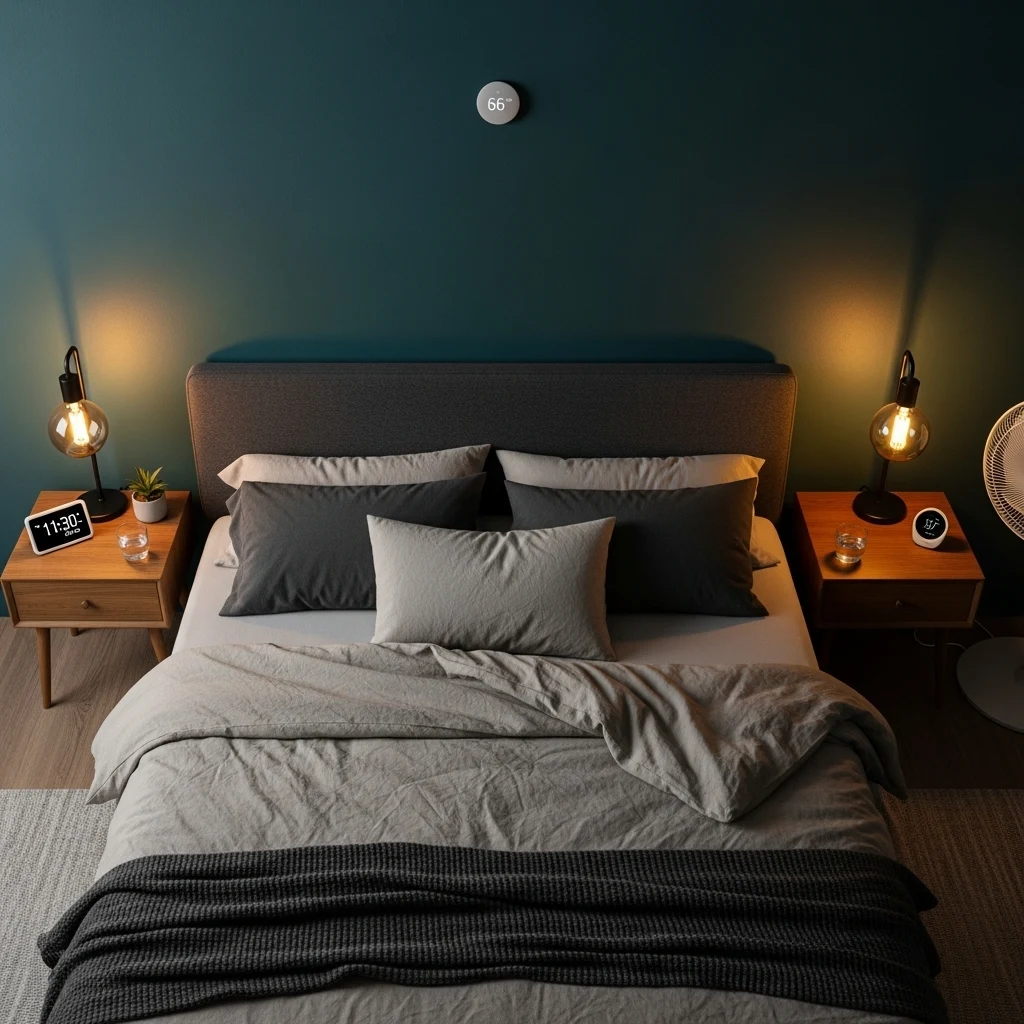
Getting your bedroom temperature right is one of the most impactful, lowest-cost changes you can make to your sleep quality.
The target range is 60 to 67 degrees Fahrenheit, with most people finding their ideal closer to 65 degrees.
Too warm shortens your deep and REM sleep. Too cold keeps your body working instead of resting.
Start with your thermostat, layer in the right bedding, use airflow to your advantage, and pay attention to how you feel after a week of adjustments.
Your body will tell you when you have found the right number.
And honestly, once you start sleeping through the night properly, you will wonder why you ever let a thermostat setting stand between you and the best sleep of your life.
What Is the Ideal Bedroom Temperature for Sleep?
The ideal bedroom temperature for most adults is between 60 and 67 degrees Fahrenheit (15.6 to 19.4 degrees Celsius). Sleep researchers often recommend 65 degrees as the best option.
This temperature helps your body lower its core temperature, which is key for deep, restorative sleep. If you’re new to adjusting your sleep environment, start at 65 degrees.
Then, tweak it by one or two degrees based on how you feel over a few nights.
Why Does Bedroom Temperature Affect Sleep Quality?
Your body needs to lower its core temperature by 1 to 2 degrees Fahrenheit to start and maintain deep sleep. If your bedroom is too warm, your body can’t release heat well.
This makes you spend more time in lighter sleep stages and less in deep and REM sleep. REM sleep is very sensitive to temperature changes.
Losing REM sleep can hurt your memory, emotional control, and thinking the next day. A cool room helps your brain switch to sleep mode faster and stay there longer.
What Happens If Your Bedroom Is Too Hot or Too Cold at Night?
A bedroom that’s too hot, over 70 degrees Fahrenheit, disrupts your sleep. It cuts into the deep and REM stages necessary for recovery.
You might wake up more often, feel groggy in the morning, and toss and turn at night. Conversely, a room that’s too cold, below 60 degrees Fahrenheit, makes your body work harder to keep warm.
This also disrupts sleep and can lead to muscle tension and stiffness. Aim for a temperature between 60 and 67 degrees. This range helps your body rest without extra struggle.
How Can You Maintain the Right Sleep Temperature Without Air Conditioning?
You don’t need central air to keep your bedroom cool for sleep. A ceiling or floor fan can improve air circulation and create a cooling effect.
Choosing breathable bedding made from cotton, bamboo, or linen helps reduce heat buildup. Taking a warm shower 60 to 90 minutes before bed speeds up your body’s heat-release process.
Keeping your curtains or blinds closed during the day blocks heat from the sun. Then, opening windows at night lets in cooler air when temperatures drop.
Does the Ideal Sleep Temperature Change As You Age?
Yes, your ideal sleep temperature changes with age. Older adults often have reduced circulation and lower metabolic heat.
They may sleep well at temperatures around 68 to 70 degrees Fahrenheit, but staying below 70 is still best. Children and teens usually prefer slightly warmer rooms than adults.
Those going through menopause might find cooler temps, even below 65 degrees, help with hot flashes and night sweats.
The main recommendation of 60 to 67 degrees is a good starting point, but age and hormonal shifts can justify adjustments within or just outside that range.