How a Weighted Blanket Calms Anxiety and Stress
Imagine this: it’s 11 PM, your mind races through every awkward moment from 2019, and sleep seems far away. Does this sound familiar? A weighted blanket could be the key to finding that elusive calm.
These heavy blankets have gained popularity in recent years, and for good reason.
Whether you struggle with chronic anxiety, occasional stress, or poor sleep, knowing how a weighted blanket works can truly transform your nights.
What Is a Weighted Blanket, Exactly?
Before we get into the science, let’s make sure we’re on the same page.
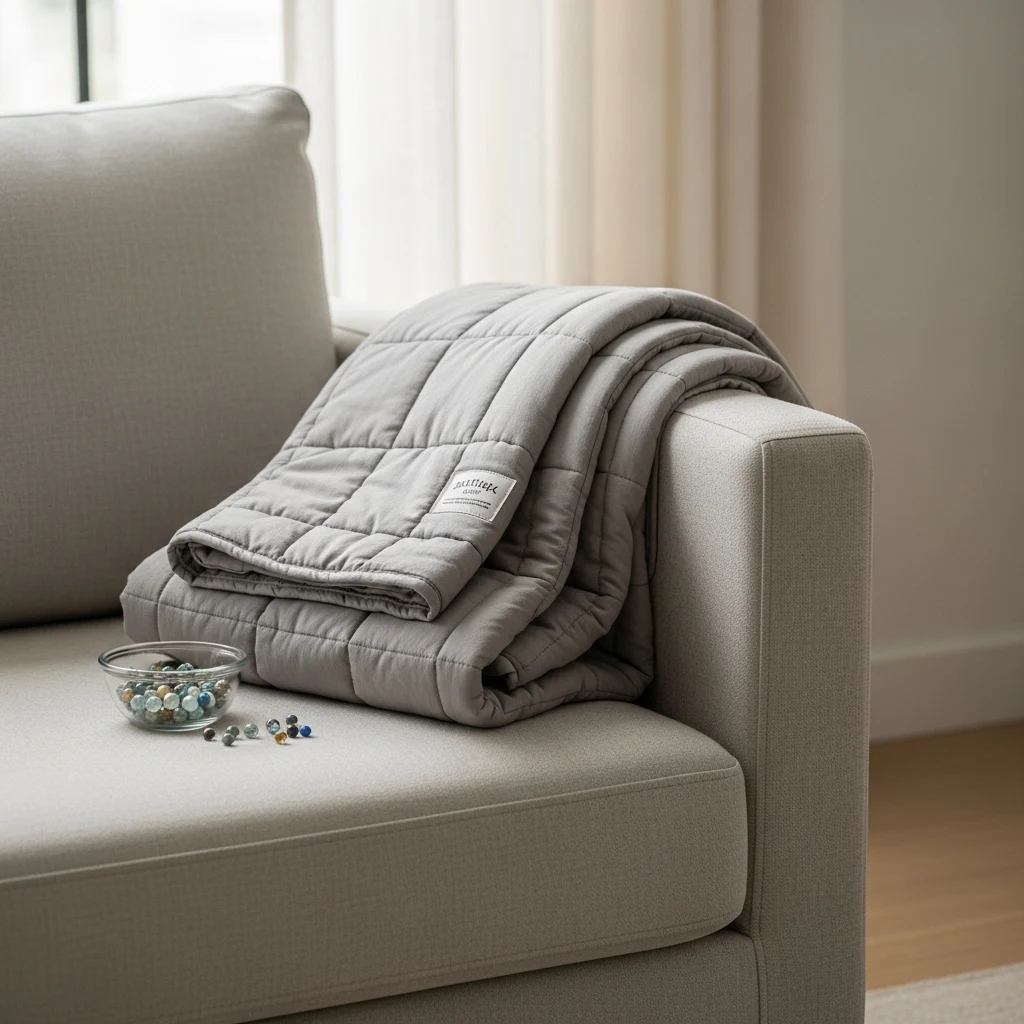
A weighted blanket is exactly what it sounds like: a blanket filled with small weighted materials, usually glass beads or plastic pellets, that make it significantly heavier than your average throw.
Most weighted blankets range from 5 to 30 pounds, and the general recommendation is to choose one that equals roughly 10% of your body weight.
They come in all sizes, fabrics, and price ranges, so there’s genuinely something for everyone.
What’s Inside Them?
The filling matters more than most people realize. Here’s a quick breakdown of the most common options:
- Glass beads: Small, smooth, and dense. They distribute weight evenly and tend to keep the blanket thinner and less bulky.
- Plastic poly pellets: Larger and lighter than glass beads. They do the job but can make the blanket feel chunkier.
- Steel shot beads: Heavier and more durable, often used in premium blankets.
- Natural fillings (like sand or grains): Less common and harder to wash, but some people prefer them.
The outer fabric matters too. Minky fabric feels plush and warm, while cotton breathes better for people who sleep hot.
If you’ve ever kicked off a regular blanket at 2 AM because you were sweating, go for cotton. Trust me on this one.
Browse Weighted Blankets On Amazon
The Science Behind Why Weighted Blankets Work
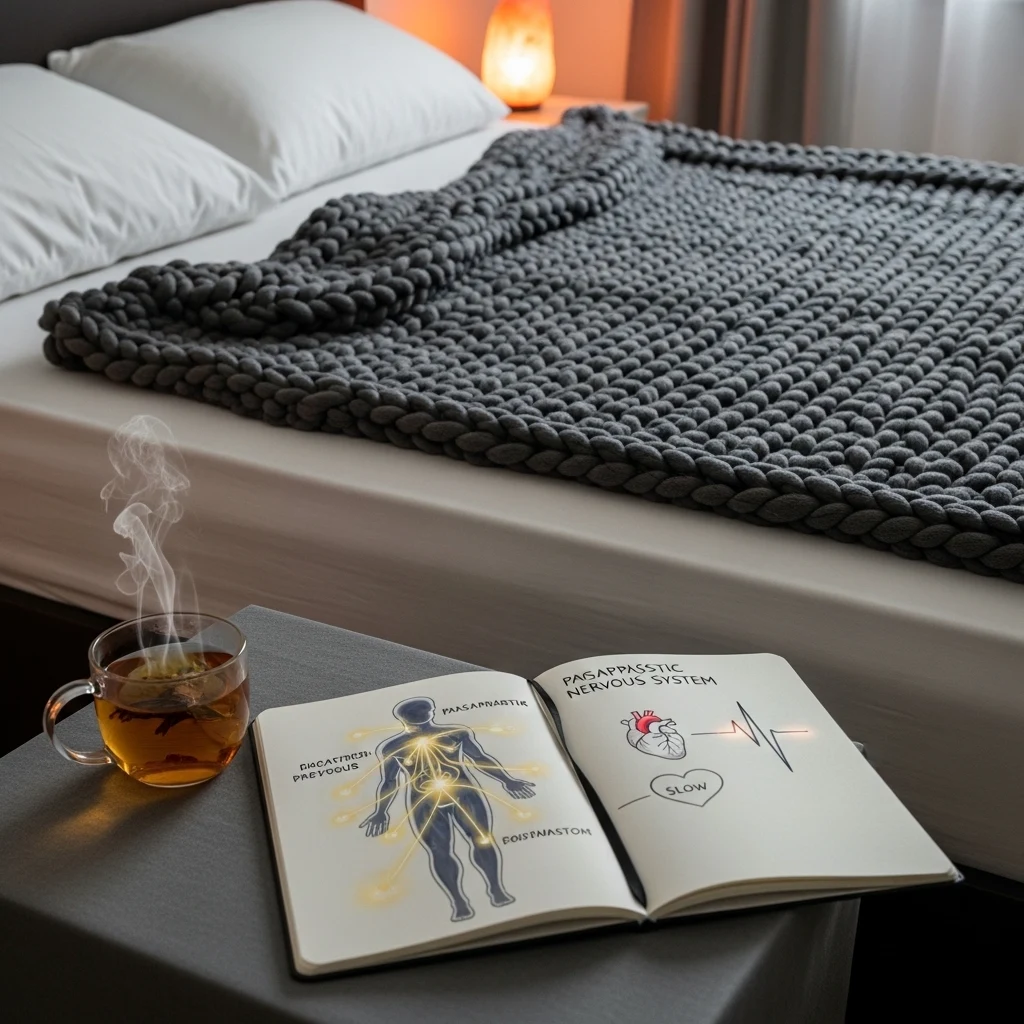
Here’s where it gets genuinely fascinating. Weighted blankets work through a mechanism called Deep Pressure Stimulation (DPS), and no, that’s not a made-up term to sell blankets on Instagram.
Deep Pressure Stimulation Explained
Deep Pressure Stimulation is the same principle behind why a firm hug feels so calming or why swaddling a newborn settles them down almost instantly.
The gentle, distributed pressure from a weighted blanket activates your parasympathetic nervous system, which is basically your body’s built-in “chill out” mode.
When your parasympathetic nervous system kicks in, a few important things happen:
- Your heart rate slows down. That racing, anxious heartbeat starts to settle.
- Your breathing becomes deeper and steadier. Less shallow, panicked breathing, more long, slow breaths.
- Cortisol levels drop. Cortisol is your primary stress hormone, and high levels of it keep your body stuck in fight-or-flight mode.
- Serotonin and dopamine production increases. These are your feel-good neurotransmitters, and they play a huge role in mood regulation.
In short, the weight of the blanket physically signals to your nervous system that there is no immediate threat.
Your body relaxes because it genuinely believes the danger has passed, even if the “danger” was just an awkward email from your boss.
The Role of Melatonin
Here’s a bonus effect most people don’t talk about enough. The serotonin boost triggered by deep pressure stimulation doesn’t just improve your mood.
Serotonin converts into melatonin, which is the hormone responsible for regulating your sleep cycle.
So when you use a weighted blanket regularly, you’re not just calming your anxiety in the moment. You’re also setting the stage for better, deeper sleep over time.
That’s a two-for-one deal that no amount of chamomile tea has ever managed to deliver.
Find A Weighted Blanket That Works For You On Amazon
How a Weighted Blanket Specifically Targets Anxiety

Anxiety is tricky because it’s not just a feeling. It’s a full-body physical response.
Your muscles tense up, your chest tightens, your thoughts spiral, and your nervous system goes into overdrive. A weighted blanket works on multiple fronts to interrupt that cycle.
It Grounds You in the Present Moment
One of the most underrated benefits of weighted blankets is the grounding effect. When you pull that heavy blanket over yourself, the physical sensation demands your attention in a gentle, non-intrusive way.
Your brain focuses on what it can physically feel, which pulls it away from anxious thoughts spiraling about the future.
This is actually a principle used in grounding therapy, where therapists encourage patients to anchor themselves in present physical sensations to break anxiety loops.
The weighted blanket essentially does that automatically.
It Mimics the Effect of Being Held
Humans are wired for physical touch. Research consistently shows that human contact, such as hugging, handholding, or gentle pressure, releases oxytocin, often called the “bonding hormone.”
Oxytocin naturally counteracts stress and promotes feelings of safety and trust.
The problem? You can’t always access a hug when anxiety strikes at midnight.
A weighted blanket replicates that physical sensation of being held, giving your body the chemical response it craves without needing another person in the room.
Is it a replacement for genuine human connection? No. But at 3 AM, it’s a pretty solid backup.
It Reduces Sensory Overload
For people whose anxiety connects to sensory overstimulation, such as those with ADHD, autism spectrum disorder, or generalized anxiety disorder, the world can feel like it’s constantly turned up too loud.
Weighted blankets provide consistent, predictable sensory input that helps regulate an overactive nervous system.
Rather than adding more stimulation, the even pressure of the blanket acts like a sensory filter, calming the noise and creating a bubble of physical calm around you.
Weighted Blankets and Stress: A Different Animal
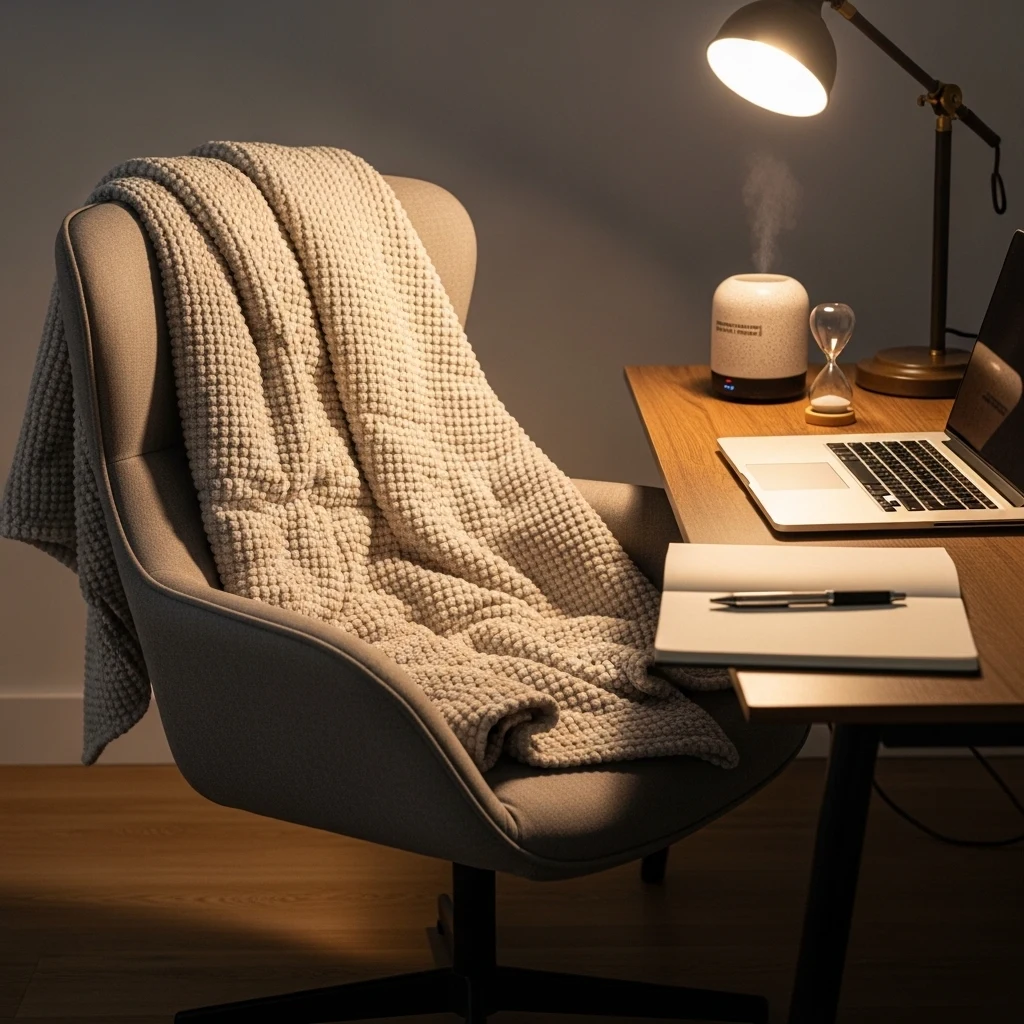
Anxiety and stress are related but not identical.
Anxiety often lingers without a clear cause, while stress typically has a direct trigger, like a work deadline, a difficult conversation, or a jam-packed schedule. Good news: weighted blankets tackle both.
Using a Weighted Blanket After a Stressful Day
Think of it as a physical decompression tool. After a high-stress day, your cortisol levels stay elevated even when the stressor is gone.
Your body doesn’t automatically switch off just because you sat down on the couch.
Using a weighted blanket during your wind-down routine actively lowers those cortisol levels faster.
Many people find that 30 to 45 minutes under a weighted blanket while reading or watching something low-key makes a significant difference in how quickly they feel settled.
Combining It With Other Stress Relief Practices
A weighted blanket works even better when you pair it with other calming habits. Here are a few combinations that genuinely help:
- Weighted blanket plus deep breathing: The blanket helps your body slow down, and the breathing gives your mind something rhythmic to focus on.
- Weighted blanket plus journaling: Write out the day’s stress first, then wrap up and let the physical calm follow.
- Weighted blanket plus low-light environments: Bright screens and harsh lighting keep your nervous system alert. Dim the room, add the blanket, and you’ve created a proper wind-down environment.
- Weighted blanket plus a warm shower beforehand: A warm shower naturally lowers your core temperature as you dry off, which primes your body for sleep. Adding the blanket extends that relaxation response.
Who Benefits Most From a Weighted Blanket?

The honest answer? Most people. But some groups see particularly significant results.
People With Anxiety Disorders
Whether you deal with generalized anxiety, panic disorder, or social anxiety, the physical calming effect of deep pressure stimulation directly addresses the body-level symptoms that anxiety triggers.
Regular use can help retrain your nervous system’s baseline response over time, not just in the moment.
People With Insomnia or Poor Sleep Quality
If racing thoughts keep you awake, the grounding and serotonin-boosting effects of a weighted blanket can shorten the time it takes to fall asleep and improve overall sleep quality.
Children and Adults With Sensory Processing Differences
Weighted blankets have a long history of use in occupational therapy for children with autism spectrum disorder and sensory processing disorders.
They’re one of the most well-supported non-pharmacological tools in that space.
Anyone Going Through High-Stress Periods
You don’t need a diagnosis to benefit. Major life transitions, demanding work phases, or just a stretch of bad weeks can all push your nervous system into overdrive.
A weighted blanket gives you an accessible, low-effort way to actively support your body’s recovery.
Choosing the Right Weighted Blanket for Anxiety Relief
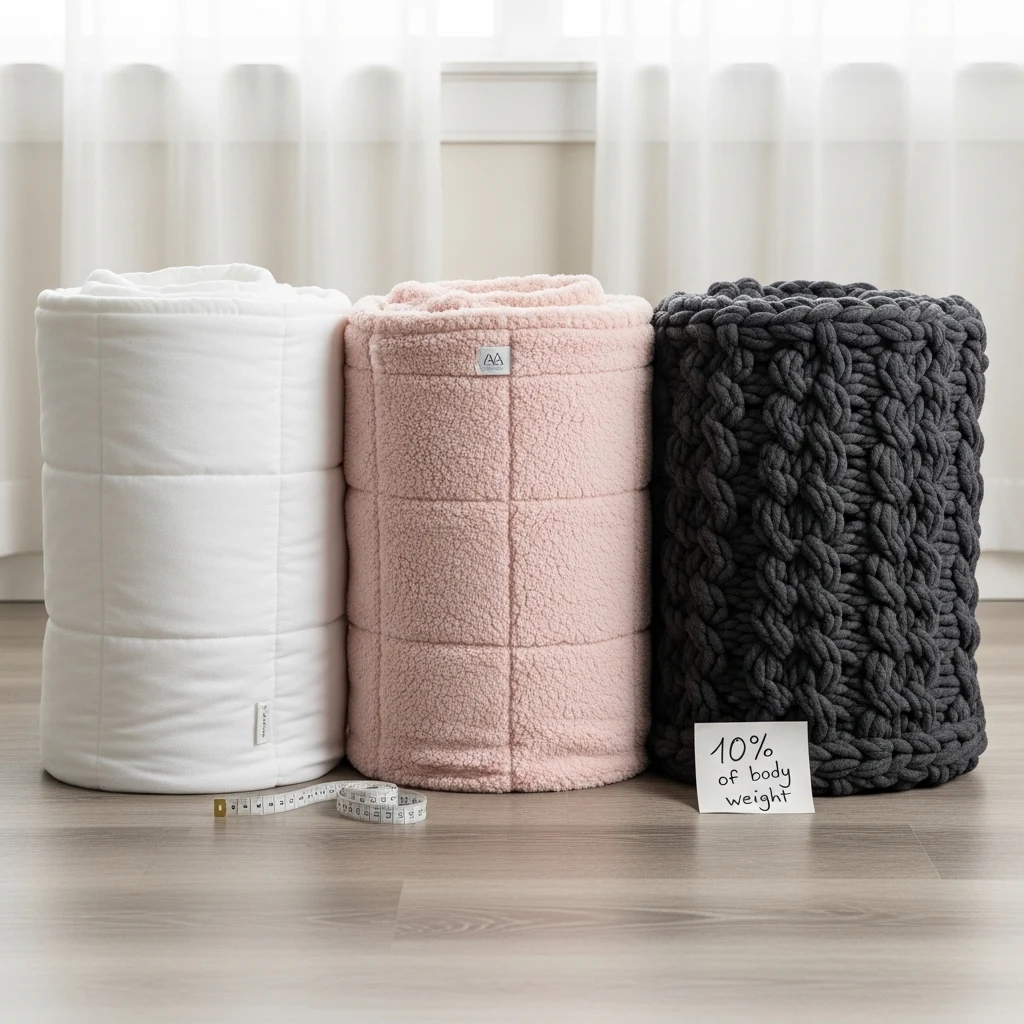
Not all weighted blankets are equal, and picking the wrong one can actually make things worse. Here’s what to prioritize:
- Weight: Aim for approximately 10% of your body weight. Too light and you won’t feel the effect; too heavy and it feels restrictive rather than comforting.
- Size: A blanket that matches your body size works better than a full king-size option. You want the weight on you, not hanging off the sides of the bed.
- Fabric: Choose based on whether you sleep hot or cold. Cotton for warm sleepers, minky or fleece for those who run cold.
- Construction: Look for blankets with small, evenly distributed pockets holding the fill. Poor construction leads to uneven weight that shifts to one side and loses its effectiveness.
- Washability: Anxiety is stressful enough. Make sure your blanket is machine washable.
Shop Weighted Blankets On Amazon
The Bottom Line
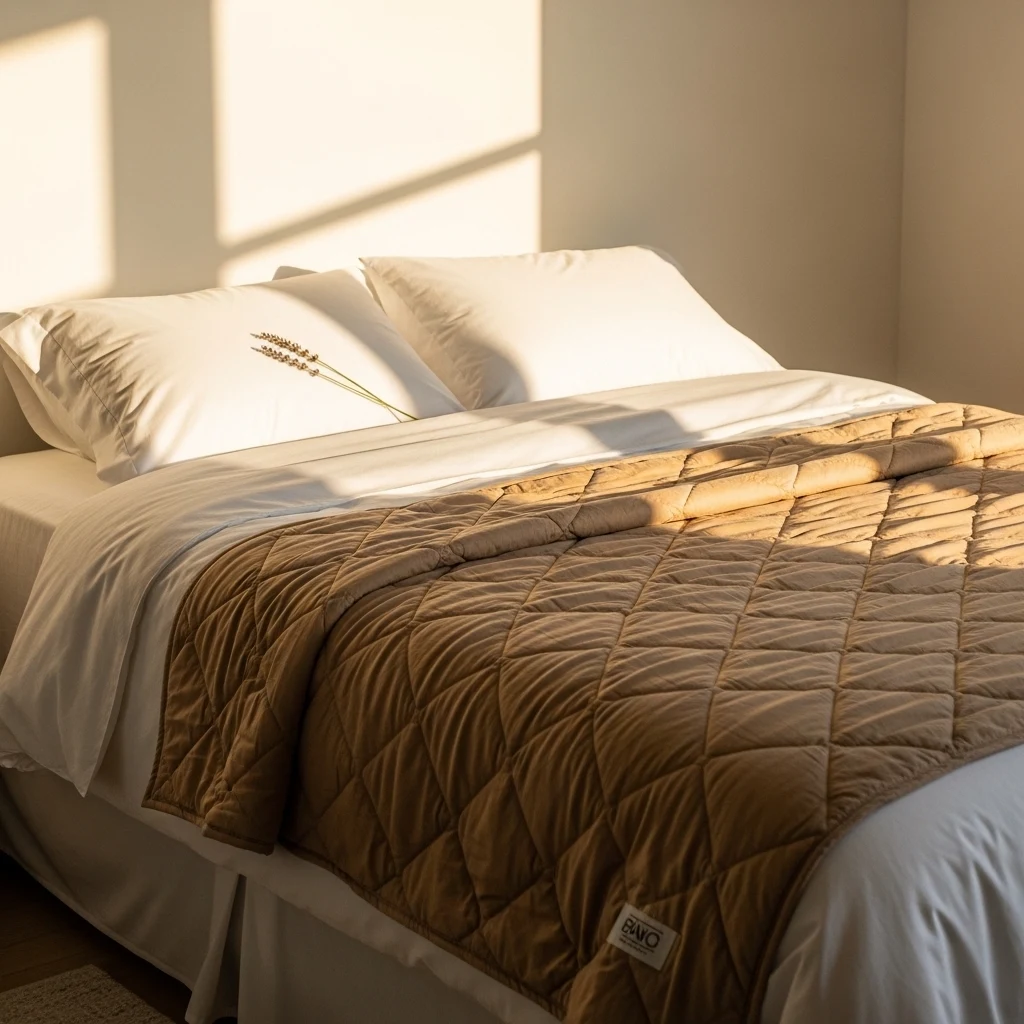
A weighted blanket calms anxiety and stress by triggering your body’s own relaxation response through deep pressure stimulation.
It lowers cortisol, boosts serotonin and dopamine, supports melatonin production, and grounds you in the present moment, all without a prescription, a side effect list, or a very expensive therapy session.
Is it a magic cure? Of course not. But as a practical, evidence-supported tool to help your nervous system slow down, it’s hard to beat. If you’ve been skeptical, consider this your nudge to try one.
Worst case, you have a very heavy blanket. Best case, you finally get a decent night’s sleep.
And honestly, after everything your brain puts you through on a daily basis, you’ve earned that.
How Heavy Should a Weighted Blanket Be for Anxiety?
The best rule is to pick a weighted blanket that is about 10% of your body weight. If you weigh 150 pounds, a 15-pound blanket is ideal.
A blanket that’s too light won’t provide much benefit, while one that’s too heavy can feel restrictive and uncomfortable.
Most adults prefer blankets weighing between 12 and 20 pounds, but personal comfort should always be your main guide.
How Long Does It Take for a Weighted Blanket to Reduce Anxiety?
Many people feel calm within 20 to 30 minutes of using a weighted blanket for the first time.
However, deeper benefits, like better sleep and a more stable nervous system, develop with regular use over weeks.
Think of it as training a muscle, not flipping a switch. The more you use it, the better your body learns to respond to the pressure.
Can You Use a Weighted Blanket During a Panic Attack?
Yes, many people find it helpful. During a panic attack, your nervous system goes into fight-or-flight mode. The deep pressure from a weighted blanket can interrupt this response.
It activates your parasympathetic nervous system. Wrapping yourself in the blanket and focusing on slow, deep breaths works better than using the blanket alone.
If panic attacks are frequent or severe, it’s best to pair the blanket with professional support for a smarter long-term solution.
Are Weighted Blankets Safe for Children With Anxiety?
Weighted blankets are widely used in pediatric occupational therapy. They help children with anxiety, autism spectrum disorder, and sensory processing differences.
For kids, the same guideline of 10% body weight applies. Always supervise younger children when using these blankets.
Most occupational therapists advise against using them for children under two or those who can’t remove the blanket on their own. The weight can create a safety risk.
Do Weighted Blankets Actually Work, or Is It Just a Placebo?
That’s a fair question. The honest answer is that the evidence is promising but still developing.
Many studies show that deep pressure stimulation can reduce cortisol levels, lower heart rates, and boost mood by increasing serotonin and dopamine.
A 2020 study in the Journal of Clinical Sleep Medicine found that weighted blankets improved sleep and reduced daytime fatigue in adults with insomnia.
Researchers are still conducting larger trials, but the physiological effects of weighted blankets are well-established. This puts them well above simple placebo effects.