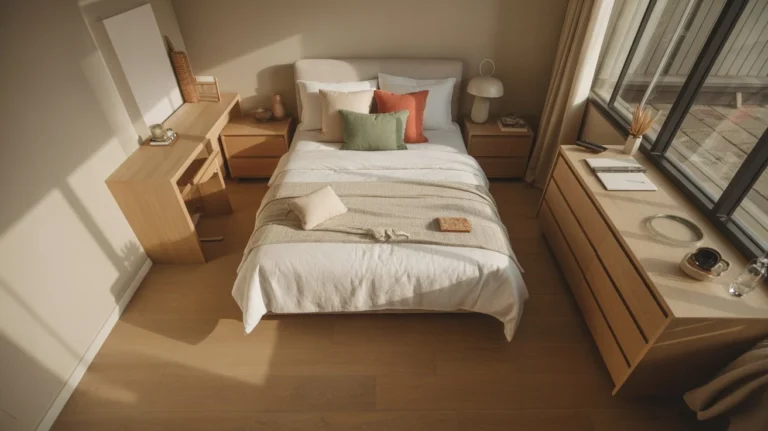
Best Rug Size for a King Bed
You finally got the king bed! It looks incredible. The room feels luxurious, and the headboard is everything you dreamed of. But then you glance down and see something is very wrong.
The rug is tiny like, “why is there a welcome mat next to my bed” tiny. We’ve all been there. A wrong-sized rug can ruin a perfect bedroom faster than you can say “interior design fail.”
Choosing the right rug size for a king bed isn’t just about what looks good. There are real rules to follow. Once you know them, you’ll never second-guess yourself at the rug store again. Let’s dive in.
Why Rug Size Actually Matters More Than You Think
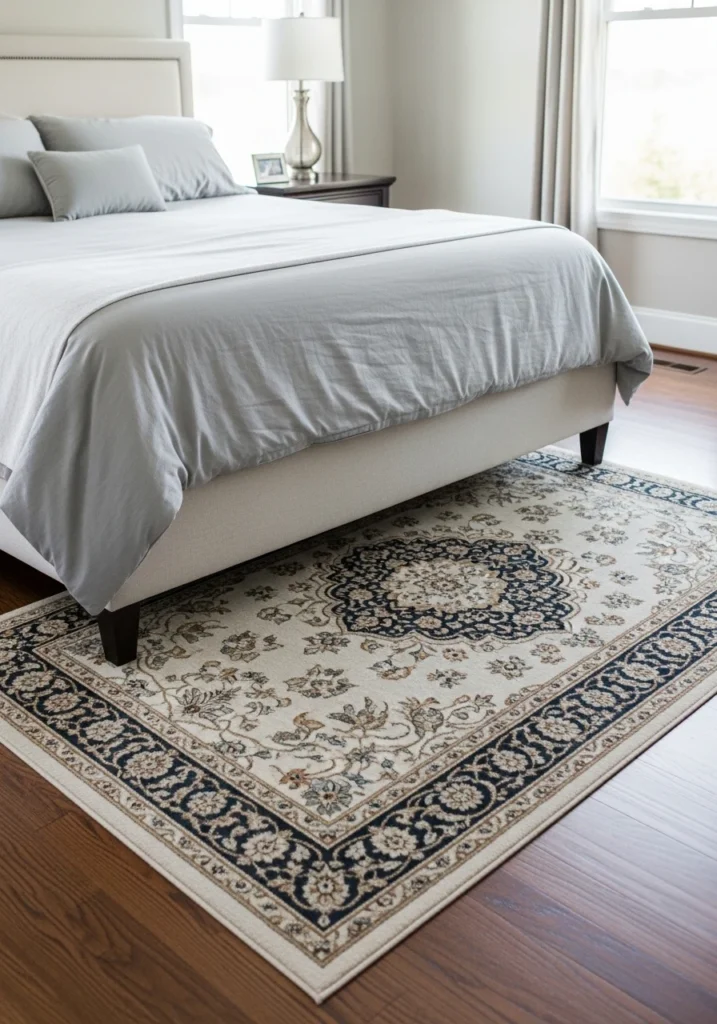
Here is a question worth sitting with: have you ever walked into a beautifully decorated room and felt something was slightly off, but could not pinpoint why? Nine times out of ten, it is the rug.
A rug that is too small makes your furniture look like it is floating awkwardly in space. A rug that is too large swallows the room whole. Neither situation does your king bed any favors.
A well-sized rug does something almost magical. It anchors the bed visually, ties the furniture together, and gives the room a sense of intentional design.
It also adds warmth underfoot, which your bare feet will thank you for every single morning.
The King Bed Dimensions You Need to Know First
Before you even look at a single rug, get familiar with what you are working with. A standard king bed measures 76 inches wide by 80 inches long.
A California king, on the other hand, runs 72 inches wide by 84 inches long, which is narrower but longer. This distinction matters a lot when you are sizing a rug.
The room size also plays a role. A king bed in a small 10×10 room creates very different rug challenges compared to the same bed in a sprawling 14×18 primary suite.
The Best Rug Sizes for a King Bed
Let us get to the numbers people actually need. These are the three rug sizes that work best with a king bed, and each one suits a slightly different room setup and style preference.
9×12: The Gold Standard
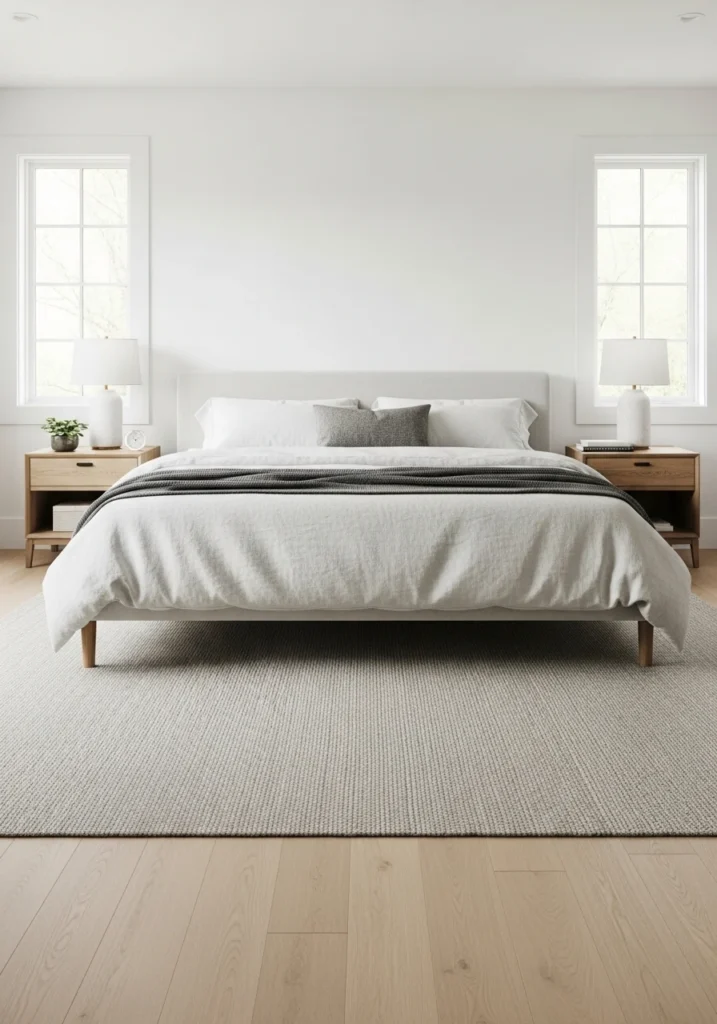
If there is one rug size that interior designers consistently recommend for a king bed, it is the 9×12 foot rug.
This size works beautifully in most standard to large bedrooms, and here is why: it allows all four legs of the bed to sit on the rug, while also extending far enough on the sides to feel generous and grounded.
With a 9×12 rug, you get roughly 24 to 30 inches of rug showing on each side of the bed and about 18 to 24 inches at the foot.
That exposed border creates a visual frame around the bed that looks polished and intentional. If your bedroom is 12×14 feet or larger, this is almost certainly your best bet.
Quick benefits of a 9×12:
- Fits most standard and large bedrooms
- Accommodates all four bed legs comfortably
- Leaves a pleasing border of rug around the bed
- Works with most furniture arrangements
8×10: A Solid Runner-Up
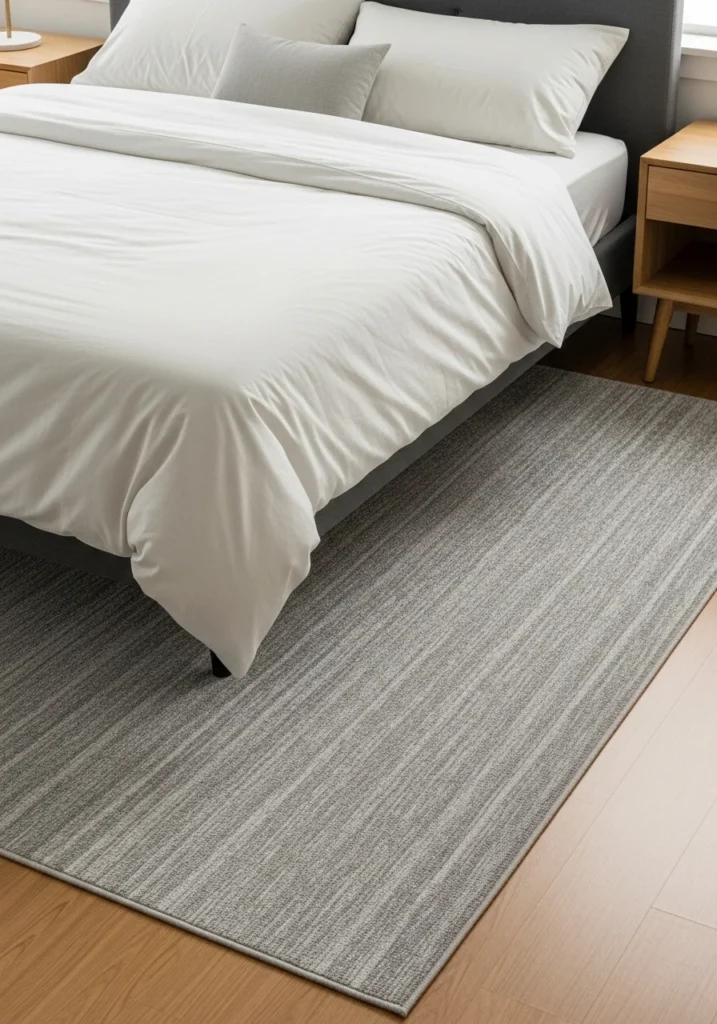
The 8×10 rug is the second most popular choice, and it works well in medium-sized bedrooms where a 9×12 might feel like overkill.
With this size, the foot of the bed and the sides still get good rug coverage, though the side panels will be a bit narrower, around 14 to 18 inches on each side.
One important thing to keep in mind with an 8×10: you want to position it so that the rug starts about two-thirds of the way under the bed, leaving that satisfying strip of rug at the foot and sides.
Sliding it too far under the bed defeats the whole purpose.
When to choose 8×10:
- Your bedroom is between 10×12 and 12×14 feet
- You want rug coverage without overwhelming a medium room
- You are working with a tighter budget but still want good proportions
10×14: Go Big or Go Home
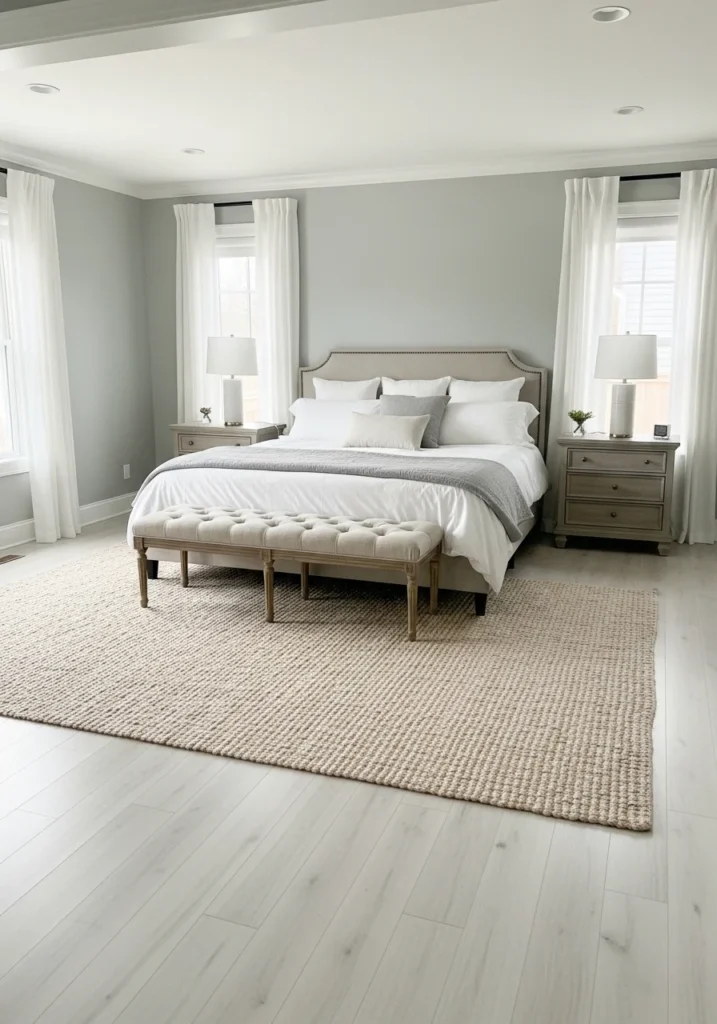
For those of you with large or open-plan primary suites, the 10×14 rug is your power move.
This size lets the rug extend beyond the bed and include your nightstands and even a bench at the foot of the bed.
Everything sits on the rug, and the whole sleeping area becomes one cohesive, well-defined zone.
Yes, a 10×14 rug is an investment. But in a spacious room, anything smaller tends to look like a postage stamp, and that is not the vibe anyone is going for.
How to Place Your Rug Under a King Bed
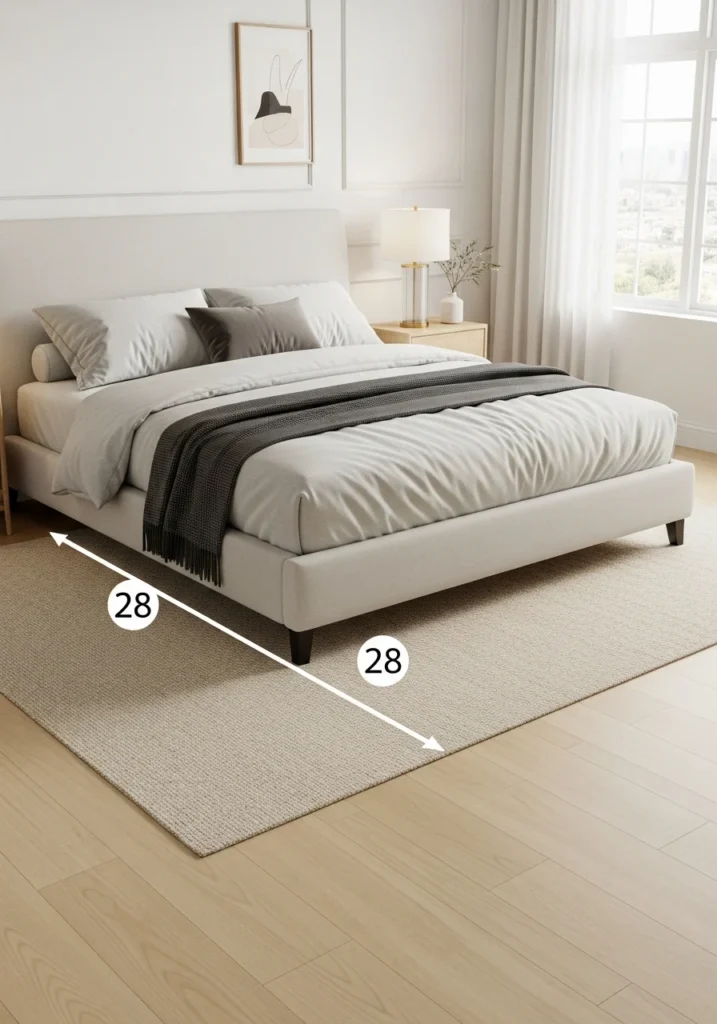
Knowing the size is only half the battle. Placement makes or breaks the whole look. There are two main placement approaches that work well with a king bed.
The Two-Thirds Rule
This is the most popular method, and it is the one most designers default to.
You slide the rug under the bed so that roughly two-thirds of the rug sits under the bed frame, and one-third sits exposed at the foot of the bed.
The sides of the rug peek out on both sides of the bed, giving you that soft landing strip for your feet first thing in the morning.
This method works especially well with a 9×12 or 8×10 rug and creates a clean, balanced look without requiring a massive rug.
Full Coverage Placement
With a larger rug like a 10×14, you can place the rug so that the entire bed sits on top of it, with rug extending generously on all sides.
This works best when your nightstands also sit on the rug, pulling the entire sleeping zone together into one unified design statement.
The key here is symmetry. Equal exposure on both sides of the bed is non-negotiable if you want the room to look balanced and deliberate rather than randomly arranged.
Rug Placement Mistakes to Avoid
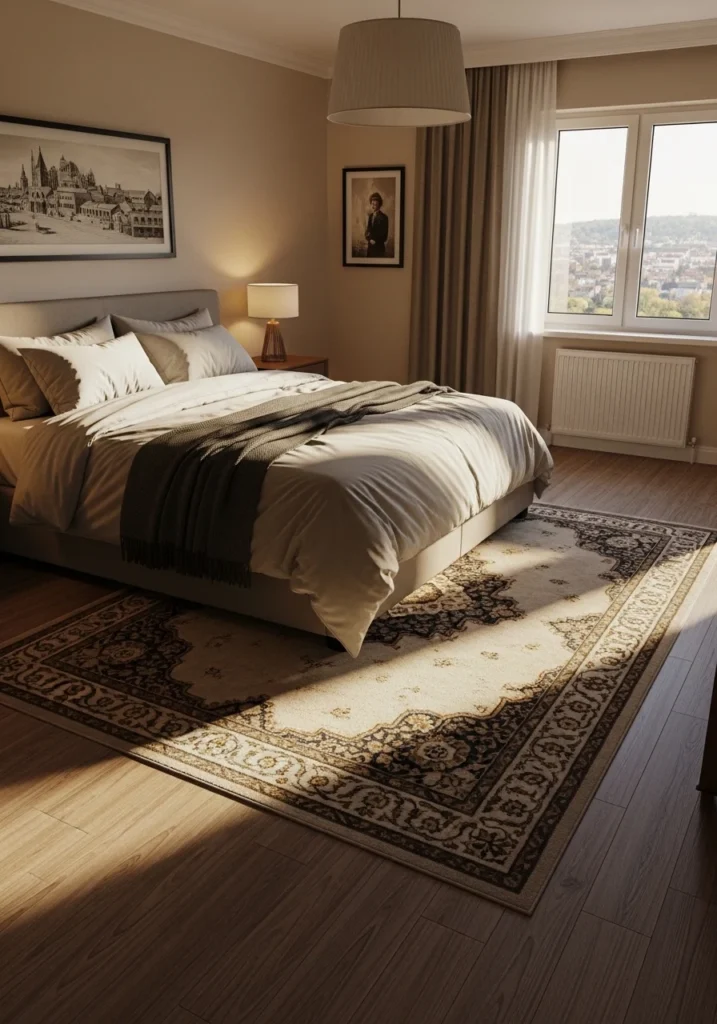
Since we are being friends here, let me be straight with you about the mistakes people make all the time.
Mistake 1: Going too small. A 5×8 rug under a king bed is basically a decorative afterthought. It will look lost, and your room will feel disjointed. Save the 5×8 for a guest room with a twin bed.
Mistake 2: Centering the rug without accounting for the bed position.
If your bed is not perfectly centered in the room, your rug placement needs to account for that. Always position the rug relative to the bed, not the walls.
Mistake 3: Forgetting about the nightstands. Ideally, your nightstands should sit either fully on the rug or at least have their front legs on it.
If they float on bare floor while the bed sits on the rug, the whole setup looks disconnected.
Mistake 4: Skipping the rug pad. A rug pad is not optional.
It keeps the rug from sliding, protects your floors, and adds a layer of cushioning underfoot. Think of it as the unsung hero of your bedroom setup.
Rug Size for Different Room Dimensions
Room size directly influences which rug size you should choose. Here is a straightforward breakdown to make this even easier.
Small Bedrooms (10×10 to 10×12 feet)
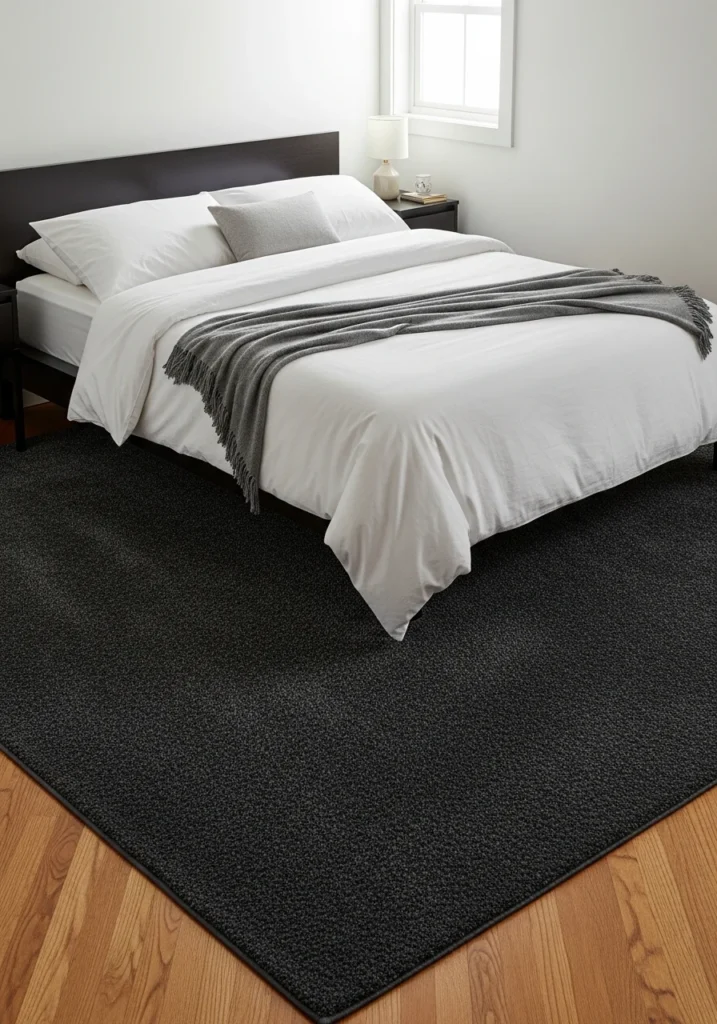
In a smaller room, a king bed already takes up significant floor space. An 8×10 rug is usually the most practical choice here.
You can also consider two smaller runner rugs placed on either side of the bed if a large rug feels too overwhelming or simply does not fit the budget.
Medium Bedrooms (12×12 to 12×14 feet)
This is where the 9×12 rug really shines. You have enough room to let the rug breathe around the bed without the rug taking over the entire floor.
A 12×12 or 12×14 bedroom with a 9×12 rug hits that sweet spot between coverage and proportion.
Large Bedrooms (14×16 feet and above)
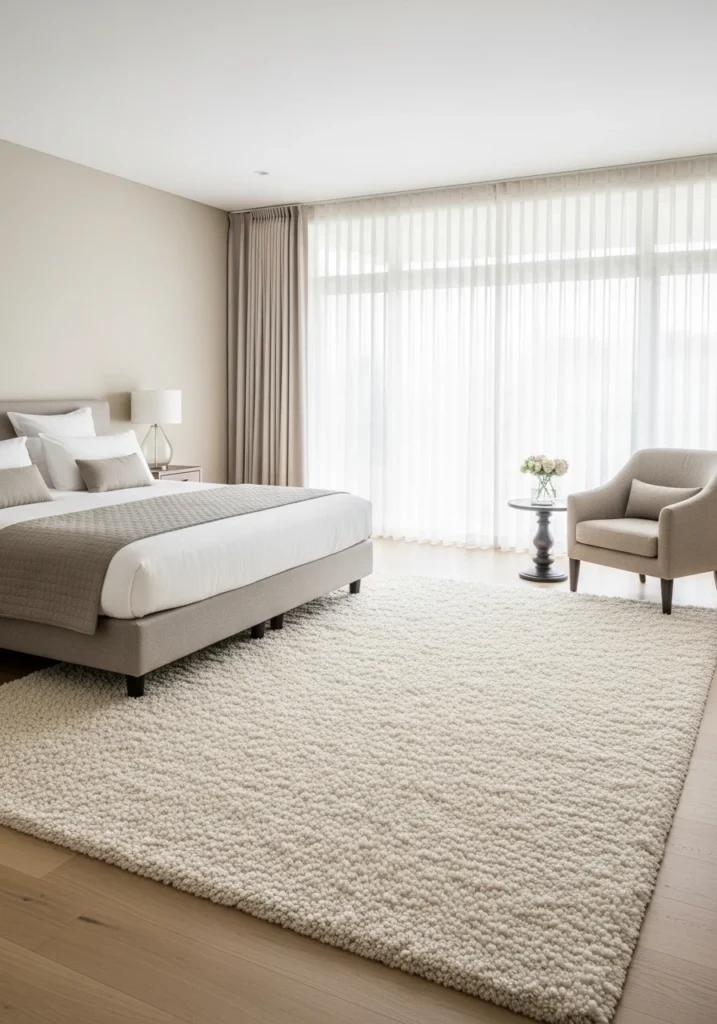
In a large primary suite, step up to a 10×14 or even a 12×15 rug if you can find one.
Rooms this size need a substantial rug to prevent the bed from looking like it is floating in an empty sea of hardwood or tile.
Material and Texture Considerations
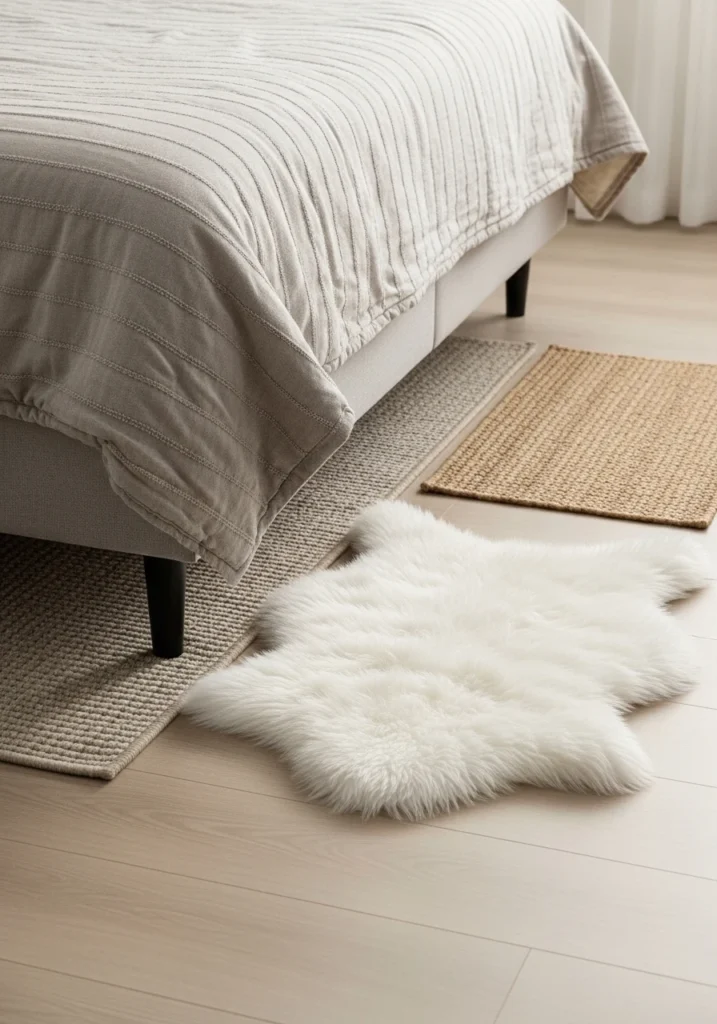
The size conversation is not complete without a quick word on material, because the wrong material in the wrong size can still ruin the look.
Low-pile rugs work well under beds because furniture legs sit flush and stable on them. They are also easier to clean, which matters in a bedroom.
High-pile or shag rugs feel incredible underfoot but can make furniture legs wobble, and they collect dust more aggressively.
If you love the plush feel, go for it in the areas where no furniture will sit, like the exposed foot of the rug.
Natural fiber rugs like jute or sisal look stunning but can feel rough underfoot. They are better suited for living rooms or entryways unless you pair them with a thick rug pad.
Browse Bedroom Rugs By Material On Amazon
The Tape Test: A Trick Worth Trying
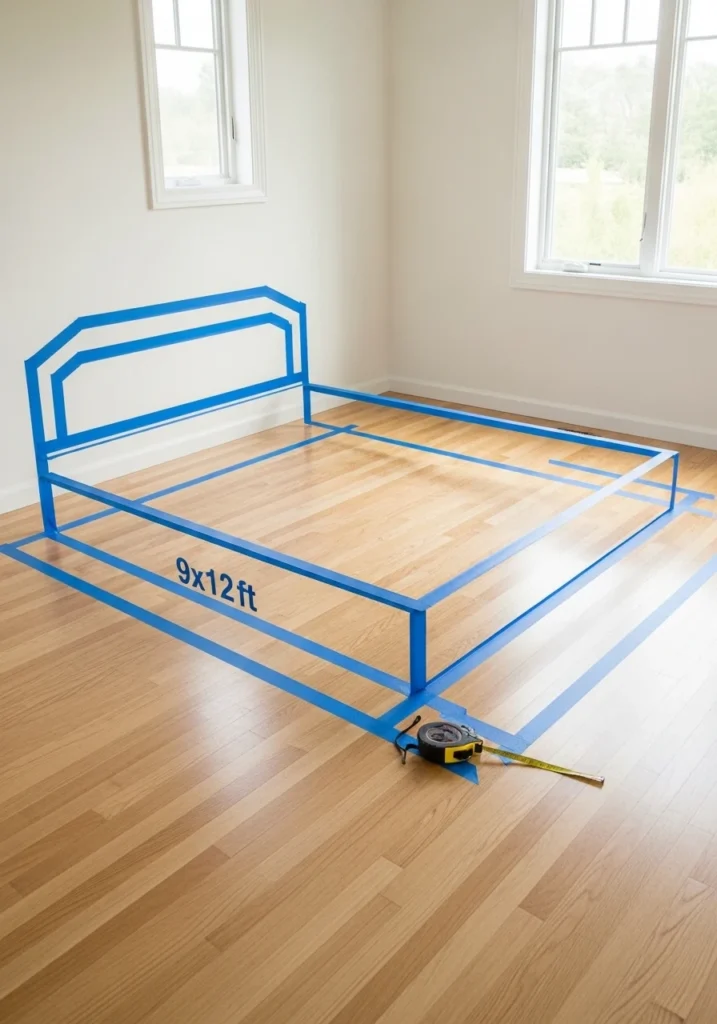
Before you commit to buying a rug, try this simple trick. Use painter’s tape to mark out the exact dimensions of the rug you are considering on your bedroom floor.
Live with it for a day. Walk around it, look at it from the doorway, see how it interacts with your furniture.
This trick costs you nothing and saves you from a very expensive mistake. A 9×12 rug that looks great in your head might look enormous or surprisingly small once you see it mapped out on your actual floor.
Conclusion
Getting the rug size right for a king bed comes down to three things:
Knowing your room dimensions, understanding how much rug exposure looks best, and not being tempted by a rug that is too small just because it is more affordable or easier to find.
The 9×12 is the safest, most versatile choice for most bedrooms. The 8×10 works well in medium-sized spaces, and the 10×14 is a bold, beautiful move for larger suites.
At the end of the day, a properly sized rug transforms a bedroom from “just a room with a bed in it” to a space that feels designed, intentional, and genuinely comfortable.
Your king bed deserves that kind of backup. Now go measure your floor, grab that painter’s tape, and find the rug that actually fits.
What Is the Most Recommended Rug Size for a King Bed?
The 9×12 foot rug is the best size for a king bed. It covers enough space to anchor the bed and lets all four legs sit comfortably on the rug.
Plus, it leaves a nice border of exposed rug around it. This size fits well in most standard to large bedrooms, balancing proportion and practicality.
Can You Use an 8×10 Rug Under a King Bed?
Yes, an 8×10 rug can fit under a king bed, but it’s better for medium-sized rooms. The sides will be narrower than with a 9×12, so placement is key.
Position the rug so about two-thirds goes under the bed. This leaves a visible, balanced strip on both sides and at the foot.
How Far Should a Rug Extend Beyond a King Bed?
A rug should ideally extend 18 to 24 inches beyond each side of a king bed. It should also go about 18 inches past the foot of the bed.
This setup gives your feet a soft landing in the morning. It also makes the rug look intentional, not like an afterthought tucked under the frame.
Should Nightstands Sit on the Rug With a King Bed?
Yes, nightstands should sit fully on the rug or at least have their front legs on it. When nightstands float on the bare floor while the bed is on the rug, the area looks disconnected.
A larger rug, like a 9×12 or 10×14, helps include both nightstands in the same rug zone.
What Rug Size Works Best for a King Bed in a Small Bedroom?
In a smaller bedroom, about 10×10 to 10×12 feet, an 8×10 rug is often the best choice. If that feels too big, consider two matching runners beside the bed.
They provide a stylish, space-saving option while still offering a soft feel underfoot.