Bedroom Curtain Lengths That Look Expensive
You can spend a lot on curtain fabric and choose the best print, yet your windows might still look like a college dorm. Usually, the issue isn’t the fabric.
It’s the length. Getting the right curtain length is one of the simplest ways to make your bedroom look polished, intentional, and much more expensive.
Interior designers focus on this detail while the rest of us hem curtains two inches above the windowsill. We wonder why the room never feels complete. Let’s change that.
Why Curtain Length Matters More Than You Think
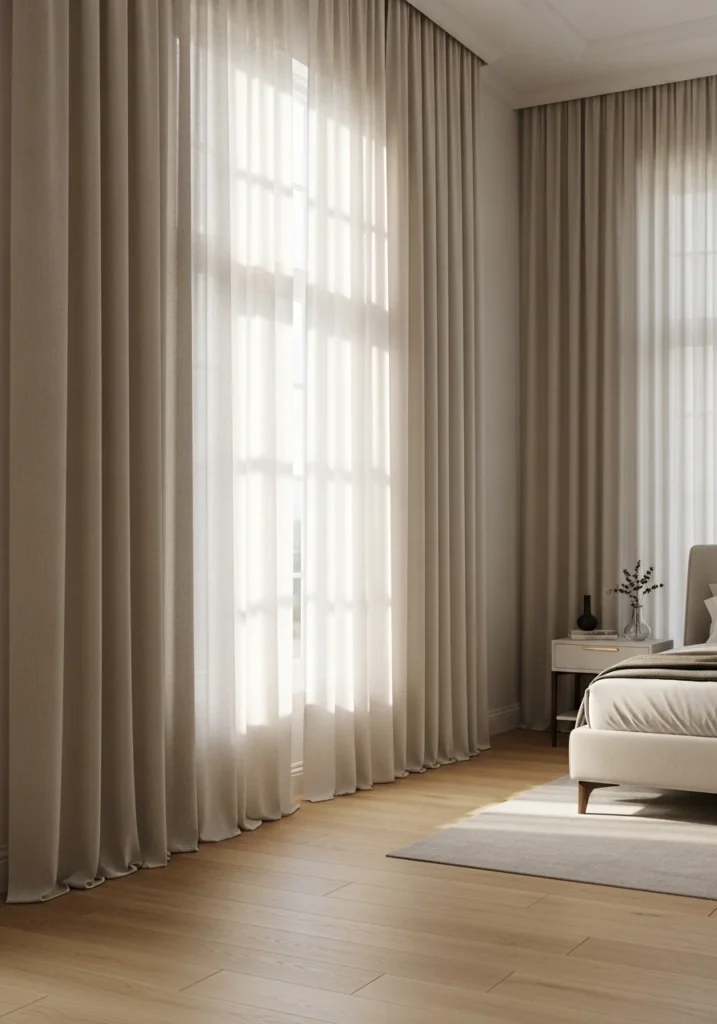
Here is a truth that took me embarrassingly long to accept: curtains that are too short make ceilings look lower and rooms look smaller. It is almost the opposite of what feels intuitive.
You would think less fabric equals more open space, but visually it just reads as an afterthought.
The right curtain length does three things at once. It frames the window, it draws the eye upward to create the illusion of height, and it gives the room a sense of intention.
When you nail the length, even budget curtains from a big box store can look like something you paid a decorator to source.
The wrong length, on the other hand, communicates that you measured once, ordered whatever was in stock, and hoped for the best. We have all been there. No judgment. But now we know better.
The Standard Lengths and What They Actually Communicate
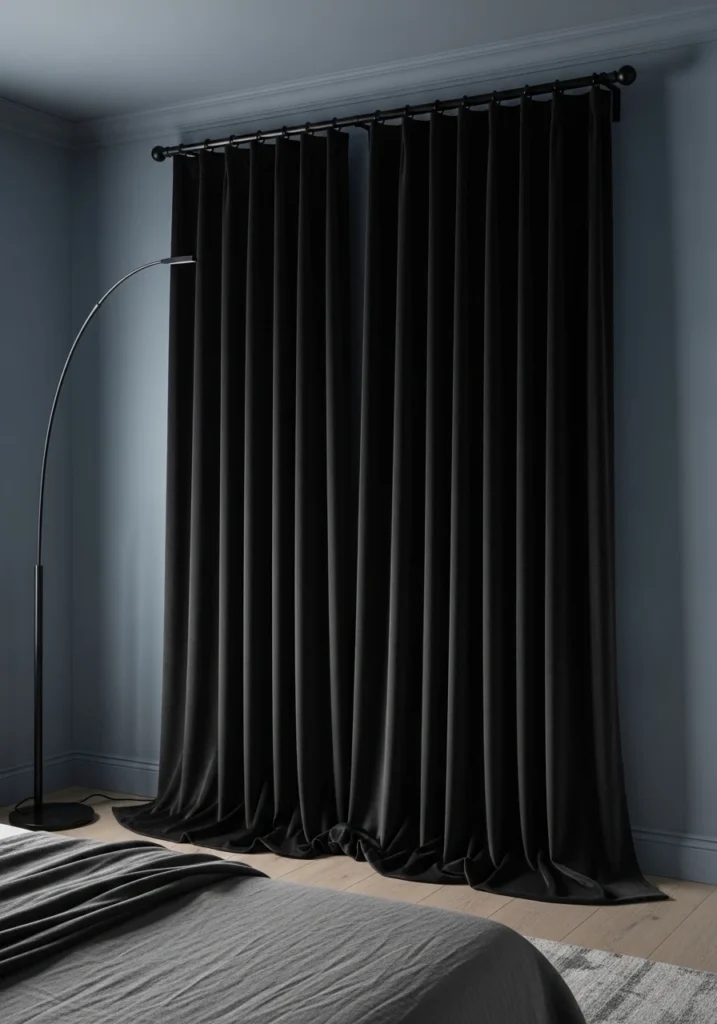
Before getting into what looks expensive, it helps to understand the full menu of options. Curtain lengths generally fall into a few categories, and each one sends a different visual message.
84 Inches: The Most Common, The Most Misunderstood
The 84-inch curtain is the most widely available length in stores. It is also the length most likely to look slightly off in the average bedroom.
Here is why: 84 inches works well if your ceiling is exactly 8 feet and you mount your curtain rod correctly.
The moment your ceiling is higher, or you mount the rod too close to the window frame instead of near the ceiling, those panels suddenly look stubby.
If you are working with 84-inch curtains, mount the rod as high as possible, ideally within a few inches of the ceiling or crown molding.
That small adjustment alone can transform how the panels read in the room.
96 Inches: The Sweet Spot for Most Bedrooms
For rooms with standard 8- to 9-foot ceilings, 96-inch curtains are genuinely the closest thing to a universally flattering length.
They hang close to the floor without pooling, they make ceilings feel taller, and they photograph beautifully.
If you want curtains that look expensive without doing anything particularly dramatic, this is your best starting point.
Mount the rod 6 to 12 inches above the window frame, let the panels fall to just above or barely kissing the floor, and the room will look like you had a plan all along.
108 Inches and Beyond: Go Big or Go Home
For rooms with ceilings at or above 9 feet, shorter panels start looking proportionally wrong in a way that is hard to articulate but impossible to unsee.
108-inch panels give taller rooms the visual weight they need. They also work beautifully in rooms where you want that slightly dramatic, editorial quality.
Custom lengths beyond 108 inches exist for a reason: some rooms just need them. Do not fight it.
The Three Looks That Actually Read as Expensive
Now for the part you actually came here for. When you study rooms that look genuinely luxurious, the curtains almost always fall into one of three camps.
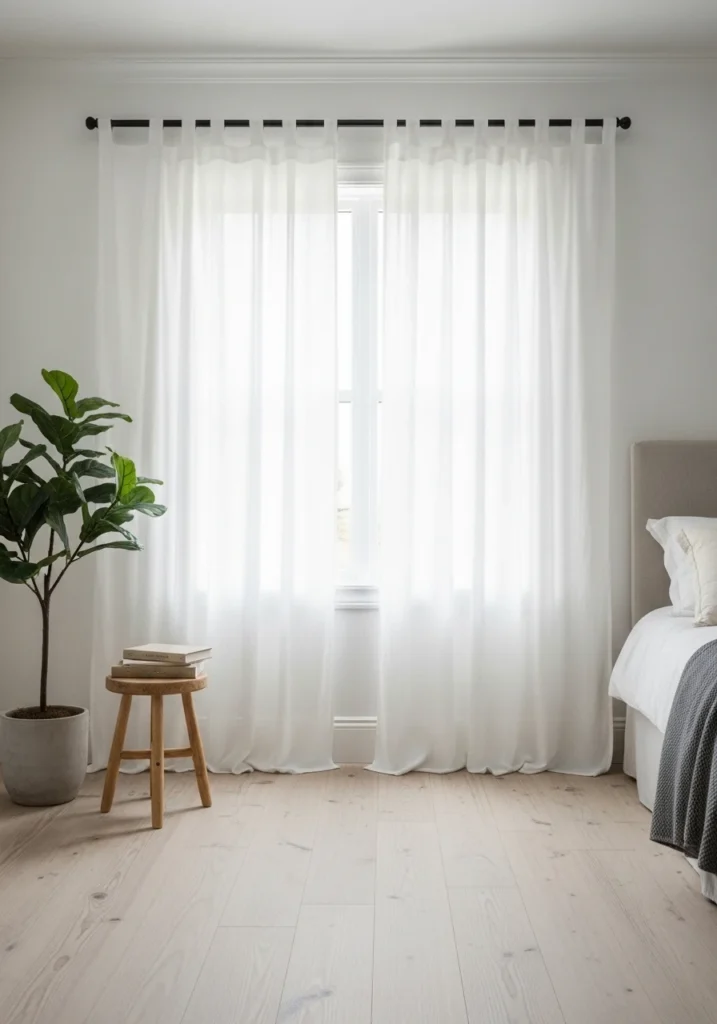
1. The Barely Grazing Floor Look
This is exactly what it sounds like. The bottom of the curtain panel touches the floor or rests about half an inch above it.
This is the cleanest, most tailored option and works well in modern, minimalist, and Scandinavian-leaning bedrooms.
It is practical too. No pooling means no tripping hazard, no dust collector, no pet hair magnet gathering at the hem.
If you have animals in your home, you probably already know that pooling curtains are basically a lint trap with delusions of grandeur.
To pull this off well:
- Measure from the top of your curtain rod to the floor precisely
- Order or hem your panels to land within half an inch of the floor
- Make sure the panels are full enough; skimpy panels ruin the effect regardless of length
Shop Full-Length Bedroom Curtains On Amazon
2. The Slight Break
A “break” in curtain terminology means the fabric touches the floor and has just a little extra, maybe an inch to two inches, that gently bunches at the base.
Think of it as the curtain equivalent of a well-tailored trouser. That small amount of extra fabric adds softness without going full-on dramatic.
This look works especially well with heavier fabrics like velvet, linen, or cotton.
Lightweight sheers tend to look a bit messy with a break rather than intentionally relaxed, so keep that in mind when you are choosing your material.
Shop Velvet, Linen, And Cotton Curtains On Amazon
3. The Pool or Puddle
Pooling curtains have four to six inches (sometimes more) of extra fabric that cascades onto the floor.
Done right, this is the most undeniably luxurious look of the three. Done wrong, it looks like you ordered the wrong size and decided to live with it.
What separates a deliberate puddle from an accident is fabric choice and maintenance. Velvet pools beautifully.
So does heavy silk. A polyester panel from a discount store pooling on your floor mostly just collects dust and raises questions.
If you want this look, commit to it. Arrange the fabric intentionally. Smooth it out regularly. Treat it like the design feature it is.
How High Should You Hang Your Curtain Rod?
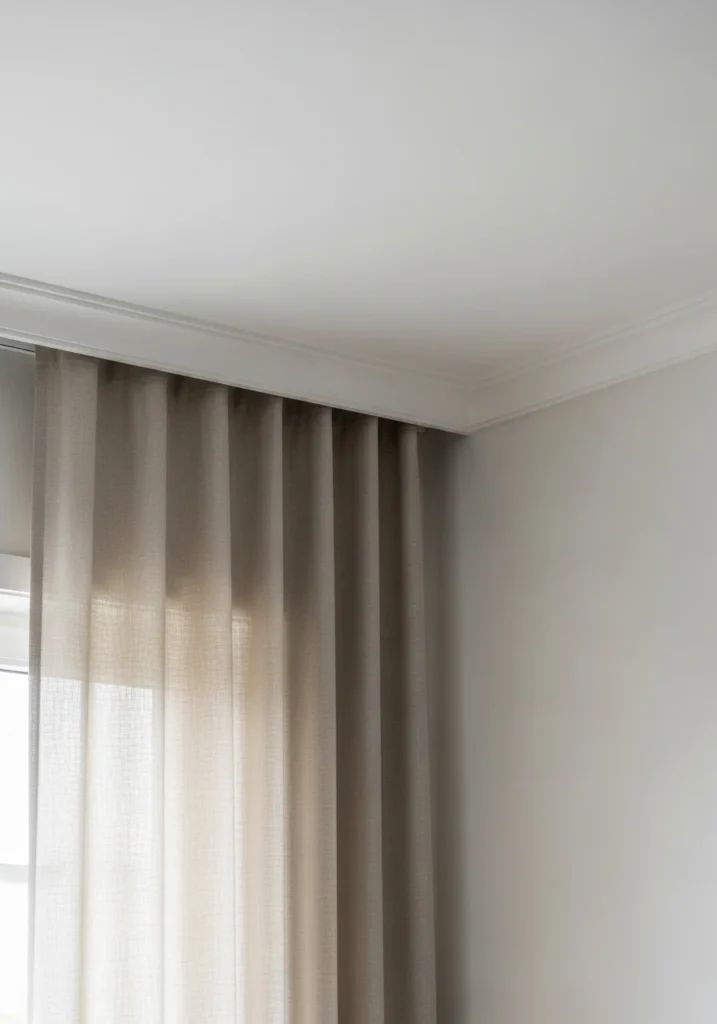
This question deserves its own section because the rod placement is just as critical as the curtain length itself. Here is the rule that changes everything: hang your rod as close to the ceiling as possible.
Most people hang their rods directly above the window frame, maybe 2 to 4 inches above it.
Interior designers typically hang rods 4 to 6 inches below the ceiling, or right at the ceiling line when there is no crown molding. The difference in how the room reads is remarkable.
When you hang the rod high, a few things happen automatically:
- The curtains visually extend the wall upward
- The ceiling feels higher than it actually is
- The window looks larger and more architectural
- The whole room feels more considered and expensive
This single change costs you nothing except a relocated curtain rod. It is one of the highest-return adjustments you can make in any bedroom.
Width: The Length’s Neglected Partner
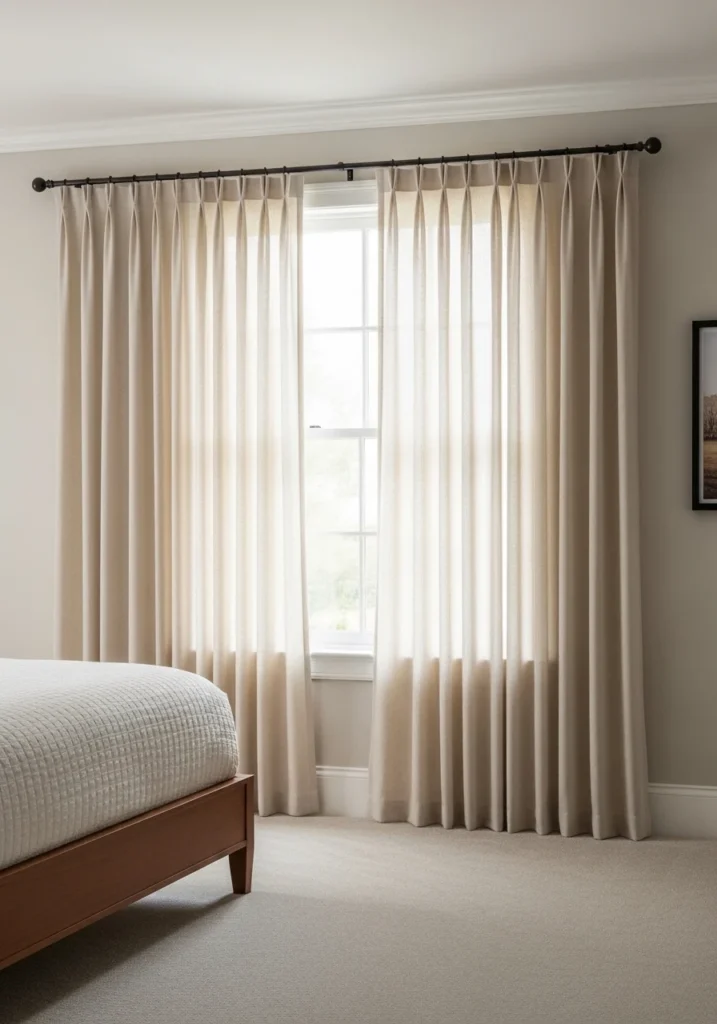
Talking about curtain length without talking about width is like discussing a great outfit without mentioning fit. A too-narrow curtain panel will always look cheap, no matter how perfect the length is.
The general rule is that your curtain panels, when hanging, should be 2 to 2.5 times the width of the window.
This creates enough fullness and gather that the panels look lush and intentional when closed, and still substantial and purposeful when pushed to the sides.
If your panels are barely wider than the window when they are open, they look flat and thin. Nobody wants flat, thin curtains. Not when the fix is this straightforward.
Common Mistakes That Instantly Cheapen the Look
Let’s take a quick inventory of the things worth avoiding.
- Hanging the rod too low: The number one curtain mistake. Fix this first.
- Choosing panels that are too short: If there is visible wall between the bottom of your curtain and the floor, this is the issue. Even an inch of gap can undermine the whole look.
- Using too few panels: One narrow panel per window reads as underdecorated. Plan for two panels per window at minimum.
- Ignoring the ceiling height: What works in a room with 8-foot ceilings looks completely wrong in a room with 10-foot ceilings. Always work with your specific dimensions.
- Skipping the lining: Lined curtains hang better, look fuller, and block more light. They almost always look more expensive than unlined panels, even when they cost the same.
Fabric Choices That Elevate Any Length
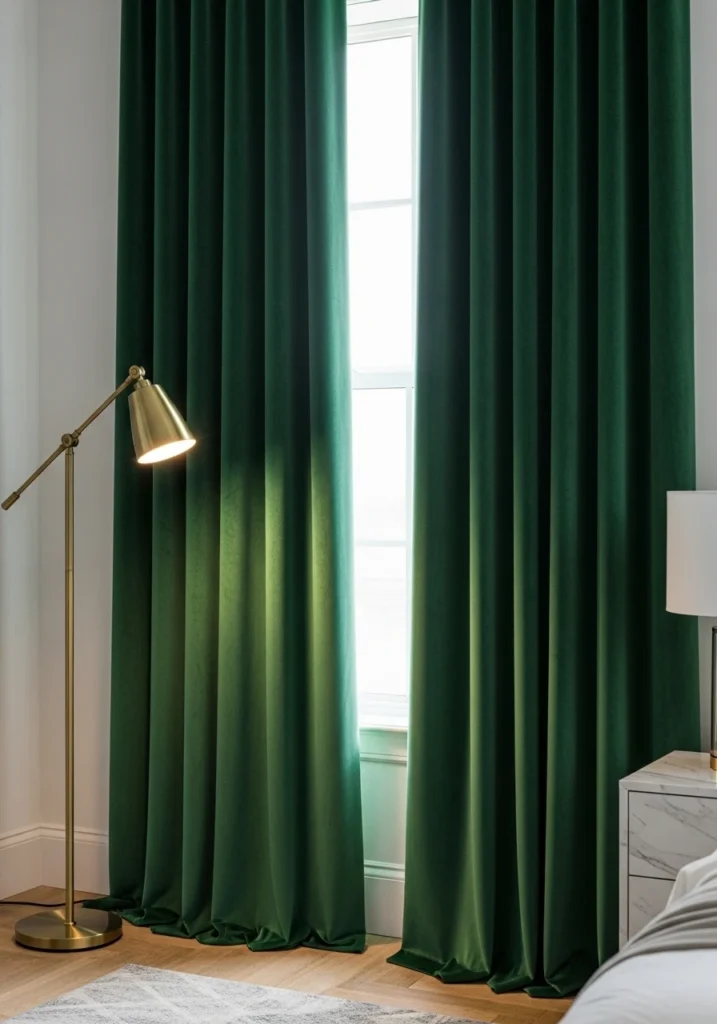
The length does the structural work, but fabric seals the deal. A few materials that reliably read as expensive:
Linen is enduringly popular for good reason. It has texture, weight, and a relaxed elegance that works in almost every bedroom aesthetic.
It wrinkles, yes, but in a way that looks intentional rather than sloppy.
Velvet is the fast track to a luxurious-looking bedroom. It absorbs light beautifully, hangs with real weight, and transforms even budget-friendly curtain rods into something that looks considered.
Cotton with a high thread count drapes cleanly and holds its shape. It is the workhouse of curtain fabrics, incredibly versatile, and often underrated.
Stay away from thin, shiny synthetics if your goal is an expensive look. They catch light in unflattering ways and tend to look exactly as budget-friendly as they are.
Shop Velvet Curtains On Amazon
A Quick Word on Custom vs. Ready-Made
Ready-made curtains are genuinely excellent now. The days of the ready-made curtain looking obviously off-the-rack are mostly behind us. The key is knowing how to work with standard lengths.
If your room needs a length that does not exist in stores, a tailor can hem ready-made panels for far less than the cost of custom curtains, and the result looks just as intentional.
Custom curtains are worth the investment in certain situations: unusual window heights, very specific fabric requirements, or rooms where you want everything exactly right with no compromise.
But for most bedrooms, a well-chosen ready-made panel with the right length and a correctly placed rod will do everything you need.
Shop Ready-Made Curtains On Amazon
Final Thoughts
Getting bedroom curtain lengths right is genuinely one of the most impactful things you can do for how your room looks and feels.
It is not about spending more money. It is about understanding a handful of principles and applying them consistently.
Mount the rod high. Let the panels reach the floor or just past it. Choose fabric with enough weight to hang properly. Make sure your panels are wide enough to look full.
Do those four things, and your bedroom will look more expensive, more finished, and more intentional than most rooms you have ever walked into.
The good news is that you now know exactly what to look for, which puts you well ahead of everyone still wondering why their room never looks quite right. Go measure your windows. You have got this.
Find Your Perfect Bedroom Curtains On Amazon
What Is the Best Curtain Length for a Bedroom?
The best curtain length for most bedrooms is 96 inches. This length suits standard 8- to 9-foot ceilings.
It creates height and offers a clean, tailored look without pooling on the floor. For a polished result, mount the rod 6 to 12 inches above the window frame.
Should Bedroom Curtains Touch the Floor?
Yes, bedroom curtains should either touch the floor or be within half an inch of it. Curtains that stop above the floor can make ceilings feel lower and rooms look smaller.
The three most popular floor-length styles are barely grazing, a slight break, and a full puddle or pool.
How High Should You Hang Curtain Rods in a Bedroom?
Hang your curtain rod near the ceiling. Aim for 4 to 6 inches below the ceiling line or right at the ceiling if there’s no crown molding.
This simple change makes ceilings look higher, windows seem larger, and the room feel more professionally designed.
Do 84-Inch Curtains Look Cheap in a Bedroom?
Not necessarily, but 84-inch curtains are often misused. They fit best when the ceiling is exactly 8 feet and the rod is mounted correctly.
In rooms with higher ceilings or a rod placed too low, 84-inch panels can look stubby and unfinished. For most bedrooms, 96-inch panels are a better choice.
What Curtain Fabrics Look the Most Expensive?
Velvet, linen, and high-thread-count cotton always look the most luxurious. Velvet absorbs light well and drapes heavily.
Linen offers a relaxed, textured elegance that fits many bedroom styles. Avoid thin, shiny synthetics. They reflect light poorly and look as budget-friendly as they are.