Non-Toxic Mattress Materials for Safer, Healthier Sleep
You spend about a third of your life on your mattress. That’s a significant amount of time to lie on a surface filled with synthetic chemicals and off-gassing foams.
Flame retardants often included aren’t meant for your health. Salespeople don’t mention this at the mattress store; they focus on “revolutionary gel memory foam technology.”
Let’s discuss this instead. If you’ve woken up with a headache, noticed a chemical smell from a new mattress, or wondered what you’re breathing in all night, this article is for you.
We’ll cover everything you need to know about non-toxic mattress materials. Sleep better and breathe easier!
Why Your Mattress Materials Actually Matter
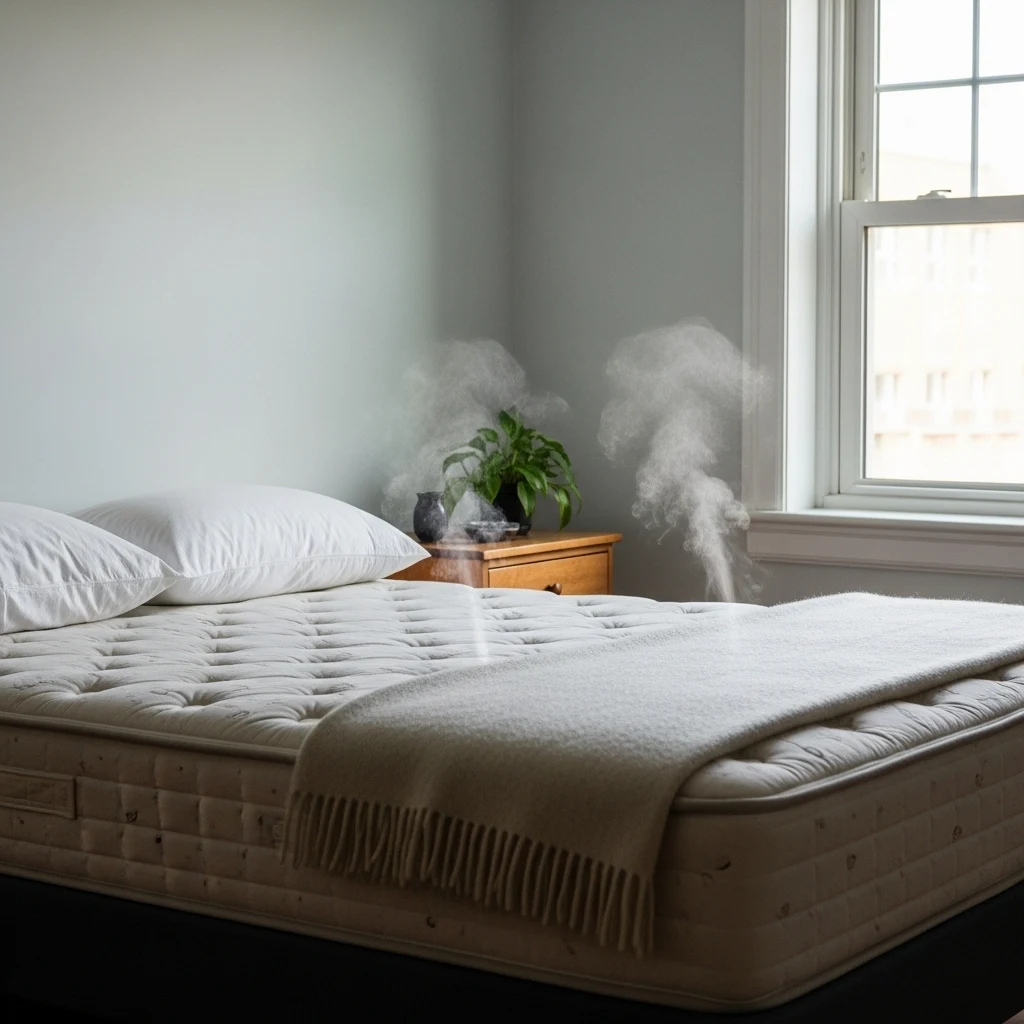
Most conventional mattresses contain a cocktail of synthetic materials that can release volatile organic compounds, also known as VOCs, into your bedroom air.
This process is called off-gassing, and it happens most aggressively with new mattresses but can continue for months or even years at lower levels.
The concern is not just about smell. Some of the compounds released from conventional foam and adhesive materials have been linked to respiratory irritation, headaches, and long-term health concerns with repeated exposure.
Add in synthetic flame retardants and waterproofing chemicals, and you start to see why a growing number of health-conscious sleepers are asking harder questions before they buy.
The good news? There are genuinely safer alternatives. And they sleep just as well, if not better.
The Main Offenders in Conventional Mattresses
Before we get to the good stuff, it helps to know what you are trying to avoid. Here are the most common problematic materials found in standard mattresses:
- Polyurethane foam: The most widely used mattress material. It off-gasses VOCs including toluene and benzene, both of which are linked to health concerns with prolonged exposure.
- Chemical flame retardants: Brands like PBDE (polybrominated diphenyl ethers) were phased out in the US, but many mattresses still use other chemical treatments to meet flammability standards.
- Formaldehyde: Used in some adhesives and fabric treatments. Yes, the same stuff used in biology labs.
- Phthalates and other plasticizers: Found in some foam materials and waterproof covers.
- Synthetic latex (SBR latex): Made from styrene and butadiene, both of which are potential irritants and carcinogens.
Now that we have covered the rogues’ gallery, let us talk about the materials you actually want in your mattress.
Non-Toxic Mattress Materials Worth Looking For
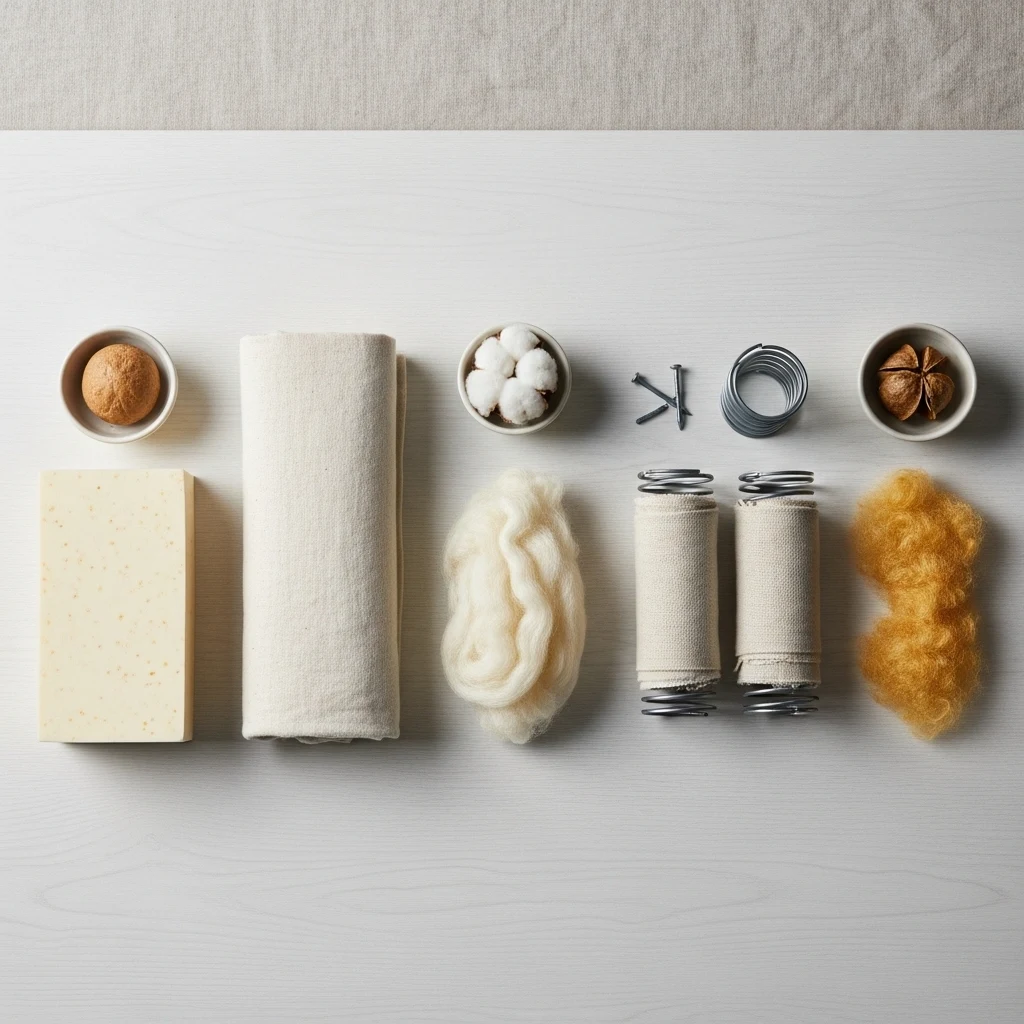
Natural Latex
If there is one non-toxic mattress material that earns genuine enthusiasm, it is natural latex.
Harvested from rubber trees, primarily the Hevea brasiliensis species, natural latex is processed using one of two methods: the Dunlop process or the Talalay process.
Dunlop latex is denser and more durable. Manufacturers pour the latex liquid into a mold and bake it, which causes heavier sediment to settle at the bottom.
This gives Dunlop a slightly firmer feel, making it ideal for support layers.
Talalay latex goes through an additional vacuum and flash-freeze step, which distributes the cell structure more evenly. The result is a softer, more consistent feel that many sleepers prefer for comfort layers.
Both types are:
- Naturally resistant to dust mites, mold, and mildew
- Biodegradable and sustainably sourced from renewable trees
- Free from VOC off-gassing when properly processed
- Highly durable, often lasting 10 to 20 years
Look for certifications like GOLS (Global Organic Latex Standard) to confirm the latex is genuinely organic and free from harmful additives.
Shop Natural Latex Mattresses On Amazon
Organic Cotton
A good non-toxic mattress almost always uses organic cotton for its cover and comfort layers.
Conventional cotton is one of the most pesticide-heavy crops in the world, which means non-organic cotton fabrics can carry chemical residues right into your sleep environment.
Organic cotton, certified under the GOTS (Global Organic Textile Standard), is grown without synthetic pesticides or fertilizers.
It is soft, breathable, and hypoallergenic. It also regulates temperature reasonably well, though it is not as breathable as wool.
When you see “GOTS certified” on a mattress, that label covers the entire supply chain from farming to manufacturing.
That matters because some brands use organic cotton in the cover but treat it with synthetic finishing chemicals. A genuine GOTS certification closes that loophole.
Browse Organic Wool Mattresses On Amazon
Organic Wool
Wool gets overlooked far too often in mattress conversations, which is a shame because it earns its place in non-toxic mattresses on multiple fronts. First, wool acts as a natural flame barrier.
Many non-toxic mattresses use a layer of organic wool to meet federal flammability standards without relying on chemical flame retardants. That alone makes it worth the inclusion.
Beyond fire safety, wool offers impressive sleep benefits:
- Temperature regulation: Wool wicks moisture and adapts to body temperature, keeping you cooler in summer and warmer in winter.
- Natural resistance: Wool is naturally resistant to dust mites and mold.
- Pressure relief: A light wool quilting layer adds cushioning without trapping heat the way memory foam does.
Look for GOTS certified organic wool or wool sourced from farms with Responsible Wool Standard (RWS) certification to ensure animal welfare and chemical-free processing.
Natural Innerspring and Pocketed Coils
Steel coils are one of the cleanest materials in a mattress from a chemical standpoint. Tempered steel does not off-gas, does not contain synthetic chemicals, and lasts for years without degrading.
Pocketed coils, where each spring is individually wrapped in fabric, offer better motion isolation and contouring compared to traditional Bonnell springs.
When paired with organic fabric wrapping rather than synthetic materials, pocketed coils form a genuinely non-toxic support system.
Many hybrid non-toxic mattresses combine a coil base with natural latex and organic cotton for a well-rounded sleep surface.
Organic Kapok Fiber
Kapok is a lesser-known plant fiber harvested from the seed pods of the kapok tree.
It is incredibly lightweight and naturally silky, often used as a filling material in pillows and some mattress comfort layers.
Kapok requires no pesticides to grow and no chemical processing to use, making it one of the more inherently non-toxic materials available.
It is not as resilient as latex under sustained body weight, so it works best as a supplementary comfort layer rather than a primary support material. But as a chemical-free filler, it is genuinely impressive.
Certifications That Actually Mean Something
Here is where things get complicated, and honestly, a little frustrating. The mattress industry is not short on vague green-washing language.
“Eco-friendly,” “natural,” and “chemical-free” mean absolutely nothing without third-party verification. Here are the certifications worth trusting:
- GOLS (Global Organic Latex Standard): Confirms latex is at least 95% certified organic raw material with strict limits on hazardous substances.
- GOTS (Global Organic Textile Standard): Covers cotton, wool, and other textiles. Audits the entire supply chain, not just the final product.
- OEKO-TEX Standard 100: Tests finished products for harmful substances. A good baseline certification even for non-organic materials.
- Greenguard Gold: Certifies low chemical emissions, particularly VOCs. Strong indicator of air quality safety.
- Rainforest Alliance or FSC: Relevant for latex sourced from rubber tree plantations, indicating sustainable forestry practices.
If a mattress brand makes non-toxic claims but cannot point you to any of these certifications, treat that claim with healthy skepticism.
How Non-Toxic Mattresses Compare to Conventional Ones
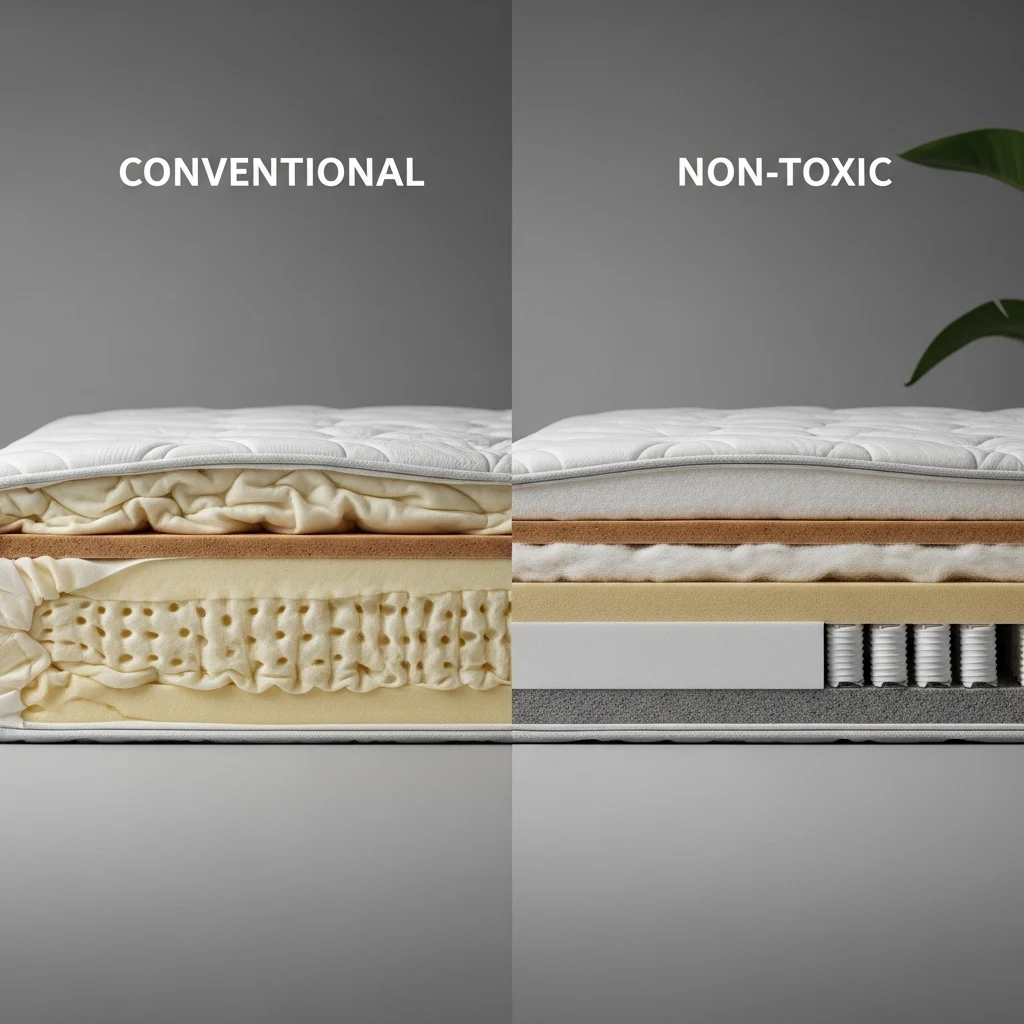
Let us put this side by side for clarity:
| Feature | Conventional Mattress | Non-Toxic Mattress |
|---|---|---|
| Primary material | Polyurethane foam | Natural latex or coils |
| Flame retardant | Chemical treatment | Organic wool layer |
| Off-gassing | High, especially when new | Minimal to none |
| Durability | 7 to 10 years typically | 10 to 20 years for latex |
| Certifications | Often none | GOLS, GOTS, Greenguard Gold |
| Price | Lower upfront | Higher upfront, better long-term value |
The price difference is real. A quality non-toxic mattress costs more upfront.
But when you factor in longevity, you often find the cost-per-year is comparable or even lower than replacing a cheap foam mattress every seven years.
Tips for Choosing a Non-Toxic Mattress
Not every mattress marketed as “natural” deserves that label. Here is how to shop smart:
- Ask for the complete material list: A trustworthy brand will tell you exactly what is in every layer.
- Verify certifications independently: Do not just take the website’s word for it. Most certification bodies maintain searchable databases where you can confirm a product’s status.
- Request off-gassing testing data: Greenguard Gold certification specifically covers this. If a brand has it, they should be able to point you to the testing documentation.
- Avoid “natural memory foam”: This phrase is largely meaningless. Memory foam is polyurethane by definition. Natural and memory foam are not compatible terms.
- Consider a trial period: Many non-toxic mattress brands offer 100-night sleep trials. Use that time to assess how you feel sleeping on the mattress, particularly if you have chemical sensitivities.
Find Non-Toxic Mattresses On Amazon
A Quick Word on Mattress Toppers

If a full mattress replacement is not in the budget right now, a non-toxic mattress topper made from natural latex or organic wool can meaningfully reduce your chemical exposure.
It creates a barrier between you and whatever is in your existing mattress and adds comfort in the process. It is not a perfect solution, but it is a practical one while you save up.
Shop Natural Latex And Organic Mattress Toppers On Amazon
The Bottom Line
Choosing a non-toxic mattress is not about being obsessive or alarmist.
It is simply about making an informed decision for a place where your body spends thousands of hours recovering, regenerating, and doing all the quiet, essential work that keeps you functional.
Materials like natural latex, organic wool, organic cotton, and tempered steel coils give you a genuinely clean sleep surface without sacrificing comfort or durability.
Read the certifications. Ask the questions. Do not let vague marketing language substitute for actual transparency.
Your sleep health is worth the extra fifteen minutes of research before you buy, and your future self will thank you for it every single morning.
What Makes a Mattress Non-Toxic?
A mattress is non-toxic if it doesn’t release harmful volatile organic compounds (VOCs) into your bedroom. This usually means it contains natural latex, organic cotton, organic wool, or tempered steel coils.
It should avoid materials like polyurethane foam, synthetic adhesives, or chemical flame retardants.
Third-party certifications like GOLS, GOTS, and Greenguard Gold verify that the mattress meets non-toxic standards. This is better than trusting unregulated marketing claims.
Is Natural Latex Safe to Sleep On?
Yes, natural latex is one of the safest mattress materials. It comes from rubber tree sap.
When processed correctly and certified under the Global Organic Latex Standard (GOLS), it has no harmful synthetic additives. Unlike polyurethane foam, it doesn’t off-gas VOCs.
It also resists dust mites, mold, and mildew. However, people with latex allergies should avoid it. They might consider organic wool or an innerspring mattress instead.
How Do I Know If a Mattress Is Truly Chemical-Free?
No mattress is completely chemical-free because all materials are made of chemical compounds. What you want is a mattress without harmful synthetic chemicals and low VOC emissions.
To be sure, look for Greenguard Gold certification for low emissions, GOLS certification for organic latex, and GOTS certification for organic cotton and wool.
If a brand claims to be chemical-free but lacks these certifications, be cautious.
Are Non-Toxic Mattresses Worth the Higher Price Tag?
For most people, yes. Non-toxic mattresses cost more at first, but they last much longer than regular foam mattresses. A good natural latex mattress can last 15 to 20 years.
In contrast, a standard polyurethane foam mattress lasts only 7 to 10 years. When you look at the yearly cost, the difference shrinks a lot.
Plus, with the health benefits of less chemical exposure during sleep, this investment makes a lot of sense.
What Certifications Should I Look for When Buying a Non-Toxic Mattress?
The four key certifications for non-toxic mattresses are:
- GOLS (Global Organic Latex Standard) for latex layers.
- GOTS (Global Organic Textile Standard) for cotton and wool fabrics.
- Greenguard Gold for low chemical emissions.
- OEKO-TEX Standard 100 for testing harmful substances in finished textiles.
Each certification requires independent third-party auditing. A brand cannot just claim compliance.
Always check a product’s certification status in the certifying body’s official database. Don’t rely only on what the brand says on its website.