Best Sleep Position to Relieve TMJ Jaw Pain Tonight
You wake up, stretch, and feel it, a dull ache in your jaw. It spreads to your temples and sometimes down your neck.
If this sounds like your Tuesday (and Wednesday, and Thursday), you likely have TMJ disorder. Your sleep position might be worsening the pain without you knowing.
Many people overlook this: what you do for eight hours each night affects your morning pain.
Choosing the right sleep position for TMJ relief isn’t rocket science. It just needs some understanding of what’s happening in your jaw.
What is TMJ and Why Does It Hate Your Sleep?
TMJ stands for temporomandibular joint, the hinge connecting your jawbone to your skull. When this joint gets inflamed, irritated, or misaligned, you get TMJ disorder (also called TMD).
The result? Pain, clicking, popping, and a general sense that your face has declared war on you.
Sleep is supposed to be the body’s recovery time.
But when you sleep in the wrong position, you put unnecessary pressure on this already-aggravated joint, clench your teeth more, and wake up feeling worse than when you went to bed. Sound familiar?
The good news is that fixing your sleep position costs exactly zero dollars and can make a noticeable difference starting tonight.
The Best Sleep Position for TMJ: Sleeping on Your Back
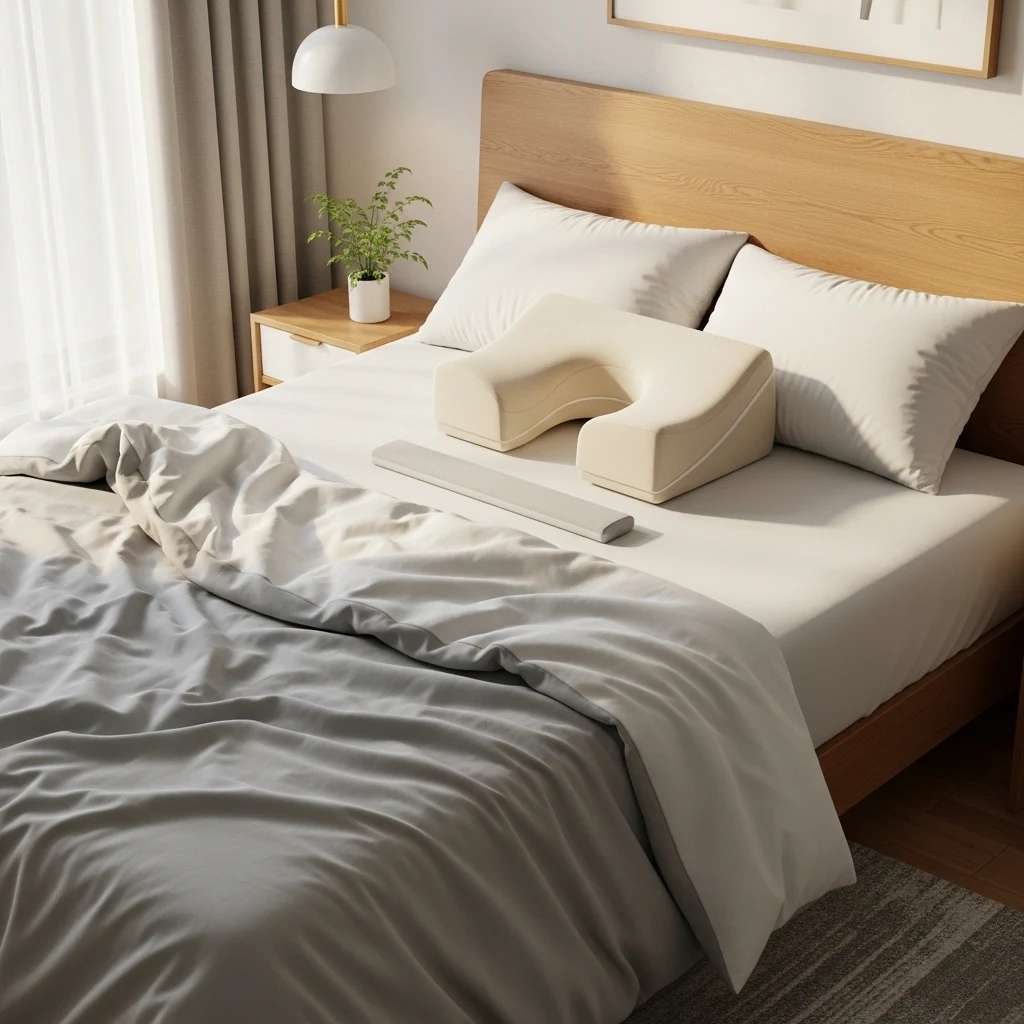
Let’s cut straight to it. Sleeping on your back is the single best position for relieving TMJ jaw pain. Full stop.
When you sleep on your back, your jaw naturally hangs in a relaxed, neutral position.
There is no pillow squashing one side of your face, no arm propped awkwardly under your cheek, and no sideways pressure on your temporomandibular joint.
Your spine stays aligned, your neck muscles relax, and your jaw gets the break it desperately needs.
Why Back Sleeping Works for TMJ
Here is what happens physiologically when you sleep on your back:
- Your jaw stays symmetrical. No one side gets compressed more than the other, so joint pressure stays balanced.
- Your neck muscles decompress. Tight neck muscles directly pull on the jaw, so relaxing them overnight reduces morning stiffness.
- Your airway stays open. Better airflow means less nighttime grinding — a huge TMJ trigger.
- Gravity works in your favor. Your jaw drops gently downward rather than being forced sideways.
Think of it as giving your jaw a night off. It spends all day working, chewing, talking, clenching when you are stressed at work. Back sleeping is the closest thing your TMJ gets to a spa day.
How to Make Back Sleeping More Comfortable
Not everyone finds back sleeping natural right away, especially if you have spent years face-planted into your pillow. A few adjustments make a big difference:
- Use a cervical pillow (also called a contour pillow). These support the natural curve of your neck and prevent your head from rolling to one side.
- Place a thin pillow under your knees. This takes pressure off your lower back and keeps you from fidgeting and rolling over in the night.
- Keep your arms at your sides or on your stomach. Raising your arms above your head tightens chest muscles, which indirectly creates tension through the neck and jaw.
Give yourself a two-week adjustment period. Your body is a creature of habit, but it can learn new tricks.
Shop Cervical Pillows On Amazon
The Second-Best Option: Sleeping on Your Side (With Conditions)
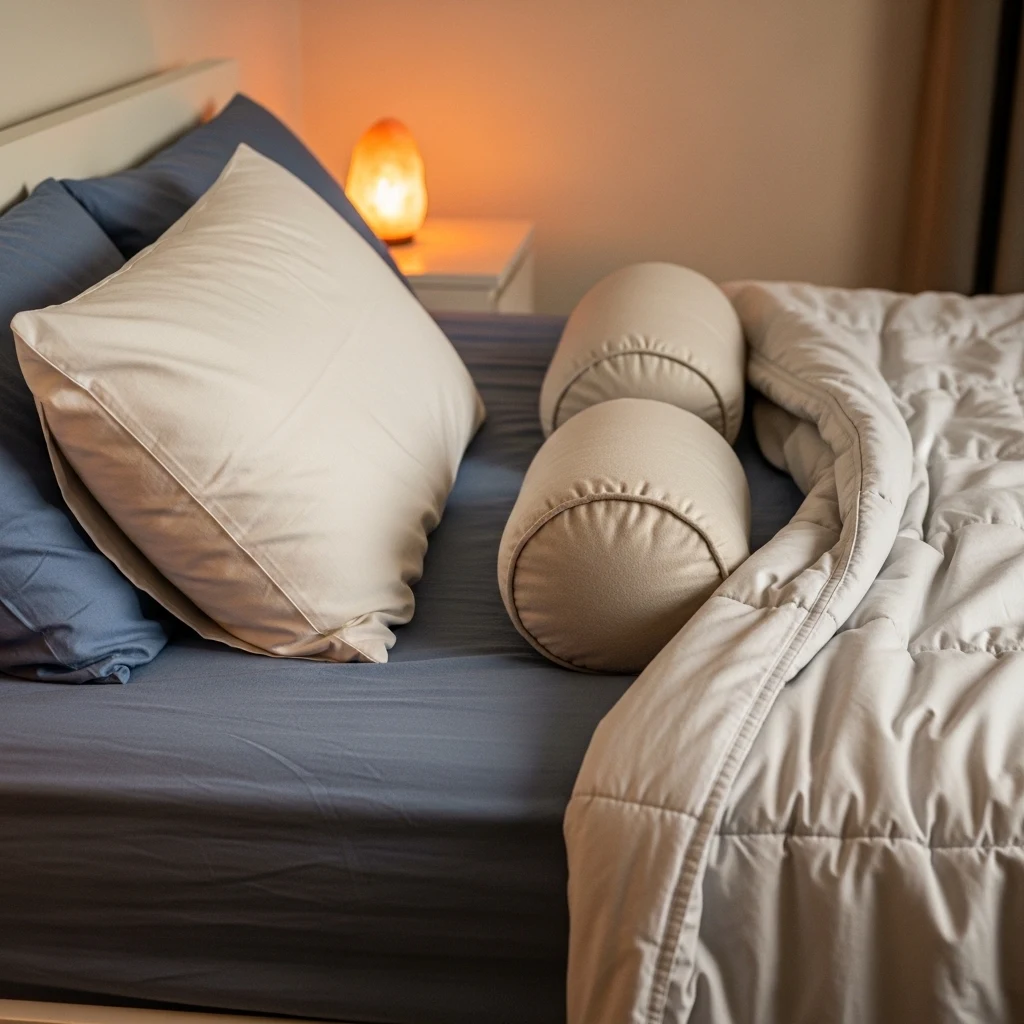
Not everyone can train themselves to sleep on their back. Life is imperfect, and so are sleeping habits.
If side sleeping is where you land every night no matter what you do, side sleeping on your left side is generally preferable, though honestly, either side beats sleeping on your stomach.
The critical part here is how you set up your pillow situation.
How to Side Sleep Without Wrecking Your Jaw
Side sleeping becomes a TMJ problem when your pillow pushes your jaw upward or sideways, compressing the joint on the lower side of your face. Here is how to avoid that:
- Use a firm, medium-height pillow that keeps your head level with your spine. Too high and your jaw angles down; too low and it tilts up.
- Avoid resting your arm or hand under your jaw. This one is sneaky. A lot of people do it without thinking, and it adds direct pressure to the TMJ.
- Put a pillow between your knees. This aligns your hips and spine, which reduces the chain-reaction tension that travels up into your neck and jaw.
The goal with side sleeping is to minimize any lateral pressure on your jaw while keeping your entire spine as neutral as possible.
The Worst Sleep Position for TMJ: Stomach Sleeping
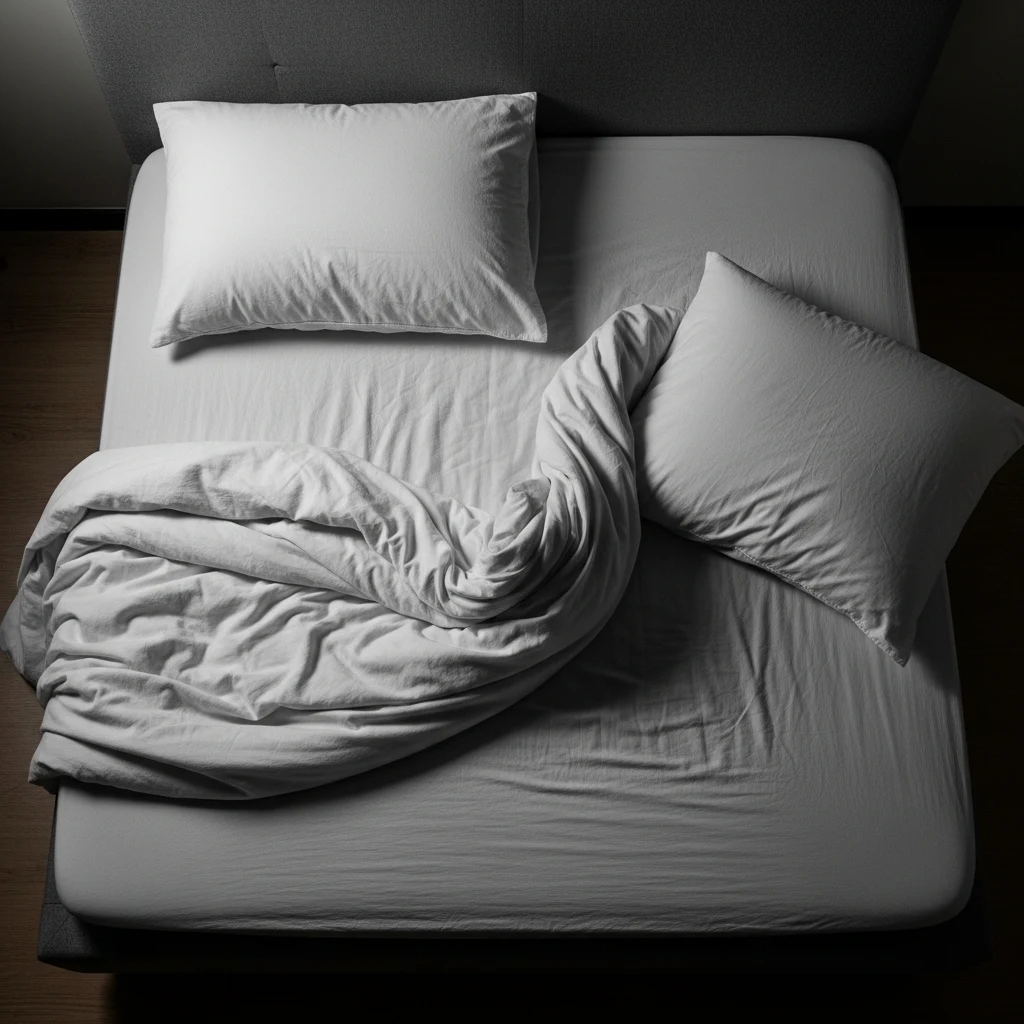
If you sleep on your stomach and you have TMJ pain, your sleep position and your jaw pain are probably having a very long, ongoing argument, and your jaw is losing.
Stomach sleeping forces you to rotate your head to one side just to breathe, which means your TMJ spends hours in a twisted, compressed position.
Your neck muscles work overtime to hold that position, and that tension radiates straight into your jaw.
On top of that, many stomach sleepers press their face directly into the pillow, adding even more direct pressure.
Stomach sleeping is the worst possible position for TMJ relief, and there really is no way to do it “correctly” if jaw pain is your concern.
Even experienced physiotherapists and dentists who treat TMD consistently flag this as the position to avoid above all others.
Transitioning away from stomach sleeping is genuinely hard.
If you are a lifelong stomach sleeper, a body pillow can help, hug it in front of you to recreate that cocooned feeling without needing to roll onto your face.
How Your Pillow Affects TMJ Pain
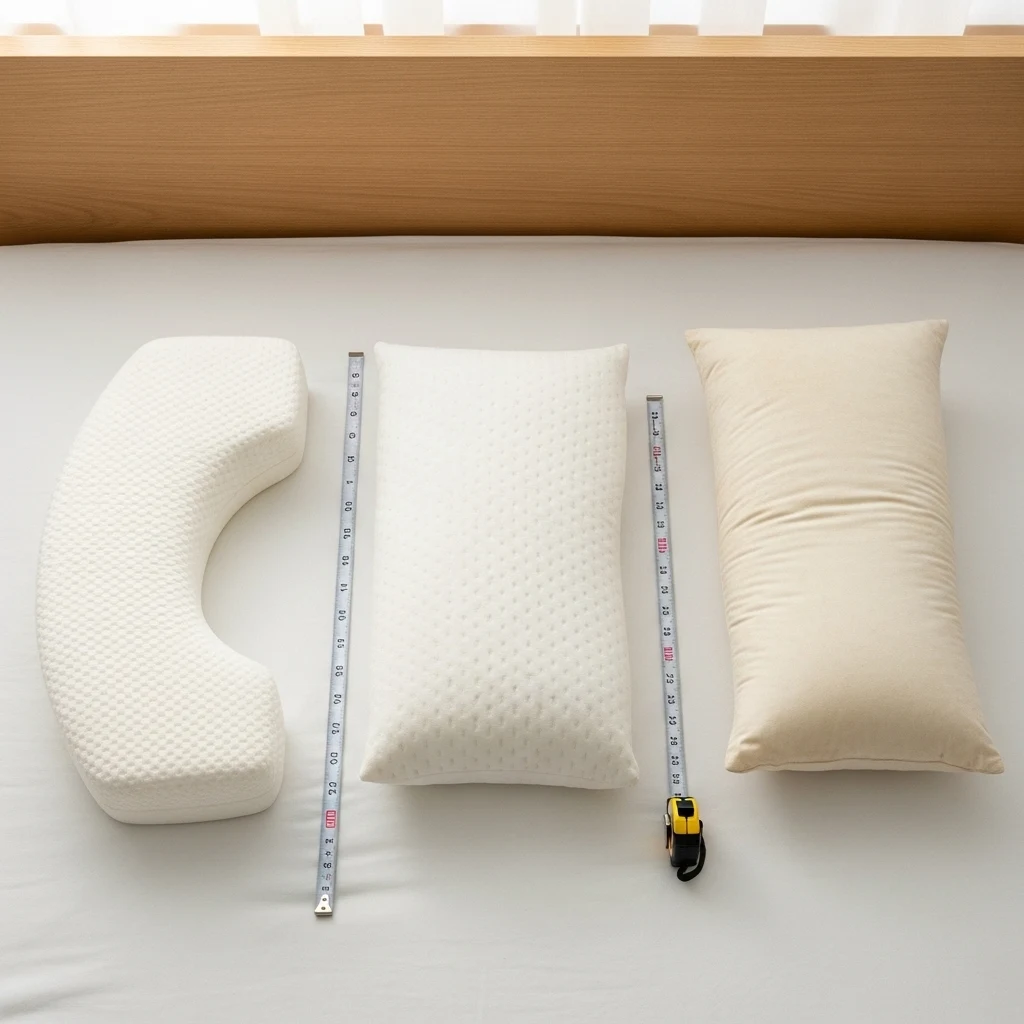
Here is something worth talking about more: your pillow matters as much as your position. You could be in the perfect back-sleeping setup and still wake up with jaw pain if your pillow is wrong.
What to Look for in a TMJ-Friendly Pillow
- Memory foam or latex material. Both conform to the shape of your head and neck without pushing back against them the way a stiff, overfilled pillow does.
- Cervical contour design. These pillows have a lower center section for your head and raised edges for your neck — perfect for back sleepers with TMJ.
- Medium height (loft). Too high creates neck flexion; too low creates neck extension. Both pull on the jaw. Aim for a pillow that keeps your ears aligned with your shoulders when lying down.
If you have been sleeping on the same pillow for three or more years, there is a decent chance it has lost its support and is working against you.
A pillow replacement is a small investment compared to ongoing jaw pain.
Find The Right Pillow For TMJ Relief On Amazon
Other Sleep Habits That Help TMJ Pain
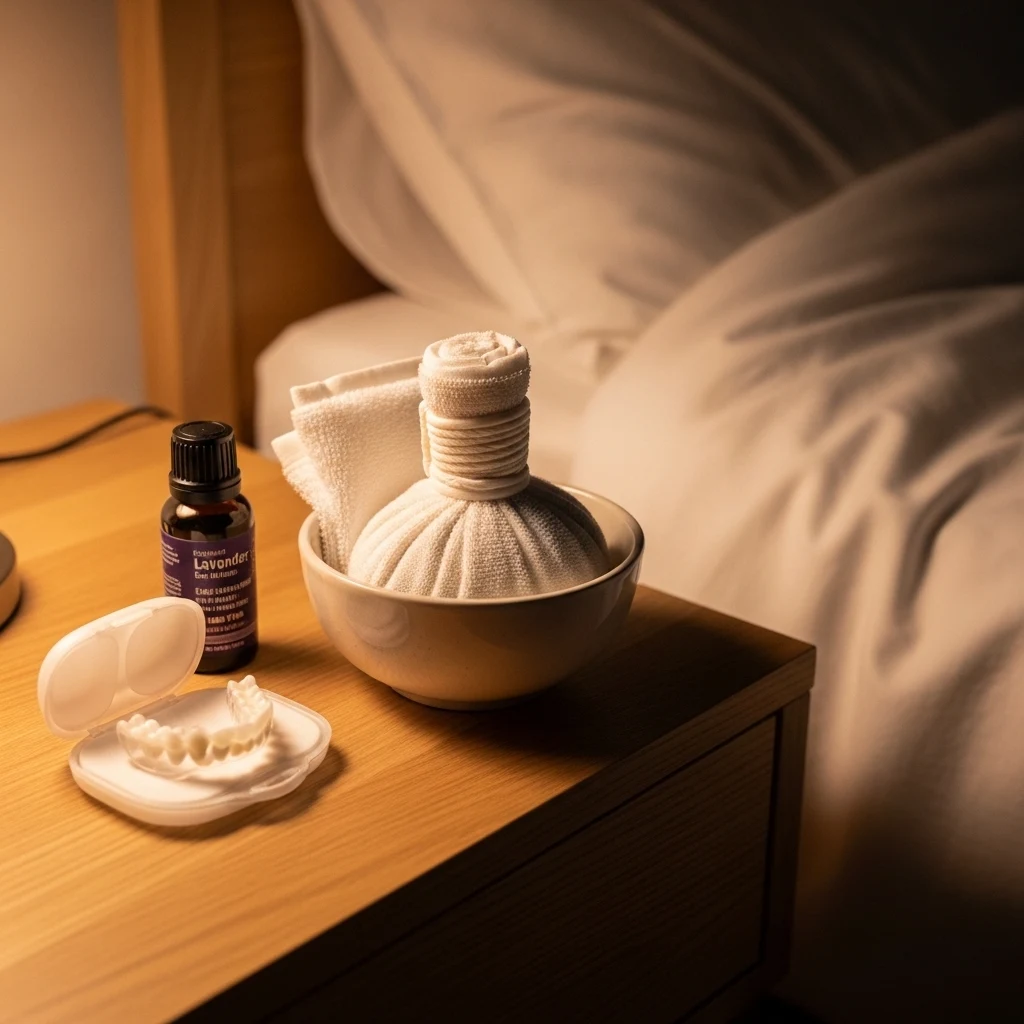
Sorting out your sleep position is a great first step, but pairing it with a few additional habits will help you get even better results.
Wear Your Night Guard If You Have One
Bruxism, grinding and clenching your teeth during sleep, is one of the most common TMJ aggravators.
If your dentist has prescribed a night guard, wear it consistently. Skipping it even a few nights can undo the progress your jaw has made.
Establish a Jaw Relaxation Routine Before Bed
Most people carry tension in their jaw throughout the day without noticing it. A simple pre-sleep routine can help:
- Gently massage your masseter muscles (the thick muscles at the sides of your jaw, just below your cheekbones).
- Practice slow nasal breathing to relax your nervous system.
- Apply a warm compress to your jaw for five to ten minutes before lying down. Warmth loosens tight muscles and reduces joint inflammation.
Watch Your Sleep Environment Temperature
A cold room sometimes causes people to tense up and clench their jaw without realizing it. Keep your bedroom at a comfortable temperature and use a warm blanket if needed.
Your muscles stay looser in warmth, and a relaxed body means a relaxed jaw.
Shop Cozy Sleep Blankets On Amazon
When Sleep Position Alone Is Not Enough
Optimizing your sleep position is genuinely helpful, but it is also worth saying clearly: TMJ disorder often requires a multifaceted treatment approach.
If your pain is severe, persistent, or comes with symptoms like locking of the jaw, significant clicking, or headaches that do not respond to position changes, a visit to a dentist or physical therapist who specializes in TMD is the right move.
Sleep position is one piece of the puzzle, a very accessible, free, and effective piece, but it works best alongside professional guidance when the disorder is more advanced.
The Bottom Line
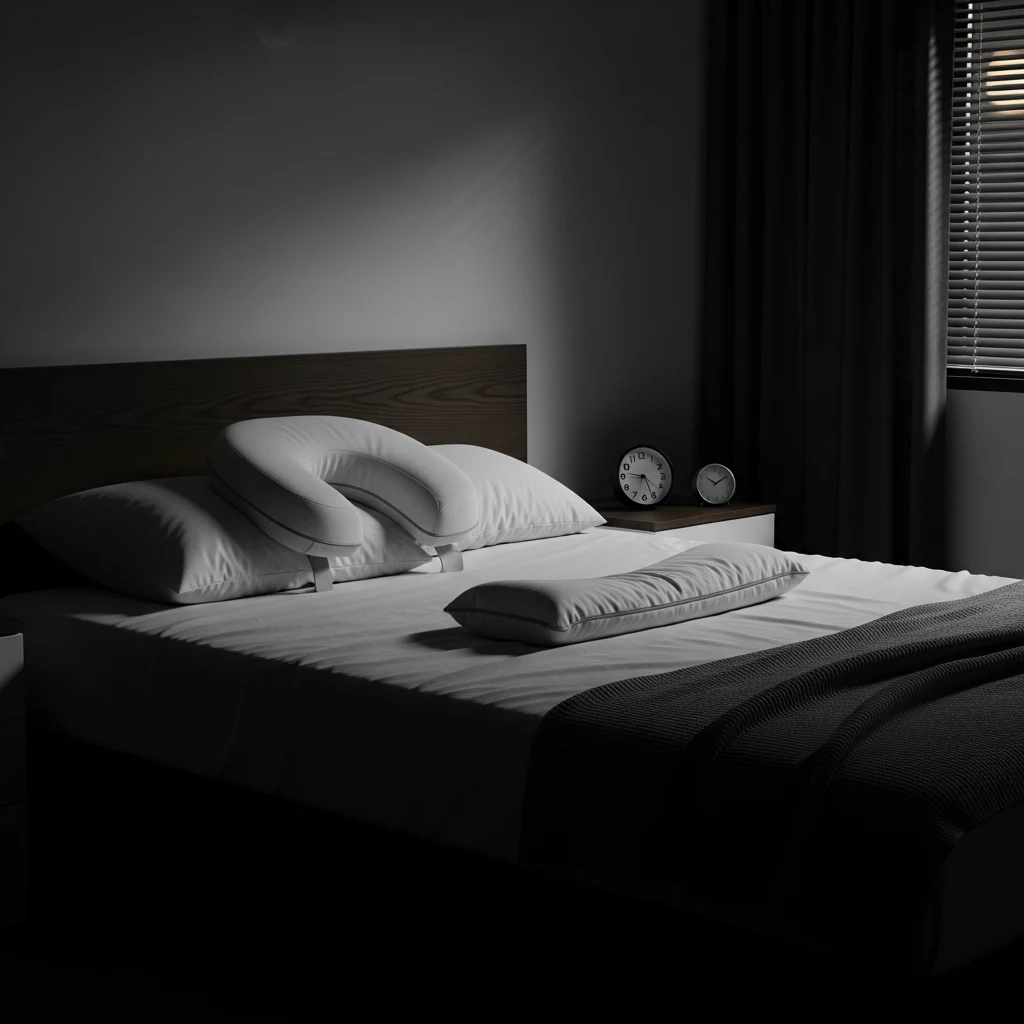
Jaw pain is miserable, and it is even more miserable when it ruins your sleep and greets you every single morning.
Switching to back sleeping, getting the right pillow, and keeping direct pressure off your jaw at night are among the most effective and underrated things you can do for TMJ relief.
Start tonight. Grab an extra pillow to prop your knees, adjust your sleeping setup, and give your jaw the rest it has been begging for.
Your future well-rested self, the one who wakes up without wincing, will thank you.
What Is the Best Sleep Position for TMJ Pain Relief?
Sleeping on your back is the best way to relieve TMJ pain. It keeps your jaw neutral and symmetrical.
This position removes pressure from the temporomandibular joint and helps your neck and jaw muscles relax overnight.
Back sleeping also cuts down on nighttime teeth grinding, a common cause of TMJ flare-ups. If it feels uncomfortable at first, try using a cervical contour pillow.
Also, place a pillow under your knees to help you stay in this position all night.
Can the Wrong Sleep Position Make TMJ Worse?
Yes, definitely. Sleeping on your stomach can harm TMJ. It makes your head turn to one side for hours. This compresses the temporomandibular joint and strains the neck muscles.
Side sleeping can also worsen TMJ if your pillow pushes your jaw up or to the side. Any position that puts uneven pressure on the jaw can increase inflammation, muscle tension, and morning pain.
Adjusting your sleep position is one of the easiest and cheapest ways to ease TMJ discomfort.
What Type of Pillow Is Best for People With TMJ Disorder?
A cervical contour pillow made of memory foam or latex is ideal for people with TMJ disorder. These pillows support the neck’s natural curve and keep the head aligned with the spine.
They also stop the head from rolling sideways while you sleep. The best pillow has a medium loft, not too high or low, so your ears align with your shoulders when lying down.
Avoid overstuffed or worn pillows, as they can push the jaw into an awkward angle, causing joint pain by morning.
Does Sleeping on Your Side Aggravate TMJ Jaw Pain?
Side sleeping can worsen TMJ if done wrong, but it can be fine with the right setup. Avoid putting your hand or arm under your jaw. Use a firm pillow to keep your head level with your spine.
Also, place a pillow between your knees to ease body tension. Neither side is better for TMJ, but it’s crucial to keep pressure off the lower jaw.
Side sleeping is a good middle-ground. It’s not as ideal as back sleeping, but much better than sleeping on your stomach.
Should I Wear a Night Guard While Sleeping If I Have TMJ?
Yes, wearing a night guard while you sleep is highly recommended if your dentist prescribed one for TMJ disorder. Night guards protect your upper and lower teeth.
They prevent grinding and clenching, which stress the temporomandibular joint. Skipping your night guard, even for a few nights, can reverse progress and cause a flare-up.
Using the night guard consistently, along with a good sleep position and a jaw relaxation routine before bed, helps you avoid waking up with TMJ pain.